
BuddhistCatholicContemplativeEvangelicalGeneral ChristianHinduJewishLatter-day SaintMuslimNew VisionsProgressive Christian
Beliefs
- Buddhist
- Catholic
- Contemplative
- Evangelical
- General Christian
- Hindu
- Jewish
- Latter-day Saint
- More Voices
- Muslim
- New Visions
- Pagan
- Progressive Christian
Topics
- Religion News
- Food and Religion
- Sports and Religion
- Religious Art
- Religious Music and Entertainment
- Religious Events
- History and Religion
- Style and Religion
- Politics and Religion
- Women in Religion
- Recreation Outdoors and Religion
- Business Finance and Religion
- Careers Workplace and Religion
- Education and Religion
- Family Parenting and Religion
- Health Fitness and Religion
- Home and Religion
- Relationships and Religion
- Technology and Religion
- Travel and Religion
Columnists
- Buddhist Columnists
- Business Finance and Religion Columnists
- Careers Workplace and Religion Columnists
- Catholic Columnists
- Contemplative Columnists
- Education and Religion Columnists
- Evangelists Columnists
- Family Parenting and Religion Columnists
- General Christian Columnists
- Health Fitness and Religion Columnists
- Hindu Columnists
- History and Religion Columnists
- Home and Religion Columnists
- Jewish Columnists
- More Voices Columnists
- Latter Day Columnists
- Muslim Columnists
- New Visions Columnists
- Nonreligious Columnists
- Pagan Columnists
- Politics and Religion Columnists
- Progressive Columnists
- Recreation Outdoors and Religion Columnists
- Relationships and Religion Columnists
- Religion News Columnists
- Religious Art Columnists
- Religious Events Columnists
- Religious Music and Entertainment Columnists
- Sports and Religion Columnists
- Style and Religion Columnists
- Technology and Religion Columnists
- Travel and Religion Columnists
- Women in Religion Columnists
Resource Library
- 2026 Calendar
- Library of World Religions
- The 100 Most Holy Places on Earth
- Patheos Answers
- Podcasts
- Videos
- Faith Leaders Database
- Anglican Episcopalian
- Bahai
- Baptist
- Buddhism
- Christianity
- Confucianism
- Eastern Orthodoxy
- Hinduism
- Holiness and Pentecostal
- ISKCON
- Islam
- Judaism
- Lutheran
- Methodist
- The Church of Jesus Christ of Latter-day Saints
- New Age
- Paganism
- Presbytarian and Reformed
- Protestantism
- Religion Behind the Scenes
- Roman Catholic
- Scientology
- Shia Islam
- Sikhism
- Sufism
- Sunni Islam
- Taoism
- Zen
- See all religions
Research Tools
 Ad-Free & Subscriber Log-In Subscription Support
Ad-Free & Subscriber Log-In Subscription Support
Follow Patheos 

- Trending:
- Forgiveness
- |
- Marriage
- |
- Consciousness
- |
- Death Penalty
- |
- Election
- |
- Halloween
 Pop Theology
- Home
- Progressive Christian
- Religious Music & Entertainment
- Ranking BLACK MIRROR Season 3
Ranking BLACK MIRROR Season 3
Last updated on: October 24, 2016 at 6:57 pm by J. Ryan Parker
Ranking BLACK MIRROR Season 3 2016-10-24T18:57:33-07:00 J. Ryan Parker
Patheos Explore the world's faith through different perspectives on religion and spirituality! Patheos has the views of the prevalent religions and spiritualities of the world.
We all agree that Black Mirror is superb television and one of the best series going…right?!?! But, within that certainty, no doubt, lie disagreements on best and/or favorite individual episodes. Check out the Pop Theology rankings of the new season’s six episodes below. While much of this is, of course, personal preference, some of these episodes feel more vital than others, given the volatile political and cultural times and spaces in which we find ourselves. It’s nearly a tie for the top spot between “Men Against Fire” and “Hated in the Nation,” but the edge goes to…
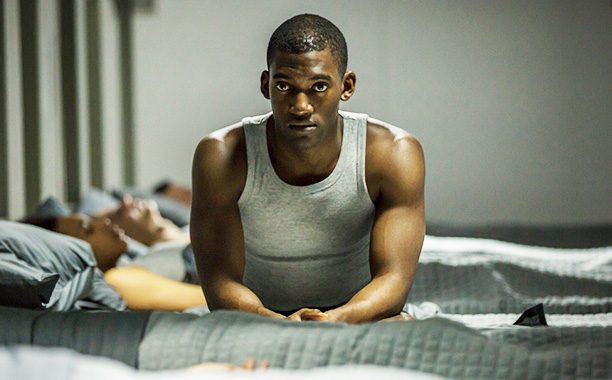
1. “Men Against Fire” encompasses many of the themes also found in “Hated in the Nation” while horrifically solidifying them in a nationalist military/industrial complex. For the military in “Men Against Fire,” words have become vision and vision has become a sort of reality. The episode made me think about a course I took on the Holocaust and slavery, in which we talked about the power of words and, specifically, the ways in which Jews were referred to as vermin for years before they were actually treated like them. In “Men Against Fire,” a group of people (immigrants?) have been identified as “roaches” that must be eradicated to preserve a more pure bloodline. To help with the cleanup, soldiers have been outfitted with mental implants that cause them to see these people as reptilian creatures, not the oppressed human beings they truly are.
“Men Against Fire” reminds us that how we talk about our enemies matters. How we talk about people different from us influences the way we treat them when and if we finally encounter them in person. The episode also shows us that those real world encounters can do great damage to the lies we’ve been told.

2. “Hated in the Nation” almost feels like something Hitchcock could have made were he immersed in a world so shaped by technology and social media. If “Men Against Fire” is concerned with the way leaders use the power of language and vision to control the military, “Hated in the Nation” reveals the power of the masses to use language and words to destroy their neighbors, both near and far. It’s also built on a generational divide between CDI Karin Parke (the brilliant Kelly Macdonald) and Blue Coulson (Faye Marsay) her younger shadow, both of whom quickly realize that they need one another’s wisdom and insight.
Even though the episode closes with a short period of mourning for the deceased “Tweeters” and ultimately ends on a seemingly triumphant note, I can’t shake the feeling that a society that participates in such online vitriol might deserve nothing more than extinction. In this way, “Hated in the Nation” also feels like something out of the Old Testament, with technology as a plague.

3. “Shut Up and Dance” might be the most gripping narrative of the new season, but it fell to #3 because of its focus on the individual. Centering on our abuses of technology (here child pornography, the arrangement of extra-marital affairs, etc.), in “Shut Up and Dance” a group of hackers spy on individuals’ online activities. Those users that cross the line are thrown into a twisted game that seems to do nothing more than perversely entertain the hackers. If they refuse to participate or fail a task, their online activity will be released to the public.
It’s tempting to feel sorry for lead “victim” Kenny (Alex Lawther), whose crime seems comparatively innocent…that is until the episode nears its conclusion and we learn that it’s much worse. Fear and shame are the backbone of this episode, but what are the conclusions that writers Charlie Brooker and William Bridges wants us to draw? Is shame a strong foundation for morality? If so, then all we need to do is put tape on our computers’ camera lenses.

4. “Nosedive” boasts one of the best performances of the new season with Bryce Dallas Howard as the praise-seeking Lacie. “Nosedive” imagines the not-too-distant future when people can rate one another, Yelp-style, based on appearance and even the most brief interaction. These ratings have real world implications: drop below 4 stars and you’ll start to lose friends or plummet below 3 stars and you could lose your job or be barred from certain businesses or gatherings.
The episode’s obsession with our obsession with rankings, likes, and followers already feels a little old, but Cherry Jones’ arrival as an outcast trucker is a superb addition of a tempting role model for many of us questioning what social media is doing to our lives.
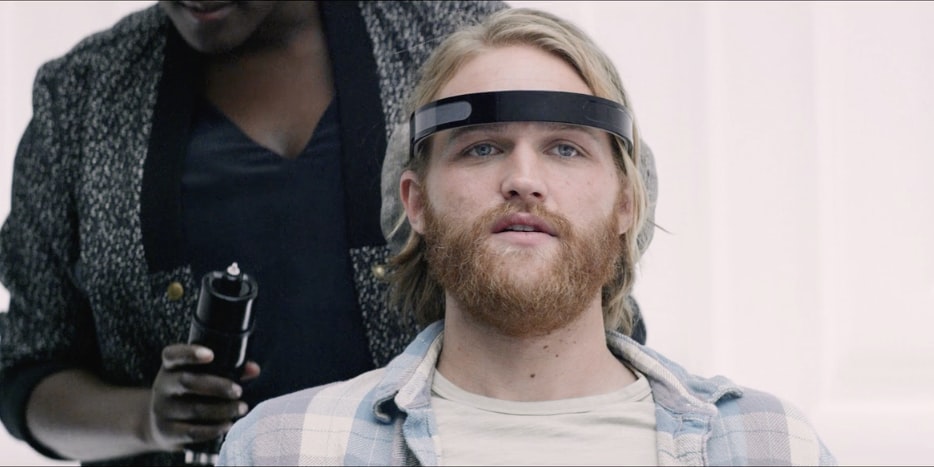
5. As a gamer, I was surprised that these two episodes rounded out my rankings. Like the first and second spots, the fifth and sixth are really close. “Playtest” lands at #5 for me because of its immediacy and my own hesitations with the rise of virtual gaming. While much of the gaming in “Playtest” is pure sci-fi, its emphasis on disconnectedness in a hyper-connected world hits close to home. Virtual realities can be places of connection (as we see in “San Junipero”), but they can just as easily be modes of escape that take us away from real world problems.
“Playtest” benefits from a strong performance by Wyatt Russell, who easily swings from comedy to terror in moments. The episode is right in claiming that much of what we fear is simply our own imaginations and that what we might fear the most is often the easiest to repair.
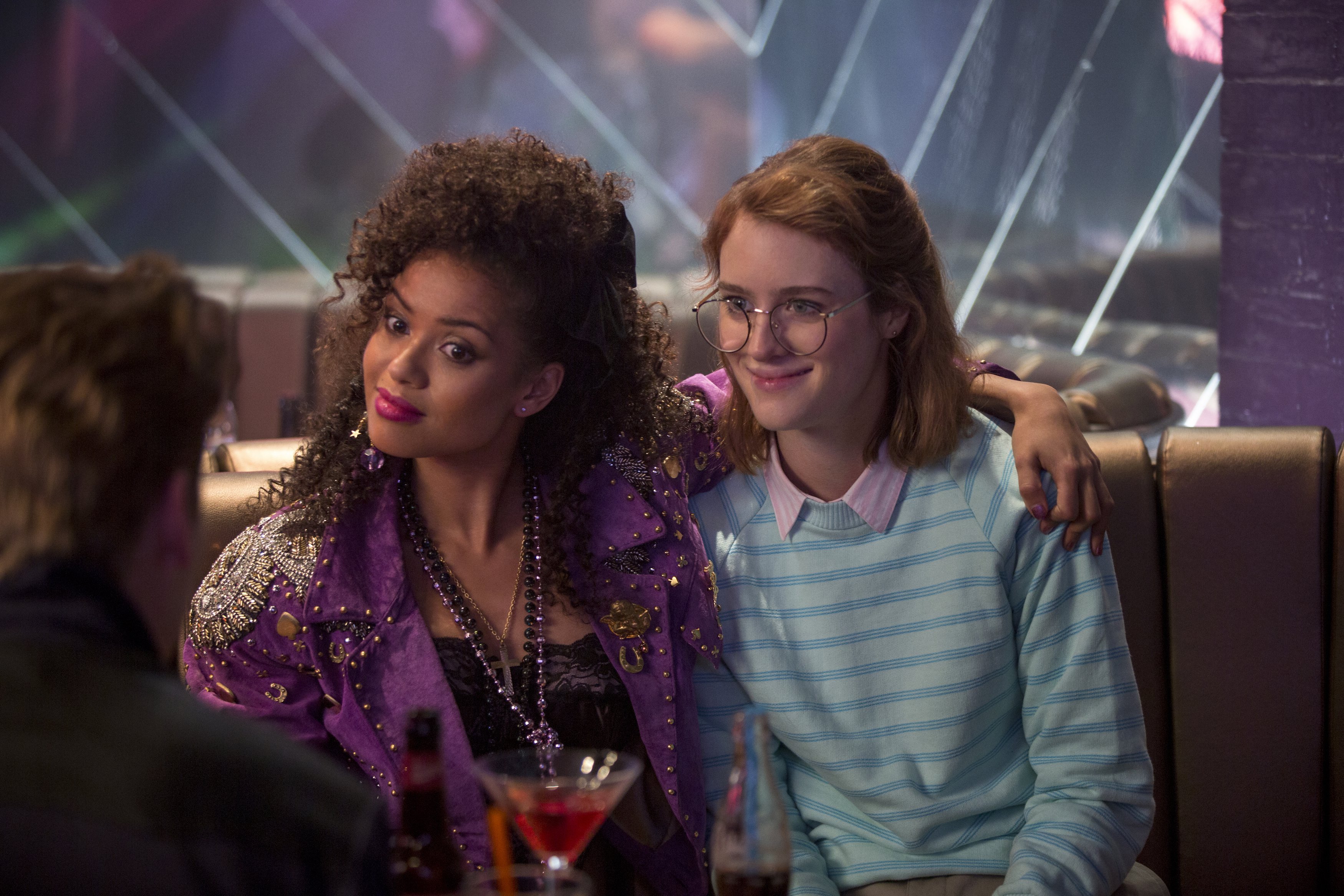
6. “San Junipero” is beautifully shot, jumping back and forth from the 80s to the 90s to today and on into the future with all the appropriate styles on display. At heart, it’s a story about identity and becoming and how technology might help us find and become who we are and who we want to spend our (after)lives with. “San Junipero” is also a story about oppression (at others’ hands and our own), liberation, celebration, and mourning. Gugu Mbatha-Raw and Mackenzie Davis shine.
Previous Post
October 7, 2016
Reflections on THE BIRTH OF A NATION
Next Post
October 26, 2016 #KillerSerials: LUKE CAGE, Eps. 3 & 4
Browse Our Archives
Select a Category Classics DVD Film Music News Pop Culture Events Print Sports Television Uncategorized Video Games
Select a Month March 2017 February 2017 January 2017 December 2016 November 2016 October 2016 September 2016 August 2016 July 2016 June 2016 May 2016 April 2016 March 2016 February 2016 January 2016 December 2015 November 2015 October 2015 September 2015 August 2015 July 2015 June 2015 May 2015 April 2015 March 2015 February 2015 January 2015 December 2014 November 2014 October 2014 September 2014 August 2014 July 2014 June 2014 May 2014 April 2014 March 2014 February 2014 January 2014 December 2013 November 2013 October 2013 September 2013 August 2013 July 2013 June 2013 May 2013 April 2013 March 2013 February 2013 January 2013 December 2012 November 2012 October 2012 September 2012 August 2012 July 2012 June 2012 May 2012 April 2012 March 2012 February 2012 January 2012 December 2011 November 2011 October 2011 September 2011 August 2011 July 2011 June 2011 May 2011 April 2011 March 2011 February 2011 January 2011 December 2010 November 2010 October 2010 September 2010 August 2010 July 2010 June 2010 May 2010 April 2010 March 2010 February 2010 January 2010 December 2009 November 2009 October 2009 September 2009 August 2009 July 2009 June 2009 May 2009 April 2009 March 2009 February 2009 January 2009 December 2008 November 2008 October 2008 September 2008 August 2008 July 2008 June 2008 May 2008 April 2008 March 2008 February 2008 January 2008 December 2007 November 2007 October 2007 September 2007 August 2007 July 2007 June 2007 May 2007 April 2007 March 2007
Follow Us!
TAKE THE
Religious Wisdom Quiz
Which book in the New Testament is the shortest?
Select your answer to see how you score.
Jude Philemon 2 John 3 John
Related posts from Pop Theology

#KillerSerials: THE PATH, S2 Ep. 11
#KillerSerials: THE PATH, S2 Ep. 10

#KillerSerials: THE PATH S2, E8
TRENDING AT PATHEOS Progressive Christian

Why Christians Have a Sacred Duty to Vote:...
The Bible offers strong support for the sacred duty to vote. Here...

What Being a Modern-Day Apostle Means to Me
In my last column, I discussed the ins and outs of modern-day...

Did Ancient China Once Worship the God of...
Across human history, a common thread weaves through the origins of the...

Love Your Neighbor – Including Earth-Kin: Lev. 19,...
God’s command to love your neighbor means acting in an ethical and...

Lead a Church Study of “Jesus and Lao...
Guest writer Jack Thomas (The Irreverent Reverend) reflects on leading his church...

Principles for Understanding the Apostolic Ministry Today
Whenever people discover that my formal ministry title is "apostle," as in...
view all Progressive Christian blogs
Ad-Free & Subscriber Log-In Subscription Support
- About Us
- 2026 Calendar
- Videos
- Podcasts
- Library of World Religions
- Faith In Media Tracker
- Advertise With Us
- Write for Us
- Privacy Policy
- Terms of Service
- Do Not Sell My Data
- Contact Us
- Radiant Digital
- Manage Newsletter Subscriptions
- Unsubscribe From Notifications
- Sitemap
Copyright 2008-2026, Patheos. All rights reserved.
Subscription Support Ad-Free & Subscriber Log-In
Follow Patheos