
BuddhistCatholicContemplativeEvangelicalGeneral ChristianHinduJewishLatter-day SaintMuslimNew VisionsProgressive Christian
Beliefs
- Buddhist
- Catholic
- Contemplative
- Evangelical
- General Christian
- Hindu
- Jewish
- Latter-day Saint
- More Voices
- Muslim
- New Visions
- Pagan
- Progressive Christian
Topics
- Religion News
- Food and Religion
- Sports and Religion
- Religious Art
- Religious Music and Entertainment
- Religious Events
- History and Religion
- Style and Religion
- Politics and Religion
- Women in Religion
- Recreation Outdoors and Religion
- Business Finance and Religion
- Careers Workplace and Religion
- Education and Religion
- Family Parenting and Religion
- Health Fitness and Religion
- Home and Religion
- Relationships and Religion
- Technology and Religion
- Travel and Religion
Columnists
- Buddhist Columnists
- Business Finance and Religion Columnists
- Careers Workplace and Religion Columnists
- Catholic Columnists
- Contemplative Columnists
- Education and Religion Columnists
- Evangelists Columnists
- Family Parenting and Religion Columnists
- General Christian Columnists
- Health Fitness and Religion Columnists
- Hindu Columnists
- History and Religion Columnists
- Home and Religion Columnists
- Jewish Columnists
- More Voices Columnists
- Latter Day Columnists
- Muslim Columnists
- New Visions Columnists
- Nonreligious Columnists
- Pagan Columnists
- Politics and Religion Columnists
- Progressive Columnists
- Recreation Outdoors and Religion Columnists
- Relationships and Religion Columnists
- Religion News Columnists
- Religious Art Columnists
- Religious Events Columnists
- Religious Music and Entertainment Columnists
- Sports and Religion Columnists
- Style and Religion Columnists
- Technology and Religion Columnists
- Travel and Religion Columnists
- Women in Religion Columnists
Resource Library
- 2026 Calendar
- Library of World Religions
- The 100 Most Holy Places on Earth
- Patheos Answers
- Podcasts
- Videos
- Faith Leaders Database
- Anglican Episcopalian
- Bahai
- Baptist
- Buddhism
- Christianity
- Confucianism
- Eastern Orthodoxy
- Hinduism
- Holiness and Pentecostal
- ISKCON
- Islam
- Judaism
- Lutheran
- Methodist
- The Church of Jesus Christ of Latter-day Saints
- New Age
- Paganism
- Presbytarian and Reformed
- Protestantism
- Religion Behind the Scenes
- Roman Catholic
- Scientology
- Shia Islam
- Sikhism
- Sufism
- Sunni Islam
- Taoism
- Zen
- See all religions
Research Tools
 Ad-Free & Subscriber Log-In Subscription Support
Ad-Free & Subscriber Log-In Subscription Support
Follow Patheos 

- Trending:
- Forgiveness
- |
- Marriage
- |
- Consciousness
- |
- Death Penalty
- |
- Election
- |
- Halloween
 Pop Theology
- Home
- Progressive Christian
- Religious Music & Entertainment
- Book Review: CHARLES WILLIAMS, THE THIRD INKLING
Book Review: CHARLES WILLIAMS, THE THIRD INKLING
Last updated on: July 13, 2016 at 9:47 am by J. Ryan Parker
Book Review: CHARLES WILLIAMS, THE THIRD INKLING 2016-07-13T09:47:22-07:00 J. Ryan Parker
Patheos Explore the world's faith through different perspectives on religion and spirituality! Patheos has the views of the prevalent religions and spiritualities of the world.
When compared to friends and fellow writers C. S. Lewis and J. R. R. Tolkien, Charles Williams seems like an unknown. It’s a shame because I’ve always found his novels—also full of supernatural elements—to be more thoughtful and thought-provoking (theologically and spiritually) than Lewis’ or Tolkien’s. Thankfully, Williams has finally received the attention he and his work deserves in the form of a fantastic new biography, Charles Williams: The Third Inkling by Grevel Lindop.
Williams (born Sept. 29, 1886 & died May 15, 1945) grew up poor in the Holloway burough of London. He never finished college, but would go on to lecture at Oxford and count the likes of Lewis, Tolkien, T. S. Eliot, and Gerard Manley Hopkins as friends and admirers. Lewis once wrote to Williams, “’I begin to suspect that we are living in the “age of Williams” and our friendship with you will be our only passport to fame. I’ve a good mind to punch your head when we next meet’” (282). Williams paid the bills (which was often a struggle) through a life-long career as an editor at the Oxford University Press’ London office. He was also a poet, playwright, novelist, and critic. Though a devout Christian, he dabbled in a variety of spiritual/magic/cultish practices and communities that would no doubt scandalize many of his fellow Christians today. Of course, this was all due to a healthy religious upbringing. Lindop writes, “Walter [Charles’ father] made sure that the children were given alternatives to religious dogmatism and learned to treat history’s radical skeptics with respect. […] Charles himself had no doubts. But, from childhood on, he was well aware of the case against Christianity” (11).
Lindop’s book is an accessible, well-researched, and entertaining read, which will most likely appeal primarily to the most avid literary biography fans and devotees of Williams and the other Inklings. His countless hours spent immersed in Williams’ creative work, letters, and criticism make it feel like, at times, that Lindop actually interviewed Williams at length about his life and work. Lindop gives most of his attention to Williams’ poetry, which leaves relatively little room for in-depth analysis of his novels. However, his unflinchingly honest depiction of Williams’ life reveals the numerous ways in which he was working out his religious, spiritual, and sexual conflicts in these books.
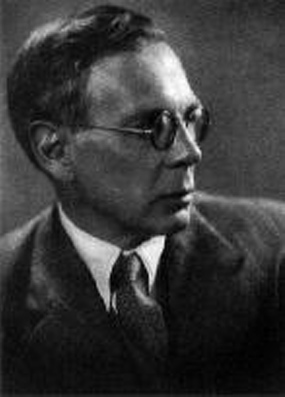
And it is Williams’ sexual proclivities that are especially surprising in this biography. Throughout his life, though Williams was married and had one son, he conducted a series of “affairs” with several younger women, most of whom were co-workers or fans of his work, and all of whom were transfixed by his personality. Although they don’t seem to have included sexual intercourse, they could best be summed up as sado-masochistic exchanges. These relationships were not purely physical for Williams, as he genuinely believed that sexual energy (the transmutation and denial of it) could be an avenue to the Divine. Lindop references Williams’ letter to an injured love interest: “He tried to aid Phyllis’s recovery by magical means. Early in her stay at the Westminster he told her, ‘I abandoned an instinct to masturbate last night so that I might offer the strength to you in God. And that, dear Celia, was that.’ There could be no clearer indication that he viewed sexual energy as a force that could be transmuted for chosen purposes” (178).
Another important theme to Williams’ life and work was his idea of substitution or co-inherence. Inspired by Paul’s admonishment in Galatians 6:2 to “bear one another’s burdens,” he believed that people should (and could) literally do this. This would not only be a central theme in his novels, but he would practice this in his daily life, even forming a religious order of sorts in which members followed this as one of their core beliefs. For Williams, Lindop writes, “[…] co-inherence represented the insight that we all inhere in one another: we are profoundly interdependent, we are what we are because of one another; we are inseparable form others, and from God” (292). This has great bearing on our understanding of our place in the world. Lindop continues, “[Williams] speculated that when we suffer, it is perhaps so that some other may benefit. When we are happy, someone else, perhaps quite unknown to us, has earned our happiness for us by their pain or effort. We live, quite literally, from and in one another; and all of us from and in God” (157).
Charles Williams: The Third Inkling (re)introduces readers to a first-rate Christian writer and thinker whose work feels just as prophetic and scandalous now as it did when it was first published decades ago. His understanding of the interdependence of all humanity is a much needed reminder in these divisive times.
Charles Williams: The Third Inkling (Oxford University Press, 464 pp) is available on Amazon.
Next Post

July 13, 2016 #KillerSerials: PREACHER, "He Gone"
Browse Our Archives
Select a Category Classics DVD Film Music News Pop Culture Events Print Sports Television Uncategorized Video Games
Select a Month March 2017 February 2017 January 2017 December 2016 November 2016 October 2016 September 2016 August 2016 July 2016 June 2016 May 2016 April 2016 March 2016 February 2016 January 2016 December 2015 November 2015 October 2015 September 2015 August 2015 July 2015 June 2015 May 2015 April 2015 March 2015 February 2015 January 2015 December 2014 November 2014 October 2014 September 2014 August 2014 July 2014 June 2014 May 2014 April 2014 March 2014 February 2014 January 2014 December 2013 November 2013 October 2013 September 2013 August 2013 July 2013 June 2013 May 2013 April 2013 March 2013 February 2013 January 2013 December 2012 November 2012 October 2012 September 2012 August 2012 July 2012 June 2012 May 2012 April 2012 March 2012 February 2012 January 2012 December 2011 November 2011 October 2011 September 2011 August 2011 July 2011 June 2011 May 2011 April 2011 March 2011 February 2011 January 2011 December 2010 November 2010 October 2010 September 2010 August 2010 July 2010 June 2010 May 2010 April 2010 March 2010 February 2010 January 2010 December 2009 November 2009 October 2009 September 2009 August 2009 July 2009 June 2009 May 2009 April 2009 March 2009 February 2009 January 2009 December 2008 November 2008 October 2008 September 2008 August 2008 July 2008 June 2008 May 2008 April 2008 March 2008 February 2008 January 2008 December 2007 November 2007 October 2007 September 2007 August 2007 July 2007 June 2007 May 2007 April 2007 March 2007
Follow Us!
TAKE THE
Religious Wisdom Quiz
Which language is the official language of the Roman Catholic Mass worldwide since Vatican II?
Select your answer to see how you score.
French Local vernacular Greek Latin
Related posts from Pop Theology

#KillerSerials: THE PATH, S2 Ep. 11

#KillerSerials: THE PATH, S2 Ep. 10

TRENDING AT PATHEOS Progressive Christian

Why Christians Have a Sacred Duty to Vote:...
The Bible offers strong support for the sacred duty to vote. Here...

What Being a Modern-Day Apostle Means to Me
In my last column, I discussed the ins and outs of modern-day...

Did Ancient China Once Worship the God of...
Across human history, a common thread weaves through the origins of the...

Love Your Neighbor – Including Earth-Kin: Lev. 19,...
God’s command to love your neighbor means acting in an ethical and...

Lead a Church Study of “Jesus and Lao...
Guest writer Jack Thomas (The Irreverent Reverend) reflects on leading his church...

Principles for Understanding the Apostolic Ministry Today
Whenever people discover that my formal ministry title is "apostle," as in...
view all Progressive Christian blogs
Ad-Free & Subscriber Log-In Subscription Support
- About Us
- 2026 Calendar
- Videos
- Podcasts
- Library of World Religions
- Faith In Media Tracker
- Advertise With Us
- Write for Us
- Privacy Policy
- Terms of Service
- Do Not Sell My Data
- Contact Us
- Radiant Digital
- Manage Newsletter Subscriptions
- Unsubscribe From Notifications
- Sitemap
Copyright 2008-2026, Patheos. All rights reserved.
Subscription Support Ad-Free & Subscriber Log-In
Follow Patheos