
BuddhistCatholicContemplativeEvangelicalGeneral ChristianHinduJewishLatter-day SaintMuslimNew VisionsProgressive Christian
Beliefs
- Buddhist
- Catholic
- Contemplative
- Evangelical
- General Christian
- Hindu
- Jewish
- Latter-day Saint
- More Voices
- Muslim
- New Visions
- Pagan
- Progressive Christian
Topics
- Religion News
- Food and Religion
- Sports and Religion
- Religious Art
- Religious Music and Entertainment
- Religious Events
- History and Religion
- Style and Religion
- Politics and Religion
- Women in Religion
- Recreation Outdoors and Religion
- Business Finance and Religion
- Careers Workplace and Religion
- Education and Religion
- Family Parenting and Religion
- Health Fitness and Religion
- Home and Religion
- Relationships and Religion
- Technology and Religion
- Travel and Religion
Columnists
- Buddhist Columnists
- Business Finance and Religion Columnists
- Careers Workplace and Religion Columnists
- Catholic Columnists
- Contemplative Columnists
- Education and Religion Columnists
- Evangelists Columnists
- Family Parenting and Religion Columnists
- General Christian Columnists
- Health Fitness and Religion Columnists
- Hindu Columnists
- History and Religion Columnists
- Home and Religion Columnists
- Jewish Columnists
- More Voices Columnists
- Latter Day Columnists
- Muslim Columnists
- New Visions Columnists
- Nonreligious Columnists
- Pagan Columnists
- Politics and Religion Columnists
- Progressive Columnists
- Recreation Outdoors and Religion Columnists
- Relationships and Religion Columnists
- Religion News Columnists
- Religious Art Columnists
- Religious Events Columnists
- Religious Music and Entertainment Columnists
- Sports and Religion Columnists
- Style and Religion Columnists
- Technology and Religion Columnists
- Travel and Religion Columnists
- Women in Religion Columnists
Resource Library
- 2026 Calendar
- Library of World Religions
- The 100 Most Holy Places on Earth
- Patheos Answers
- Podcasts
- Videos
- Faith Leaders Database
- Anglican Episcopalian
- Bahai
- Baptist
- Buddhism
- Christianity
- Confucianism
- Eastern Orthodoxy
- Hinduism
- Holiness and Pentecostal
- ISKCON
- Islam
- Judaism
- Lutheran
- Methodist
- The Church of Jesus Christ of Latter-day Saints
- New Age
- Paganism
- Presbytarian and Reformed
- Protestantism
- Religion Behind the Scenes
- Roman Catholic
- Scientology
- Shia Islam
- Sikhism
- Sufism
- Sunni Islam
- Taoism
- Zen
- See all religions
Research Tools
 Ad-Free & Subscriber Log-In Subscription Support
Ad-Free & Subscriber Log-In Subscription Support
Follow Patheos 

- Trending:
- Forgiveness
- |
- Marriage
- |
- Consciousness
- |
- Death Penalty
- |
- Election
- |
- Halloween
 Pop Theology
- Home
- Progressive Christian
- Religious Music & Entertainment
- Interview with Stephen Cone, Director of ‘Henry Gamble’s Birthday Party’
Interview with Stephen Cone, Director of ‘Henry Gamble’s Birthday Party’
Last updated on: February 13, 2017 at 12:47 pm by Richard Lindsay
Interview with Stephen Cone, Director of ‘Henry Gamble’s Birthday Party’ 2017-02-13T12:47:15-08:00 Richard Lindsay
Patheos Explore the world's faith through different perspectives on religion and spirituality! Patheos has the views of the prevalent religions and spiritualities of the world.
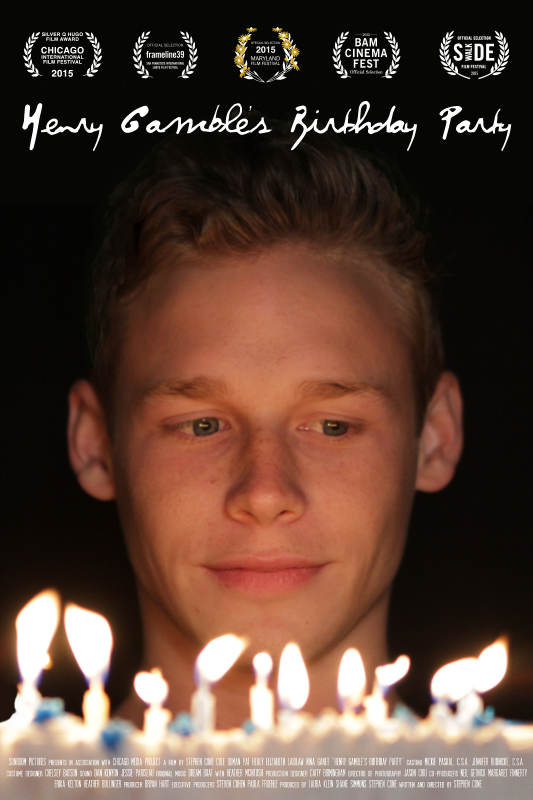 Tuesday, May 3, is an exciting day for lovers of good independent film because it marks the video release of Henry Gamble’s Birthday Party. Written and directed by Stephen Cone, a Southern-born filmmaker now living and working in Chicago, it tells the story of a 17 year-old preacher’s kid coming to terms with his sexuality. With this story line of course it’s been wildly popular at LGBT and independent film festivals. But the film is so much more than a coming out movie. The events unfold over one day as an evangelical church community gathers at Henry’s family’s house for a pool party. As the party goes on and church members surrender their inhibitions, we discover truths about each of them they would never share on a Sunday morning. Stephen Cone also wrote and directed an acclaimed film about Christian youth coming to terms with adulthood, sexuality, and doubting faith called The Wise Kids, which was released in 2011. (PopTheology review here.) We can safely say you can add these films to that rarest of genres that express honesty about human experience, while taking the lives of people of faith seriously.
PopTheology.com editors Ryan Parker and Richard Lindsay had a chance to interview Stephen Cone before the release. You can listen to the interview here:
http://wp.production.patheos.com/blogs/poptheology/files/2016/05/Stephen-Cone-2.mp3
If you prefer to read, here’s a brief transcript of part of the interview, with the whole interview available in PDF format below:
Editor’s Note: Both the recording of the interview and the transcript have been edited for clarity and length.
Ryan Parker: So Stephen, it’s great to talk to you. I think a place that I always like to start is to maybe tell us about how you got to this point of making films. And then how you got to create Henry Gamble’s Birthday Party.
Stephen Cone: I grew up in the Carolinas. I’m a cinephile from early childhood. I was obsessed with film scores even as early as seven, eight, nine years old, and had a whole teenage life of coming to different categories of film. I went through the AFI/Oscar phase; I went through the art phase; I went through the American independent film phase; and the action movie phase.
So I always loved movies, but back in the 90s, filmmaking as a sort of self-empowerment tool didn’t seem possible. So I was drawn to performance. I was an actor in high school and college and I was a theater major, but knowing somehow I would eventually end up making movies.
So I came out of the University of South Carolina, spent a year in New York and I didn’t love it there. Eventually I started writing plays, and the first play I wrote was a one act play that was produced in Chicago. I came to see it and felt more at home here. My stress level went down. It felt like a cultural center that was more conducive to the atmosphere that I grew up in. So I came here and dabbled in theater for a couple years.
Then in 2005 I had a really crappy day job and I called my dad during one lunch— I think it was either March or May— and I said, “I think I’m going to start making movies this summer. I don’t know how I’m going to do it or what I’m going to do but I’m going to start.” And so the last 12 years have basically been my self- education. I’ve made more or less one movie per year of various shapes and sizes and budgets. And so that’s been my life.
I have a weird story in that it’s taken me almost a whole decade to achieve any kind of first-time filmmaker buzz and that’s seven features later. So it’s been a really strange journey. The first five years was just me making a bunch of really over-ambitious stuff that didn’t really come off and that didn’t play anywhere. So in 2010 I was like, “Get off your high horse, your artsy over-ambitious high horse, and just make something small and personal.” It took me five years of making stuff that wasn’t very successful on the festival circuit to be like, “What if I just tackle something that was true to me and semi-autobiographical?” So that’s when I made The Wise Kids. That’s when I started gaining legitimacy as a filmmaker. And so the latter five years of that ten-year journey has been a little bit easier and my movies have actually gotten seen.
So, with Henry Gamble I didn’t really expect to come back to this world of evangelical America so soon. But I had written another script called Porn Ministry, about two evangelical ministers.
Ryan Parker: Yaasss.
Stephen Cone: I think they were in Charlotte and one of them catches porn on their 15-year-old son’s computer and rather than lambast him they experience a really emotional pull toward the West Coast to share the Gospel with the adult entertainment industry. It wasn’t that good, I mean it sounds great.
Ryan Parker: There’s something there, man, there’s something there.
Richard Lindsay: I would be very surprised if it’s not already being done in real life.
Stephen Cone: Well, I looked up organizations.
Ryan Parker: There’s a porn church out here.
Stephen Cone: But that movie culminated in a pool party [when the ministers came back to Charlotte], so the whole crux of that movie is that we spend about ninety minutes out with this adult entertainment industry and then the teenage son has a birthday party in the final ten pages. So this movie about porn culminated in this smaller sequence of all these Christians gathering to take off their clothes, which is the paradox at the heart of Henry Gamble, and any Christian pool party.
I was excited by that sequence and ultimately that’s what became Henry Gamble’s Birthday Party.
Ryan Parker: Fascinating.
Stephen Cone: And inevitably I was like I had already tackled these things a little bit [evangelical culture]. So it was like, “Why do this?” But you know then I started thinking about it as an emotional prequel to The Wise Kids. The Wise Kids didn’t directly confront sexuality and those early mysterious inklings of desire. So that’s ultimately what gave me the justification to do a kind of flip side to the coin. So ultimately I see these movies siblings: one just happens to emotionally and psychologically take place before the first one.
Ryan Parker: Yeah, so you bring up the pool party, and I hadn’t really thought about that setting as carrying as much weight as it does. Growing up in the South and growing up Southern Baptist, that’s something we always did every summer. We had a pool and we would have a bunch of people over and have pool parties with the youth group, and it’s such a sexually charged thing. So what I appreciated about Henry Gamble’s Birthday Party is the authenticity of it. You’re not attempting to parody this community. I think that’s what makes it stand out. I work in promoting faith films and they’re not even close, not even in the ballpark [in terms of honesty].
Richard Lindsay: I see both films as being apocalyptic, in that sense of revealing something. Each of these characters in turn, something gets revealed to them, or revealed to us about them, and then it’s never the same for them. It’s like the veil of reality is ripped and suddenly they have to go on with that information. It seems like the weight of the gravity of the film rests on each of these characters in turn, and in the process we reveal things about those characters. So I’m just wondering what your thought process is on that and why you like doing that kind of filmmaking?
Stephen Cone: I mean, the reason I make them is because I grew up with these people and I love these people dearly. Even though I’m not technically part of that community anymore, I’ve come to appreciate that community more and I’m very moved by this community of believers. And I don’t see them represented properly in culture.
Ryan Parker: Even from their own filmmakers, even from their own community they can’t get that right.
Stephen Cone: Yeah, you have to understand art and storytelling. Movies that are supposed to be sympathetic, like Saved, I guess relatively speaking it’s more sympathetic?
Richard Lindsay: It kind of turned into a Mean Girls prom movie at the end.
Stephen Cone: Yeah, so the standard has not been set for compassionate three-dimensional portraits of Christians in films. Which is odd because there’s so many of them.
Richard Lindsay: That was one of the things I thought about. In both of these films, people pray. And even after…you know, there’s the opening scene in Henry Gamble. And I don’t want to reveal any spoilers, but there’s two teenage boys and they’re at a sleepover.
Ryan Parker: Ha!
Richard Lindsay: And they have a little discussion about sex, and then the teenage boys do whatever it is that teenage boys do when they start talking about sex. But then, right after that moment, Henry says his prayers and goes to sleep. And I think that’s so characteristic of his culture. And you never see that in Hollywood. You never see someone say a prayer as part of everyday life. And yet that’s part of mainstream culture in America. That’s what most Americans do.
Stephen Cone: Yeah, [that scene] sort of embodies the whole movie in a way. In that opening scene it’s midnight and it’s safe. I’ve compared the bedroom in that movie to underneath the pool. These safe places where what may be judged or forbidden or called out or criticized in public—there are actually these little safe spaces in adolescence where you can work your stuff out. But you have limited time there and they are small spaces. You’re most exposed to the larger spaces which are more tinged with judgment and you’re more worried about what people are thinking of you.
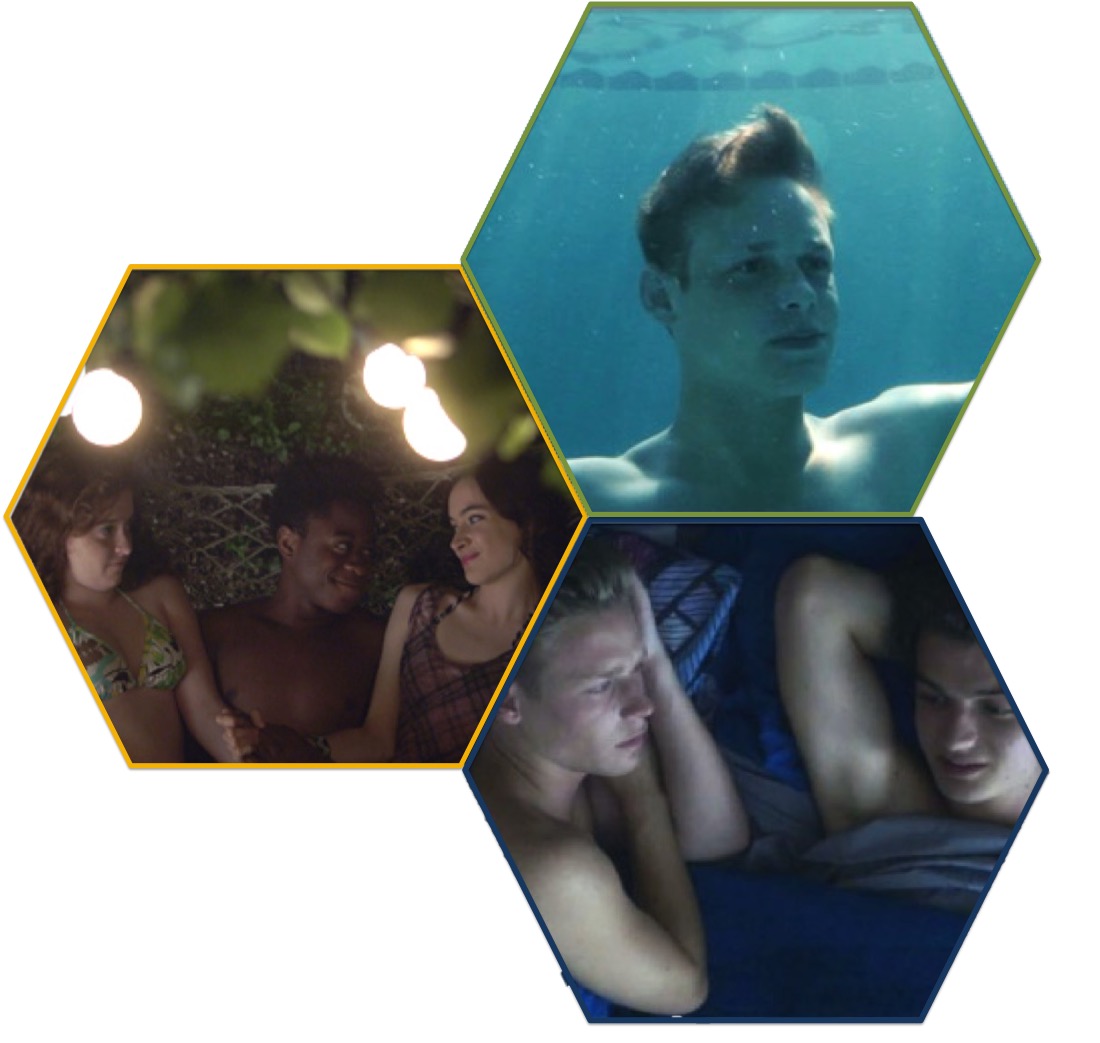
Stephen Cone: “There are actually these little safe spaces in adolescence where you can work your stuff out. But you have limited time there and they are small spaces.”
Richard Lindsay: Have there been any audiences that the film has resonated with that you were surprised the film resonated with?
Stephen Cone: No, I wish. The maddening thing about the last few years, making Wise Kids and Henry Gamble… you know there are beautiful organizations like Level Ground who do embrace it and do look out for these sorts of movies. But there’s really no forum for me to show this to a large group of conservative to moderate Christians. There’s no organization made up of those people that is going to invite this movie there. And it’s the same reason that we had to shoot The Wise Kids in a Methodist church and not a Baptist church.
Richard Lindsay: I wondered where you shot that.
Stephen Cone: My dad’s Baptist church was right down the street but that was just not something I wanted to deal with and Methodists are more open to LGBT people than other denominations. I think the people that might really secretly profoundly respond to this in the Christian world are going to see it in May onward [after the film’s release on DVD] when they’re alone at night and it’s safe.
Richard Lindsay: Yeah, they’re going to be in Henry’s bedroom, so to speak.
Listen to the interview or read the transcript (PDF below) to find out more about the making of Henry Gamble, how Stephen compares it to The Wise Kids, and how to get your Southern Baptist family members drunk enough to watch the films you make about gay youth.
Full PopTheology Interview with Stephen Cone
Previous Post

April 28, 2016
#KillerSerials: The Path, Ep. 6
Next Post
May 5, 2016 #KillerSerials: THE PATH, Ep. 7
Browse Our Archives
Select a Category Classics DVD Film Music News Pop Culture Events Print Sports Television Uncategorized Video Games
Select a Month March 2017 February 2017 January 2017 December 2016 November 2016 October 2016 September 2016 August 2016 July 2016 June 2016 May 2016 April 2016 March 2016 February 2016 January 2016 December 2015 November 2015 October 2015 September 2015 August 2015 July 2015 June 2015 May 2015 April 2015 March 2015 February 2015 January 2015 December 2014 November 2014 October 2014 September 2014 August 2014 July 2014 June 2014 May 2014 April 2014 March 2014 February 2014 January 2014 December 2013 November 2013 October 2013 September 2013 August 2013 July 2013 June 2013 May 2013 April 2013 March 2013 February 2013 January 2013 December 2012 November 2012 October 2012 September 2012 August 2012 July 2012 June 2012 May 2012 April 2012 March 2012 February 2012 January 2012 December 2011 November 2011 October 2011 September 2011 August 2011 July 2011 June 2011 May 2011 April 2011 March 2011 February 2011 January 2011 December 2010 November 2010 October 2010 September 2010 August 2010 July 2010 June 2010 May 2010 April 2010 March 2010 February 2010 January 2010 December 2009 November 2009 October 2009 September 2009 August 2009 July 2009 June 2009 May 2009 April 2009 March 2009 February 2009 January 2009 December 2008 November 2008 October 2008 September 2008 August 2008 July 2008 June 2008 May 2008 April 2008 March 2008 February 2008 January 2008 December 2007 November 2007 October 2007 September 2007 August 2007 July 2007 June 2007 May 2007 April 2007 March 2007
Follow Us!
TAKE THE
Religious Wisdom Quiz
What does the Greek word 'Ekklesia' mean?
Select your answer to see how you score.
Church Righteousness Salvation Resurrection
Related posts from Pop Theology


At SXSW2017: May It Last: A Portrait of...

At SXSW 2017: "Untold Tales of Armistead Maupin"
TRENDING AT PATHEOS Progressive Christian

Why Christians Have a Sacred Duty to Vote:...
The Bible offers strong support for the sacred duty to vote. Here...

What Being a Modern-Day Apostle Means to Me
In my last column, I discussed the ins and outs of modern-day...

Did Ancient China Once Worship the God of...
Across human history, a common thread weaves through the origins of the...

Love Your Neighbor – Including Earth-Kin: Lev. 19,...
God’s command to love your neighbor means acting in an ethical and...

Lead a Church Study of “Jesus and Lao...
Guest writer Jack Thomas (The Irreverent Reverend) reflects on leading his church...

Principles for Understanding the Apostolic Ministry Today
Whenever people discover that my formal ministry title is "apostle," as in...
view all Progressive Christian blogs
Ad-Free & Subscriber Log-In Subscription Support
- About Us
- 2026 Calendar
- Videos
- Podcasts
- Library of World Religions
- Faith In Media Tracker
- Advertise With Us
- Write for Us
- Privacy Policy
- Terms of Service
- Do Not Sell My Data
- Contact Us
- Radiant Digital
- Manage Newsletter Subscriptions
- Unsubscribe From Notifications
- Sitemap
Copyright 2008-2026, Patheos. All rights reserved.
Subscription Support Ad-Free & Subscriber Log-In
Follow Patheos