
BuddhistCatholicContemplativeEvangelicalGeneral ChristianHinduJewishLatter-day SaintMuslimNew VisionsProgressive Christian
Beliefs
- Buddhist
- Catholic
- Contemplative
- Evangelical
- General Christian
- Hindu
- Jewish
- Latter-day Saint
- More Voices
- Muslim
- New Visions
- Pagan
- Progressive Christian
Topics
- Religion News
- Food and Religion
- Sports and Religion
- Religious Art
- Religious Music and Entertainment
- Religious Events
- History and Religion
- Style and Religion
- Politics and Religion
- Women in Religion
- Recreation Outdoors and Religion
- Business Finance and Religion
- Careers Workplace and Religion
- Education and Religion
- Family Parenting and Religion
- Health Fitness and Religion
- Home and Religion
- Relationships and Religion
- Technology and Religion
- Travel and Religion
Columnists
- Buddhist Columnists
- Business Finance and Religion Columnists
- Careers Workplace and Religion Columnists
- Catholic Columnists
- Contemplative Columnists
- Education and Religion Columnists
- Evangelists Columnists
- Family Parenting and Religion Columnists
- General Christian Columnists
- Health Fitness and Religion Columnists
- Hindu Columnists
- History and Religion Columnists
- Home and Religion Columnists
- Jewish Columnists
- More Voices Columnists
- Latter Day Columnists
- Muslim Columnists
- New Visions Columnists
- Nonreligious Columnists
- Pagan Columnists
- Politics and Religion Columnists
- Progressive Columnists
- Recreation Outdoors and Religion Columnists
- Relationships and Religion Columnists
- Religion News Columnists
- Religious Art Columnists
- Religious Events Columnists
- Religious Music and Entertainment Columnists
- Sports and Religion Columnists
- Style and Religion Columnists
- Technology and Religion Columnists
- Travel and Religion Columnists
- Women in Religion Columnists
Resource Library
- 2026 Calendar
- Library of World Religions
- The 100 Most Holy Places on Earth
- Patheos Answers
- Podcasts
- Videos
- Faith Leaders Database
- Anglican Episcopalian
- Bahai
- Baptist
- Buddhism
- Christianity
- Confucianism
- Eastern Orthodoxy
- Hinduism
- Holiness and Pentecostal
- ISKCON
- Islam
- Judaism
- Lutheran
- Methodist
- The Church of Jesus Christ of Latter-day Saints
- New Age
- Paganism
- Presbytarian and Reformed
- Protestantism
- Religion Behind the Scenes
- Roman Catholic
- Scientology
- Shia Islam
- Sikhism
- Sufism
- Sunni Islam
- Taoism
- Zen
- See all religions
Research Tools
 Ad-Free & Subscriber Log-In Subscription Support
Ad-Free & Subscriber Log-In Subscription Support
Follow Patheos 

- Trending:
- Forgiveness
- |
- Marriage
- |
- Consciousness
- |
- Death Penalty
- |
- Election
- |
- Halloween
 Pop Theology
- Home
- Progressive Christian
- Religious Music & Entertainment
- THE INVITATION to THE PATH: Pain, The Search for Truth, and Being in Community
THE INVITATION to THE PATH: Pain, The Search for Truth, and Being in Community
Last updated on: April 12, 2016 at 2:50 pm by J. Ryan Parker
THE INVITATION to THE PATH: Pain, The Search for Truth, and Being in Community 2016-04-12T14:50:56-07:00 J. Ryan Parker
Patheos Explore the world's faith through different perspectives on religion and spirituality! Patheos has the views of the prevalent religions and spiritualities of the world.
I spent the weekend in a cult frame of mind. Saturday morning, I watched Karyn Kusama’s great new film, The Invitation, and spent much of Sunday afternoon obsessing over the terrific new Hulu series, The Path. Both have, whether their characters admit to it or not, cults at the center of their narratives. But the film and series are about much more than that as they also provide windows into much broader discussions about faith and the variety of ways we believe in and belong to religious communities.
The Invitation takes place at a mysterious dinner party. Eden (Tammy Blanchard) and David (Michiel Huisman), who have been away for two years, suddenly return to Los Angeles and invite their closest friends to a lavish dinner party at their home in the Hollywood Hills. As the film progresses, we learn that one of the guests, Will (Logan Marshall-Green), was once married to Eden. After the tragic death of their young son, the two divorced. Years later, Will still wrestles with grief over that loss, but, upon her return, Eden seems to have put that traumatic experience behind her, which is the main reason she has called her friends together. She and David were part of a group in Mexico, where they experienced spiritual transformation, and now they want to share that gift with their friends.
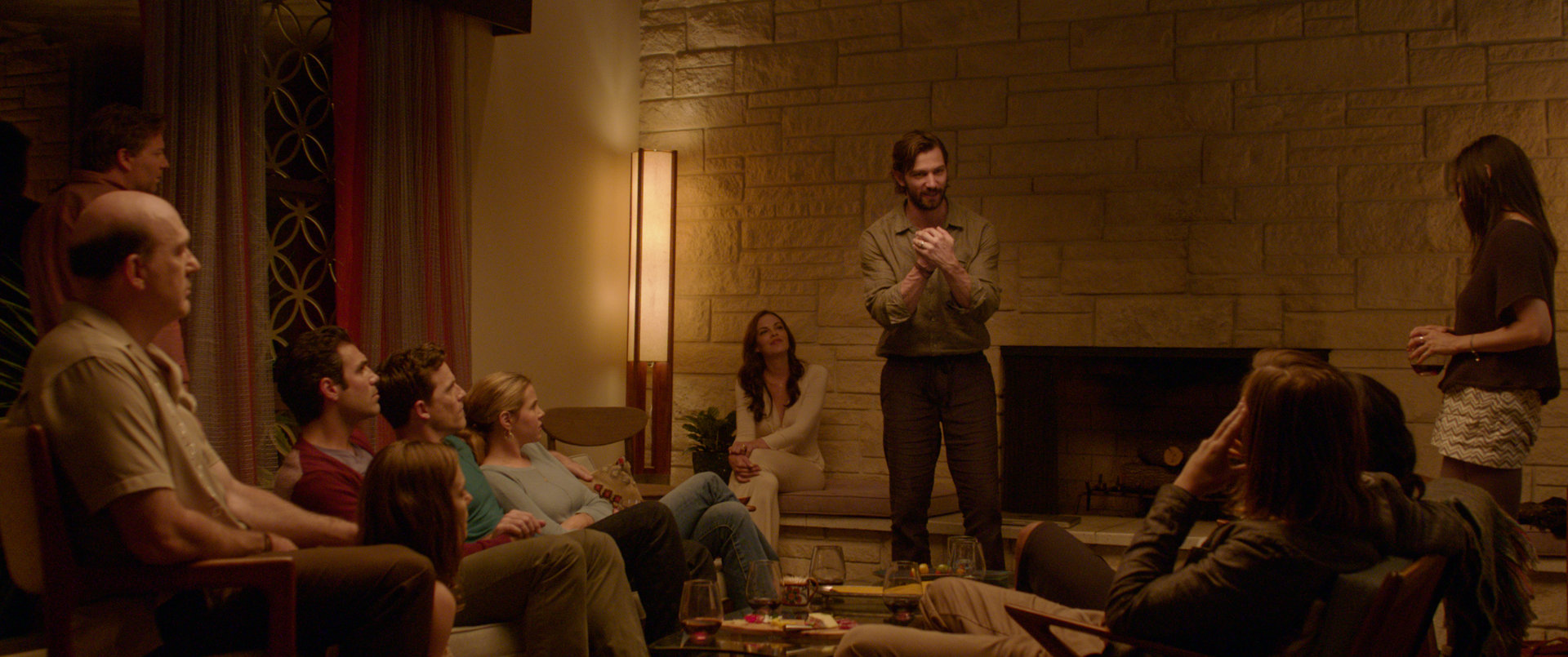
To say much more about The Invitation would rob the film of much of its power. It sustains an unrelenting tension throughout that explodes into a traumatic ending for the characters and, I would imagine, many viewers. Kusama has taken writers Phil Hay and Matt Manfredi’s single location story and woven one of the most gripping narratives of the year. The film benefits from strong casting, and both rich production design and claustrophobic cinematography intensify the viewing experience.
By contrast, The Path is a much larger narrative, both in length and setting, but equally enthralling. The series follows the Meyerists, a group that feels like a cult, even thought its members consistently refer to themselves as a movement. Based on some of the tenets of their faith and their spiritual practices, it appears to be a mashup of Christian, Buddhist, and New Age thought. The series focuses specifically on married members Eddie (Aaron Paul) and Sara (Michelle Monaghan) and the movement’s de facto leader, Cal Roberts (Hugh Dancy). Eddie has recently returned from a retreat in Peru, where a traumatic experience has left him with doubts about the movement and his place in it. This throws his marriage to Sarah and relationship with their children into disarray. Cal, in the meantime, is taking advantage of the absence of the movement’s founder to both assert his authority and exercise his vision for bringing it further into the mainstream.
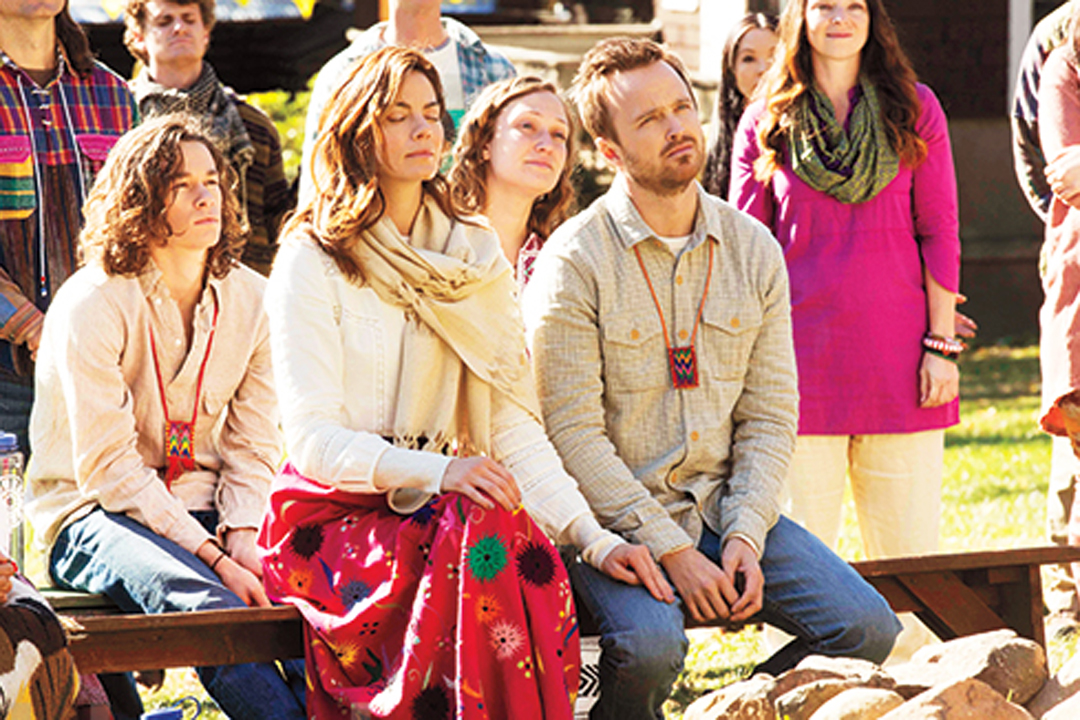
Like The Invitation, The Path nails its casting. It’s great to finally have Aaron Paul back in such a strong series that has loads of potential. Dancy and Monaghan are good too, and the former captures the “is he or isn’t he crazy” brilliance that he put on display in Hannibal. But it’s creator Jessica Goldberg and the team of writers’ clear understanding of and deep thoughtfulness about belief and faith that add such gravity to the series.
One of the common themes between The Invitation and The Path is pain (or trauma) and how we deal with it. The presence of grief in the lead characters’ lives makes The Invitation stand out from other films in the thriller/horror genre, specifically those that feature cults in their narratives. Eden and David don’t join a movement as a power grab. They are grieving individuals in search of healing and wholeness, and when they find it, they want to share it. However, both the film and the series–or at least the cults in them–suggest that pain must be transcended, which feels like another way of saying “bury it.” Pain is an impediment to a fuller, richer life in this world and a roadblock to life beyond it. But this attempt to deny pain or trauma’s hold on us is not only spiritually immature, it might be physically impossible. In her book, Trauma and Grace, Serene Jones consults neuroscientists who talk about the impossibility of physically processing traumatic experiences. Memories of them rattle around in victims’ brains like ping pong balls, forcing them to relive those experiences with the slightest trigger or without any warning at all. Inside Out might work wonders in these communities as it shows how sadness, pain, grief, and emptiness are parts of life that must be integrated into the rest of our experiences. They cannot be paved over on the path to a “better” existence.
Another central theme in both The Invitation and The Path is the question of how we enter into and belong to faith communities–or any community for that matter–and ultimately believe in the truth they espouse. There’s a complexity of belonging in the Meyerist Movement in The Path: some members seem to have been born into it (Sarah), others are wooed into it (Sean), and still others seem to be victims of abduction (the survivors of the hurricane in the opening scene of the first episode). In any event, it is the love and hospitality of the community that keeps most of them there. While there are levels of membership to the movement, progression up those levels isn’t a prerequisite of belonging to the community. But the longer people stay in the movement, and the more love they experience, the more compelled they seem to be to rise in the ranks.
On the other hand, in The Invitation, Eden and David take a radically different approach. Unfortunately, they are of a more violent (psychologically and spiritually) mindset. They expect–almost demand–that their friends see the sense (and the beauty) of what they’ve experienced. They take offense at all questions or suspicions, and so the “logic” and “beauty” of what they’ve experienced is lost on their friends as it comes from a place of frustration rather than love. They miss an integral component of belief–one that was essential to their own “spiritual awakening”–the importance of community. In his new book, On Purpose: How We Create the Meaning of Life, Paul Froese frequently refers to Communities of Truth, which could be denominations, congregations, political parties, etc. He writes, “Communities of Truth build confidence in their beliefs through emotional attachment rather than reasoned debate. For this reason, the power of Truth does not lie in a religion’s doctrine or sacred text but rather in the dedication followers have to each other. Feelings of group love are fused with conceptions of religious Truth.”
This echoes something that Phyllis Tickle discusses in The Great Emergence: How Christianity is Changing and Why, specifically the dichotomy for thinking about how people participate in religious communities. Traditional understandings rely on a model of believe, behave, belong: you believe a particular theology, behave accordingly, and then experience full membership in a community. But Tickle (and Froese) argue that the reverse (belong, behave, believe) is actually a truer assessment of what happens: a community envelops you in love and care, you begin to align your behavior with that of the group, and then you fully believe in the foundational truths of the community.
If we consider this dichotomy when viewing The Path, we see further complexities at work. Like Eden and David’s approach to their friends, there’s a violent streak in the Meyerist Movement as well, one that’s more characteristic of the believe/behave/belong model than its alternative. A defector from the movement has some damning accusations against her former community. At the same time, the movement’s means of dealing with transgression (or regression) is also violent: doing “fourteen days in-house,” isn’t the staycation it might sound like. But, in the end, it might be these tensions–this realization that religious movements and communities aren’t all light or all darkness–that set these narratives apart from so many others.
While The Invitation reaches an unsettling conclusion, it remains to be seen, of course, where The Path is taking us. However, it’s first three episodes are strong enough to demand more attention and devotion. As it stands, both The Invitation and The Path are two of the more thoughtful entries in the cult sub-genre since Martha Marcy May Marlene.
The Invitation (100 mins.) is rated R for violence and language and is in limited theatrical release and available on iTunes, Amazon, Google Play, Vimeo, and Vudu.
The first three episodes of The Path (60 mins.) are streaming on Hulu. New episodes release on Wednesdays.
Previous Post

April 12, 2016
#KillerSerials: THE PATH, Episodes 1 & 2
Next Post
April 15, 2016 #KillerSerials: THE PATH, Eps. 3 & 4
Browse Our Archives
Select a Category Classics DVD Film Music News Pop Culture Events Print Sports Television Uncategorized Video Games
Select a Month March 2017 February 2017 January 2017 December 2016 November 2016 October 2016 September 2016 August 2016 July 2016 June 2016 May 2016 April 2016 March 2016 February 2016 January 2016 December 2015 November 2015 October 2015 September 2015 August 2015 July 2015 June 2015 May 2015 April 2015 March 2015 February 2015 January 2015 December 2014 November 2014 October 2014 September 2014 August 2014 July 2014 June 2014 May 2014 April 2014 March 2014 February 2014 January 2014 December 2013 November 2013 October 2013 September 2013 August 2013 July 2013 June 2013 May 2013 April 2013 March 2013 February 2013 January 2013 December 2012 November 2012 October 2012 September 2012 August 2012 July 2012 June 2012 May 2012 April 2012 March 2012 February 2012 January 2012 December 2011 November 2011 October 2011 September 2011 August 2011 July 2011 June 2011 May 2011 April 2011 March 2011 February 2011 January 2011 December 2010 November 2010 October 2010 September 2010 August 2010 July 2010 June 2010 May 2010 April 2010 March 2010 February 2010 January 2010 December 2009 November 2009 October 2009 September 2009 August 2009 July 2009 June 2009 May 2009 April 2009 March 2009 February 2009 January 2009 December 2008 November 2008 October 2008 September 2008 August 2008 July 2008 June 2008 May 2008 April 2008 March 2008 February 2008 January 2008 December 2007 November 2007 October 2007 September 2007 August 2007 July 2007 June 2007 May 2007 April 2007 March 2007
Follow Us!
TAKE THE
Religious Wisdom Quiz
Which mountain is traditionally believed to be where Noah's Ark came to rest?
Select your answer to see how you score.
Mount Ararat Mount Sinai Mount Hermon Mount Carmel
Related posts from Pop Theology
#KillerSerials: THE PATH, S2 Ep. 11

#KillerSerials: THE PATH, S2 Ep. 10

At SXSW2017: May It Last: A Portrait of...
TRENDING AT PATHEOS Progressive Christian

Why Christians Have a Sacred Duty to Vote:...
The Bible offers strong support for the sacred duty to vote. Here...

What Being a Modern-Day Apostle Means to Me
In my last column, I discussed the ins and outs of modern-day...

Did Ancient China Once Worship the God of...
Across human history, a common thread weaves through the origins of the...

Love Your Neighbor – Including Earth-Kin: Lev. 19,...
God’s command to love your neighbor means acting in an ethical and...

Lead a Church Study of “Jesus and Lao...
Guest writer Jack Thomas (The Irreverent Reverend) reflects on leading his church...

Principles for Understanding the Apostolic Ministry Today
Whenever people discover that my formal ministry title is "apostle," as in...
view all Progressive Christian blogs
Ad-Free & Subscriber Log-In Subscription Support
- About Us
- 2026 Calendar
- Videos
- Podcasts
- Library of World Religions
- Faith In Media Tracker
- Advertise With Us
- Write for Us
- Privacy Policy
- Terms of Service
- Do Not Sell My Data
- Contact Us
- Radiant Digital
- Manage Newsletter Subscriptions
- Unsubscribe From Notifications
- Sitemap
Copyright 2008-2026, Patheos. All rights reserved.
Subscription Support Ad-Free & Subscriber Log-In
Follow Patheos