
BuddhistCatholicContemplativeEvangelicalGeneral ChristianHinduJewishLatter-day SaintMuslimNew VisionsProgressive Christian
Beliefs
- Buddhist
- Catholic
- Contemplative
- Evangelical
- General Christian
- Hindu
- Jewish
- Latter-day Saint
- More Voices
- Muslim
- New Visions
- Pagan
- Progressive Christian
Topics
- Religion News
- Food and Religion
- Sports and Religion
- Religious Art
- Religious Music and Entertainment
- Religious Events
- History and Religion
- Style and Religion
- Politics and Religion
- Women in Religion
- Recreation Outdoors and Religion
- Business Finance and Religion
- Careers Workplace and Religion
- Education and Religion
- Family Parenting and Religion
- Health Fitness and Religion
- Home and Religion
- Relationships and Religion
- Technology and Religion
- Travel and Religion
Columnists
- Buddhist Columnists
- Business Finance and Religion Columnists
- Careers Workplace and Religion Columnists
- Catholic Columnists
- Contemplative Columnists
- Education and Religion Columnists
- Evangelists Columnists
- Family Parenting and Religion Columnists
- General Christian Columnists
- Health Fitness and Religion Columnists
- Hindu Columnists
- History and Religion Columnists
- Home and Religion Columnists
- Jewish Columnists
- More Voices Columnists
- Latter Day Columnists
- Muslim Columnists
- New Visions Columnists
- Nonreligious Columnists
- Pagan Columnists
- Politics and Religion Columnists
- Progressive Columnists
- Recreation Outdoors and Religion Columnists
- Relationships and Religion Columnists
- Religion News Columnists
- Religious Art Columnists
- Religious Events Columnists
- Religious Music and Entertainment Columnists
- Sports and Religion Columnists
- Style and Religion Columnists
- Technology and Religion Columnists
- Travel and Religion Columnists
- Women in Religion Columnists
Resource Library
- 2026 Calendar
- Library of World Religions
- The 100 Most Holy Places on Earth
- Patheos Answers
- Podcasts
- Videos
- Faith Leaders Database
- Anglican Episcopalian
- Bahai
- Baptist
- Buddhism
- Christianity
- Confucianism
- Eastern Orthodoxy
- Hinduism
- Holiness and Pentecostal
- ISKCON
- Islam
- Judaism
- Lutheran
- Methodist
- The Church of Jesus Christ of Latter-day Saints
- New Age
- Paganism
- Presbytarian and Reformed
- Protestantism
- Religion Behind the Scenes
- Roman Catholic
- Scientology
- Shia Islam
- Sikhism
- Sufism
- Sunni Islam
- Taoism
- Zen
- See all religions
Research Tools
 Ad-Free & Subscriber Log-In Subscription Support
Ad-Free & Subscriber Log-In Subscription Support
Follow Patheos 

- Trending:
- Forgiveness
- |
- Marriage
- |
- Consciousness
- |
- Death Penalty
- |
- Election
- |
- Halloween
 Pop Theology
- Home
- Progressive Christian
- Religious Music & Entertainment
- Book Review: ON PURPOSE
Book Review: ON PURPOSE
Last updated on: April 18, 2016 at 8:21 am by J. Ryan Parker
Book Review: ON PURPOSE 2016-04-18T08:21:30-07:00 J. Ryan Parker
Patheos Explore the world's faith through different perspectives on religion and spirituality! Patheos has the views of the prevalent religions and spiritualities of the world.
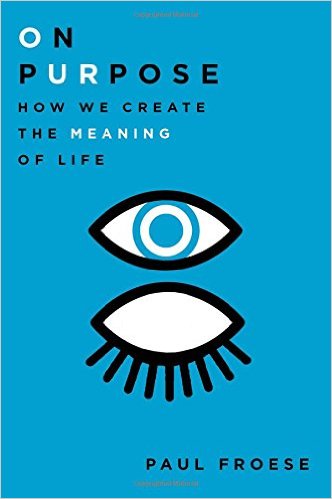
As election season trudges on and troubling laws are passed in places like Mississippi and North Carolina on a weekly basis, few books are as timely and necessary as Paul Froese’s On Purpose: How We Create the Meaning of Life.
On Purpose is not a self-help book. Froese (a sociology professor at Baylor University) isn’t as concerned with helping readers find their purpose in life as much as he is helping us understand how we (and others) find purpose and make meaning, whether it be secular, religious, political, or economic. Froese’s research will both help individual readers better understand how they have come to value what they hold dear and, more importantly, how those who think/believe/act differently have come to their own conclusions. Understanding the core similarities between various meaning-making processes could help us overcome what seem like insurmountable differences.
 The great gift of On Purpose is Froese’s assertion and clear articulation that meaning/values/purpose are not shaped in a vacuum. While we benefit from imagination—the ability to dream dreams and envision a future different from (brighter than?) our current circumstances—that too is shaped by our geographical, economic, and historical locations. Froese writes, “You don’t get to choose your purpose in life. It depends on systems of meaning ascribed to you by your social and historical circumstances, which determine your belief in Truth, your sense of self, and your experience of time. Together these define your purpose. Isn’t that uplifting! No, it is downright stultifying” (153). Of course, there’s a less depressing way of understanding this.
We are lured into, belong to, and are shaped by what Froese calls Communities of Truth. Froese reflects on these groups:
Communities of Truth build confidence in their beliefs through emotional attachment rather than reasoned debate. For this reason, the power of Truth does not lie in a religion’s doctrine or sacred text but rather in the dedication followers have to each other. Feelings of group love are fused with conceptions of religious Truth. […] Group loyalty also helps explain why believers are willing to pay the ultimate cost–martyrdom–for religious Truth. […] It may be more accurate to blame global terrorist activity on in-group love than out-group hate. (107, 110)
This begins to get at something that I discussed in a recent article on The Invitation and The Path, particularly how we understand our membership in religious communities. Froese’s comments here seem to echo Phyllis Tickle’s assertion that we belong, behave, and believe.
Of course, Communities of Truth evolve over time and across geographical distances. Froese does a good job of showing how some of our more “pressing” theological and religious disagreements are actually relatively new. He writes, “Without the printing press or the ability to read, average citizens form past eras could not be biblical literalists. Literalism requires a text and the skill to decipher its markings. For this reason, biblical literalism is modern, based on historical developments and community dynamics that made the Bible an accessible source for Truth” (40). Nevertheless, these disagreements fuel heated debates at best and violence at worst.
In the South, we had a saying, “There’s no mean like church mean.” Froese puts a more academic spin on this folk saying: “Ironically, the universal desire to be good is what drives people to be bad. Righteous groups tell their members that they are better and more moral than anyone else; this satisfies a powerful moral hunger in us all. […] Consequently, the most righteous individuals also tend to be the most obedient to moral authorities. Their sense of self is tied inextricably to the purpose of the group and in extreme cases may lead to terrible acts like suicide bombing” (98). Or passing laws to protect “religious liberty” while simultaneously discriminating against entire groups of people.
On Purpose is the good kind of academic work. While Froese bolsters his analyses with studies and surveys, facts and figures, there are also real implications for how readers can better understand their own lives and interact more peacefully with those who conceptualize their meaning and purpose in contrasting ways.
On Purpose is available on Amazon (in print or on Kindle).
Previous Post

April 15, 2016
"The Wise Kids" and the Apocalypse of Young Adulthood
Next Post

April 21, 2016 #KillerSerials: THE PATH, Ep. 5
Browse Our Archives
Select a Category Classics DVD Film Music News Pop Culture Events Print Sports Television Uncategorized Video Games
Select a Month March 2017 February 2017 January 2017 December 2016 November 2016 October 2016 September 2016 August 2016 July 2016 June 2016 May 2016 April 2016 March 2016 February 2016 January 2016 December 2015 November 2015 October 2015 September 2015 August 2015 July 2015 June 2015 May 2015 April 2015 March 2015 February 2015 January 2015 December 2014 November 2014 October 2014 September 2014 August 2014 July 2014 June 2014 May 2014 April 2014 March 2014 February 2014 January 2014 December 2013 November 2013 October 2013 September 2013 August 2013 July 2013 June 2013 May 2013 April 2013 March 2013 February 2013 January 2013 December 2012 November 2012 October 2012 September 2012 August 2012 July 2012 June 2012 May 2012 April 2012 March 2012 February 2012 January 2012 December 2011 November 2011 October 2011 September 2011 August 2011 July 2011 June 2011 May 2011 April 2011 March 2011 February 2011 January 2011 December 2010 November 2010 October 2010 September 2010 August 2010 July 2010 June 2010 May 2010 April 2010 March 2010 February 2010 January 2010 December 2009 November 2009 October 2009 September 2009 August 2009 July 2009 June 2009 May 2009 April 2009 March 2009 February 2009 January 2009 December 2008 November 2008 October 2008 September 2008 August 2008 July 2008 June 2008 May 2008 April 2008 March 2008 February 2008 January 2008 December 2007 November 2007 October 2007 September 2007 August 2007 July 2007 June 2007 May 2007 April 2007 March 2007
Follow Us!
TAKE THE
Religious Wisdom Quiz
Who saw the vision of the valley of dry bones?
Select your answer to see how you score.
Isaiah Jeremiah Daniel Ezekiel
Related posts from Pop Theology



#KillerSerials: An Interview with Kutter Callaway

Book Review: MUSLIMS AND THE MAKING OF AMERICA
TRENDING AT PATHEOS Progressive Christian

What Being a Modern-Day Apostle Means to Me
In my last column, I discussed the ins and outs of modern-day...

Did Ancient China Once Worship the God of...
Across human history, a common thread weaves through the origins of the...

Love Your Neighbor – Including Earth-Kin: Lev. 19,...
God’s command to love your neighbor means acting in an ethical and...

Lead a Church Study of “Jesus and Lao...
Guest writer Jack Thomas (The Irreverent Reverend) reflects on leading his church...

Pastoral Wisdom for Responding to Sermon Pushback
Getting sermon pushback on your social justice sermon? Learn practical, Proverbs-based strategies...

Principles for Understanding the Apostolic Ministry Today
Whenever people discover that my formal ministry title is "apostle," as in...
view all Progressive Christian blogs
Ad-Free & Subscriber Log-In Subscription Support
- About Us
- 2026 Calendar
- Videos
- Podcasts
- Library of World Religions
- Faith In Media Tracker
- Advertise With Us
- Write for Us
- Privacy Policy
- Terms of Service
- Do Not Sell My Data
- Contact Us
- Radiant Digital
- Manage Newsletter Subscriptions
- Unsubscribe From Notifications
- Sitemap
Copyright 2008-2026, Patheos. All rights reserved.
Subscription Support Ad-Free & Subscriber Log-In
Follow Patheos