
BuddhistCatholicContemplativeEvangelicalGeneral ChristianHinduJewishLatter-day SaintMuslimNew VisionsProgressive Christian
Beliefs
- Buddhist
- Catholic
- Contemplative
- Evangelical
- General Christian
- Hindu
- Jewish
- Latter-day Saint
- More Voices
- Muslim
- New Visions
- Pagan
- Progressive Christian
Topics
- Religion News
- Food and Religion
- Sports and Religion
- Religious Art
- Religious Music and Entertainment
- Religious Events
- History and Religion
- Style and Religion
- Politics and Religion
- Women in Religion
- Recreation Outdoors and Religion
- Business Finance and Religion
- Careers Workplace and Religion
- Education and Religion
- Family Parenting and Religion
- Health Fitness and Religion
- Home and Religion
- Relationships and Religion
- Technology and Religion
- Travel and Religion
Columnists
- Buddhist Columnists
- Business Finance and Religion Columnists
- Careers Workplace and Religion Columnists
- Catholic Columnists
- Contemplative Columnists
- Education and Religion Columnists
- Evangelists Columnists
- Family Parenting and Religion Columnists
- General Christian Columnists
- Health Fitness and Religion Columnists
- Hindu Columnists
- History and Religion Columnists
- Home and Religion Columnists
- Jewish Columnists
- More Voices Columnists
- Latter Day Columnists
- Muslim Columnists
- New Visions Columnists
- Nonreligious Columnists
- Pagan Columnists
- Politics and Religion Columnists
- Progressive Columnists
- Recreation Outdoors and Religion Columnists
- Relationships and Religion Columnists
- Religion News Columnists
- Religious Art Columnists
- Religious Events Columnists
- Religious Music and Entertainment Columnists
- Sports and Religion Columnists
- Style and Religion Columnists
- Technology and Religion Columnists
- Travel and Religion Columnists
- Women in Religion Columnists
Resource Library
- 2026 Calendar
- Library of World Religions
- The 100 Most Holy Places on Earth
- Patheos Answers
- Podcasts
- Videos
- Faith Leaders Database
- Anglican Episcopalian
- Bahai
- Baptist
- Buddhism
- Christianity
- Confucianism
- Eastern Orthodoxy
- Hinduism
- Holiness and Pentecostal
- ISKCON
- Islam
- Judaism
- Lutheran
- Methodist
- The Church of Jesus Christ of Latter-day Saints
- New Age
- Paganism
- Presbytarian and Reformed
- Protestantism
- Religion Behind the Scenes
- Roman Catholic
- Scientology
- Shia Islam
- Sikhism
- Sufism
- Sunni Islam
- Taoism
- Zen
- See all religions
Research Tools
 Ad-Free & Subscriber Log-In Subscription Support
Ad-Free & Subscriber Log-In Subscription Support
Follow Patheos 

- Trending:
- Forgiveness
- |
- Marriage
- |
- Consciousness
- |
- Death Penalty
- |
- Election
- |
- Halloween
 Pop Theology
- Home
- Progressive Christian
- Religious Music & Entertainment
- Killer Serials: Breakthrough, Ep. 3 “Decoding the Brain”
Killer Serials: Breakthrough, Ep. 3 “Decoding the Brain”
Last updated on: November 16, 2015 at 7:32 am by J. Ryan Parker
Killer Serials: Breakthrough, Ep. 3 “Decoding the Brain” 2015-11-16T07:32:19-08:00 J. Ryan Parker
Patheos Explore the world's faith through different perspectives on religion and spirituality! Patheos has the views of the prevalent religions and spiritualities of the world.
Tony Jones and I dig into the third episode of Breakthrough, which continues to ask questions about what it means to be human and the role of memories and remembering in shaping our identities.
RP: We’ve got yet another fascinating episode on our hands in “Decoding the Brain.” However, I missed Paul Giamatti in this episode and that personal journey motif that made the last episode even more compelling. This week’s episode continues to ask questions that get at the heart of our identity. What makes us who we are? How does our brain work, particularly in terms of memory- and decision-making? How do our memories shape our identities.
This week’s episode is especially relevant given the attacks in Paris on Friday night. Much of the episode discusses the way our brain process events, specifically traumatic events, those that scientists call “flashbulb” memories. The episode looks at people who witnessed the events of 9/11 first-hand and how their memories of that event change year after year. We actively change our memories every time we remember. Scientists know that good memories can become bad ones over time. What I find more interesting is whether or not bad memories can be redeemed over time.
The rest of the episode gives attention to a number of neuroscientists doing revolutionary work that has implications for people suffering from epilepsy, PTSD, depression, Alzheimer’s, and a host of other neurological diseases.
TJ: Put these two theses together, both stated on the show:
Thesis A: Memories define our identities.
Thesis B: Memories are quite plastic and change with time and influence.
Put those things together, and I cannot help but conclude that human identity — and, therefore, behavior — is very easily manipulated. This does have implications for the terrorist attacks in Paris because it shows us once again how people are radicalized by terrorist organizations. It’s simply not that hard to convince someone of something, especially if they are in an already vulnerable state.
And I’m glad that this episode at least mentions the ethical problems that come with opti-genetics. And the fact that MIT would not let the documentarians film their experiments with rats is telling.
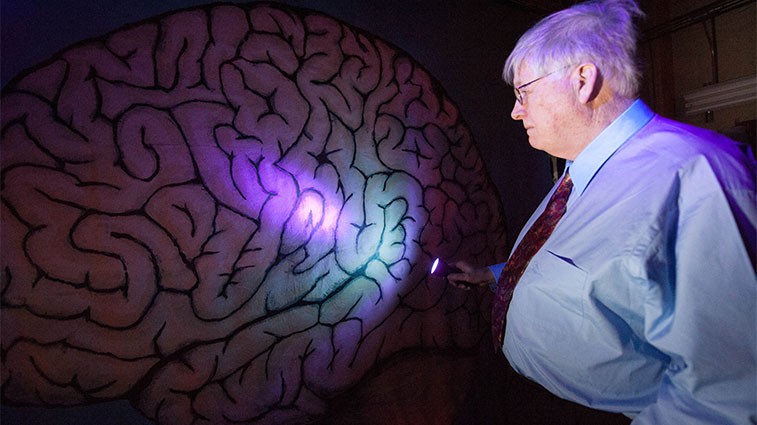
RP: I think one of the most fascinating topics of discussion in this episode is the analysis of how we make choices. Science is showing that we move through much of our lives on auto-pilot…that our subconscious makes the majority of the choices for us up to seven seconds before we are consciously aware that we are making them. For me, this seems to have profound implications for discussions of ethics and morality. To what extent can we be held responsible for choices that might literally be out of our conscious control?
All of these insights are even more profound when you consider the closing statement in the episode: if the human brain can be perceived as a sophisticated Swiss timepiece, then the leading neuroscientists in the world are like first graders in their understanding of it.
Finally, and I’m having some fun with this, but there are more Christ-like moments in the series. Some historians and theologians argue that Biblical accounts of demon-possession might well have been people who suffered from epileptic seizures. We know that Jesus healed them by casting out those demons. In “Decoding the Brain,” we see a scientist implant tiny electric wires into the brains of patients suffering from epileptic seizures. This procedure has resulted in a 92% decrease in seizures with no discernible decrease in cognitive functions.
TJ: That’s a great point about Jesus’ miracles. Maybe he was implanting a metaphysical electrode in the demoniac’s brain? The part of the episode about seizures was fascinating. First, it shows just how fragile the human brain really is — one little thing can put it off kilter, and basically ruin someone’s life. But now surgeons implant electrodes that permanently suppress those seizures. To watch that surgery is breathtaking. Here’s one line from the narration: “They move the electrode a fraction of a millimeter…”
The theological question it raises for me is this: What was the state of Jesus’ brain? All of the episodes in this series are about breakthrough science, and each is pure materialist science (at least so far). What made Jesus special? Was there something materially different about his brain? Did God implant a divinity electrode in there?
We’ll be back next Monday with a look at the next episode, “The Age of Aging.”
Breakthrough airs on Nat Geo on Sunday nights at 9. You can also stream all episodes online.
Previous Post
November 9, 2015
Killer Serials: Breakthrough Ep. 2, “More Than Human”
Next Post

November 16, 2015 This Ain't a Sunday School Lesson for Kids
Browse Our Archives
Select a Category Classics DVD Film Music News Pop Culture Events Print Sports Television Uncategorized Video Games
Select a Month March 2017 February 2017 January 2017 December 2016 November 2016 October 2016 September 2016 August 2016 July 2016 June 2016 May 2016 April 2016 March 2016 February 2016 January 2016 December 2015 November 2015 October 2015 September 2015 August 2015 July 2015 June 2015 May 2015 April 2015 March 2015 February 2015 January 2015 December 2014 November 2014 October 2014 September 2014 August 2014 July 2014 June 2014 May 2014 April 2014 March 2014 February 2014 January 2014 December 2013 November 2013 October 2013 September 2013 August 2013 July 2013 June 2013 May 2013 April 2013 March 2013 February 2013 January 2013 December 2012 November 2012 October 2012 September 2012 August 2012 July 2012 June 2012 May 2012 April 2012 March 2012 February 2012 January 2012 December 2011 November 2011 October 2011 September 2011 August 2011 July 2011 June 2011 May 2011 April 2011 March 2011 February 2011 January 2011 December 2010 November 2010 October 2010 September 2010 August 2010 July 2010 June 2010 May 2010 April 2010 March 2010 February 2010 January 2010 December 2009 November 2009 October 2009 September 2009 August 2009 July 2009 June 2009 May 2009 April 2009 March 2009 February 2009 January 2009 December 2008 November 2008 October 2008 September 2008 August 2008 July 2008 June 2008 May 2008 April 2008 March 2008 February 2008 January 2008 December 2007 November 2007 October 2007 September 2007 August 2007 July 2007 June 2007 May 2007 April 2007 March 2007
Follow Us!
TAKE THE
Religious Wisdom Quiz
What does "Satan" mean in Hebrew?
Select your answer to see how you score.
Adversary Destroyer Deceiver Murderer
Related posts from Pop Theology

#KillerSerials: THE PATH, S2 Ep. 11
#KillerSerials: THE PATH, S2 Ep. 10

#KillerSerials: THE PATH S2, E8
TRENDING AT PATHEOS Progressive Christian

Why Christians Have a Sacred Duty to Vote:...
The Bible offers strong support for the sacred duty to vote. Here...

What Being a Modern-Day Apostle Means to Me
In my last column, I discussed the ins and outs of modern-day...

Did Ancient China Once Worship the God of...
Across human history, a common thread weaves through the origins of the...

Love Your Neighbor – Including Earth-Kin: Lev. 19,...
God’s command to love your neighbor means acting in an ethical and...

Lead a Church Study of “Jesus and Lao...
Guest writer Jack Thomas (The Irreverent Reverend) reflects on leading his church...

Principles for Understanding the Apostolic Ministry Today
Whenever people discover that my formal ministry title is "apostle," as in...
view all Progressive Christian blogs
Ad-Free & Subscriber Log-In Subscription Support
- About Us
- 2026 Calendar
- Videos
- Podcasts
- Library of World Religions
- Faith In Media Tracker
- Advertise With Us
- Write for Us
- Privacy Policy
- Terms of Service
- Do Not Sell My Data
- Contact Us
- Radiant Digital
- Manage Newsletter Subscriptions
- Unsubscribe From Notifications
- Sitemap
Copyright 2008-2026, Patheos. All rights reserved.
Subscription Support Ad-Free & Subscriber Log-In
Follow Patheos