
BuddhistCatholicContemplativeEvangelicalGeneral ChristianHinduJewishLatter-day SaintMuslimNew VisionsProgressive Christian
Beliefs
- Buddhist
- Catholic
- Contemplative
- Evangelical
- General Christian
- Hindu
- Jewish
- Latter-day Saint
- More Voices
- Muslim
- New Visions
- Pagan
- Progressive Christian
Topics
- Religion News
- Food and Religion
- Sports and Religion
- Religious Art
- Religious Music and Entertainment
- Religious Events
- History and Religion
- Style and Religion
- Politics and Religion
- Women in Religion
- Recreation Outdoors and Religion
- Business Finance and Religion
- Careers Workplace and Religion
- Education and Religion
- Family Parenting and Religion
- Health Fitness and Religion
- Home and Religion
- Relationships and Religion
- Technology and Religion
- Travel and Religion
Columnists
- Buddhist Columnists
- Business Finance and Religion Columnists
- Careers Workplace and Religion Columnists
- Catholic Columnists
- Contemplative Columnists
- Education and Religion Columnists
- Evangelists Columnists
- Family Parenting and Religion Columnists
- General Christian Columnists
- Health Fitness and Religion Columnists
- Hindu Columnists
- History and Religion Columnists
- Home and Religion Columnists
- Jewish Columnists
- More Voices Columnists
- Latter Day Columnists
- Muslim Columnists
- New Visions Columnists
- Nonreligious Columnists
- Pagan Columnists
- Politics and Religion Columnists
- Progressive Columnists
- Recreation Outdoors and Religion Columnists
- Relationships and Religion Columnists
- Religion News Columnists
- Religious Art Columnists
- Religious Events Columnists
- Religious Music and Entertainment Columnists
- Sports and Religion Columnists
- Style and Religion Columnists
- Technology and Religion Columnists
- Travel and Religion Columnists
- Women in Religion Columnists
Resource Library
- 2026 Calendar
- Library of World Religions
- The 100 Most Holy Places on Earth
- Patheos Answers
- Podcasts
- Videos
- Faith Leaders Database
- Anglican Episcopalian
- Bahai
- Baptist
- Buddhism
- Christianity
- Confucianism
- Eastern Orthodoxy
- Hinduism
- Holiness and Pentecostal
- ISKCON
- Islam
- Judaism
- Lutheran
- Methodist
- The Church of Jesus Christ of Latter-day Saints
- New Age
- Paganism
- Presbytarian and Reformed
- Protestantism
- Religion Behind the Scenes
- Roman Catholic
- Scientology
- Shia Islam
- Sikhism
- Sufism
- Sunni Islam
- Taoism
- Zen
- See all religions
Research Tools
 Ad-Free & Subscriber Log-In Subscription Support
Ad-Free & Subscriber Log-In Subscription Support
Follow Patheos 

- Trending:
- Forgiveness
- |
- Marriage
- |
- Consciousness
- |
- Death Penalty
- |
- Election
- |
- Halloween
 Pop Theology
- Home
- Progressive Christian
- Religious Music & Entertainment
- Church in PA Does Peter Gabriel Mass
Church in PA Does Peter Gabriel Mass
Last updated on: September 4, 2015 at 9:53 pm by Richard Lindsay
Church in PA Does Peter Gabriel Mass 2015-09-04T21:53:13-07:00 Richard Lindsay
Patheos Explore the world's faith through different perspectives on religion and spirituality! Patheos has the views of the prevalent religions and spiritualities of the world.
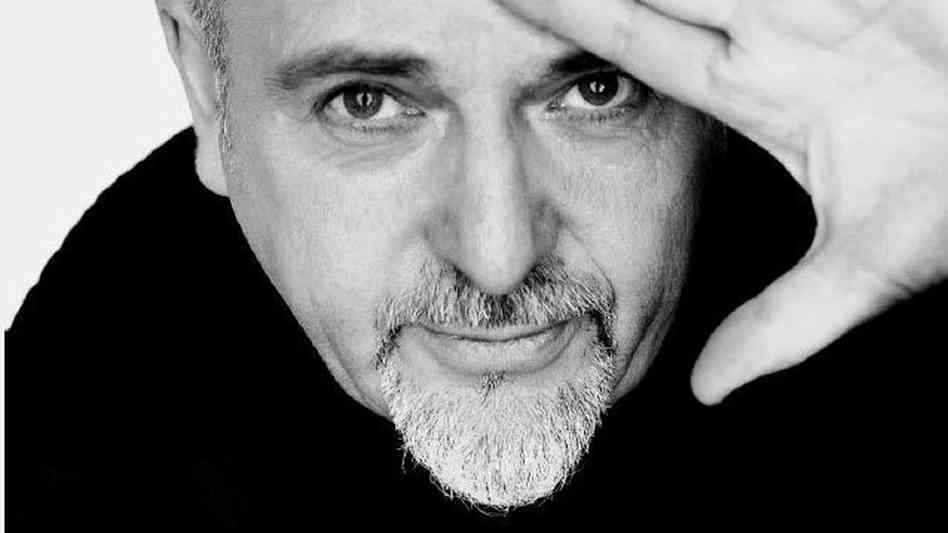 No more miracles, loaves and fishes/Been too busy with the washing of the dishes.
— “Lay Your Hands on Me” Peter Gabriel
There was a buzz among some of my Facebook friends last week when one of my former students, The Rev. Lauren Schoek, posted an upcoming service at the church where she serves, St. James Episcopal in Lancaster, PA. It was a Saturday-night Eucharist featuring the music of Peter Gabriel. Many prog-rock-and-theology nerds (and there are more of us than you think) on three coasts were trying to arrange their travel calendars to get to Lancaster last Saturday night.
Fortunately, the service was livestreamed and archived. And examining the selection of pop/Episcopal masses on the Web site, it looks like Saint James is onto something. Peter Gabriel was just one of a long list of popular music legends the church has worked into its worship schedule. Past Eucharists have featured the music of John Lennon, Neil Young, Elvis Costello, Johnny Cash, Leonard Cohen, Chet Baker, Walt Disney films, even the Statler Brothers and the Dixie Chicks (?).
I watched the Peter Gabriel mass on the archive and was really struck with how well the music fit the service.
Gabriel’s music was mostly used in the “contemplative” portions of the service, where you might have preludes, anthems, or offertories. Selections included, “Here Comes the Flood,” “Mercy Street,” “Lay Your Hands on Me,” “Don’t Give Up,” “Father, Son,” and of course, “Solsbury Hill.” (Not surprising that they avoided some of Gabriel’s more famous MTV hits like “Sledgehammer” and “Shock the Monkey.”)
St. James has a talented and versatile music director, J.R. Ankey, who, bald and grey-goateed, bears a striking resemblance to the sixty-five year-old rocker. The band he’s put together, a cross-generational mix of drummers, guitarists, keyboardists, singers, and even a rock-n-roll cellist, did credible renditions of all the songs, with Ankey singing most of the leads.
In his homily, the rector of St. James, the Rev. David Warner Peck, suggested that the congregation has “an appetite for truth planted within us.” “We are not a place,” Peck said, “that wants to put Jesus in one box and culture in another, as if it was His kryptonite.”
Peck drew comparison between the ritual of the Eucharist and the crowd-surfing ritual of the rock concert: “What I hope we experience in tonight’s Holy Communion is an even larger version of [the communion] I experienced as a teenager in an outdoor concert in Cleveland. Where, with thousands of people I will never know or meet [again], we found something break open in our hearts as we passed Peter Gabriel over our heads.”
This feeling of shared oneness that comes over us in rock concerts, sports events, and occasionally, but not nearly frequently enough, at church services, is what Emile Durkheim called “collective effervescence.” It’s that tingle in the spine you get when everybody’s singing along with the same song, cheering for the same team, or involved and spiritually open during a worship experience.
The thing I loved about witnessing this service was how the “sacred” liturgy, and “secular” music alternately contrasted and cohered with each other. Peter Gabriel’s music often touches on religious themes, but in a vernacular style. Hearing it as part of a liturgy brings the grit, pain, disappointment, and joy of everyday life into a sacred setting. This is what we should be doing in worship: bringing our whole selves–including our quotidian culture expressed in pop songs, YouTube videos, and movie fandoms—and laying it before God.
I’ve written before about how mainline churches need to change and modernize their worship culture in order to reach out beyond the dwindling numbers of dyed-in-the-wool and dedicated-unto-death churchgoers who trickle into services on Sunday mornings. Based on some recent writings of a certain evangelical-to-Episcopal convert, there seems to be some idea that the Millennials, the spiritual-but-not religious, and the “nones” are just waiting for the right invitation to come to church. No significant change in how we do church is needed — not the organizational structure, not the theology, not the settings we meet in, and especially not the worship. Once they discover that we’re socially liberal and they can bring their doubts and queer friends to worship, they’ll start beating down the doors.
I’ve said it before and I’ll say it again: this is a delusion. There is no significant cohort of young people who are desperate to be introduced to church anthems and congregational hymnody. We need to take the words of Marshall McLuhan seriously: the medium is the message. Progressive congregations that adhere to anachronistic worship styles at the expense of cultural relevance do not appear progressive to casual observers. They just look like the same old Church.
This does not mean all ancient tradition must be jettisoned, but it may need to be reimagined and restructured for a postmodern audience. St. James Episcopal seems to have found a way to adhere to the tradition of the Book of Common Prayer and bring it to new relevance. Mixing traditional liturgy and modern pop songs may not be the only way to do it, but it might be one way. I’m sure there are multiple ways of reaching out to a postmodern, indeed, post-Christian culture. But churches need to get on with it–start taking risks and trying new things, before there’s no liberal Christian movement left to worship with.
In the mean time, I’m looking forward to the grunge mass – please watch the candles when you mosh.
Previous Post

September 2, 2015
On Kim Davis of Rowan County, Kentucky
Next Post

September 8, 2015 Killer Serials: MR. ROBOT, Season Finale
Browse Our Archives
Select a Category Classics DVD Film Music News Pop Culture Events Print Sports Television Uncategorized Video Games
Select a Month March 2017 February 2017 January 2017 December 2016 November 2016 October 2016 September 2016 August 2016 July 2016 June 2016 May 2016 April 2016 March 2016 February 2016 January 2016 December 2015 November 2015 October 2015 September 2015 August 2015 July 2015 June 2015 May 2015 April 2015 March 2015 February 2015 January 2015 December 2014 November 2014 October 2014 September 2014 August 2014 July 2014 June 2014 May 2014 April 2014 March 2014 February 2014 January 2014 December 2013 November 2013 October 2013 September 2013 August 2013 July 2013 June 2013 May 2013 April 2013 March 2013 February 2013 January 2013 December 2012 November 2012 October 2012 September 2012 August 2012 July 2012 June 2012 May 2012 April 2012 March 2012 February 2012 January 2012 December 2011 November 2011 October 2011 September 2011 August 2011 July 2011 June 2011 May 2011 April 2011 March 2011 February 2011 January 2011 December 2010 November 2010 October 2010 September 2010 August 2010 July 2010 June 2010 May 2010 April 2010 March 2010 February 2010 January 2010 December 2009 November 2009 October 2009 September 2009 August 2009 July 2009 June 2009 May 2009 April 2009 March 2009 February 2009 January 2009 December 2008 November 2008 October 2008 September 2008 August 2008 July 2008 June 2008 May 2008 April 2008 March 2008 February 2008 January 2008 December 2007 November 2007 October 2007 September 2007 August 2007 July 2007 June 2007 May 2007 April 2007 March 2007
Follow Us!
TAKE THE
Religious Wisdom Quiz
What was the primary inheritance method in biblical times?
Select your answer to see how you score.
Equal division Oldest daughter Firstborn son Youngest child
Related posts from Pop Theology
The Mastodon In The Room: A Conversation with...

At SXSW2017: Music Festival Day 5
At SXSW2017: Music Festival Day 4
At SXSW2017: Music Festival Day 3
TRENDING AT PATHEOS Progressive Christian

What Being a Modern-Day Apostle Means to Me
In my last column, I discussed the ins and outs of modern-day...

Did Ancient China Once Worship the God of...
Across human history, a common thread weaves through the origins of the...

Love Your Neighbor – Including Earth-Kin: Lev. 19,...
God’s command to love your neighbor means acting in an ethical and...

Lead a Church Study of “Jesus and Lao...
Guest writer Jack Thomas (The Irreverent Reverend) reflects on leading his church...

Pastoral Wisdom for Responding to Sermon Pushback
Getting sermon pushback on your social justice sermon? Learn practical, Proverbs-based strategies...

Principles for Understanding the Apostolic Ministry Today
Whenever people discover that my formal ministry title is "apostle," as in...
view all Progressive Christian blogs
Ad-Free & Subscriber Log-In Subscription Support
- About Us
- 2026 Calendar
- Videos
- Podcasts
- Library of World Religions
- Faith In Media Tracker
- Advertise With Us
- Write for Us
- Privacy Policy
- Terms of Service
- Do Not Sell My Data
- Contact Us
- Radiant Digital
- Manage Newsletter Subscriptions
- Unsubscribe From Notifications
- Sitemap
Copyright 2008-2026, Patheos. All rights reserved.
Subscription Support Ad-Free & Subscriber Log-In
Follow Patheos