
BuddhistCatholicContemplativeEvangelicalGeneral ChristianHinduJewishLatter-day SaintMuslimNew VisionsProgressive Christian
Beliefs
- Buddhist
- Catholic
- Contemplative
- Evangelical
- General Christian
- Hindu
- Jewish
- Latter-day Saint
- More Voices
- Muslim
- New Visions
- Pagan
- Progressive Christian
Topics
- Religion News
- Food and Religion
- Sports and Religion
- Religious Art
- Religious Music and Entertainment
- Religious Events
- History and Religion
- Style and Religion
- Politics and Religion
- Women in Religion
- Recreation Outdoors and Religion
- Business Finance and Religion
- Careers Workplace and Religion
- Education and Religion
- Family Parenting and Religion
- Health Fitness and Religion
- Home and Religion
- Relationships and Religion
- Technology and Religion
- Travel and Religion
Columnists
- Buddhist Columnists
- Business Finance and Religion Columnists
- Careers Workplace and Religion Columnists
- Catholic Columnists
- Contemplative Columnists
- Education and Religion Columnists
- Evangelists Columnists
- Family Parenting and Religion Columnists
- General Christian Columnists
- Health Fitness and Religion Columnists
- Hindu Columnists
- History and Religion Columnists
- Home and Religion Columnists
- Jewish Columnists
- More Voices Columnists
- Latter Day Columnists
- Muslim Columnists
- New Visions Columnists
- Nonreligious Columnists
- Pagan Columnists
- Politics and Religion Columnists
- Progressive Columnists
- Recreation Outdoors and Religion Columnists
- Relationships and Religion Columnists
- Religion News Columnists
- Religious Art Columnists
- Religious Events Columnists
- Religious Music and Entertainment Columnists
- Sports and Religion Columnists
- Style and Religion Columnists
- Technology and Religion Columnists
- Travel and Religion Columnists
- Women in Religion Columnists
Resource Library
- 2026 Calendar
- Library of World Religions
- The 100 Most Holy Places on Earth
- Patheos Answers
- Podcasts
- Videos
- Faith Leaders Database
- Anglican Episcopalian
- Bahai
- Baptist
- Buddhism
- Christianity
- Confucianism
- Eastern Orthodoxy
- Hinduism
- Holiness and Pentecostal
- ISKCON
- Islam
- Judaism
- Lutheran
- Methodist
- The Church of Jesus Christ of Latter-day Saints
- New Age
- Paganism
- Presbytarian and Reformed
- Protestantism
- Religion Behind the Scenes
- Roman Catholic
- Scientology
- Shia Islam
- Sikhism
- Sufism
- Sunni Islam
- Taoism
- Zen
- See all religions
Research Tools
 Ad-Free & Subscriber Log-In Subscription Support
Ad-Free & Subscriber Log-In Subscription Support
Follow Patheos 

- Trending:
- Forgiveness
- |
- Marriage
- |
- Consciousness
- |
- Death Penalty
- |
- Election
- |
- Halloween
 Pop Theology
- Home
- Progressive Christian
- Religious Music & Entertainment
- Cross Roads Faith And Film Renewal: Cannes Review of “Filosofi Kopi”
Cross Roads Faith And Film Renewal: Cannes Review of “Filosofi Kopi”
Last updated on: May 21, 2015 at 11:34 am by kdickson
Cross Roads Faith And Film Renewal: Cannes Review of “Filosofi Kopi” 2015-05-21T11:34:29-07:00 kdickson
Patheos Explore the world's faith through different perspectives on religion and spirituality! Patheos has the views of the prevalent religions and spiritualities of the world.
For some people, coffee is simply a carrier of caffeine that fuels a dulled mind and a tired body. To Coffee-philes, it’s much more than that: it is one of the great joys of life. Filosofi Kopi is a film brewed for the latter group, though in reality, the message can be generalized for the masses as we all have some interest, hobby, or passion that generates joy and meaning in our life. For some it’s coffee, for others wine, for others, still, it’s cinema. The fact that for one person coffee is a commodity and for another a spiritual experience simply indicates the diversity of interests and passions in the world.

Set in Indonesia, one of the largest coffee producers in the world, Filosofi Kopi (directed by Angga Dwimas Sasongk) is the story of Jody (Rio Dewanto) and Ben (Chicco Jerikho), two good friends in their twenties whose lives have been complicated by past events and the actions of others. They seek to rise above their present circumstances by opening and running a coffee shop. While one wants to erase debt built up by his father, debt he soon learns was created to fund his education, the other wants to produce the finest coffee as a way to get past the traumatic disintegration of his coffee-growing family.
The film opens with the revelation that the shop, Filosofi Kopi, is failing and, unless something changes soon, will close. There is a hint that some of the debt is owed to people who would do more than take ownership of the building. It is also evident early that the two partners have different agendas, business student Jody seeks to make the Filosofi Kopi profitable by expanding services such as offering WiFi and opening during the lunch hour, as well as cutting expenses by purchasing cheaper, lower grade coffee beans. Coffee master Ben believes that only good coffee will make the shop successful, and therefore the shop should buy only the best beans. Ben also considers ancillary things such as WiFi a distraction from the “superior coffee experience” that he believes Filosofi Kopi provides.
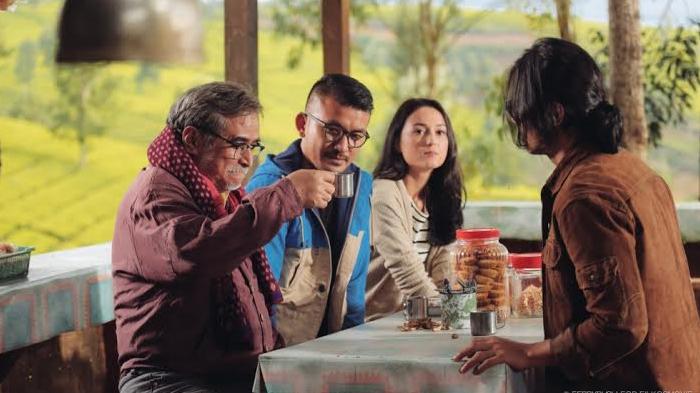
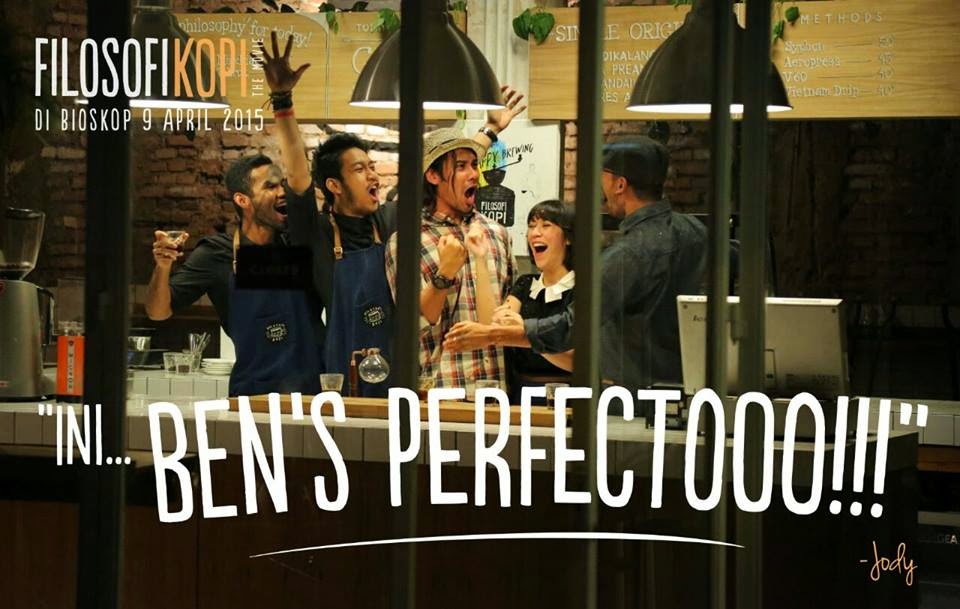 Into this stalemate walks a wealthy businessman, who offers them a challenge and a life-line. If they can brew the finest cup of coffee in Jakarta, he will reward them with enough money to decrease their debt and save the shop. After spending more money on very expensive coffee beans and two weeks finding the right blend, Ben and Jodi believe they have blended the perfect cup, and begin selling it under the name, “Ben’s Perfectooo!” All is well until an international coffee grader, El (Julie Estelle) comes into the shop and is less than impressed. She tells them that she has already tasted the best coffee at a some miles from Jakarta, and offers to take Jody and Ben to meet the grower and brewer. During Ben’s return to a coffee plantation and encounter with a grower much like his father, we learn his backstory. As often happened throughout Indonesia, Ben’s family was forced to abandon coffee beans for palm tree oil, a far more profitable crop. This changes Ben’s father into an angry volatile man, and it soon becomes apparent that Ben traveled to Jakarta to escape his father.
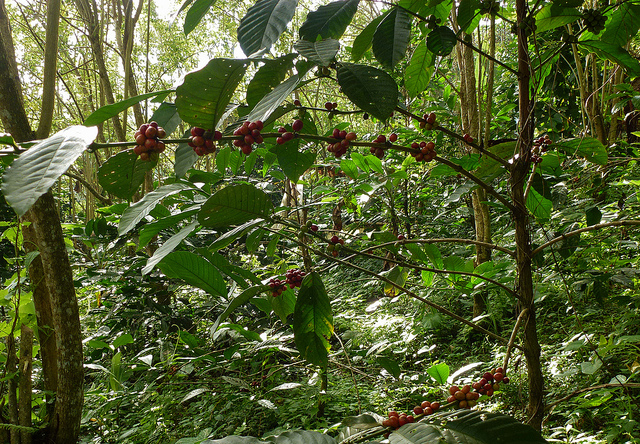
 Throughout the film, the audience learns that brewing a cup of high quality coffee requires great care throughout the entire process. It’s an extensive checklist: proper and timely pruning of nonproductive branches so that the most nutrients can reach the bean; picking beans at just the right time; proper sun drying to prepare the beans for roasting; retaining and crafting the proper flavor during roasting; grinding the beans just enough to release that flavor but not losing it during brewing; and, finally, brewing the coffee at the correct temperature and for the right length of time. Shortcuts at any phase of production will ruin the experience.
Filosofi Kopi compares Ben’s life to this process. Childhood trauma wounded him, and even though his life was producing fruit, it wasn’t as flavorful as it could–or should–be. Rather than going back, facing his trauma, and repairing this brokenness by confronting his father and his fears, Ben compensates by doubling down in other areas of his life. The skill that Ben readily applied to growing coffee beans, but failed to realize in his own experience, was the necessity of pruning away that which chokes out life. Until Ben pruned the trauma from his life by addressing it, his life would never have the flavor the he–and his father–desired.
When we are injured–spiritually damaged by poor personal decisions or the actions of others–we cannot wait it out. If we do not address pain, loss, or fear, our lives will not be as full and productive as they can. Like coffee bean growers, caring for our own lives is tedious work that cannot be rushed or mechanized. It can be painful, and in the short term draining, but it’s the only way to ensure health and fruitfulness.
Like Jacob in the Old Testament, we all have baggage that we try to leave behind. But like Jacob, our disappointments, loss, behavior, and fears, follow us through life. No matter how successful, wealthy or powerful we may become, it’s not until we face our past, wresting and struggling with our losses and fears, that we can fully live the life that God desires for us. Like Jacob, we may come away from this encounter changed, or even wounded, but we will, even in this changed, wounded state, be truly whole and empowered to live a more fulfilled life.
Previous Post

May 19, 2015
'Montage of Heck': A Gospel of Kurt Cobain
Next Post
May 26, 2015 Cross+Roads Faith and Film Renewal: "Aloft" Review
Browse Our Archives
Select a Category Classics DVD Film Music News Pop Culture Events Print Sports Television Uncategorized Video Games
Select a Month March 2017 February 2017 January 2017 December 2016 November 2016 October 2016 September 2016 August 2016 July 2016 June 2016 May 2016 April 2016 March 2016 February 2016 January 2016 December 2015 November 2015 October 2015 September 2015 August 2015 July 2015 June 2015 May 2015 April 2015 March 2015 February 2015 January 2015 December 2014 November 2014 October 2014 September 2014 August 2014 July 2014 June 2014 May 2014 April 2014 March 2014 February 2014 January 2014 December 2013 November 2013 October 2013 September 2013 August 2013 July 2013 June 2013 May 2013 April 2013 March 2013 February 2013 January 2013 December 2012 November 2012 October 2012 September 2012 August 2012 July 2012 June 2012 May 2012 April 2012 March 2012 February 2012 January 2012 December 2011 November 2011 October 2011 September 2011 August 2011 July 2011 June 2011 May 2011 April 2011 March 2011 February 2011 January 2011 December 2010 November 2010 October 2010 September 2010 August 2010 July 2010 June 2010 May 2010 April 2010 March 2010 February 2010 January 2010 December 2009 November 2009 October 2009 September 2009 August 2009 July 2009 June 2009 May 2009 April 2009 March 2009 February 2009 January 2009 December 2008 November 2008 October 2008 September 2008 August 2008 July 2008 June 2008 May 2008 April 2008 March 2008 February 2008 January 2008 December 2007 November 2007 October 2007 September 2007 August 2007 July 2007 June 2007 May 2007 April 2007 March 2007
Follow Us!
TAKE THE
Religious Wisdom Quiz
Who said, "I do not know how to speak; I am too young"?
Select your answer to see how you score.
Jeremiah Samuel Moses Isaiah
Related posts from Pop Theology

#KillerSerials: THE PATH, S2 Ep. 11

#KillerSerials: THE PATH, S2 Ep. 10

At SXSW2017: May It Last: A Portrait of...
TRENDING AT PATHEOS Progressive Christian

Why Christians Have a Sacred Duty to Vote:...
The Bible offers strong support for the sacred duty to vote. Here...

What Being a Modern-Day Apostle Means to Me
In my last column, I discussed the ins and outs of modern-day...

Did Ancient China Once Worship the God of...
Across human history, a common thread weaves through the origins of the...

Love Your Neighbor – Including Earth-Kin: Lev. 19,...
God’s command to love your neighbor means acting in an ethical and...

Lead a Church Study of “Jesus and Lao...
Guest writer Jack Thomas (The Irreverent Reverend) reflects on leading his church...

Principles for Understanding the Apostolic Ministry Today
Whenever people discover that my formal ministry title is "apostle," as in...
view all Progressive Christian blogs
Ad-Free & Subscriber Log-In Subscription Support
- About Us
- 2026 Calendar
- Videos
- Podcasts
- Library of World Religions
- Faith In Media Tracker
- Advertise With Us
- Write for Us
- Privacy Policy
- Terms of Service
- Do Not Sell My Data
- Contact Us
- Radiant Digital
- Manage Newsletter Subscriptions
- Unsubscribe From Notifications
- Sitemap
Copyright 2008-2026, Patheos. All rights reserved.
Subscription Support Ad-Free & Subscriber Log-In
Follow Patheos