
BuddhistCatholicContemplativeEvangelicalGeneral ChristianHinduJewishLatter-day SaintMuslimNew VisionsProgressive Christian
Beliefs
- Buddhist
- Catholic
- Contemplative
- Evangelical
- General Christian
- Hindu
- Jewish
- Latter-day Saint
- More Voices
- Muslim
- New Visions
- Pagan
- Progressive Christian
Topics
- Religion News
- Food and Religion
- Sports and Religion
- Religious Art
- Religious Music and Entertainment
- Religious Events
- History and Religion
- Style and Religion
- Politics and Religion
- Women in Religion
- Recreation Outdoors and Religion
- Business Finance and Religion
- Careers Workplace and Religion
- Education and Religion
- Family Parenting and Religion
- Health Fitness and Religion
- Home and Religion
- Relationships and Religion
- Technology and Religion
- Travel and Religion
Columnists
- Buddhist Columnists
- Business Finance and Religion Columnists
- Careers Workplace and Religion Columnists
- Catholic Columnists
- Contemplative Columnists
- Education and Religion Columnists
- Evangelists Columnists
- Family Parenting and Religion Columnists
- General Christian Columnists
- Health Fitness and Religion Columnists
- Hindu Columnists
- History and Religion Columnists
- Home and Religion Columnists
- Jewish Columnists
- More Voices Columnists
- Latter Day Columnists
- Muslim Columnists
- New Visions Columnists
- Nonreligious Columnists
- Pagan Columnists
- Politics and Religion Columnists
- Progressive Columnists
- Recreation Outdoors and Religion Columnists
- Relationships and Religion Columnists
- Religion News Columnists
- Religious Art Columnists
- Religious Events Columnists
- Religious Music and Entertainment Columnists
- Sports and Religion Columnists
- Style and Religion Columnists
- Technology and Religion Columnists
- Travel and Religion Columnists
- Women in Religion Columnists
Resource Library
- 2026 Calendar
- Library of World Religions
- The 100 Most Holy Places on Earth
- Patheos Answers
- Podcasts
- Videos
- Faith Leaders Database
- Anglican Episcopalian
- Bahai
- Baptist
- Buddhism
- Christianity
- Confucianism
- Eastern Orthodoxy
- Hinduism
- Holiness and Pentecostal
- ISKCON
- Islam
- Judaism
- Lutheran
- Methodist
- The Church of Jesus Christ of Latter-day Saints
- New Age
- Paganism
- Presbytarian and Reformed
- Protestantism
- Religion Behind the Scenes
- Roman Catholic
- Scientology
- Shia Islam
- Sikhism
- Sufism
- Sunni Islam
- Taoism
- Zen
- See all religions
Research Tools
 Ad-Free & Subscriber Log-In Subscription Support
Ad-Free & Subscriber Log-In Subscription Support
Follow Patheos 

- Trending:
- Forgiveness
- |
- Marriage
- |
- Consciousness
- |
- Death Penalty
- |
- Election
- |
- Halloween
 Pop Theology
- Home
- Progressive Christian
- Religious Music & Entertainment
- ‘Metalhead’ and the Community of Resurrection
‘Metalhead’ and the Community of Resurrection
Last updated on: April 3, 2015 at 11:12 am by Richard Lindsay
‘Metalhead’ and the Community of Resurrection 2015-04-03T11:12:46-07:00 Richard Lindsay
Patheos Explore the world's faith through different perspectives on religion and spirituality! Patheos has the views of the prevalent religions and spiritualities of the world.
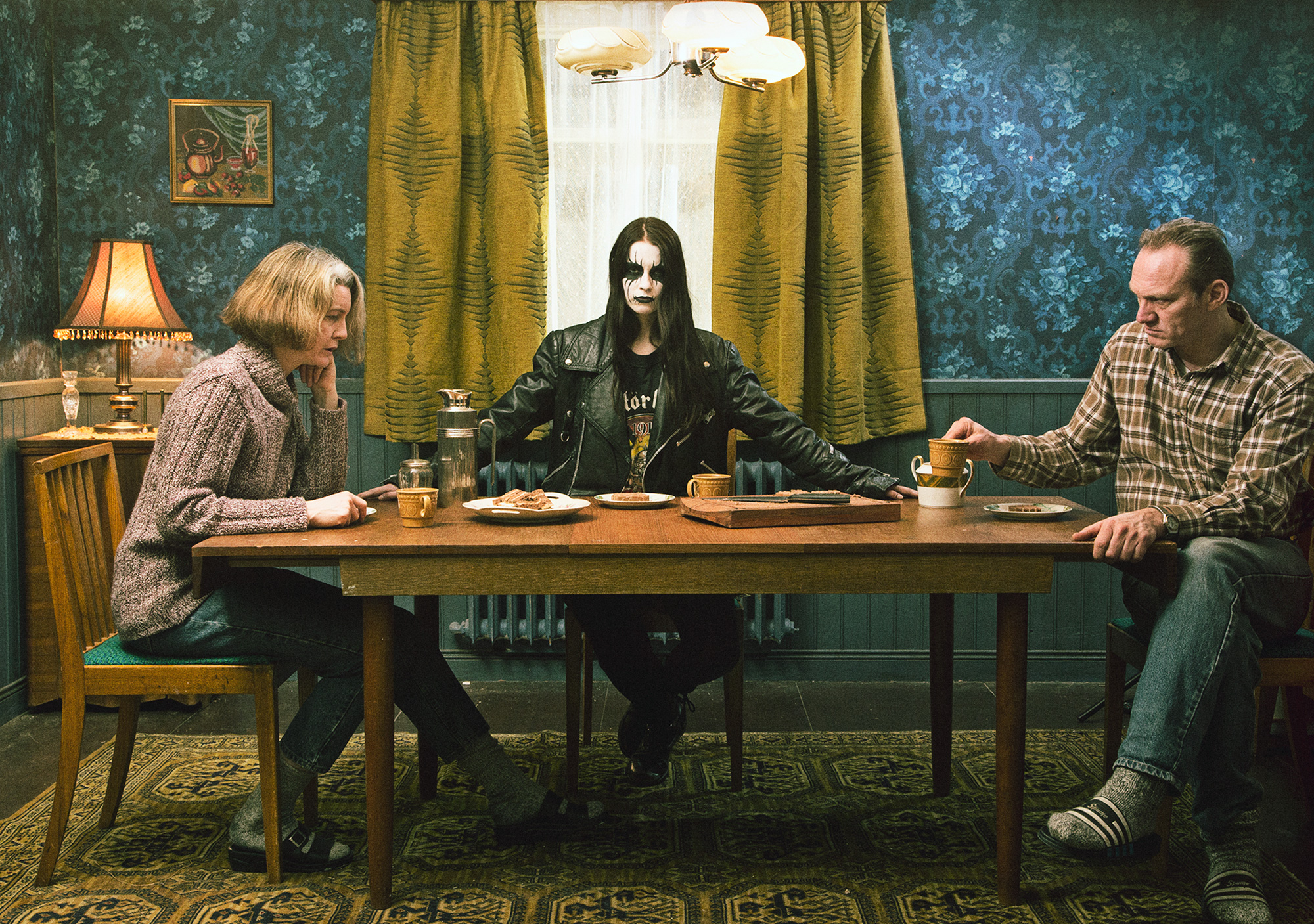
“Sometimes God can be found in the dark.”
Metalhead, an Icelandic film written and directed by Ragnar Bragason, premiered in fall of 2013 at the Toronto International Film Festival, and is finally getting limited release in the United States, along with widespread Video on Demand starting April 3.
The film starts with a rural farm family experiencing a horrific loss. Their teenage son, Baldur, is killed in a tractor accident as his twelve year-old sister, Hera, watches. The family holds the funeral in the local Lutheran church. During the funeral, Hera looks at the crucifixes and the Jesus portrait above the altar and is disgusted. She runs out of the church, dons her brother’s black leather jacket and takes over his record collection, which is made up entirely of the dark and skeletal heavy metal of the early 80’s.
Hera decides to run away from home to the city—presumably Reykjavik—with her brother’s guitar in hand. An old gentleman at the bus stop asks her if she has nothing to keep her in the country. She shakes her head. But when the bus pulls away, she is still sitting on the bench, and nine years have passed. Now a young adult, she still hasn’t left.
The film is a study in how grief can overtake a family—mocking the idea of its moving in neat rhythms, cycles, or “stages.” Nearly a decade after the son’s death, Hera and her parents still move through life in a daze. Everything seems to bring back memories of that fateful day on the farm: A blot of ketchup on a plate, which reminds the mother of the color of blood, a neighbor’s tractor that Hera steals one night while drunk. And of course, the son’s room, which, with its Iron Maiden and AC/DC posters still intact, has become a shrine since his death.
The film is slow to unfold, in the Scandinavian style. The cinematography shares with Bergman the interplay of light and dark, but always with a preference for the scrim-filtered pale light of winter. The pacing gives you a kind of sick, pit-of-the stomach feeling, as Hera moves from one self-destructive act to another. At twenty-one, she is much too old to be acting out in teenage rebellion. (One evening she startles the family by showing up to the dinner table in black-eyed, KISS-style makeup.)
Change begins when Hera is confronted by the town’s new minister, Pastor Janus. She’s as prickly to him as to everyone else, until he reveals he’s a metal fan, too—a fellow traveler on the “Crazy Train.”
Hera insists Metal is “About reality. Death is real, war is real. It tells things like they really are without any sugarcoating.”
Pastor Janus seems to agree. “Sometimes God can be found in the dark,” he says.
Fittingly, Hera works in a slaughterhouse where they kill and dress sheep. If the crucifixes and portrait of Jesus don’t drive home the religious symbolism, the bleating of the lambs being led to slaughter should.
In fact, the livestock of the farming community act as a kind of Greek chorus in the film, pointing out both the absurdity of life and the desperation of these characters not to be lured docilely into the oblivion of the Icelandic winter night.
When Hera makes a demo tape of her own music in the family barn, she realizes when she plays it back that her father’s herd of milk cows are mooing in the background. Hera is delighted by the sound, and sends it off to some record labels. Later, she gets a visit from some fans from the Oslo Metal scene who’ve heard the demo and love the cow-rock, too. “This is the most evil-sounding, brutal music I’ve ever heard,” one of them says. It’s the highest compliment they could give her.
The townsfolk in the community, many of whom are also members of the local church, treat Hera and her family with profound decency as she lurches from one self-destructive act to another. Her final act of rebellion is one of violence against the whole community. Yet it is their ability to forgive that leads to healing.
This film says a lot about resurrection, although in a roundabout way. If you think about it, Jesus’ Resurrection was really a communal event. Except for Mary Magdalene’s moment in the garden with Jesus in the Gospel of John, he never appears to just one person after his death. And even in this extraordinary instant with Mary, he immediately tells her to go and spread the news to his brothers.
In our personal-salvation-obsessed American Christianity, we tend to portray the Resurrection as a singular, heroic act of God. But as much as anything, it was the restoration of a community, the circle being mended. Or, to put it in rock terms, getting the band back together.
The themes of forgiveness and restoration of community are central to Metalhead. They play out in the life of Hera’s family and in the circles of the church and townsfolk—and despite religion’s continued misunderstanding, in the freaky circles of Metal fandom. For some communities, a devil-horn sign with index finger and pinky extended is as good as a “Peace be with you.”
“Peace be with you.”
Previous Post

March 31, 2015
Movie Review: Going Clear: Scientology and the Prison of Belief
Next Post

April 15, 2015 Movie Review: Ex Machina
Browse Our Archives
Select a Category Classics DVD Film Music News Pop Culture Events Print Sports Television Uncategorized Video Games
Select a Month March 2017 February 2017 January 2017 December 2016 November 2016 October 2016 September 2016 August 2016 July 2016 June 2016 May 2016 April 2016 March 2016 February 2016 January 2016 December 2015 November 2015 October 2015 September 2015 August 2015 July 2015 June 2015 May 2015 April 2015 March 2015 February 2015 January 2015 December 2014 November 2014 October 2014 September 2014 August 2014 July 2014 June 2014 May 2014 April 2014 March 2014 February 2014 January 2014 December 2013 November 2013 October 2013 September 2013 August 2013 July 2013 June 2013 May 2013 April 2013 March 2013 February 2013 January 2013 December 2012 November 2012 October 2012 September 2012 August 2012 July 2012 June 2012 May 2012 April 2012 March 2012 February 2012 January 2012 December 2011 November 2011 October 2011 September 2011 August 2011 July 2011 June 2011 May 2011 April 2011 March 2011 February 2011 January 2011 December 2010 November 2010 October 2010 September 2010 August 2010 July 2010 June 2010 May 2010 April 2010 March 2010 February 2010 January 2010 December 2009 November 2009 October 2009 September 2009 August 2009 July 2009 June 2009 May 2009 April 2009 March 2009 February 2009 January 2009 December 2008 November 2008 October 2008 September 2008 August 2008 July 2008 June 2008 May 2008 April 2008 March 2008 February 2008 January 2008 December 2007 November 2007 October 2007 September 2007 August 2007 July 2007 June 2007 May 2007 April 2007 March 2007
Follow Us!
TAKE THE
Religious Wisdom Quiz
Who was known as the doubter among Jesus' disciples?
Select your answer to see how you score.
Peter John James Thomas
Related posts from Pop Theology


At SXSW2017: May It Last: A Portrait of...

At SXSW 2017: "Untold Tales of Armistead Maupin"
TRENDING AT PATHEOS Progressive Christian

Why Christians Have a Sacred Duty to Vote:...
The Bible offers strong support for the sacred duty to vote. Here...

What Being a Modern-Day Apostle Means to Me
In my last column, I discussed the ins and outs of modern-day...

Did Ancient China Once Worship the God of...
Across human history, a common thread weaves through the origins of the...

Love Your Neighbor – Including Earth-Kin: Lev. 19,...
God’s command to love your neighbor means acting in an ethical and...

Lead a Church Study of “Jesus and Lao...
Guest writer Jack Thomas (The Irreverent Reverend) reflects on leading his church...

Principles for Understanding the Apostolic Ministry Today
Whenever people discover that my formal ministry title is "apostle," as in...
view all Progressive Christian blogs
Ad-Free & Subscriber Log-In Subscription Support
- About Us
- 2026 Calendar
- Videos
- Podcasts
- Library of World Religions
- Faith In Media Tracker
- Advertise With Us
- Write for Us
- Privacy Policy
- Terms of Service
- Do Not Sell My Data
- Contact Us
- Radiant Digital
- Manage Newsletter Subscriptions
- Unsubscribe From Notifications
- Sitemap
Copyright 2008-2026, Patheos. All rights reserved.
Subscription Support Ad-Free & Subscriber Log-In
Follow Patheos