
BuddhistCatholicContemplativeEvangelicalGeneral ChristianHinduJewishLatter-day SaintMuslimNew VisionsProgressive Christian
Beliefs
- Buddhist
- Catholic
- Contemplative
- Evangelical
- General Christian
- Hindu
- Jewish
- Latter-day Saint
- More Voices
- Muslim
- New Visions
- Pagan
- Progressive Christian
Topics
- Religion News
- Food and Religion
- Sports and Religion
- Religious Art
- Religious Music and Entertainment
- Religious Events
- History and Religion
- Style and Religion
- Politics and Religion
- Women in Religion
- Recreation Outdoors and Religion
- Business Finance and Religion
- Careers Workplace and Religion
- Education and Religion
- Family Parenting and Religion
- Health Fitness and Religion
- Home and Religion
- Relationships and Religion
- Technology and Religion
- Travel and Religion
Columnists
- Buddhist Columnists
- Business Finance and Religion Columnists
- Careers Workplace and Religion Columnists
- Catholic Columnists
- Contemplative Columnists
- Education and Religion Columnists
- Evangelists Columnists
- Family Parenting and Religion Columnists
- General Christian Columnists
- Health Fitness and Religion Columnists
- Hindu Columnists
- History and Religion Columnists
- Home and Religion Columnists
- Jewish Columnists
- More Voices Columnists
- Latter Day Columnists
- Muslim Columnists
- New Visions Columnists
- Nonreligious Columnists
- Pagan Columnists
- Politics and Religion Columnists
- Progressive Columnists
- Recreation Outdoors and Religion Columnists
- Relationships and Religion Columnists
- Religion News Columnists
- Religious Art Columnists
- Religious Events Columnists
- Religious Music and Entertainment Columnists
- Sports and Religion Columnists
- Style and Religion Columnists
- Technology and Religion Columnists
- Travel and Religion Columnists
- Women in Religion Columnists
Resource Library
- 2026 Calendar
- Library of World Religions
- The 100 Most Holy Places on Earth
- Patheos Answers
- Podcasts
- Videos
- Faith Leaders Database
- Anglican Episcopalian
- Bahai
- Baptist
- Buddhism
- Christianity
- Confucianism
- Eastern Orthodoxy
- Hinduism
- Holiness and Pentecostal
- ISKCON
- Islam
- Judaism
- Lutheran
- Methodist
- The Church of Jesus Christ of Latter-day Saints
- New Age
- Paganism
- Presbytarian and Reformed
- Protestantism
- Religion Behind the Scenes
- Roman Catholic
- Scientology
- Shia Islam
- Sikhism
- Sufism
- Sunni Islam
- Taoism
- Zen
- See all religions
Research Tools
 Ad-Free & Subscriber Log-In Subscription Support
Ad-Free & Subscriber Log-In Subscription Support
Follow Patheos 

- Trending:
- Forgiveness
- |
- Marriage
- |
- Consciousness
- |
- Death Penalty
- |
- Election
- |
- Halloween
 Pop Theology
- Home
- Progressive Christian
- Religious Music & Entertainment
- Book Review: DID GOD KILL JESUS?
Book Review: DID GOD KILL JESUS?
Last updated on: March 30, 2015 at 10:27 am by J. Ryan Parker
Book Review: DID GOD KILL JESUS? 2015-03-30T10:27:37-07:00 J. Ryan Parker
Patheos Explore the world's faith through different perspectives on religion and spirituality! Patheos has the views of the prevalent religions and spiritualities of the world.
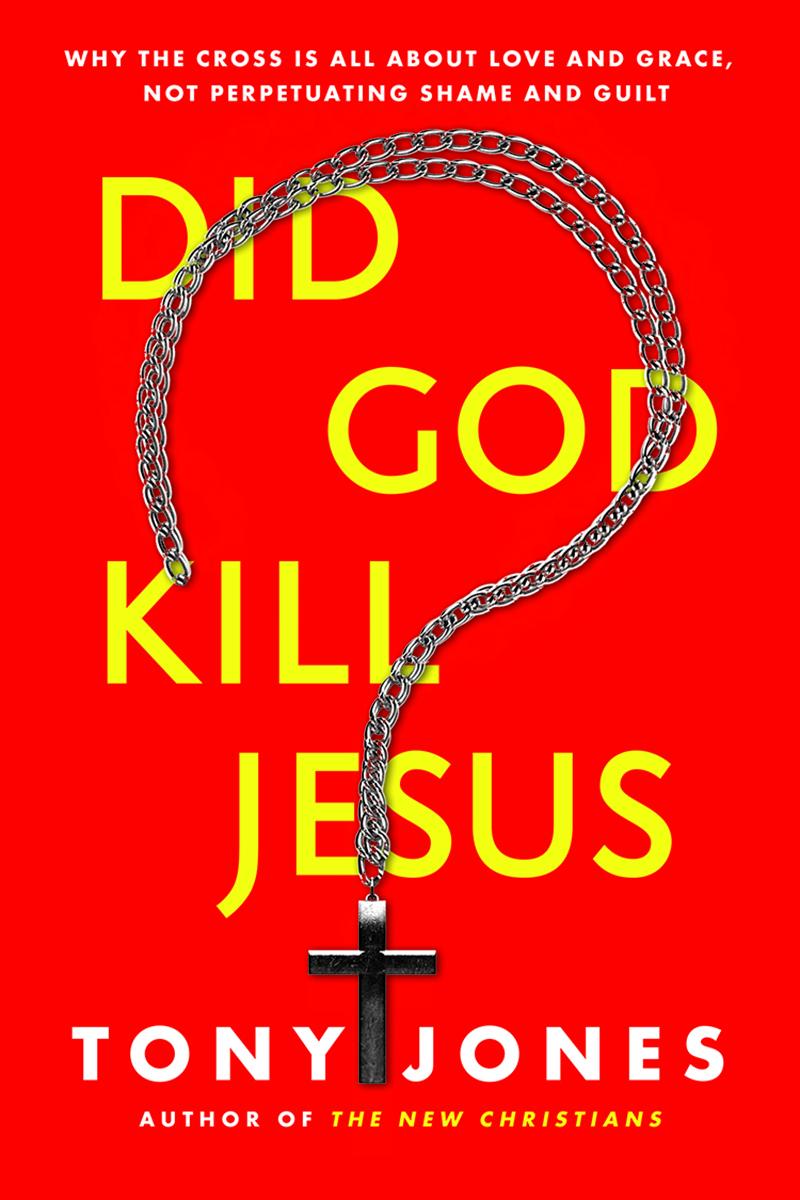
I’ve got a Godfather 3 type relationship with the church. Just when I think I’m out, they pull me back in. Communities and people of faith have serendipitously entered my life–or I theirs–at moments when I was just about to give up on the whole thing. Tony Jones is one of those people and his new book, did God Kill Jesus: Looking for Love in History’s Most Famous Execution, is one of those rare texts that is both informative and inspirational. It’s given me fresh eyes with which to see the crucifixion–timely given the arrival of Holy Week–and a view of God that makes sense in and for the world in which we live.
 Much like Jones, I grew up in a Christian environment that preached a penal substitutionary atonement theory (PSA) of the crucifixion, even though they didn’t put such a fine point on it. Our ministers and evangelists were much more more creative: God is mad as hell, and HE isn’t going to take it any more. My sins incurred a debt that I’d never be able to pay, and so we sang, “Jesus paid it all.” I lived through guilt- and angst-ridden religious teenage years, hoping that my prayers for forgiveness were heard. As I grew older, it wasn’t the theology that put me off but the people who espoused it. Many of my peers didn’t even seem as kind and forgiving as the little old ladies I grew up with in church. As I was about to bail out of church during college, I found a Christian community that entertained different theologies and ways of being in the world and didn’t get too bent out of shape if Saturday night polluted Sunday morning. They even inspired me to attend divinity school, where I encountered another range of theological interpretations and religious experiences.
Flash forward to Jones’ new book, which reads like an armchair divinity school course in soteriology (the study of salvation), Christology, and theology from an author who is witty, deeply intelligent, and kind. Jones begins with a critique of PSA–or what he calls the Payment model–before analyzing other atonement theories, which include the Victory Model, the Magnet Model, the Divinity Model, and the Mirror Model, all of which have deep roots in Christian history, which proves that PSA isn’t the only right way to view what happened on the cross. Jones also gives attention to more recent interpretations of the crucifixion from sources other than DWM (dead white men), including James Cone, Rita Nakashima Brock and Rebecca Parker, and Andrew Sung Park. While Jones points out shortcomings in most of these theories, he is quick to highlight their contributions to theology and spiritual practice.
Of each model, Jones asks six critical questions:
- What does the model say about God?
- What does it say about Jesus?
- What does it say about the relationship between God and Jesus?
- How does it make sense of violence?
- What does it mean for us spiritually?
- Where’s the love?
We would do well to apply these questions not only to our interpretations of what happened on the cross, but to all aspects of our lives from our beliefs to our daily practices. What do our religious affiliations say about God? Do our financial practices reveal love? How does what we engage in pop culture make sense of violence? And the list goes on.
Jones begins with what now unfortunately seems like a daring theological claim: God is love. Proceeding from this, any interpretation of the birth, life, and death of Jesus must echo from that love. Both our theologies and our Christologies must inspire us and others to live lives of self sacrificial love, not fear, hatred, anger, or judgment. When Christians today are known more for hatred and judgment, Jones’ message and theological interpretations are needed more now than ever.
Full of anecdotes that will be, hilariously and painfully, familiar to most Christian readers, Did God Kill Jesus is a reminder that there is no one way of interpreting the crucifixion. If you are frustrated with fellow believers who argue differently or are uncomfortable with a particular theology that doesn’t jibe with your experience of God, join Jones on this thoughtful theological journey that ultimately arrives at a place of hope.
Previous Post

March 5, 2015
Timbuktu
Next Post

March 31, 2015 Movie Review: Going Clear: Scientology and the Prison of Belief
Browse Our Archives
Select a Category Classics DVD Film Music News Pop Culture Events Print Sports Television Uncategorized Video Games
Select a Month March 2017 February 2017 January 2017 December 2016 November 2016 October 2016 September 2016 August 2016 July 2016 June 2016 May 2016 April 2016 March 2016 February 2016 January 2016 December 2015 November 2015 October 2015 September 2015 August 2015 July 2015 June 2015 May 2015 April 2015 March 2015 February 2015 January 2015 December 2014 November 2014 October 2014 September 2014 August 2014 July 2014 June 2014 May 2014 April 2014 March 2014 February 2014 January 2014 December 2013 November 2013 October 2013 September 2013 August 2013 July 2013 June 2013 May 2013 April 2013 March 2013 February 2013 January 2013 December 2012 November 2012 October 2012 September 2012 August 2012 July 2012 June 2012 May 2012 April 2012 March 2012 February 2012 January 2012 December 2011 November 2011 October 2011 September 2011 August 2011 July 2011 June 2011 May 2011 April 2011 March 2011 February 2011 January 2011 December 2010 November 2010 October 2010 September 2010 August 2010 July 2010 June 2010 May 2010 April 2010 March 2010 February 2010 January 2010 December 2009 November 2009 October 2009 September 2009 August 2009 July 2009 June 2009 May 2009 April 2009 March 2009 February 2009 January 2009 December 2008 November 2008 October 2008 September 2008 August 2008 July 2008 June 2008 May 2008 April 2008 March 2008 February 2008 January 2008 December 2007 November 2007 October 2007 September 2007 August 2007 July 2007 June 2007 May 2007 April 2007 March 2007
Follow Us!
TAKE THE
Religious Wisdom Quiz
Who built the first temple in Jerusalem?
Select your answer to see how you score.
David Moses Solomon Joshua
Related posts from Pop Theology


#KillerSerials: An Interview with Kutter Callaway

Book Review: MUSLIMS AND THE MAKING OF AMERICA

#KillerSerials: LUKE CAGE, Eps. 1 & 2
TRENDING AT PATHEOS Progressive Christian

Why Christians Have a Sacred Duty to Vote:...
The Bible offers strong support for the sacred duty to vote. Here...

What Being a Modern-Day Apostle Means to Me
In my last column, I discussed the ins and outs of modern-day...

Did Ancient China Once Worship the God of...
Across human history, a common thread weaves through the origins of the...

Love Your Neighbor – Including Earth-Kin: Lev. 19,...
God’s command to love your neighbor means acting in an ethical and...

Lead a Church Study of “Jesus and Lao...
Guest writer Jack Thomas (The Irreverent Reverend) reflects on leading his church...

Principles for Understanding the Apostolic Ministry Today
Whenever people discover that my formal ministry title is "apostle," as in...
view all Progressive Christian blogs
Ad-Free & Subscriber Log-In Subscription Support
- About Us
- 2026 Calendar
- Videos
- Podcasts
- Library of World Religions
- Faith In Media Tracker
- Advertise With Us
- Write for Us
- Privacy Policy
- Terms of Service
- Do Not Sell My Data
- Contact Us
- Radiant Digital
- Manage Newsletter Subscriptions
- Unsubscribe From Notifications
- Sitemap
Copyright 2008-2026, Patheos. All rights reserved.
Subscription Support Ad-Free & Subscriber Log-In
Follow Patheos