
BuddhistCatholicContemplativeEvangelicalGeneral ChristianHinduJewishLatter-day SaintMuslimNew VisionsProgressive Christian
Beliefs
- Buddhist
- Catholic
- Contemplative
- Evangelical
- General Christian
- Hindu
- Jewish
- Latter-day Saint
- More Voices
- Muslim
- New Visions
- Pagan
- Progressive Christian
Topics
- Religion News
- Food and Religion
- Sports and Religion
- Religious Art
- Religious Music and Entertainment
- Religious Events
- History and Religion
- Style and Religion
- Politics and Religion
- Women in Religion
- Recreation Outdoors and Religion
- Business Finance and Religion
- Careers Workplace and Religion
- Education and Religion
- Family Parenting and Religion
- Health Fitness and Religion
- Home and Religion
- Relationships and Religion
- Technology and Religion
- Travel and Religion
Columnists
- Buddhist Columnists
- Business Finance and Religion Columnists
- Careers Workplace and Religion Columnists
- Catholic Columnists
- Contemplative Columnists
- Education and Religion Columnists
- Evangelists Columnists
- Family Parenting and Religion Columnists
- General Christian Columnists
- Health Fitness and Religion Columnists
- Hindu Columnists
- History and Religion Columnists
- Home and Religion Columnists
- Jewish Columnists
- More Voices Columnists
- Latter Day Columnists
- Muslim Columnists
- New Visions Columnists
- Nonreligious Columnists
- Pagan Columnists
- Politics and Religion Columnists
- Progressive Columnists
- Recreation Outdoors and Religion Columnists
- Relationships and Religion Columnists
- Religion News Columnists
- Religious Art Columnists
- Religious Events Columnists
- Religious Music and Entertainment Columnists
- Sports and Religion Columnists
- Style and Religion Columnists
- Technology and Religion Columnists
- Travel and Religion Columnists
- Women in Religion Columnists
Resource Library
- 2026 Calendar
- Library of World Religions
- The 100 Most Holy Places on Earth
- Patheos Answers
- Podcasts
- Videos
- Faith Leaders Database
- Anglican Episcopalian
- Bahai
- Baptist
- Buddhism
- Christianity
- Confucianism
- Eastern Orthodoxy
- Hinduism
- Holiness and Pentecostal
- ISKCON
- Islam
- Judaism
- Lutheran
- Methodist
- The Church of Jesus Christ of Latter-day Saints
- New Age
- Paganism
- Presbytarian and Reformed
- Protestantism
- Religion Behind the Scenes
- Roman Catholic
- Scientology
- Shia Islam
- Sikhism
- Sufism
- Sunni Islam
- Taoism
- Zen
- See all religions
Research Tools
 Ad-Free & Subscriber Log-In Subscription Support
Ad-Free & Subscriber Log-In Subscription Support
Follow Patheos 

- Trending:
- Forgiveness
- |
- Marriage
- |
- Consciousness
- |
- Death Penalty
- |
- Election
- |
- Halloween
 Pop Theology
- Home
- Progressive Christian
- Religious Music & Entertainment
- Death at the Movies: A Review
Death at the Movies: A Review
Last updated on: January 30, 2014 at 10:07 am by J. Ryan Parker
Death at the Movies: A Review 2014-01-30T10:07:48-08:00 J. Ryan Parker
Patheos Explore the world's faith through different perspectives on religion and spirituality! Patheos has the views of the prevalent religions and spiritualities of the world.
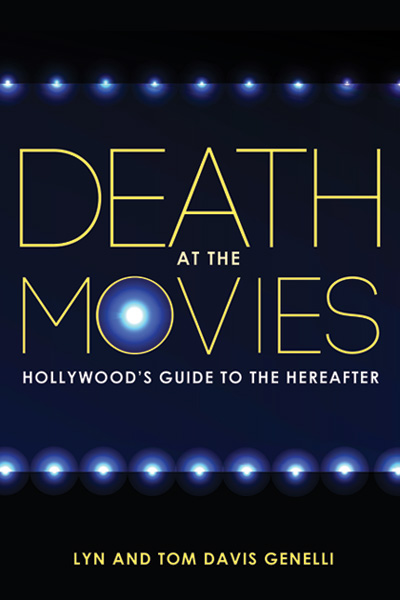
Few film and religion books are as intriguingly interreligious as Lyn and Tom Davis Genelli’s Death at the Movies: Hollywood’s Guide to the Hereafter. The authors look at a relatively unexplored genre, film blanc, from Christian, Buddhist, mystical perspectives and arrive at prophetic and inspirational insights into our fears of and suppressed obsessions with death, the afterlife, and what happens in between.
The Genellis employ Peter L. Valenti’s definition of film blanc as motion pictures that embody the following characteristics
- A mortal’s death or lapse into dream
- Subsequent acquaintance with a kindly representative of the world beyond, most commonly known as heaven
- A budding love affair
- Ultimate transcendence of mortality to escape the spiritual world and return to the mortal world.
 Film blanc is the lesser-known sibling of film noir, the darker post-war genre that reflected pessimistic worldviews with doomed characters and corrupt worlds. The film blanc genre includes such popular films as It’s a Wonderful Life (1946) and The Sixth Sense (1999) to quirky films like Outward Bound (1930) and Defending Your Life (1991). Other films that the Genellis discuss include Casablanca (1942), Between Two Worlds (1944), Resurrection (1980), Poltergeist (1982), Jacob’s Ladder (1990), and Hereafter (2010).
The Genellis use these films to explore the theme of transit, that mysterious time and space between death and what lies beyond. Depending on your theological or physical outlook, transit can take place both before and after our physical bodies have expired. Many of us might be moving through this world in a dream state, desperately needing to be awoken to the beauty and implications of our interconnectedness. Of course, when we die, our souls/energy/spirit will transition into another form of existence.
I appreciate how the Genelli’s don’t limit their engagement with films from one specific religious context. As a result, their analysis of these films reveals the real ways in which religions can be mutually informative and how, at heart, they are concerned with similar fundamental issues that plague the human experience. They also reveal how best to move through our world (spoiler: selflessly).
I am taken by the Genelli’s discussion of the importance and power of film. I quote a portion of their text at length:
It is true as well that as everyday life becomes increasingly indistinguishable from an action/horror flick playing 24/7–living in a state of world crisis, economic near-collapse, and the falling away of long-held securities and certainties–a desire or need arises in many of us for knowledge about other dimensions of being, particularly those we suspect might lie beyond this “real” one. In such times, the great movies, and particularly the classic transit movies, can provide a grounding unity; they remind our fractured society of the truths we all know and the goodness we all yearn for. (127)
Like all good film criticism books, Death at the Movies reminds me of both why I love classics like It’s a Wonderful Life or Casablanca while introducing me to previously unknown films like Dead of Night (1945) or Purgatory (1999), which will almost surely become new favorites. On the flip side, their summaries of these films reveal that the art form not only embodies our collective fears, hopes, and dreams but pushes back against traditional expressions of religion when they do not address them compellingly enough.
Previous Post

January 29, 2014
Wounded Healers
Next Post

February 5, 2014 A Beautiful Mystery
Browse Our Archives
Select a Category Classics DVD Film Music News Pop Culture Events Print Sports Television Uncategorized Video Games
Select a Month March 2017 February 2017 January 2017 December 2016 November 2016 October 2016 September 2016 August 2016 July 2016 June 2016 May 2016 April 2016 March 2016 February 2016 January 2016 December 2015 November 2015 October 2015 September 2015 August 2015 July 2015 June 2015 May 2015 April 2015 March 2015 February 2015 January 2015 December 2014 November 2014 October 2014 September 2014 August 2014 July 2014 June 2014 May 2014 April 2014 March 2014 February 2014 January 2014 December 2013 November 2013 October 2013 September 2013 August 2013 July 2013 June 2013 May 2013 April 2013 March 2013 February 2013 January 2013 December 2012 November 2012 October 2012 September 2012 August 2012 July 2012 June 2012 May 2012 April 2012 March 2012 February 2012 January 2012 December 2011 November 2011 October 2011 September 2011 August 2011 July 2011 June 2011 May 2011 April 2011 March 2011 February 2011 January 2011 December 2010 November 2010 October 2010 September 2010 August 2010 July 2010 June 2010 May 2010 April 2010 March 2010 February 2010 January 2010 December 2009 November 2009 October 2009 September 2009 August 2009 July 2009 June 2009 May 2009 April 2009 March 2009 February 2009 January 2009 December 2008 November 2008 October 2008 September 2008 August 2008 July 2008 June 2008 May 2008 April 2008 March 2008 February 2008 January 2008 December 2007 November 2007 October 2007 September 2007 August 2007 July 2007 June 2007 May 2007 April 2007 March 2007
Follow Us!
TAKE THE
Religious Wisdom Quiz
True or False: The church in Jerusalem sent Barnabas to investigate what was happening in Antioch.
Select your answer to see how you score.
FALSE TRUE
Related posts from Pop Theology


At SXSW2017: May It Last: A Portrait of...

At SXSW 2017: "Untold Tales of Armistead Maupin"
TRENDING AT PATHEOS Progressive Christian

Why Christians Have a Sacred Duty to Vote:...
The Bible offers strong support for the sacred duty to vote. Here...

What Being a Modern-Day Apostle Means to Me
In my last column, I discussed the ins and outs of modern-day...

Did Ancient China Once Worship the God of...
Across human history, a common thread weaves through the origins of the...

Love Your Neighbor – Including Earth-Kin: Lev. 19,...
God’s command to love your neighbor means acting in an ethical and...

Lead a Church Study of “Jesus and Lao...
Guest writer Jack Thomas (The Irreverent Reverend) reflects on leading his church...

Principles for Understanding the Apostolic Ministry Today
Whenever people discover that my formal ministry title is "apostle," as in...
view all Progressive Christian blogs
Ad-Free & Subscriber Log-In Subscription Support
- About Us
- 2026 Calendar
- Videos
- Podcasts
- Library of World Religions
- Faith In Media Tracker
- Advertise With Us
- Write for Us
- Privacy Policy
- Terms of Service
- Do Not Sell My Data
- Contact Us
- Radiant Digital
- Manage Newsletter Subscriptions
- Unsubscribe From Notifications
- Sitemap
Copyright 2008-2026, Patheos. All rights reserved.
Subscription Support Ad-Free & Subscriber Log-In
Follow Patheos