
BuddhistCatholicContemplativeEvangelicalGeneral ChristianHinduJewishLatter-day SaintMuslimNew VisionsProgressive Christian
Beliefs
- Buddhist
- Catholic
- Contemplative
- Evangelical
- General Christian
- Hindu
- Jewish
- Latter-day Saint
- More Voices
- Muslim
- New Visions
- Pagan
- Progressive Christian
Topics
- Religion News
- Food and Religion
- Sports and Religion
- Religious Art
- Religious Music and Entertainment
- Religious Events
- History and Religion
- Style and Religion
- Politics and Religion
- Women in Religion
- Recreation Outdoors and Religion
- Business Finance and Religion
- Careers Workplace and Religion
- Education and Religion
- Family Parenting and Religion
- Health Fitness and Religion
- Home and Religion
- Relationships and Religion
- Technology and Religion
- Travel and Religion
Columnists
- Buddhist Columnists
- Business Finance and Religion Columnists
- Careers Workplace and Religion Columnists
- Catholic Columnists
- Contemplative Columnists
- Education and Religion Columnists
- Evangelists Columnists
- Family Parenting and Religion Columnists
- General Christian Columnists
- Health Fitness and Religion Columnists
- Hindu Columnists
- History and Religion Columnists
- Home and Religion Columnists
- Jewish Columnists
- More Voices Columnists
- Latter Day Columnists
- Muslim Columnists
- New Visions Columnists
- Nonreligious Columnists
- Pagan Columnists
- Politics and Religion Columnists
- Progressive Columnists
- Recreation Outdoors and Religion Columnists
- Relationships and Religion Columnists
- Religion News Columnists
- Religious Art Columnists
- Religious Events Columnists
- Religious Music and Entertainment Columnists
- Sports and Religion Columnists
- Style and Religion Columnists
- Technology and Religion Columnists
- Travel and Religion Columnists
- Women in Religion Columnists
Resource Library
- 2026 Calendar
- Library of World Religions
- The 100 Most Holy Places on Earth
- Patheos Answers
- Podcasts
- Videos
- Faith Leaders Database
- Anglican Episcopalian
- Bahai
- Baptist
- Buddhism
- Christianity
- Confucianism
- Eastern Orthodoxy
- Hinduism
- Holiness and Pentecostal
- ISKCON
- Islam
- Judaism
- Lutheran
- Methodist
- The Church of Jesus Christ of Latter-day Saints
- New Age
- Paganism
- Presbytarian and Reformed
- Protestantism
- Religion Behind the Scenes
- Roman Catholic
- Scientology
- Shia Islam
- Sikhism
- Sufism
- Sunni Islam
- Taoism
- Zen
- See all religions
Research Tools
 Ad-Free & Subscriber Log-In Subscription Support
Ad-Free & Subscriber Log-In Subscription Support
Follow Patheos 

- Trending:
- Forgiveness
- |
- Marriage
- |
- Consciousness
- |
- Death Penalty
- |
- Election
- |
- Halloween
 Pop Theology
- Home
- Progressive Christian
- Religious Music & Entertainment
- A Prophetic State of Mind
A Prophetic State of Mind
Last updated on: December 11, 2013 at 1:05 pm by J. Ryan Parker
A Prophetic State of Mind 2013-12-11T13:05:14-08:00 J. Ryan Parker
Patheos Explore the world's faith through different perspectives on religion and spirituality! Patheos has the views of the prevalent religions and spiritualities of the world.
Every now and then…rarely really…I read a book about film(making) that, like I feel after seeing a great film for the first time, makes me want to immediately start reading it all over again. Gareth Higgins‘ Cinematic States is just such a book. It’s not only the best film book I’ve read in a long time, it’s one of my favorite books of the year.
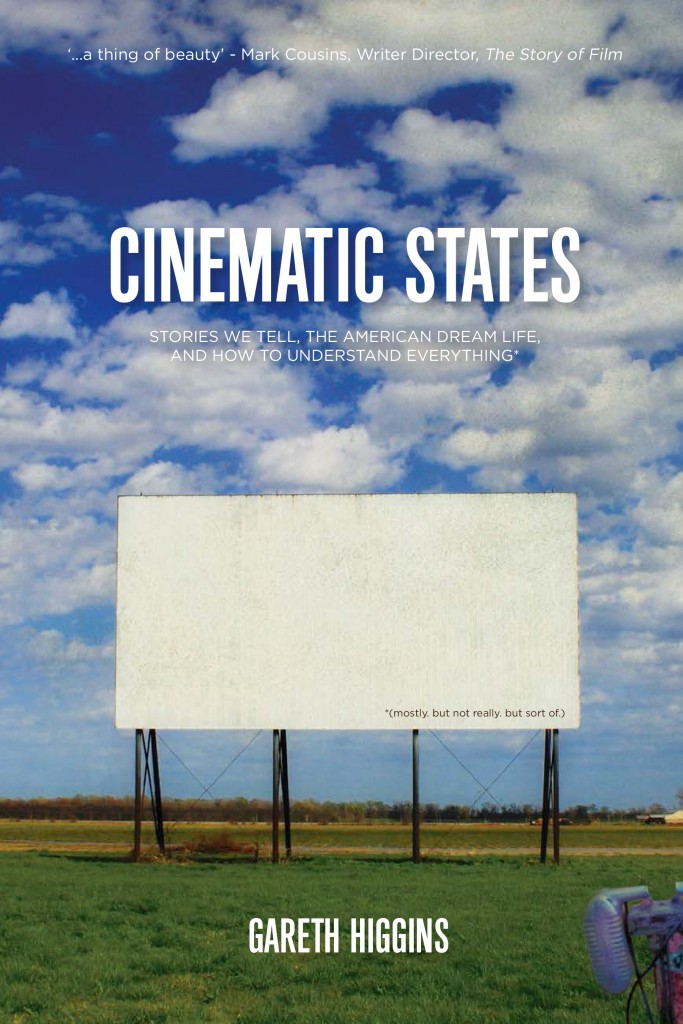 In Cinematic States: Stories We Tell, the American Dreamlife, and How to Understand Everything, Higgins sets out on a daunting task, to explore each of the fifty states through at least one film set in each state, in order to better understand his adopted homeland (Higgins is originally from northern Ireland). His findings are at once beautiful and terrifying…in a word, prophetic. Higgins writes with an incisive wit that would make Billy Wilder proud. I’ve always felt that the work of film critics and scholars says just as much (or more) about the writer as it does about the film. Higgins seems to be aware of this and writes with a brutal honesty about his own spiritual journey that is at times heart-breaking and at others uplifting. The juxtaposition of his film criticism and his self-awareness makes so much other film writing feel hollow.
In case you don’t pick up on it throughout his cinematic road-trip through the United States, Higgins’ clarifies his criteria for selecting films: “[…The] films I give a damn about are the ones that give a damn about me, or at least about people generally, and the struggle to be human in a technophiliac world, driven by the forces of the military-industrial-entertainment complex” (365). I don’t want to give away too much of Higgins’ brilliant analysis of these films and their implications for the states/country from which they emerge. Without a doubt, you’ll discover “new” films, fall in love all over again with old favorites, and learn something new about each of the fifty states. You won’t agree with his choice of films or his assessment of them, but if that trips you up, then you’re missing the bigger picture. Ayone who devotes 5 1/2 pages to the greatness that is The Goonies (1985) clearly knows what he’s doing.
In Cinematic States, Higgins becomes something of a cinematic de Tocqueville, who calls it like he sees it. Of course, he has a more holistic and healthier vision for how we can better answer the higher calling to which we collectively and individually aspire (as either residents of a democratic state, Christians, or both). I’ve encountered precious few film writers who see through finished products to uncover what they say about who we are, where we’re from, and where we’re headed as Higgins does. It’s worth sharing two examples of this vision. In writing about Ace in the Hole (1951), Higgins comments on its relevance to the current state of journalism/entertainment in the United States: “And it [still] feels like reality, because it’s pretty obvious from a sampling of US prime time television that turning human suffering into dollars is a national sport. Game shows bribing marriages into oblivion through public confessions, close-ups of the aftermath of murder, the publication of psychiatric records that destroy people’s careers—all in the public interest” (237).
About one of my favorite films Higgins writes, “The most disturbing thing about Fargo [1996] is the fact that the Coen Brothers don’t feel the need to explain why the protagonist is in financial difficulty. They just take it for granted that this is the way of the world, that everyone in the audience will identify with the notion of not being satisfied with what they have and how quickly a sense of lack can turn itself into fear. And it doesn’t take very long for this fear to transform itself into violence” (249). Higgins is rightfully attuned to the prevalence of violence in both American film and the culture at large, and his engagement with this horrific reality transcends any sort of banal conversation about which comes first.
Higgins’ introductory and concluding chapters reminded me yet again of why it is a good and right thing to be passionate about film. If you’re remotely interested in film, American history and/or current events, religion/spirituality, or delicious literary cocktails with these ingredients, then you have to read Cinematic States. It’s available through Amazon in print or digital format.
Previous Post

December 11, 2013
Overlooked Christmas Albums
Next Post

December 18, 2013 Phil Robertson Comes Out
Browse Our Archives
Select a Category Classics DVD Film Music News Pop Culture Events Print Sports Television Uncategorized Video Games
Select a Month March 2017 February 2017 January 2017 December 2016 November 2016 October 2016 September 2016 August 2016 July 2016 June 2016 May 2016 April 2016 March 2016 February 2016 January 2016 December 2015 November 2015 October 2015 September 2015 August 2015 July 2015 June 2015 May 2015 April 2015 March 2015 February 2015 January 2015 December 2014 November 2014 October 2014 September 2014 August 2014 July 2014 June 2014 May 2014 April 2014 March 2014 February 2014 January 2014 December 2013 November 2013 October 2013 September 2013 August 2013 July 2013 June 2013 May 2013 April 2013 March 2013 February 2013 January 2013 December 2012 November 2012 October 2012 September 2012 August 2012 July 2012 June 2012 May 2012 April 2012 March 2012 February 2012 January 2012 December 2011 November 2011 October 2011 September 2011 August 2011 July 2011 June 2011 May 2011 April 2011 March 2011 February 2011 January 2011 December 2010 November 2010 October 2010 September 2010 August 2010 July 2010 June 2010 May 2010 April 2010 March 2010 February 2010 January 2010 December 2009 November 2009 October 2009 September 2009 August 2009 July 2009 June 2009 May 2009 April 2009 March 2009 February 2009 January 2009 December 2008 November 2008 October 2008 September 2008 August 2008 July 2008 June 2008 May 2008 April 2008 March 2008 February 2008 January 2008 December 2007 November 2007 October 2007 September 2007 August 2007 July 2007 June 2007 May 2007 April 2007 March 2007
Follow Us!
TAKE THE
Religious Wisdom Quiz
According to Jeremiah 31:31, what did God promise to make with His people?
Select your answer to see how you score.
A new temple A new covenant A new kingdom A new law
Related posts from Pop Theology


#KillerSerials: An Interview with Kutter Callaway

Book Review: MUSLIMS AND THE MAKING OF AMERICA

TRENDING AT PATHEOS Progressive Christian

Why Christians Have a Sacred Duty to Vote:...
The Bible offers strong support for the sacred duty to vote. Here...

What Being a Modern-Day Apostle Means to Me
In my last column, I discussed the ins and outs of modern-day...

Did Ancient China Once Worship the God of...
Across human history, a common thread weaves through the origins of the...

Love Your Neighbor – Including Earth-Kin: Lev. 19,...
God’s command to love your neighbor means acting in an ethical and...

Lead a Church Study of “Jesus and Lao...
Guest writer Jack Thomas (The Irreverent Reverend) reflects on leading his church...

Principles for Understanding the Apostolic Ministry Today
Whenever people discover that my formal ministry title is "apostle," as in...
view all Progressive Christian blogs
Ad-Free & Subscriber Log-In Subscription Support
- About Us
- 2026 Calendar
- Videos
- Podcasts
- Library of World Religions
- Faith In Media Tracker
- Advertise With Us
- Write for Us
- Privacy Policy
- Terms of Service
- Do Not Sell My Data
- Contact Us
- Radiant Digital
- Manage Newsletter Subscriptions
- Unsubscribe From Notifications
- Sitemap
Copyright 2008-2026, Patheos. All rights reserved.
Subscription Support Ad-Free & Subscriber Log-In
Follow Patheos