
BuddhistCatholicContemplativeEvangelicalGeneral ChristianHinduJewishLatter-day SaintMuslimNew VisionsProgressive Christian
Beliefs
- Buddhist
- Catholic
- Contemplative
- Evangelical
- General Christian
- Hindu
- Jewish
- Latter-day Saint
- More Voices
- Muslim
- New Visions
- Pagan
- Progressive Christian
Topics
- Religion News
- Food and Religion
- Sports and Religion
- Religious Art
- Religious Music and Entertainment
- Religious Events
- History and Religion
- Style and Religion
- Politics and Religion
- Women in Religion
- Recreation Outdoors and Religion
- Business Finance and Religion
- Careers Workplace and Religion
- Education and Religion
- Family Parenting and Religion
- Health Fitness and Religion
- Home and Religion
- Relationships and Religion
- Technology and Religion
- Travel and Religion
Columnists
- Buddhist Columnists
- Business Finance and Religion Columnists
- Careers Workplace and Religion Columnists
- Catholic Columnists
- Contemplative Columnists
- Education and Religion Columnists
- Evangelists Columnists
- Family Parenting and Religion Columnists
- General Christian Columnists
- Health Fitness and Religion Columnists
- Hindu Columnists
- History and Religion Columnists
- Home and Religion Columnists
- Jewish Columnists
- More Voices Columnists
- Latter Day Columnists
- Muslim Columnists
- New Visions Columnists
- Nonreligious Columnists
- Pagan Columnists
- Politics and Religion Columnists
- Progressive Columnists
- Recreation Outdoors and Religion Columnists
- Relationships and Religion Columnists
- Religion News Columnists
- Religious Art Columnists
- Religious Events Columnists
- Religious Music and Entertainment Columnists
- Sports and Religion Columnists
- Style and Religion Columnists
- Technology and Religion Columnists
- Travel and Religion Columnists
- Women in Religion Columnists
Resource Library
- 2026 Calendar
- Library of World Religions
- The 100 Most Holy Places on Earth
- Patheos Answers
- Podcasts
- Videos
- Faith Leaders Database
- Anglican Episcopalian
- Bahai
- Baptist
- Buddhism
- Christianity
- Confucianism
- Eastern Orthodoxy
- Hinduism
- Holiness and Pentecostal
- ISKCON
- Islam
- Judaism
- Lutheran
- Methodist
- The Church of Jesus Christ of Latter-day Saints
- New Age
- Paganism
- Presbytarian and Reformed
- Protestantism
- Religion Behind the Scenes
- Roman Catholic
- Scientology
- Shia Islam
- Sikhism
- Sufism
- Sunni Islam
- Taoism
- Zen
- See all religions
Research Tools
 Ad-Free & Subscriber Log-In Subscription Support
Ad-Free & Subscriber Log-In Subscription Support
Follow Patheos 

- Trending:
- Forgiveness
- |
- Marriage
- |
- Consciousness
- |
- Death Penalty
- |
- Election
- |
- Halloween
 Pop Theology
- Home
- Progressive Christian
- Religious Music & Entertainment
- Are You There God? It’s Vampire Weekend
Are You There God? It’s Vampire Weekend
Last updated on: November 11, 2013 at 3:55 pm by Richard Lindsay
Are You There God? It’s Vampire Weekend 2013-11-11T15:55:57-08:00 Richard Lindsay
Patheos Explore the world's faith through different perspectives on religion and spirituality! Patheos has the views of the prevalent religions and spiritualities of the world.
Editor’s note: Another great post from Benjamin Griffin, lover of all things musically creative and Master of Spirituality. (Really, that’s his degree.) Here, he reflects on the blurring of lines between “religious” and “secular” music in the latest release from Vampire Weekend, “Modern Vampires of the City.”
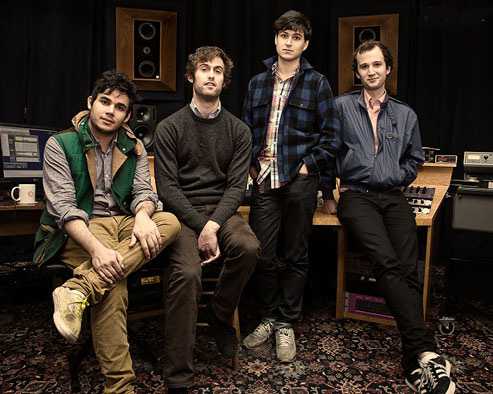
By Benjamin Griffin
I grew up adoring alternative Christian music. While I began with traditional CCM, I quickly found that there were artists in all genres, from ska to metal, singing praise, filling in the gaps where ‘secular’ music left me unfulfilled. Now, don’t get me wrong, I still adored and listened to any and all ‘secular’ music I could get my hands on but, being a young and thirsty Christian, I had a natural inclination to listen out for any possible mention of God. Deep down though, I just wanted all sides of the argument and was fascinated when secular artists would address and wrestle with issues of faith.
It took me a long time, however, to truly know what to do with the argument. After all, being fairly conservative in my youth, it would upset me greatly when I heard the struggles of anger or hurt brought on by religion (looking at you, Everclear’s ‘Why I don’t Believe in God.’). Not that I didn’t respect it, I just didn’t quite know how to incorporate it, how to face it, how to use it to enter into the conversation. Now that I’ve grown out of my comfortable conservative shell, spent many more years studying religion and theology, I can safely (and finally) say one thing for certain: these aren’t ‘secular’ voices, these are, in fact, religious voices.
Now, the artists themselves might take issue with this statement, but let me clarify. The impetus for this article began when I got the new Vampire Weekend album, Modern Vampires in the City. As a fan, I was fully prepared to listen to another great album of Ivy-League life observations set to kinetic Afro-indie pop but what I got instead was an album that spends nearly half of its time wondering what the deal is with God – specifically, the Jewish conception of God. From the joyfully irreverent “Unbelievers” (We know the fire awaits unbelievers/ All of the sinners, the same./ Girl you and I will die unbelievers/ bound to the tracks of the train) to the hopeful humility of “Everlasting Arms” (Hold me in your everlasting arms/Looked up full of fear/Trapped beneath a chandelier that’s going down.) the album’s religious notes are often shockingly poignant.
The key track, however, is the Yahweh- skewering “Yah Hey.” Now, before anyone wants to get offended by the silly title, let me offer that this is one of the most remarkable songs about spiritual wrestling I’ve ever heard. On the surface of it, it can seem a bit flippant with its repetitive voice altered chorus but, if you listen closely, this pop song presents an incredibly important, if fairly common, problem with our relationship with God. Singer Ezra Koenig deftly challenges the notion of God’s unchanging nature as “I am who I am” in light of the changing whims of His various people (with the straight to the heart line “Zion don’t love You, Babylon don’t love You”). Now, as someone who wrote a thesis with a central focus on the conception of God’s Self-Subsisting identity inherent in His proclamation to Moses, I must say that this song is simply brilliant in it’s blunt frustration with the nature of God in relation to His created images. Vampire Weekend is posing a very necessary question when they ask of God:
“Through the fire and through the flames
You won’t even say your name
Through the fire and through the flames
You won’t even say your name
Only “I am what I am”
But who could ever live that way?
Ut Deo, Ya Hey
Ut Deo, Deo”
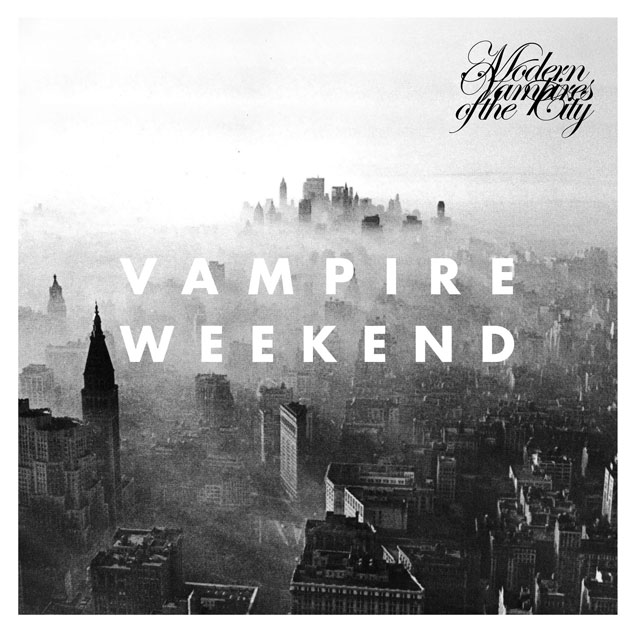
While I could write an entire essay exploring the themes of this song, I merely mention it in order to get to a more important issue – namely, that although Koenig is at best ambivalent about his religious affiliations in interviews, his voice is just as essential to religious or spiritual music as any artists on Christian labels BEC or Tooth & Nail. I can imagine some fans have been quite confused by this album’s religious preoccupation and, on the flip side, that fans of ‘religious music’ might be offended by its occasional flippancy.
What both sides need to understand, however, is that Koenig’s voice is an essential element in what makes modern religious music relevant. But this isn’t about Vampire Weekend’s popularity – what I’m talking about is the potential for a wider conversation.
If our only option for ‘authentic’ religious music consists of the sort of acoustic light-rock love songs that echo softly against church rafters like a big fluffy pillow, then our religious experience will simply become a stagnant hovel where we hide from any actual engagement with how the world understands and encounters God. There is certainly a time and place for wooing God as our Beloved, but we have to admit that there are some kinks still left in this relationship.
While “Yah Hey” might come as a slap in the face for some, “Everlasting Arms” helps remind us that regardless of whatever issues we have with our religious histories, we are all equally a part of the human struggle towards a fulfilling spiritual life. Vampire Weekend will never be labeled a ‘religious’ band, but why should they be? They’re a human one and that’s enough to hear them out because it turns out, they have fascinating things to say.

Benjamin Griffin graduated with a Master of Arts in Spirituality from the Dominican School of Philosophy and Theology in Berkeley, CA in 2013.
Previous Post

November 5, 2013
A Luxurious Recipe for Disaster
Next Post
November 15, 2013 Artpop: the Latest from Gaga Needs More of her Gospel
Browse Our Archives
Select a Category Classics DVD Film Music News Pop Culture Events Print Sports Television Uncategorized Video Games
Select a Month March 2017 February 2017 January 2017 December 2016 November 2016 October 2016 September 2016 August 2016 July 2016 June 2016 May 2016 April 2016 March 2016 February 2016 January 2016 December 2015 November 2015 October 2015 September 2015 August 2015 July 2015 June 2015 May 2015 April 2015 March 2015 February 2015 January 2015 December 2014 November 2014 October 2014 September 2014 August 2014 July 2014 June 2014 May 2014 April 2014 March 2014 February 2014 January 2014 December 2013 November 2013 October 2013 September 2013 August 2013 July 2013 June 2013 May 2013 April 2013 March 2013 February 2013 January 2013 December 2012 November 2012 October 2012 September 2012 August 2012 July 2012 June 2012 May 2012 April 2012 March 2012 February 2012 January 2012 December 2011 November 2011 October 2011 September 2011 August 2011 July 2011 June 2011 May 2011 April 2011 March 2011 February 2011 January 2011 December 2010 November 2010 October 2010 September 2010 August 2010 July 2010 June 2010 May 2010 April 2010 March 2010 February 2010 January 2010 December 2009 November 2009 October 2009 September 2009 August 2009 July 2009 June 2009 May 2009 April 2009 March 2009 February 2009 January 2009 December 2008 November 2008 October 2008 September 2008 August 2008 July 2008 June 2008 May 2008 April 2008 March 2008 February 2008 January 2008 December 2007 November 2007 October 2007 September 2007 August 2007 July 2007 June 2007 May 2007 April 2007 March 2007
Follow Us!
TAKE THE
Religious Wisdom Quiz
Where did the Pentecostal movement begin in the early 1900s?
Select your answer to see how you score.
Rome Berlin London Azusa Street, Los Angeles
Related posts from Pop Theology
The Mastodon In The Room: A Conversation with...

At SXSW2017: Music Festival Day 5
At SXSW2017: Music Festival Day 4
At SXSW2017: Music Festival Day 3
TRENDING AT PATHEOS Progressive Christian

What Being a Modern-Day Apostle Means to Me
In my last column, I discussed the ins and outs of modern-day...

Did Ancient China Once Worship the God of...
Across human history, a common thread weaves through the origins of the...

Love Your Neighbor – Including Earth-Kin: Lev. 19,...
God’s command to love your neighbor means acting in an ethical and...

Lead a Church Study of “Jesus and Lao...
Guest writer Jack Thomas (The Irreverent Reverend) reflects on leading his church...

Pastoral Wisdom for Responding to Sermon Pushback
Getting sermon pushback on your social justice sermon? Learn practical, Proverbs-based strategies...

Principles for Understanding the Apostolic Ministry Today
Whenever people discover that my formal ministry title is "apostle," as in...
view all Progressive Christian blogs
Ad-Free & Subscriber Log-In Subscription Support
- About Us
- 2026 Calendar
- Videos
- Podcasts
- Library of World Religions
- Faith In Media Tracker
- Advertise With Us
- Write for Us
- Privacy Policy
- Terms of Service
- Do Not Sell My Data
- Contact Us
- Radiant Digital
- Manage Newsletter Subscriptions
- Unsubscribe From Notifications
- Sitemap
Copyright 2008-2026, Patheos. All rights reserved.
Subscription Support Ad-Free & Subscriber Log-In
Follow Patheos