
BuddhistCatholicContemplativeEvangelicalGeneral ChristianHinduJewishLatter-day SaintMuslimNew VisionsProgressive Christian
Beliefs
- Buddhist
- Catholic
- Contemplative
- Evangelical
- General Christian
- Hindu
- Jewish
- Latter-day Saint
- More Voices
- Muslim
- New Visions
- Pagan
- Progressive Christian
Topics
- Religion News
- Food and Religion
- Sports and Religion
- Religious Art
- Religious Music and Entertainment
- Religious Events
- History and Religion
- Style and Religion
- Politics and Religion
- Women in Religion
- Recreation Outdoors and Religion
- Business Finance and Religion
- Careers Workplace and Religion
- Education and Religion
- Family Parenting and Religion
- Health Fitness and Religion
- Home and Religion
- Relationships and Religion
- Technology and Religion
- Travel and Religion
Columnists
- Buddhist Columnists
- Business Finance and Religion Columnists
- Careers Workplace and Religion Columnists
- Catholic Columnists
- Contemplative Columnists
- Education and Religion Columnists
- Evangelists Columnists
- Family Parenting and Religion Columnists
- General Christian Columnists
- Health Fitness and Religion Columnists
- Hindu Columnists
- History and Religion Columnists
- Home and Religion Columnists
- Jewish Columnists
- More Voices Columnists
- Latter Day Columnists
- Muslim Columnists
- New Visions Columnists
- Nonreligious Columnists
- Pagan Columnists
- Politics and Religion Columnists
- Progressive Columnists
- Recreation Outdoors and Religion Columnists
- Relationships and Religion Columnists
- Religion News Columnists
- Religious Art Columnists
- Religious Events Columnists
- Religious Music and Entertainment Columnists
- Sports and Religion Columnists
- Style and Religion Columnists
- Technology and Religion Columnists
- Travel and Religion Columnists
- Women in Religion Columnists
Resource Library
- 2026 Calendar
- Library of World Religions
- The 100 Most Holy Places on Earth
- Patheos Answers
- Podcasts
- Videos
- Faith Leaders Database
- Anglican Episcopalian
- Bahai
- Baptist
- Buddhism
- Christianity
- Confucianism
- Eastern Orthodoxy
- Hinduism
- Holiness and Pentecostal
- ISKCON
- Islam
- Judaism
- Lutheran
- Methodist
- The Church of Jesus Christ of Latter-day Saints
- New Age
- Paganism
- Presbytarian and Reformed
- Protestantism
- Religion Behind the Scenes
- Roman Catholic
- Scientology
- Shia Islam
- Sikhism
- Sufism
- Sunni Islam
- Taoism
- Zen
- See all religions
Research Tools
 Ad-Free & Subscriber Log-In Subscription Support
Ad-Free & Subscriber Log-In Subscription Support
Follow Patheos 

- Trending:
- Forgiveness
- |
- Marriage
- |
- Consciousness
- |
- Death Penalty
- |
- Election
- |
- Halloween
 Pop Theology
- Home
- Progressive Christian
- Religious Music & Entertainment
- A Conversation with the Stars of Black Nativity
A Conversation with the Stars of Black Nativity
Last updated on: November 27, 2013 at 11:25 am by J. Ryan Parker
A Conversation with the Stars of Black Nativity 2013-11-27T11:25:43-08:00 J. Ryan Parker
Patheos Explore the world's faith through different perspectives on religion and spirituality! Patheos has the views of the prevalent religions and spiritualities of the world.
A couple of weeks ago, I attended my very first press junket, a typical Hollywood affair in which a bunch of journalists and bloggers are herded through luxury hotel rooms and suites to interview directors, producers, and actors affiliated with an upcoming film. The film of the hour was Black Nativity, which releases today. Lucky for me, the film stars none other than Forest Whitaker, Angela Bassett, Tyrese Gibson, Mary J. Blige, Jennifer Hudson, and Jacob Lattimore. These larger-than-life stars couldn’t have been more hospitable to a newcomer like me.
I’ve constructed the following interview into two sections, the first featuring questions that I asked (almost) everyone and the second with questions specific to the individual. Hope it makes sense…and that you enjoy.
RP: For many people, Langston Hughes’ Black Nativity is a holiday tradition. What was your experience with the story before signing on to the film?

Writer/Director Kasi Lemmons.
Writer/Director Kasi Lemmons: I was raised in Boston, and my mother took me to see it every year. It was a part of my childhood and was engrained in me. When the producer asked me if I’d be interested in making a film version of it, I was excited. I was intimately familiar with the stage play. I’m also very interested in him…he’s kind of a hero of mine…as an American icon and a poet famous in his lifetime. Langston struggled with questions of faith as I feel that I do.
Angela Bassett: I wasn’t familiar with Black Nativity before the film, but in college, I found an album of Ruby Dee and Ossie Davis doing the poetry of Langston Hughes. That opened a door for me, and I became enamored of him from that time on.
Jacob Lattimore: I obviously knew the [Jesus] story, but not from Langston Hughes’ perspective with the whole African American cast. I was so happy to be a part of that, and I think this is definitely his vision, his play, his spirit on film.
Tyrese Gibson: I never saw the play. I’m well aware of Langston Hughes, but I never saw the play. When I got the script, I was really excited about the opportunity to be in a movie written and directed by [Kasi Lemmons] as well as working alongside the rest of the cast. I was very honored to get that call.
Bishop TD Jakes: I was not familiar [with Black Nativity], but I was very familiar with Langston Hughes because some of his poetry was very influential for me. They were the fuel with which our parents educated us.
RP: Were there religious experiences in your own life that shaped your preparation for and work in the film?
KL: I came from a church-going family. We were Episcopalian, but my mother’s family were Baptist. The first time I went [to my grandmother’s church], I was terrified, but then I quickly realized this is where the party is. I really liked the music and the scene. I know how to be that kind of church person, but it’s not that…I’m not an incredible church goer, but I can appreciate going.
Forest Whitaker: Definitely. I did some contemporary research too. There were a number of preachers that I remember as a youth that I fashioned [my performance] around because I wanted it to have a sense of the old school preacher. There was this one preacher named Reverend Williams, who was my grandmother’s preacher, that I used as a model. My father’s preacher, who’s in Longview, Texas, was a little bit of a model. I worked with him on meter as a preacher. Which words you emphasize…if it’s words you think should be emphasized or if it’s the smaller words in between. Then I met with–because I wanted to understand the legacy issue with the oldest church in Harlem–a preacher there named Reverend Butts, and he talked to me about his congregation and what it means to raise a family as a minister and the details of that.
AB: I grew up in the church. My mother had my sister and me in church every Sunday. We also attended the Passion Plays that came through the local fair grounds every year. I have a beautiful first lady [her pastor’s wife] in my life at the church I attend. She’s just amazing. She’s an organizational ninja. She’s so kind and encouraging and always so poised. She deals with hurt people and remains so loving. I adore her. She was definitely my inspiration.
JL: Definitely. I think everyone in the film reminded me of someone in my family. My grandfather was into church as well as my grandmother. I grew up around a lot of Christian beliefs and that’s what I’ve been taught.
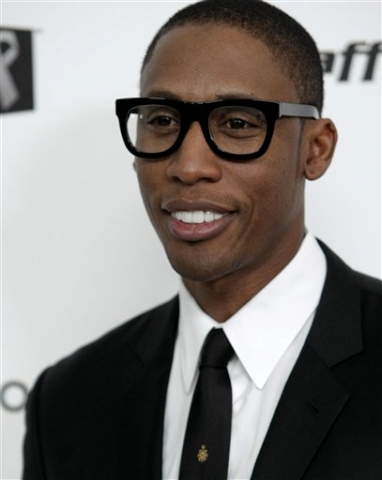
Music Producer Raphael Saadiq
Music Producer Raphael Saadiq: I had similar experiences with Christmas plays in church. My mother used to act in church in different Christmas plays. My grandmother used to take me to church all day long before I started playing. I loved the musicians at her church. When I started playing, I started playing at other churches, but no one could hear me playing bass guitar because everyone was louder than me. My grandmother would visit my church and stand up and say, “I love the way my grandson plays.” That was my early experience of Gospel and the church.
TG: I’ve known many pastors, and there’s a lot of mentors and mentees who may not be famous, but they’re in the hood…they’re in the trenches every single day having conversations with people trying to help them through situations. These people are the angels of the earth.
Mary J. Blige: My experience in church was singing. I went to church because it was where I could sing and express myself. There was one experience I had where I really experienced a touch from God. I was a little girl, probably 12, and detected God’s presence, (laughing) which afterwards made me very aware of every bad thing I was doing.
RP: I think there’s an artistic and historical significance to Black Nativity in that it seems to be a mashup of musicals and more socially conscious films, both of which feature greatly in the history of African American cinema. Is that something you were conscious of in preparing for and working on this production?
KL: Absolutely. I’m writing this in 2008 in the midst of the financial crisis and I’m witnessing what the country is going through, when we didn’t know where the bottom was, we didn’t know what was happening to us, and we might have to think through our futures differently. […] I wanted to take this timeless piece of theater and put it in a time capsule of real contemporary drama of what we have to deal with in life. Towards the end of 2011, when I was getting ready to do the major pitch I heard a news report about the financial crisis disproportionately affecting African Americans, so this was something on my mind.
RS: Everyone grew up close to those kind of stories. It was almost second nature to me to see a teenage girl pregnant, leaving home to try to fend for herself, and the strong male ego that her son has to carry and fend for himself. This kid had to turn into a man a little earlier. This happens to so many families where younger children lose older siblings and have to grow up too soon.
FW: I think so. The issue of family and forgiveness was a big one, even though it’s in the larger social context of a young man that doesn’t have a father figure in his life. Ultimately because of [the family’s] love and forgiveness, [they were] able to come together, but that doesn’t always happen. I think Kasi was able to do that and give it a rawness and a feeling that you wouldn’t expect.
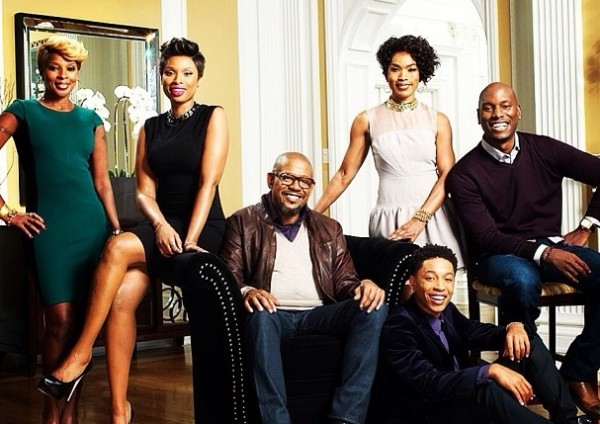
The cast of Black Nativity: Mary J. Blige, Jennifer Hudson, Forest Whitaker, Angela Bassett, Jacob Lattimore, and Tyrese Gibson.
RP: Given the iconic nature of the source material and its religious context, what was the biggest challenge in preparing for your involvement in Black Nativity?
JL: Everything was pretty easy, but the most challenging [part] was keeping the intensity of Langston. He’s a sensitive guy, but he puts up a front…he has a really hard shell. […] Kasi really made sure that I kept that hard edge. [Keeping] him angry was probably the most challenging. That was the most advice I got from Kasi.
MJB: To play this angel, I had to look at my own life story. My music has been an angel for a lot of people, because so many of my fans come to me and tell me that my songs help them get out of bad relationships. And I give god the credit for that. I had to use that to play the angel.
RP: As far as you can hope for anything in terms of audience reaction to a film, what do you hope viewers take away from Black Nativity?
FW: Forgiveness and reconciliation. First of all, [it shows] acknowledgement, acknowledging what happens and then hopefully moving to some form of understanding, which can hopefully move us to some form of forgiveness, which I think is the message of much of the work I’m doing. Also recognizing that we come from pasts [and have] mistakes…regrets…that we can work through. […] It’s about reconciliation of not just the family, but of the community and the church being a central space where people can come in and be as one.
MJB: The message I hope they walk away with is that everyone makes mistakes due to fear or insecurity, even people we think are perfect, like the pastor. Forgiveness is key to saving a family…to saving a life…and it’s a big part of this film.
TDJ: I think [the character of Reverend Cobb] is a confessional booth for clergy to step into and say that just because you’re good at one thing doesn’t mean you’re good at everything. Just because you’re a good pulpiteer doesn’t mean you’re good at investing and financing and children and fixing cars and that you have to be good at everything. It’s too much pressure for any human being. The reality is that you’re going to have a blind side. This film brings that to life.
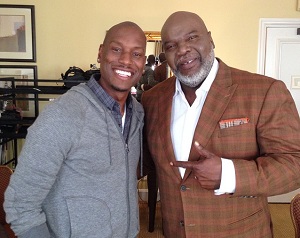
Tyrese Gibson and Bishop TD Jakes.
Bishop Jakes and the members of his ministry team actively engage pop culture. I was interested in talking to him about this involvement and what he thinks about being a minister in a highly technological and connected age.
RP: Can you talk about the inspiration behind your engagement with pop culture?
TDJ: I love it. From a faith perspective, Jesus said we go unto all the world and I don’t think we have to go by camel. We can engage the culture through social media, networking, television, film. Even though there are all kinds of other voices, to not be able to infiltrate the culture or to be left out of the conversation is dangerous for us.
RP: In this highly technological and connected world in which we find ourselves, what should the role of the minister be?
TDJ: I think about it every day. Our world is changing. The way in which we touch and communicate with each other is changing. People friend you and have never met you. They like your page, but they don’t know you. There’s a loss of intimacy. The expectations for clergy have change. I have not mastered that because it is changing drastically right in front of me. The expectations of the younger generation are different. We’re still trying to get our hands around it. How do we nurture intimacy and closeness. I don’t think any [of this] is inherently negative. It’s just a different way of reaching people. Pastors in my generation…the things we spent our lives being good at…aren’t as relevant any more.
RP: In the film, there’s a sense that the minister’s message doesn’t impact his life as fully as it should. Is he a stand-in for the larger church and the culture’s negative reaction to perceived hypocrisies in it?
TDJ: I think there is an opportunity for ministers to recognize that our strength is often in our frailties. If we had the courage to confess that we were but men of clay, it might be more attractive. It would lead to Jesus only being worshipped, rather than us having to be the end-all image of his indwelling. […] People become uncomfortable when we set ourselves up as being the epitome of what we preach. We should say I’m trying…I care about it…it’s important. I haven’t mastered being like Jesus. I’ll teach you what I know about him, but I’m not him. The early apostles were very clear about this. Black Nativity takes us back to that.
 In preparing for my interviews, I learned that Forest Whitaker is actively involved in promoting peace and reconciliation in communities around the world. He has also been involved with many recent films that are fueled by social justice oriented themes. During our time together, I asked him to elaborate more broadly on his recent work in film and his work outside the industry.
RP: I like to consider filmmakers’ work in small blocks of time. In looking at your recent projects (Fruitvale Station, I Am You, Rising From Ashes, and Black Nativity), I’ve noticed a strong thread of social-justice running through them. Where does that come from?
FW: I think that I’m starting to align my own personal beliefs into some of my films. I think The Butler did that too in dealing with human rights and civil rights. Fruitvale does it by putting a human face on a social injustice for us to feel and care about. [Rising From Ashes] deals with genocide through the Rwandan bicyclists. The films I have coming out do this too. I did a film called Zulu that deals with post-apartheid and what’s going on in South Africa today because of the apartheid era and being haunted by that. I did another film on profiling, which is called Enemy Way, which is about a man who converts to Islam and returns to the border state of New Mexico. I think those stories about humanizing, and us understanding, these social issues started to enter into a lot of my films. The social consciousness of what I do is trying to get to the place in every character where I recognize his connection with myself and everyone. That’s my journey as an artist. It’s always been going on with me, but maybe it’s becoming more evident.
RP: I’m currently researching images of forgiveness and reconciliation in film, and in preparing for this interview, I learned that you are heavily involved in work to promote peace and reconciliation around the world through the International Institute for Peace. Can you say more about that?
FW: I have an initiative called the Whitaker Peace and Development Initiative. I just got back from South Sudan where we’re working [to train] youth in every state of that country in conflict transformation, life skills, and ICT skills (information and communication technology) as well as directing them toward development in their communities. We started a program in Mexico that will be up in January in Tijuana. We have a program in Uganda. In the United States, we’re developing a tween program on conflict transformation and we’re going to enter into the school system. I’m working on that with the Cal State University Dominguez Hills. We’re just beginning the research, but we’re going to be doing some work with police officers on empathy training for communities.
The institute you were talking about is the International Institute for Peace, which I founded with the State Department, UNESCO, and Rutgers University. We have our first class of five [students] that just started. They have a B.A. and M.A. program, and the graduates will be working in my programs in the field.
RP: And you’re also undertaking your own research into these issues as well?
FW: I’m working on that. I’ve been working on, at the University of the Western Cape [in South Africa], a development degree using the Sudan as a model for development and conflict resolution across that continent and hopefully across other continents.
RP: Where can readers learn more about this work?
FW: The Whitaker Peace and Development Initiative site will be up in about a month, and at the beginning of next year, visitors can go online and take classes.
Black Nativity releases today in theaters everywhere.
Previous Post

November 27, 2013
Review: Prism by Katy Perry
Next Post
November 29, 2013 Black Nativity: A Review
Browse Our Archives
Select a Category Classics DVD Film Music News Pop Culture Events Print Sports Television Uncategorized Video Games
Select a Month March 2017 February 2017 January 2017 December 2016 November 2016 October 2016 September 2016 August 2016 July 2016 June 2016 May 2016 April 2016 March 2016 February 2016 January 2016 December 2015 November 2015 October 2015 September 2015 August 2015 July 2015 June 2015 May 2015 April 2015 March 2015 February 2015 January 2015 December 2014 November 2014 October 2014 September 2014 August 2014 July 2014 June 2014 May 2014 April 2014 March 2014 February 2014 January 2014 December 2013 November 2013 October 2013 September 2013 August 2013 July 2013 June 2013 May 2013 April 2013 March 2013 February 2013 January 2013 December 2012 November 2012 October 2012 September 2012 August 2012 July 2012 June 2012 May 2012 April 2012 March 2012 February 2012 January 2012 December 2011 November 2011 October 2011 September 2011 August 2011 July 2011 June 2011 May 2011 April 2011 March 2011 February 2011 January 2011 December 2010 November 2010 October 2010 September 2010 August 2010 July 2010 June 2010 May 2010 April 2010 March 2010 February 2010 January 2010 December 2009 November 2009 October 2009 September 2009 August 2009 July 2009 June 2009 May 2009 April 2009 March 2009 February 2009 January 2009 December 2008 November 2008 October 2008 September 2008 August 2008 July 2008 June 2008 May 2008 April 2008 March 2008 February 2008 January 2008 December 2007 November 2007 October 2007 September 2007 August 2007 July 2007 June 2007 May 2007 April 2007 March 2007
Follow Us!
TAKE THE
Religious Wisdom Quiz
I saw a vision of four living creatures with four faces—human, lion, ox, and eagle—beside wheels within wheels. Who witnessed this?
Select your answer to see how you score.
Isaiah John Ezekiel Daniel
Related posts from Pop Theology


At SXSW2017: May It Last: A Portrait of...

At SXSW 2017: "Untold Tales of Armistead Maupin"
TRENDING AT PATHEOS Progressive Christian

Why Christians Have a Sacred Duty to Vote:...
The Bible offers strong support for the sacred duty to vote. Here...

What Being a Modern-Day Apostle Means to Me
In my last column, I discussed the ins and outs of modern-day...

Did Ancient China Once Worship the God of...
Across human history, a common thread weaves through the origins of the...

Love Your Neighbor – Including Earth-Kin: Lev. 19,...
God’s command to love your neighbor means acting in an ethical and...

Lead a Church Study of “Jesus and Lao...
Guest writer Jack Thomas (The Irreverent Reverend) reflects on leading his church...

Principles for Understanding the Apostolic Ministry Today
Whenever people discover that my formal ministry title is "apostle," as in...
view all Progressive Christian blogs
Ad-Free & Subscriber Log-In Subscription Support
- About Us
- 2026 Calendar
- Videos
- Podcasts
- Library of World Religions
- Faith In Media Tracker
- Advertise With Us
- Write for Us
- Privacy Policy
- Terms of Service
- Do Not Sell My Data
- Contact Us
- Radiant Digital
- Manage Newsletter Subscriptions
- Unsubscribe From Notifications
- Sitemap
Copyright 2008-2026, Patheos. All rights reserved.
Subscription Support Ad-Free & Subscriber Log-In
Follow Patheos