
BuddhistCatholicContemplativeEvangelicalGeneral ChristianHinduJewishLatter-day SaintMuslimNew VisionsProgressive Christian
Beliefs
- Buddhist
- Catholic
- Contemplative
- Evangelical
- General Christian
- Hindu
- Jewish
- Latter-day Saint
- More Voices
- Muslim
- New Visions
- Pagan
- Progressive Christian
Topics
- Religion News
- Food and Religion
- Sports and Religion
- Religious Art
- Religious Music and Entertainment
- Religious Events
- History and Religion
- Style and Religion
- Politics and Religion
- Women in Religion
- Recreation Outdoors and Religion
- Business Finance and Religion
- Careers Workplace and Religion
- Education and Religion
- Family Parenting and Religion
- Health Fitness and Religion
- Home and Religion
- Relationships and Religion
- Technology and Religion
- Travel and Religion
Columnists
- Buddhist Columnists
- Business Finance and Religion Columnists
- Careers Workplace and Religion Columnists
- Catholic Columnists
- Contemplative Columnists
- Education and Religion Columnists
- Evangelists Columnists
- Family Parenting and Religion Columnists
- General Christian Columnists
- Health Fitness and Religion Columnists
- Hindu Columnists
- History and Religion Columnists
- Home and Religion Columnists
- Jewish Columnists
- More Voices Columnists
- Latter Day Columnists
- Muslim Columnists
- New Visions Columnists
- Nonreligious Columnists
- Pagan Columnists
- Politics and Religion Columnists
- Progressive Columnists
- Recreation Outdoors and Religion Columnists
- Relationships and Religion Columnists
- Religion News Columnists
- Religious Art Columnists
- Religious Events Columnists
- Religious Music and Entertainment Columnists
- Sports and Religion Columnists
- Style and Religion Columnists
- Technology and Religion Columnists
- Travel and Religion Columnists
- Women in Religion Columnists
Resource Library
- 2026 Calendar
- Library of World Religions
- The 100 Most Holy Places on Earth
- Patheos Answers
- Podcasts
- Videos
- Faith Leaders Database
- Anglican Episcopalian
- Bahai
- Baptist
- Buddhism
- Christianity
- Confucianism
- Eastern Orthodoxy
- Hinduism
- Holiness and Pentecostal
- ISKCON
- Islam
- Judaism
- Lutheran
- Methodist
- The Church of Jesus Christ of Latter-day Saints
- New Age
- Paganism
- Presbytarian and Reformed
- Protestantism
- Religion Behind the Scenes
- Roman Catholic
- Scientology
- Shia Islam
- Sikhism
- Sufism
- Sunni Islam
- Taoism
- Zen
- See all religions
Research Tools
 Ad-Free & Subscriber Log-In Subscription Support
Ad-Free & Subscriber Log-In Subscription Support
Follow Patheos 

- Trending:
- Forgiveness
- |
- Marriage
- |
- Consciousness
- |
- Death Penalty
- |
- Election
- |
- Halloween
 Pop Theology
- Home
- Progressive Christian
- Religious Music & Entertainment
- Drinking as Spiritual Experience?
Drinking as Spiritual Experience?
Last updated on: August 27, 2013 at 10:15 am by J. Ryan Parker
Drinking as Spiritual Experience? 2013-08-27T10:15:22-07:00 J. Ryan Parker
Patheos Explore the world's faith through different perspectives on religion and spirituality! Patheos has the views of the prevalent religions and spiritualities of the world.
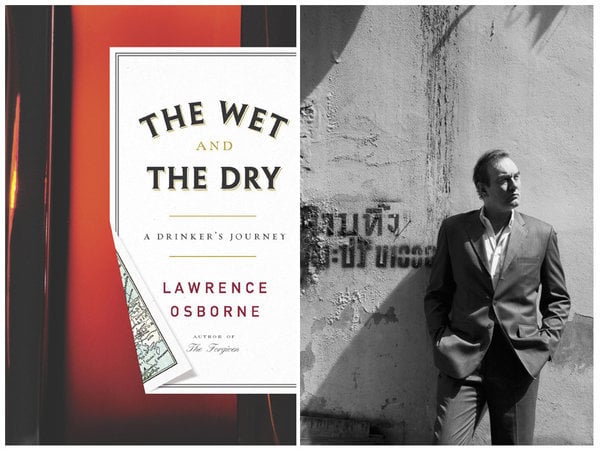
Based on our travel experiences last year, I frequently think about creating a “reality series” that focuses on drinking cultures around the world. It’s not a terribly new idea, but Three Sheets was too “drunk,” and alcohol is always second to Anthony Bourdain‘s food obsession. Thankfully, a new book by Lawrence Osborne, The Wet and the Dry: A Drinker’s Journey, begins to get at the aesthetic and intellectual depth of the kind of pop-cultural studies I’d like to pursue through alcohol cultures and consumption.
The Wet and the Dry is Osborne’s travelogue of trying (and more often than not succeeding) to procure alcoholic beverages while traveling, mainly, throughout the Middle East. He peppers these tales with reflections on significant periods of and relationships in his life that revolved around his use of alcohol. There’s his experience of being broke and homeless and his relationship with his mother, also a consummate drinker. One might say that Osborne battles with alcoholism, but this would miss the point. It is more the case that he grasps the horns of the alcohol beast and tolerates (and occasionally enjoys) the ride. Throughout his travels, he visits Middle and Eastern countries like Lebanon, Egypt, Saudi Arabia, Malaysia, and Thailand. In between tales of these adventures, he reflects on the perfect cocktail and what makes an ideal bar in Western cities like Milan, London, and New York. If you’re a cocktail hour devotee or simply enjoy the occasional glass of wine with dinner, pour yourself a drink (or two) and enjoy this book. Read on for some thoughts on the religious and/or spiritual implications of Osborne’s book.
Even when Osborne recalls funny alcohol-fueled experiences, there is a tinge of melancholy to them, as if he is simultaneously aware of the negative impact that drinking has on his life. He consistently questions the Islamic fundamentalists’ assertion that alcohol and drinking is a sickness of the soul, but at the same time, it frequently sounds like he is keenly aware of the symptoms of his own illness(es).
Osborne’s work has implications (hence the title) for broader discussions of religious and cultural relationships and differences, particularly between the East and West and Christianity, Islam, Buddhism, and nonbelievers. While Osborne might initially sound hyper-critical of Islam, it is clear that he has no patience for fundamentalisms of any sort (unless it be a religious-like devotion to cocktail hour). He does raise interesting historical points about the role of alcohol in Islam and some historically famous Muslims’ use of it. Consider the similarities to popular discussions of Christianity and alcohol consumption: “Alcohol is mentioned a mere three times in the Koran, and its use, though frowned upon, is not always explicitly forbidden. The hostility to wine in the holy book, if stern, does not seem especially ferocious. It is drunkenness, rather than alcohol per se, that provokes the Prophet’s ire” (17).
At the same, influenced by experiences of diverse class strata around the world (and particularly in the Middle East), Osborne shows how class (and being of the upper crust) often softens fundamental religiosity. This is a reality that people of all faiths know. But even among lower classes, there must still be an attraction to alcohol to help cope with the harshness of life. Just who is contributing to the $30 million alcohol black market in Pakistan? In the process, Osborne reveals that in our increasingly global and complex societies rarely are people or communities soaking wet or aridly dry.
Reading through The Wet and the Dry, I started to get the sense that Osborne was hinting at a possible spirituality attached to drink(ing). His discussions of Dionysus, the cults surrounding him, and the threats they posed to more “traditional” expressions of religion are fascinating. Osborne writes, “The drinker slouching his way every night toward his bar-shaped Bethlehem is searching for his or her own version of Pindar’s [the ancient Greek poet] amazing intuition. We want, even for a few moments, the ‘pure light of high summer’ inside us. For Pindar was suggesting not that Dionysus was like that light, but that he was that light. The god as summer’s light itself: intoxication as pure immanence” (72-73). Osborne laments what has happened to this ancient form of spiritual expression: “In the Mediterranean world, it was at the origin of a religious passion. Today we have turned that same passion into a secular industry and a private struggle. But meanwhile Hezbollah are right to hate the drinker: he […is] their greatest threat” (23).
I’m tempted to conclude with a lengthy list of quotable quotes from Osborne’s observations of drink, drinking, and drinkers, but that would give away all of the fun of reading them for the first time in their context. I will end with this bit of insight: “The drinker is a Dionysiac, a dancer who sits still, a mocker. He doesn’t need your seriousness or your regard. He just needs a little quiet music, and a gentle freedom from priests.” (65)
Previous Post

August 22, 2013
Duck Dynasty Blog #2: 'So You Think You Can Date'
Next Post
August 28, 2013 Duck Dynasty Blog #3: Hot Tub Grime Machine
Browse Our Archives
Select a Category Classics DVD Film Music News Pop Culture Events Print Sports Television Uncategorized Video Games
Select a Month March 2017 February 2017 January 2017 December 2016 November 2016 October 2016 September 2016 August 2016 July 2016 June 2016 May 2016 April 2016 March 2016 February 2016 January 2016 December 2015 November 2015 October 2015 September 2015 August 2015 July 2015 June 2015 May 2015 April 2015 March 2015 February 2015 January 2015 December 2014 November 2014 October 2014 September 2014 August 2014 July 2014 June 2014 May 2014 April 2014 March 2014 February 2014 January 2014 December 2013 November 2013 October 2013 September 2013 August 2013 July 2013 June 2013 May 2013 April 2013 March 2013 February 2013 January 2013 December 2012 November 2012 October 2012 September 2012 August 2012 July 2012 June 2012 May 2012 April 2012 March 2012 February 2012 January 2012 December 2011 November 2011 October 2011 September 2011 August 2011 July 2011 June 2011 May 2011 April 2011 March 2011 February 2011 January 2011 December 2010 November 2010 October 2010 September 2010 August 2010 July 2010 June 2010 May 2010 April 2010 March 2010 February 2010 January 2010 December 2009 November 2009 October 2009 September 2009 August 2009 July 2009 June 2009 May 2009 April 2009 March 2009 February 2009 January 2009 December 2008 November 2008 October 2008 September 2008 August 2008 July 2008 June 2008 May 2008 April 2008 March 2008 February 2008 January 2008 December 2007 November 2007 October 2007 September 2007 August 2007 July 2007 June 2007 May 2007 April 2007 March 2007
Follow Us!
TAKE THE
Religious Wisdom Quiz
Which Christian festival begins with Ash Wednesday and ends at Easter?
Select your answer to see how you score.
Advent Lent Pentecost Epiphany
Related posts from Pop Theology


#KillerSerials: An Interview with Kutter Callaway

Book Review: MUSLIMS AND THE MAKING OF AMERICA

TRENDING AT PATHEOS Progressive Christian

Why Christians Have a Sacred Duty to Vote:...
The Bible offers strong support for the sacred duty to vote. Here...

What Being a Modern-Day Apostle Means to Me
In my last column, I discussed the ins and outs of modern-day...

Did Ancient China Once Worship the God of...
Across human history, a common thread weaves through the origins of the...

Love Your Neighbor – Including Earth-Kin: Lev. 19,...
God’s command to love your neighbor means acting in an ethical and...

Lead a Church Study of “Jesus and Lao...
Guest writer Jack Thomas (The Irreverent Reverend) reflects on leading his church...

Principles for Understanding the Apostolic Ministry Today
Whenever people discover that my formal ministry title is "apostle," as in...
view all Progressive Christian blogs
Ad-Free & Subscriber Log-In Subscription Support
- About Us
- 2026 Calendar
- Videos
- Podcasts
- Library of World Religions
- Faith In Media Tracker
- Advertise With Us
- Write for Us
- Privacy Policy
- Terms of Service
- Do Not Sell My Data
- Contact Us
- Radiant Digital
- Manage Newsletter Subscriptions
- Unsubscribe From Notifications
- Sitemap
Copyright 2008-2026, Patheos. All rights reserved.
Subscription Support Ad-Free & Subscriber Log-In
Follow Patheos