
BuddhistCatholicContemplativeEvangelicalGeneral ChristianHinduJewishLatter-day SaintMuslimNew VisionsProgressive Christian
Beliefs
- Buddhist
- Catholic
- Contemplative
- Evangelical
- General Christian
- Hindu
- Jewish
- Latter-day Saint
- More Voices
- Muslim
- New Visions
- Pagan
- Progressive Christian
Topics
- Religion News
- Food and Religion
- Sports and Religion
- Religious Art
- Religious Music and Entertainment
- Religious Events
- History and Religion
- Style and Religion
- Politics and Religion
- Women in Religion
- Recreation Outdoors and Religion
- Business Finance and Religion
- Careers Workplace and Religion
- Education and Religion
- Family Parenting and Religion
- Health Fitness and Religion
- Home and Religion
- Relationships and Religion
- Technology and Religion
- Travel and Religion
Columnists
- Buddhist Columnists
- Business Finance and Religion Columnists
- Careers Workplace and Religion Columnists
- Catholic Columnists
- Contemplative Columnists
- Education and Religion Columnists
- Evangelists Columnists
- Family Parenting and Religion Columnists
- General Christian Columnists
- Health Fitness and Religion Columnists
- Hindu Columnists
- History and Religion Columnists
- Home and Religion Columnists
- Jewish Columnists
- More Voices Columnists
- Latter Day Columnists
- Muslim Columnists
- New Visions Columnists
- Nonreligious Columnists
- Pagan Columnists
- Politics and Religion Columnists
- Progressive Columnists
- Recreation Outdoors and Religion Columnists
- Relationships and Religion Columnists
- Religion News Columnists
- Religious Art Columnists
- Religious Events Columnists
- Religious Music and Entertainment Columnists
- Sports and Religion Columnists
- Style and Religion Columnists
- Technology and Religion Columnists
- Travel and Religion Columnists
- Women in Religion Columnists
Resource Library
- 2026 Calendar
- Library of World Religions
- The 100 Most Holy Places on Earth
- Patheos Answers
- Podcasts
- Videos
- Faith Leaders Database
- Anglican Episcopalian
- Bahai
- Baptist
- Buddhism
- Christianity
- Confucianism
- Eastern Orthodoxy
- Hinduism
- Holiness and Pentecostal
- ISKCON
- Islam
- Judaism
- Lutheran
- Methodist
- The Church of Jesus Christ of Latter-day Saints
- New Age
- Paganism
- Presbytarian and Reformed
- Protestantism
- Religion Behind the Scenes
- Roman Catholic
- Scientology
- Shia Islam
- Sikhism
- Sufism
- Sunni Islam
- Taoism
- Zen
- See all religions
Research Tools
 Ad-Free & Subscriber Log-In Subscription Support
Ad-Free & Subscriber Log-In Subscription Support
Follow Patheos 

- Trending:
- Forgiveness
- |
- Marriage
- |
- Consciousness
- |
- Death Penalty
- |
- Election
- |
- Halloween
 Pop Theology
- Home
- Progressive Christian
- Religious Music & Entertainment
- Cooperative Creativity
Cooperative Creativity
Last updated on: May 22, 2013 at 10:15 am by J. Ryan Parker
Cooperative Creativity 2013-05-22T10:15:15-07:00 J. Ryan Parker
Patheos Explore the world's faith through different perspectives on religion and spirituality! Patheos has the views of the prevalent religions and spiritualities of the world.
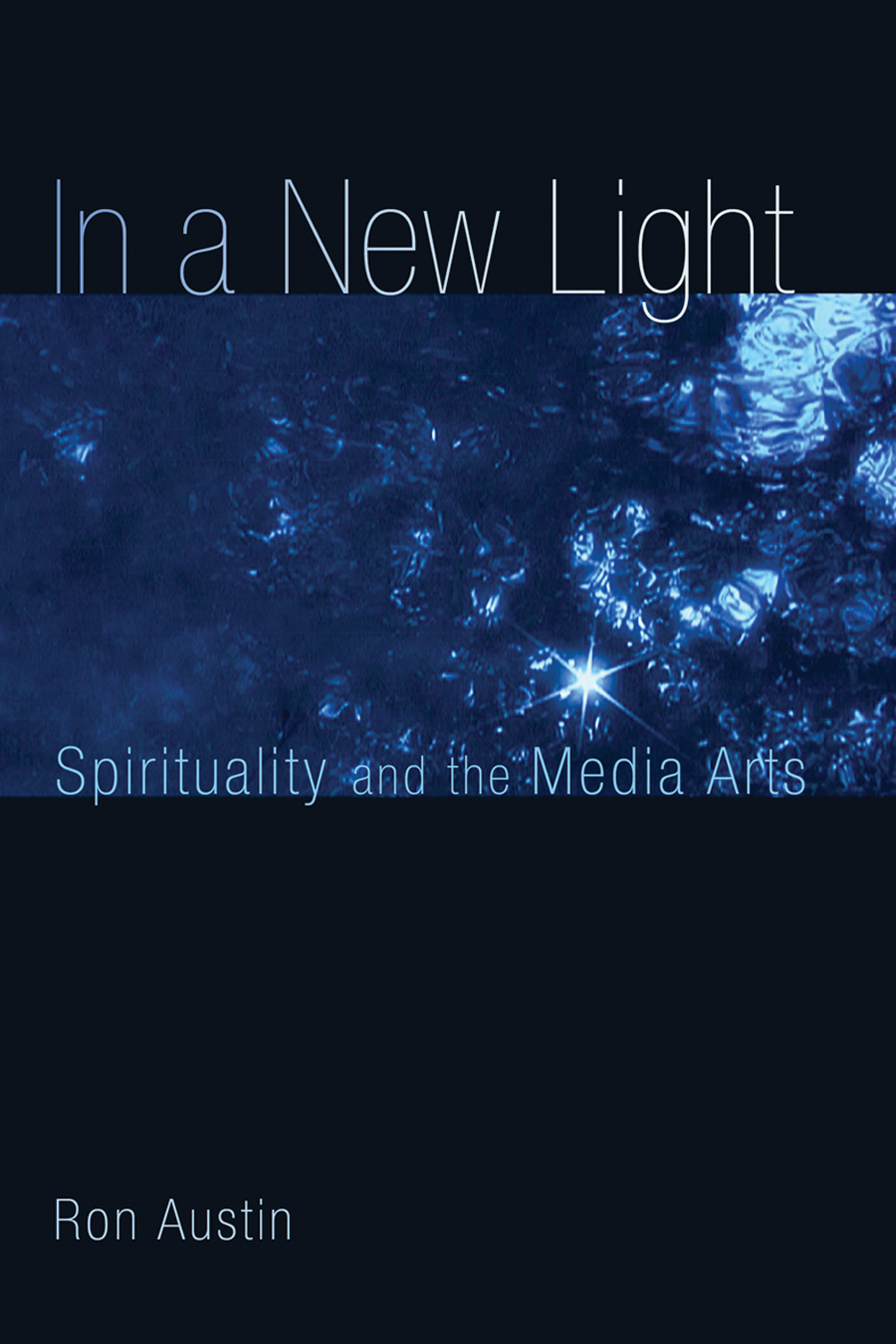
In preparation for an upcoming film producers’ program, I’ve got a laundry list of films to watch and books to read. One of those books, Ron Austin‘s In a New Light: Spirituality and the Media Arts, just happens to be one of the better reflections on the relationship between film and religion I’ve ever read.
Austin’s theoretical, religious, and spiritual reflections on the possibilities of film are borne out of decades of a life in “the business.” A student of no less than Charlie Chaplin and Jean Renoir, he has written for numerous television series from Charlie’s Angels to Matlock to Mission Impossible. He is a member of the Academy (the one that counts!) and has even been awarded a lifetime achievement award by the Writers Guild of America. When it comes to film, Austin clearly knows of what he speaks.
He has coupled this rich experience with deep theological and religious reflection. He approaches this work with both a strong commitment to his Christian faith and a genuine openness to insights from other traditions that both challenge and inspire his own. He has taken this radical openness and used it to fuel UNICA “a band of filmmakers working together to change the way films are made and seen based on a radical commitment to unity,” whose first film, Blue In Green, is an attempt to flesh this out.
Austin breaks down his short (90-odd pages) but insightful book into three sections: Spiritual Foundations, A Brief Spiritual History of Film, and Spiritual Frontiers. In the first section, he reflects on three common themes he detects across all major faith traditions: 1) being in the present moment; 2) affirming the mystery of the Other, and 3) transforming conflict. In each case, he considers the ways in which filmmakers are (or should be) best suited to truthfully address them through their work.
As a society, Austin argues, we are asleep, and pop culture products often help keep us that way. However, filmmakers have the ability to wake us up, to point us to our spiritual lethargy, and to envision a different way of being in the world. This requires the audience to be attentive to the filmmaker and the filmmaker to be attentive to the world around her. Austin writes, “far more than a lack of skill, the obstacle to good writing, directing, and acting is inattentiveness” (6).
In terms of remaining open to the mystery of the Other, Austin writes about the necessity of filmmakers being open to the “otherness” of their characters, to treat them with respect and not as disposable elements in the narrative. Unfortunately, the ways in which filmmakers depict conflict in their films often falls under the category of the latter. Therefore, Austin argues, the “moral obligation of the artist is to transform conflict in such a way that it forces us to delve into the fundamental sources of conflict and violence. […] Our objective, then, is not to resolve or avoid conflict, but to be able to truly and fully observe and probe it” (10). The sources of violence that filmmakers (and the rest of us) must overcome are “ignorance and error, the mirroring process, and perversity or malevolence” (11). This last source leads Austin to a reflection on the nature of evil and the role that scapegoating continues to play in our popular culture.
In the second part of the book, Ausint offers a brief spiritual history of film in which he devotes a couple of pages each to several filmmakers that, he argues, responded artistically (cinematically) to the times in which they lived with films that reveled in deep spiritual themes. He readily admits that his history is a Euro-American one as it includes the likes of Chaplin, Renoir, Dreyer, De Sica, Scorsese, Allen, and Kieslowski, to name a few. Here, Austin points to one or two key films from each directors oeuvre and highlights recurring spiritual/religious themes in their work. This entire section (like the book itself) left me longing for more.
In the third section, Austin turns his attention to the present moment and the near future. He writes, “We are engaged in a search for the primal springs of art and life itself” and argues that the call for transcendence can be answered (in part) by filmmakers and Christians and, perhaps, a combination of both (69). Christian artists should answer the despair of the world by creating a “culture of hope,” but, as prefaced in the first section, it cannot be one that ignores or downplays the suffering of others. He writes, “To create a complex, yet spontaneous audience response, akin to poetics, means finding significant moments of depth and insight more than forging a progressive narrative” (73).
Austin concludes his book with two important appendices, one of personal reflections on faith and the other about the creation of a cooperative film project, Blue In Green. Here, he calls for “creative kenosis,” the paradigm for which, Austin argues, is “Jesus, who ’emptied himself’ on the Cross to reveal the ultimate truth of God’s redemptive love. This is the model for our spiritual discipline, […] an imitation of Jesus’ self-emptying in the context of artistic creation” (81). In conclusion, Austin leaves readers with a spiritual filmography that will no doubt keep film lovers engaged for months.
In 2011, Austin was inducted into the Dominican School of Philosophy and Theology’s College of Fellows. I took many film courses there under Professor Michael Morris. You can read Austin’s commencement address here and watch a video of one of his lectures here.
Previous Post

May 20, 2013
Eat of My Flesh
Next Post

May 26, 2013 Star Trek: Into Darkness -- Boldly Brimming with Bromance and Story
Browse Our Archives
Select a Category Classics DVD Film Music News Pop Culture Events Print Sports Television Uncategorized Video Games
Select a Month March 2017 February 2017 January 2017 December 2016 November 2016 October 2016 September 2016 August 2016 July 2016 June 2016 May 2016 April 2016 March 2016 February 2016 January 2016 December 2015 November 2015 October 2015 September 2015 August 2015 July 2015 June 2015 May 2015 April 2015 March 2015 February 2015 January 2015 December 2014 November 2014 October 2014 September 2014 August 2014 July 2014 June 2014 May 2014 April 2014 March 2014 February 2014 January 2014 December 2013 November 2013 October 2013 September 2013 August 2013 July 2013 June 2013 May 2013 April 2013 March 2013 February 2013 January 2013 December 2012 November 2012 October 2012 September 2012 August 2012 July 2012 June 2012 May 2012 April 2012 March 2012 February 2012 January 2012 December 2011 November 2011 October 2011 September 2011 August 2011 July 2011 June 2011 May 2011 April 2011 March 2011 February 2011 January 2011 December 2010 November 2010 October 2010 September 2010 August 2010 July 2010 June 2010 May 2010 April 2010 March 2010 February 2010 January 2010 December 2009 November 2009 October 2009 September 2009 August 2009 July 2009 June 2009 May 2009 April 2009 March 2009 February 2009 January 2009 December 2008 November 2008 October 2008 September 2008 August 2008 July 2008 June 2008 May 2008 April 2008 March 2008 February 2008 January 2008 December 2007 November 2007 October 2007 September 2007 August 2007 July 2007 June 2007 May 2007 April 2007 March 2007
Follow Us!
TAKE THE
Religious Wisdom Quiz
Who was King Zedekiah, and what did he do to anger God and ensure Jerusalem's fall?
Select your answer to see how you score.
He rebelled against Babylon He burned the scroll He built an idol He killed Jeremiah
Related posts from Pop Theology


#KillerSerials: An Interview with Kutter Callaway

Book Review: MUSLIMS AND THE MAKING OF AMERICA

TRENDING AT PATHEOS Progressive Christian

Why Christians Have a Sacred Duty to Vote:...
The Bible offers strong support for the sacred duty to vote. Here...

What Being a Modern-Day Apostle Means to Me
In my last column, I discussed the ins and outs of modern-day...

Did Ancient China Once Worship the God of...
Across human history, a common thread weaves through the origins of the...

Love Your Neighbor – Including Earth-Kin: Lev. 19,...
God’s command to love your neighbor means acting in an ethical and...

Lead a Church Study of “Jesus and Lao...
Guest writer Jack Thomas (The Irreverent Reverend) reflects on leading his church...

Principles for Understanding the Apostolic Ministry Today
Whenever people discover that my formal ministry title is "apostle," as in...
view all Progressive Christian blogs
Ad-Free & Subscriber Log-In Subscription Support
- About Us
- 2026 Calendar
- Videos
- Podcasts
- Library of World Religions
- Faith In Media Tracker
- Advertise With Us
- Write for Us
- Privacy Policy
- Terms of Service
- Do Not Sell My Data
- Contact Us
- Radiant Digital
- Manage Newsletter Subscriptions
- Unsubscribe From Notifications
- Sitemap
Copyright 2008-2026, Patheos. All rights reserved.
Subscription Support Ad-Free & Subscriber Log-In
Follow Patheos