
BuddhistCatholicContemplativeEvangelicalGeneral ChristianHinduJewishLatter-day SaintMuslimNew VisionsProgressive Christian
Beliefs
- Buddhist
- Catholic
- Contemplative
- Evangelical
- General Christian
- Hindu
- Jewish
- Latter-day Saint
- More Voices
- Muslim
- New Visions
- Pagan
- Progressive Christian
Topics
- Religion News
- Food and Religion
- Sports and Religion
- Religious Art
- Religious Music and Entertainment
- Religious Events
- History and Religion
- Style and Religion
- Politics and Religion
- Women in Religion
- Recreation Outdoors and Religion
- Business Finance and Religion
- Careers Workplace and Religion
- Education and Religion
- Family Parenting and Religion
- Health Fitness and Religion
- Home and Religion
- Relationships and Religion
- Technology and Religion
- Travel and Religion
Columnists
- Buddhist Columnists
- Business Finance and Religion Columnists
- Careers Workplace and Religion Columnists
- Catholic Columnists
- Contemplative Columnists
- Education and Religion Columnists
- Evangelists Columnists
- Family Parenting and Religion Columnists
- General Christian Columnists
- Health Fitness and Religion Columnists
- Hindu Columnists
- History and Religion Columnists
- Home and Religion Columnists
- Jewish Columnists
- More Voices Columnists
- Latter Day Columnists
- Muslim Columnists
- New Visions Columnists
- Nonreligious Columnists
- Pagan Columnists
- Politics and Religion Columnists
- Progressive Columnists
- Recreation Outdoors and Religion Columnists
- Relationships and Religion Columnists
- Religion News Columnists
- Religious Art Columnists
- Religious Events Columnists
- Religious Music and Entertainment Columnists
- Sports and Religion Columnists
- Style and Religion Columnists
- Technology and Religion Columnists
- Travel and Religion Columnists
- Women in Religion Columnists
Resource Library
- 2026 Calendar
- Library of World Religions
- The 100 Most Holy Places on Earth
- Patheos Answers
- Podcasts
- Videos
- Faith Leaders Database
- Anglican Episcopalian
- Bahai
- Baptist
- Buddhism
- Christianity
- Confucianism
- Eastern Orthodoxy
- Hinduism
- Holiness and Pentecostal
- ISKCON
- Islam
- Judaism
- Lutheran
- Methodist
- The Church of Jesus Christ of Latter-day Saints
- New Age
- Paganism
- Presbytarian and Reformed
- Protestantism
- Religion Behind the Scenes
- Roman Catholic
- Scientology
- Shia Islam
- Sikhism
- Sufism
- Sunni Islam
- Taoism
- Zen
- See all religions
Research Tools
 Ad-Free & Subscriber Log-In Subscription Support
Ad-Free & Subscriber Log-In Subscription Support
Follow Patheos 

- Trending:
- Forgiveness
- |
- Marriage
- |
- Consciousness
- |
- Death Penalty
- |
- Election
- |
- Halloween
 Pop Theology
- Home
- Progressive Christian
- Religious Music & Entertainment
- Are you Bro Life?
Are you Bro Life?
Last updated on: June 18, 2013 at 9:24 pm by Richard Lindsay
Are you Bro Life? 2013-06-18T21:24:49-07:00 Richard Lindsay
Patheos Explore the world's faith through different perspectives on religion and spirituality! Patheos has the views of the prevalent religions and spiritualities of the world.
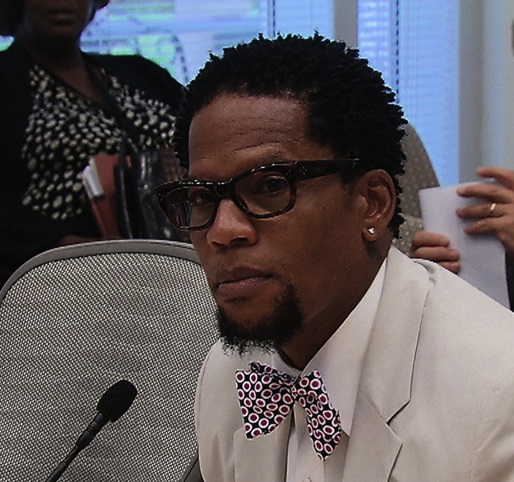 Sometimes it takes absurdity to point out an absurdity. Especially when that absurdity is unexamined prejudice.
Mine came four years ago with the until-then absurd proposition of electing a black man president. I was an Obama supporter since the primaries and was buzzing along on the “Yes we did!” high for a couple of days after the election. My admiration for the man was limitless as it seemed we’d elected a person of superior intelligence, keen judgment, and emotional maturity to the highest office in America. (I still think this, BTW, so go vote for his re-election.)
Walking down a street in Oakland during those heady days, I smiled at the black kids wearing Obama t-shirts. “How nice,” I thought, “that they now have something to aspire to.” This pulled me up short. Didn’t they have something to aspire to before Obama was elected? Even with all things economically and racially not being equal in America, why didn’t I ascribe the same potential for nation-leading intelligence, judgment, and emotional maturity to black kids in Oakland as I did to the black man now headed for the Oval Office? It was like I was limiting these kids in my own mind, assigning them to a permanent underclass just because they were urban and African-American.
Attacking absurdity with absurdity was just the point of D.L. Hughley’s Comedy Central special “The Endangered List,” broadcast last Saturday night. The show is about Hughley’s attempt to have the EPA declare the black man an endangered species.
The idea is just ridiculous enough to point out a significant American contradiction: people will band together to save whales, or trees, or Community, but not their fellow human beings, like urban African-Americans, that face consistent and formidable obstacles to their health and wellbeing.
A few stats from the Morehouse College Male Initiative and other sources:
- The black unemployment rate in September was 13.4%, versus an overall unemployment rate of 7.8%.
- Median net worth of black families in 2009: $5,677; Median net worth of white families in 2009: $113,149
- 1 in 3 black men between the ages of 20 and 29 years old is under correctional supervision or control.
- In at least 15 states, black men are sent to prison on drug charges at rates ranging from 20-57 times those of white men.
- Blacks, who comprise only 13% of the population, constitute 35% of all arrests for drug possession, 55% of all convictions on those charges, and 74% of all those sentenced to prison for possession.
- A black man is 7 times more likely to be murdered than a white man.
Hughley sets out to counter these grim statistics with the comedy attack style developed by Michael Moore, Sacha Baron Cohen, and The Daily Show. This first involves trying to get people to sign a petition to have the black man declared an endangered species. Even employing busty white sorority girls in what Hughley calls the “Bermuda Triangle of white guilt”—Union Square in New York City—he gets few signatures.
One exchange unfolded like this:
“Black men’s habitat is being oppressed,” one of the sorority girls tells a passer-by.
“By who?” the man asks.
“Jeremy Lin.”
Hughley spends time with a white supremacist to get his take on race relations and the survival of whites and blacks.
“I do the same thing for white people that Al Sharpton and Jesse Jackson do for black people,” the racist states confidently.
“You annoy white people?” Hughley responds.
Hughley tries to get him to sign the petition to save the black man on the principle that losing African-Americans would destroy the neo-Nazi ecosystem of hate. He doesn’t get a signature, but they do share a black and white cookie, and they both agree they hate the latest Tyler Perry movie.
A couple of segments point out with more bitter irony how systemic racism stacks the deck against African Americans. Hughley has a conversation with two young men from South Central L.A., members of the Bloods street gang. Although he’s sympathetic to the conditions they’ve grown up in (one of the kids, who can’t be older than 20, has been shot four times) he challenges them to see the larger implications of their life choices. He points out that companies like Corrections Corporation of America are getting rich on young black men not getting their lives together, as they privatize the “corrections industry.” Partially as a piece of agitprop consumerism, and partially to send a message to the young gang members, he buys them each a piece of stock in CCA, so at least if they get sent to prison, they’ll be part owners in the company.
The second piece that should make anyone’s blood boil involves the case of egregious environmental racism. Hughley visits an African-American family in Tennessee who lost their father and had several other family members get sick with cancer when a landfill moved next to their family farm. Adding to the understandable “not in my back yard” sense of violation that any property owner would feel at such a development, it seemed more than a little suspicious that the landfill was placed in a majority-black populated part of the county. The daughter of the family later found out that white residents in the area had received letters from the county warning them not to drink their well water because it would be contaminated. Black residents received a letter from the county that told them their well water was perfectly safe. With the family patriarch dying, the final insult came when they sued for damages and won, leaving some hope that they would have sufficient funds to pay for their father’s medical care. The white residents, however, were awarded their settlements right away. As the African-American family watched their father die, they had yet to receive one cent of their settlement. At this point, the petition for EPA endangered status for black men did not seem absurd at all, and Hughley had no trouble getting the family to sign on.
We’re now at a point in American history where racism hides itself well. We’ve seen this in the course of the Obama administration, where blatant statements of discrimination have been replaced with the vague (he doesn’t understand America) or the downright loony (he’s not from America). These are ways of “othering” Obama without bringing up the taboo topic of race. Environmental racism, often not as easy to spot as what happened to the family in Tennesee, is another socially acceptable form of racism. And, as I discovered, racism can be as subtle as allowing a negative status quo to continue unchallenged when it comes to the opportunity, health, and safety of people of different races and classes. Yes, the young Bloods Hughley interviewed needed to start taking personal responsibility for their lives, but if white kids of any socioeconomic status were getting shot four times before their 20th birthday, there would be community outrage and a demand for action.
Hughley’s show points out with humor, some that tickles and some that bites, that as a culture, either on purpose or simply by accepting that “that’s just the way things are,” we have assigned different value to peoples’ lives based on their race. This absurdity must end. We’ve all got to be bro life.
Previous Post

October 31, 2012
The Undead and Theology: A Review
Next Post
November 6, 2012 Making Friends Among the Taliban
Browse Our Archives
Select a Category Classics DVD Film Music News Pop Culture Events Print Sports Television Uncategorized Video Games
Select a Month March 2017 February 2017 January 2017 December 2016 November 2016 October 2016 September 2016 August 2016 July 2016 June 2016 May 2016 April 2016 March 2016 February 2016 January 2016 December 2015 November 2015 October 2015 September 2015 August 2015 July 2015 June 2015 May 2015 April 2015 March 2015 February 2015 January 2015 December 2014 November 2014 October 2014 September 2014 August 2014 July 2014 June 2014 May 2014 April 2014 March 2014 February 2014 January 2014 December 2013 November 2013 October 2013 September 2013 August 2013 July 2013 June 2013 May 2013 April 2013 March 2013 February 2013 January 2013 December 2012 November 2012 October 2012 September 2012 August 2012 July 2012 June 2012 May 2012 April 2012 March 2012 February 2012 January 2012 December 2011 November 2011 October 2011 September 2011 August 2011 July 2011 June 2011 May 2011 April 2011 March 2011 February 2011 January 2011 December 2010 November 2010 October 2010 September 2010 August 2010 July 2010 June 2010 May 2010 April 2010 March 2010 February 2010 January 2010 December 2009 November 2009 October 2009 September 2009 August 2009 July 2009 June 2009 May 2009 April 2009 March 2009 February 2009 January 2009 December 2008 November 2008 October 2008 September 2008 August 2008 July 2008 June 2008 May 2008 April 2008 March 2008 February 2008 January 2008 December 2007 November 2007 October 2007 September 2007 August 2007 July 2007 June 2007 May 2007 April 2007 March 2007
Follow Us!
TAKE THE
Religious Wisdom Quiz
Which prophet's father was a priest named Buzi?
Select your answer to see how you score.
Hosea Ezekiel Joel Daniel
Related posts from Pop Theology

#KillerSerials: THE PATH, S2 Ep. 11
#KillerSerials: THE PATH, S2 Ep. 10

#KillerSerials: THE PATH S2, E8
TRENDING AT PATHEOS Progressive Christian

Why Christians Have a Sacred Duty to Vote:...
The Bible offers strong support for the sacred duty to vote. Here...

What Being a Modern-Day Apostle Means to Me
In my last column, I discussed the ins and outs of modern-day...

Did Ancient China Once Worship the God of...
Across human history, a common thread weaves through the origins of the...

Love Your Neighbor – Including Earth-Kin: Lev. 19,...
God’s command to love your neighbor means acting in an ethical and...

Lead a Church Study of “Jesus and Lao...
Guest writer Jack Thomas (The Irreverent Reverend) reflects on leading his church...

Principles for Understanding the Apostolic Ministry Today
Whenever people discover that my formal ministry title is "apostle," as in...
view all Progressive Christian blogs
Ad-Free & Subscriber Log-In Subscription Support
- About Us
- 2026 Calendar
- Videos
- Podcasts
- Library of World Religions
- Faith In Media Tracker
- Advertise With Us
- Write for Us
- Privacy Policy
- Terms of Service
- Do Not Sell My Data
- Contact Us
- Radiant Digital
- Manage Newsletter Subscriptions
- Unsubscribe From Notifications
- Sitemap
Copyright 2008-2026, Patheos. All rights reserved.
Subscription Support Ad-Free & Subscriber Log-In
Follow Patheos