
BuddhistCatholicContemplativeEvangelicalGeneral ChristianHinduJewishLatter-day SaintMuslimNew VisionsProgressive Christian
Beliefs
- Buddhist
- Catholic
- Contemplative
- Evangelical
- General Christian
- Hindu
- Jewish
- Latter-day Saint
- More Voices
- Muslim
- New Visions
- Pagan
- Progressive Christian
Topics
- Religion News
- Food and Religion
- Sports and Religion
- Religious Art
- Religious Music and Entertainment
- Religious Events
- History and Religion
- Style and Religion
- Politics and Religion
- Women in Religion
- Recreation Outdoors and Religion
- Business Finance and Religion
- Careers Workplace and Religion
- Education and Religion
- Family Parenting and Religion
- Health Fitness and Religion
- Home and Religion
- Relationships and Religion
- Technology and Religion
- Travel and Religion
Columnists
- Buddhist Columnists
- Business Finance and Religion Columnists
- Careers Workplace and Religion Columnists
- Catholic Columnists
- Contemplative Columnists
- Education and Religion Columnists
- Evangelists Columnists
- Family Parenting and Religion Columnists
- General Christian Columnists
- Health Fitness and Religion Columnists
- Hindu Columnists
- History and Religion Columnists
- Home and Religion Columnists
- Jewish Columnists
- More Voices Columnists
- Latter Day Columnists
- Muslim Columnists
- New Visions Columnists
- Nonreligious Columnists
- Pagan Columnists
- Politics and Religion Columnists
- Progressive Columnists
- Recreation Outdoors and Religion Columnists
- Relationships and Religion Columnists
- Religion News Columnists
- Religious Art Columnists
- Religious Events Columnists
- Religious Music and Entertainment Columnists
- Sports and Religion Columnists
- Style and Religion Columnists
- Technology and Religion Columnists
- Travel and Religion Columnists
- Women in Religion Columnists
Resource Library
- 2026 Calendar
- Library of World Religions
- The 100 Most Holy Places on Earth
- Patheos Answers
- Podcasts
- Videos
- Faith Leaders Database
- Anglican Episcopalian
- Bahai
- Baptist
- Buddhism
- Christianity
- Confucianism
- Eastern Orthodoxy
- Hinduism
- Holiness and Pentecostal
- ISKCON
- Islam
- Judaism
- Lutheran
- Methodist
- The Church of Jesus Christ of Latter-day Saints
- New Age
- Paganism
- Presbytarian and Reformed
- Protestantism
- Religion Behind the Scenes
- Roman Catholic
- Scientology
- Shia Islam
- Sikhism
- Sufism
- Sunni Islam
- Taoism
- Zen
- See all religions
Research Tools
 Ad-Free & Subscriber Log-In Subscription Support
Ad-Free & Subscriber Log-In Subscription Support
Follow Patheos 

- Trending:
- Forgiveness
- |
- Marriage
- |
- Consciousness
- |
- Death Penalty
- |
- Election
- |
- Halloween
 Pop Theology
- Home
- Progressive Christian
- Religious Music & Entertainment
- Total Recall: Remembering It Wholesale
Total Recall: Remembering It Wholesale
Last updated on: September 18, 2012 at 11:21 pm by Richard Lindsay
Total Recall: Remembering It Wholesale 2012-09-18T23:21:39-07:00 Richard Lindsay
Patheos Explore the world's faith through different perspectives on religion and spirituality! Patheos has the views of the prevalent religions and spiritualities of the world.
A few weeks ago, I went to see the Colin Ferrell Total Recall remake (directed by Len Wiseman) and was struck by a comment from another audience member while the movie started: “I remember coming to see this when Arnold was in it.” The audience member was two rows behind me and, sadly, this would not be his last audible statement during the movie. The commentary pretty much went on non-stop for the next hour and a half.
But what a comment to begin a movie about memory and identity! Who would have thought, watching Paul Verhoeven’s cheese-tastic Total Recall twenty-two years ago, that the grunting Austrian body builder on screen would take on the identity of a governor of California? Or that Sharon Stone, sex siren of the 90’s, would one day look too voluptuous and healthy-looking to be a leading lady in the 21st century? And speaking of changes, had most of us even said the word Internet in 1990?
I was surprised to read how many critics were disappointed with the Len Wiseman/Colin Ferrell version that came out this summer because they…er…recalled the first film so fondly. It made me want to watch the original, which I had never seen (this reviewer was not allowed to watch rated ‘R’ films until he turned 17 in 1992). Watching the Verhoeven/Schwarzenegger Total Recall for the first time, I enjoyed the film’s campy sci-fi sense of fun (they certainly made sure they got the full value of that three-breasted woman) but it’s not a good film. In fact, watching it on Blu-ray, with the HD exposing the blue-screen shots and amateurish sets and vehicles, it looks like a high-budget version of an old Doctor Who episode.

Hard to believe anyone would dare to remake the classic movie on the left.
The Wiseman/Ferrell version is a thousand times more technically advanced. With the CGI revolution, the world the filmmakers create grinds, pulses, and immerses the viewer in a claustrophobic urban dystopia. The film purposely…er…recalls (sorry, I’ll try not to do that again) not only the Verhoeven version, but Hollywood sci-fi classics like Blade Runner, Star Wars, and Journey to the Center of the Earth. The film suspends viewers in a continual state of memory of films past, blending hyperrealities until no one is sure which film is the remake and which is the original. Seeing the 2012 version as a well-made homage to directors like Ridley Scott and George Lucas makes it at least as watchable, and possibly as enjoyable as the 1990 version.

Ferrell explores a world seemingly built by Ridley Scott.
But why remake such a fantastically successful film only twenty years later? (IMDB counts the worldwide total for 1990’s Total Recall at $260 million). There’s a kernel of anxiety in this story about loss of identity in a technologically advanced age. It’s summed up in line readings in both Schwarzenegger’s garbled Austrian accent, and the Irish Ferrell’s impeccable regular guy American accent: “If I’m not me, then who the hell am I?” What a brilliant statement on the predicament of postmodern life.
Both films claim to be based on Philip K. Dick’s 1966 short story, “We Can Remember It for You Wholesale,” about a faceless clerk who tries to take a chemically-induced trip to Mars, and is discovered to be a secret agent who’s memory has been erased. What a prophet Philip K. Dick was to suggest that in the future, in an age of avatars and Facebook, identities would be so fluid, we’d be uncertain of just who we are!
Except that wasn’t quite what Dick was writing about. My curiosity piqued by having now seen both the 1990 and 2012 versions of Total Recall, I looked up “We Can Remember it for you Wholesale.” The story is clearly a piece of 20th century fiction, dealing with 20th century problems. The yearnings of a hapless clerk, the loss of customer satisfaction in a corporatized world, questions of altered consciousness through chemical experimentation, and the fear of manipulation by the postwar psychoanalytic establishment are part of the mix of issues Dick deals with in the story.
In fact, the films bear only a passing resemblance to the short story. Watching the movies, bits and pieces of “We Can Remember It for You Wholesale” pop up like details of a half-remembered dream. The obnoxious robotic cab driver from the 1990 film is in the story, although in Dick’s tale, he keeps referring to the clerk as “Sir or Madam.” The three-breasted woman is based on Dick’s conception of the secretary of Rekall, Incorporated, the company that offers these vacations of the mind. She’s topless (apparently acceptable work attire in the future), and has her bare chest spray-painted blue, but there’s no mention of a third mammary. In Dick’s story, the protagonist is named “Quail,” not “Quaid.” In 1990, the name Quail might have brought up associations with a certain Vice President who is already being lost to history. Finally, that most memorable line, “If I’m not me…” was the creation of the screenwriters.
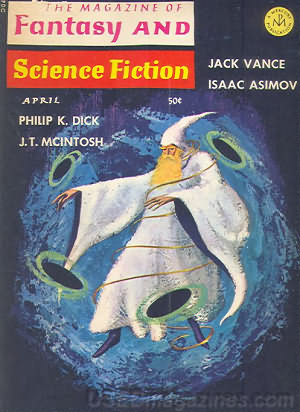
The short story is full of lovingly placed anachronisms that ground it in 20th Century experience. For instance, when Quail realizes he hasn’t gotten his promised mental trip to Mars from Rekall, he heads straight home to write a letter to the Better Business Bureau—on a typewriter. A Hermes Rocket Portable, to be exact, which happened to be Phillip K. Dick’s writing instrument of choice. Quail’s problem isn’t so much the confusion of identities of the postmodern world, but the existential anxiety of lost identity in the modern world. In fact, his name, ‘Quail,’ rather suggests his role as corporate quarry.
Part of the legacy bequeathed to us by the modern era was the idea of “self-help.” If one was uncertain of the importance of one’s life, perhaps by living into a fuller version of the self—more “real” and “self-actualized”—one could disarm the existential dread that supposedly stalked us all. Books like Norman Vincent Peale’s The Power of Positive Thinking (1952), and Dale Carnegie’s How to Win Friends and Influence People (1936) merged with pop perceptions of psychoanalysis and the breakdown of institutional religion to create modern-day self-help psycho-religious gurus like Oprah Winfrey, Deepak Chopra, and Eckhart Tolle. Yet, often what is seen as axiomatic in a society—in this case that the self may be “helped” to a greater fullness of being—is in fact the location of profound uncertainty.
As multiple forms of media allow us to practice multiplicities of self in the form of personas and avatars, this leads to the shadow questions, the elephants in the room of our self-help spiritual society: “Which of my selves am I to help?” “If I were to pick one self to start with, which one would it be?” And, even more ominously, “What if there is no essential self for me to help?”
I lecture about this in the final class of my course on religion and popular culture, and the answer I basically come to is: “God.” If we are beings made in the image of God, perhaps there is an “essential self” that is not entirely contained within our own personal identities, but must be found in the more expansive identity of being human beings made in the image and likeness of God. This doesn’t negate the fracturedness of postmodern life, but gives us hope that in some way both within and beyond ourselves there might be wholeness and unity.
Perhaps the critics and fans of the 1990 Total Recall that couldn’t accept Colin Ferrell, a significantly better actor, in the role of Douglas Quaid were mourning their own lost selves. Perhaps they were asking, “If I was me, then who the hell was I when I thought this film was good?”
That was twenty-two years ago, when Arnold becoming “the Governator” would have been a wildly unlikely joke, when Sharon Stone’s permed blond mop was the height of screen eroticism, and the adolescent fantasies spawned by a woman with three breasts were unencumbered by those even stranger mutation agents of the human body and mind: age and experience.

In addition to the parentally-enforced ban on rated 'R' movies, the author was way too busy with band camp to see the first Total Recall.
Previous Post

September 14, 2012
Religion, Submission, and Authority
Next Post
October 1, 2012 A Shameless Plug and Summary!
Browse Our Archives
Select a Category Classics DVD Film Music News Pop Culture Events Print Sports Television Uncategorized Video Games
Select a Month March 2017 February 2017 January 2017 December 2016 November 2016 October 2016 September 2016 August 2016 July 2016 June 2016 May 2016 April 2016 March 2016 February 2016 January 2016 December 2015 November 2015 October 2015 September 2015 August 2015 July 2015 June 2015 May 2015 April 2015 March 2015 February 2015 January 2015 December 2014 November 2014 October 2014 September 2014 August 2014 July 2014 June 2014 May 2014 April 2014 March 2014 February 2014 January 2014 December 2013 November 2013 October 2013 September 2013 August 2013 July 2013 June 2013 May 2013 April 2013 March 2013 February 2013 January 2013 December 2012 November 2012 October 2012 September 2012 August 2012 July 2012 June 2012 May 2012 April 2012 March 2012 February 2012 January 2012 December 2011 November 2011 October 2011 September 2011 August 2011 July 2011 June 2011 May 2011 April 2011 March 2011 February 2011 January 2011 December 2010 November 2010 October 2010 September 2010 August 2010 July 2010 June 2010 May 2010 April 2010 March 2010 February 2010 January 2010 December 2009 November 2009 October 2009 September 2009 August 2009 July 2009 June 2009 May 2009 April 2009 March 2009 February 2009 January 2009 December 2008 November 2008 October 2008 September 2008 August 2008 July 2008 June 2008 May 2008 April 2008 March 2008 February 2008 January 2008 December 2007 November 2007 October 2007 September 2007 August 2007 July 2007 June 2007 May 2007 April 2007 March 2007
Follow Us!
TAKE THE
Religious Wisdom Quiz
Who is traditionally believed to have written the book of Ecclesiastes?
Select your answer to see how you score.
Isaiah Solomon David Ezra
Related posts from Pop Theology


At SXSW2017: May It Last: A Portrait of...

At SXSW 2017: "Untold Tales of Armistead Maupin"
TRENDING AT PATHEOS Progressive Christian

Why Christians Have a Sacred Duty to Vote:...
The Bible offers strong support for the sacred duty to vote. Here...

What Being a Modern-Day Apostle Means to Me
In my last column, I discussed the ins and outs of modern-day...

Did Ancient China Once Worship the God of...
Across human history, a common thread weaves through the origins of the...

Love Your Neighbor – Including Earth-Kin: Lev. 19,...
God’s command to love your neighbor means acting in an ethical and...

Lead a Church Study of “Jesus and Lao...
Guest writer Jack Thomas (The Irreverent Reverend) reflects on leading his church...

Principles for Understanding the Apostolic Ministry Today
Whenever people discover that my formal ministry title is "apostle," as in...
view all Progressive Christian blogs
Ad-Free & Subscriber Log-In Subscription Support
- About Us
- 2026 Calendar
- Videos
- Podcasts
- Library of World Religions
- Faith In Media Tracker
- Advertise With Us
- Write for Us
- Privacy Policy
- Terms of Service
- Do Not Sell My Data
- Contact Us
- Radiant Digital
- Manage Newsletter Subscriptions
- Unsubscribe From Notifications
- Sitemap
Copyright 2008-2026, Patheos. All rights reserved.
Subscription Support Ad-Free & Subscriber Log-In
Follow Patheos