
BuddhistCatholicContemplativeEvangelicalGeneral ChristianHinduJewishLatter-day SaintMuslimNew VisionsProgressive Christian
Beliefs
- Buddhist
- Catholic
- Contemplative
- Evangelical
- General Christian
- Hindu
- Jewish
- Latter-day Saint
- More Voices
- Muslim
- New Visions
- Pagan
- Progressive Christian
Topics
- Religion News
- Food and Religion
- Sports and Religion
- Religious Art
- Religious Music and Entertainment
- Religious Events
- History and Religion
- Style and Religion
- Politics and Religion
- Women in Religion
- Recreation Outdoors and Religion
- Business Finance and Religion
- Careers Workplace and Religion
- Education and Religion
- Family Parenting and Religion
- Health Fitness and Religion
- Home and Religion
- Relationships and Religion
- Technology and Religion
- Travel and Religion
Columnists
- Buddhist Columnists
- Business Finance and Religion Columnists
- Careers Workplace and Religion Columnists
- Catholic Columnists
- Contemplative Columnists
- Education and Religion Columnists
- Evangelists Columnists
- Family Parenting and Religion Columnists
- General Christian Columnists
- Health Fitness and Religion Columnists
- Hindu Columnists
- History and Religion Columnists
- Home and Religion Columnists
- Jewish Columnists
- More Voices Columnists
- Latter Day Columnists
- Muslim Columnists
- New Visions Columnists
- Nonreligious Columnists
- Pagan Columnists
- Politics and Religion Columnists
- Progressive Columnists
- Recreation Outdoors and Religion Columnists
- Relationships and Religion Columnists
- Religion News Columnists
- Religious Art Columnists
- Religious Events Columnists
- Religious Music and Entertainment Columnists
- Sports and Religion Columnists
- Style and Religion Columnists
- Technology and Religion Columnists
- Travel and Religion Columnists
- Women in Religion Columnists
Resource Library
- 2026 Calendar
- Library of World Religions
- The 100 Most Holy Places on Earth
- Patheos Answers
- Podcasts
- Videos
- Faith Leaders Database
- Anglican Episcopalian
- Bahai
- Baptist
- Buddhism
- Christianity
- Confucianism
- Eastern Orthodoxy
- Hinduism
- Holiness and Pentecostal
- ISKCON
- Islam
- Judaism
- Lutheran
- Methodist
- The Church of Jesus Christ of Latter-day Saints
- New Age
- Paganism
- Presbytarian and Reformed
- Protestantism
- Religion Behind the Scenes
- Roman Catholic
- Scientology
- Shia Islam
- Sikhism
- Sufism
- Sunni Islam
- Taoism
- Zen
- See all religions
Research Tools
 Ad-Free & Subscriber Log-In Subscription Support
Ad-Free & Subscriber Log-In Subscription Support
Follow Patheos 

- Trending:
- Forgiveness
- |
- Marriage
- |
- Consciousness
- |
- Death Penalty
- |
- Election
- |
- Halloween
 Pop Theology
- Home
- Progressive Christian
- Religious Music & Entertainment
- Religion, Submission, and Authority
Religion, Submission, and Authority
Last updated on: September 14, 2012 at 8:15 am by J. Ryan Parker
Religion, Submission, and Authority 2012-09-14T08:15:07-07:00 J. Ryan Parker
Patheos Explore the world's faith through different perspectives on religion and spirituality! Patheos has the views of the prevalent religions and spiritualities of the world.
With the events in Libya over the past week and the anniversary of 9/11, it seems serendipitous that I recently finished Amy Waldman‘s brilliant book, The Submission. I think it might just be one of the most important books of this young century (yeah, I said it!) and certainly for our time now.
Set in a fictional post-9/11 America, one that thankfully didn’t transpire this way, but one that easily could have, Waldman tells the story of an open competition to design the 9/11 monument. A panel of judges from business people to art historians to family members accepted thousands of submissions which they judged anonymously. The book opens with jury deliberations over the two finalists, one proposing a “void” and the other proposing a garden. The Garden wins, barely, after much deliberation. When the panel, and eventually the public, learns the artist/architect’s identity, Mohammed Khan, all hell breaks loose. Never mind the fact that Khan is not a practicing Muslim and is a born and bred American, everything about him is called into question from his appearance to his motives for entering the competition. Soon, camps form between those who think he should withdraw or that the jury should reject his submission, some of whom undertake violence in their resistance, and others, a minority, who believe that Khan’s submission should be honored, along with the American values of equality, diversity, and, quite simply, fairness.
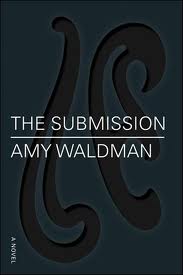 The Submission touches on nearly every major issue facing us today, but never feels threadbare for doing so. I’ll list a few: the violent/peaceful nature of Islam, immigration, secularization, journalistic integrity, political machinations and corruption, mourning and remembering terrorist activity, and the list goes on and on. Waldman’s characters are as diverse as the experiences of both the immediate victims and the mourning nation in the aftermath of 9/11. There are family members that accept Khan’s design and others that reject it for a variety of reasons, some understandable. There are a range of Muslim characters from the secular Khan to the devout and silent-suffering Asma, who grieved in silence the death of her Muslim husband, a janitor in the World Trade Towers. If Waldman employs any character to, perhaps, represent the silent/silenced Muslim majority, it is certainly her.
There are echoes in Waldman’s book of both the shameful and prideful ways in which people responded, around the world, to the real-world 9/11 attacks. Of course, there are echoes of both 9/11 and this narrative in the events taking place in Libya and throughout the Middle East even as I type this. As Khan’s submission showed, the uprising of Muslims protesting against violent extremism and the attacks on the United States complicate the harsh judgments that condemn Islam as a violent religion. That these protestors do so with a greater potential of violent retribution demands more of our respect. But back to Waldman’s novel.
The most interesting character is most definitely, “Mo” Khan, who, I think, stands in for not only Middle Eastern/Muslim immigrants but all immigrants who face pressures to define and redefine themselves based on demands of their fellow American citizens, even as those who demand explanation never think twice about their own constructed identities. The conclusion to which Waldman arrives on both the memorial competition and Khan’s own life is one that will certainly engender on-going conversation not only in light of the plot but in the ways in which they speak to the larger themes in which Waldman works.
That indefensible violence will continue in the Middle East and that ignorance in the United States will continue to stoke it is an unfortunate given. As such, Waldman’s The Submission, and other measured, insightful narratives like it, should be go-to resources for communities seeking to better understand these turbulent situations and to find peaceful ways forward through them.
Previous Post

September 2, 2012
A Sinful History
Next Post
September 18, 2012 Total Recall: Remembering It Wholesale
Browse Our Archives
Select a Category Classics DVD Film Music News Pop Culture Events Print Sports Television Uncategorized Video Games
Select a Month March 2017 February 2017 January 2017 December 2016 November 2016 October 2016 September 2016 August 2016 July 2016 June 2016 May 2016 April 2016 March 2016 February 2016 January 2016 December 2015 November 2015 October 2015 September 2015 August 2015 July 2015 June 2015 May 2015 April 2015 March 2015 February 2015 January 2015 December 2014 November 2014 October 2014 September 2014 August 2014 July 2014 June 2014 May 2014 April 2014 March 2014 February 2014 January 2014 December 2013 November 2013 October 2013 September 2013 August 2013 July 2013 June 2013 May 2013 April 2013 March 2013 February 2013 January 2013 December 2012 November 2012 October 2012 September 2012 August 2012 July 2012 June 2012 May 2012 April 2012 March 2012 February 2012 January 2012 December 2011 November 2011 October 2011 September 2011 August 2011 July 2011 June 2011 May 2011 April 2011 March 2011 February 2011 January 2011 December 2010 November 2010 October 2010 September 2010 August 2010 July 2010 June 2010 May 2010 April 2010 March 2010 February 2010 January 2010 December 2009 November 2009 October 2009 September 2009 August 2009 July 2009 June 2009 May 2009 April 2009 March 2009 February 2009 January 2009 December 2008 November 2008 October 2008 September 2008 August 2008 July 2008 June 2008 May 2008 April 2008 March 2008 February 2008 January 2008 December 2007 November 2007 October 2007 September 2007 August 2007 July 2007 June 2007 May 2007 April 2007 March 2007
Follow Us!
TAKE THE
Religious Wisdom Quiz
What does the name "Jesus" mean?
Select your answer to see how you score.
The Lord Saves Chosen One Prince of Peace Son of Man
Related posts from Pop Theology


#KillerSerials: An Interview with Kutter Callaway

Book Review: MUSLIMS AND THE MAKING OF AMERICA

TRENDING AT PATHEOS Progressive Christian

Why Christians Have a Sacred Duty to Vote:...
The Bible offers strong support for the sacred duty to vote. Here...

What Being a Modern-Day Apostle Means to Me
In my last column, I discussed the ins and outs of modern-day...

Did Ancient China Once Worship the God of...
Across human history, a common thread weaves through the origins of the...

Love Your Neighbor – Including Earth-Kin: Lev. 19,...
God’s command to love your neighbor means acting in an ethical and...

Lead a Church Study of “Jesus and Lao...
Guest writer Jack Thomas (The Irreverent Reverend) reflects on leading his church...

Principles for Understanding the Apostolic Ministry Today
Whenever people discover that my formal ministry title is "apostle," as in...
view all Progressive Christian blogs
Ad-Free & Subscriber Log-In Subscription Support
- About Us
- 2026 Calendar
- Videos
- Podcasts
- Library of World Religions
- Faith In Media Tracker
- Advertise With Us
- Write for Us
- Privacy Policy
- Terms of Service
- Do Not Sell My Data
- Contact Us
- Radiant Digital
- Manage Newsletter Subscriptions
- Unsubscribe From Notifications
- Sitemap
Copyright 2008-2026, Patheos. All rights reserved.
Subscription Support Ad-Free & Subscriber Log-In
Follow Patheos