
BuddhistCatholicContemplativeEvangelicalGeneral ChristianHinduJewishLatter-day SaintMuslimNew VisionsProgressive Christian
Beliefs
- Buddhist
- Catholic
- Contemplative
- Evangelical
- General Christian
- Hindu
- Jewish
- Latter-day Saint
- More Voices
- Muslim
- New Visions
- Pagan
- Progressive Christian
Topics
- Religion News
- Food and Religion
- Sports and Religion
- Religious Art
- Religious Music and Entertainment
- Religious Events
- History and Religion
- Style and Religion
- Politics and Religion
- Women in Religion
- Recreation Outdoors and Religion
- Business Finance and Religion
- Careers Workplace and Religion
- Education and Religion
- Family Parenting and Religion
- Health Fitness and Religion
- Home and Religion
- Relationships and Religion
- Technology and Religion
- Travel and Religion
Columnists
- Buddhist Columnists
- Business Finance and Religion Columnists
- Careers Workplace and Religion Columnists
- Catholic Columnists
- Contemplative Columnists
- Education and Religion Columnists
- Evangelists Columnists
- Family Parenting and Religion Columnists
- General Christian Columnists
- Health Fitness and Religion Columnists
- Hindu Columnists
- History and Religion Columnists
- Home and Religion Columnists
- Jewish Columnists
- More Voices Columnists
- Latter Day Columnists
- Muslim Columnists
- New Visions Columnists
- Nonreligious Columnists
- Pagan Columnists
- Politics and Religion Columnists
- Progressive Columnists
- Recreation Outdoors and Religion Columnists
- Relationships and Religion Columnists
- Religion News Columnists
- Religious Art Columnists
- Religious Events Columnists
- Religious Music and Entertainment Columnists
- Sports and Religion Columnists
- Style and Religion Columnists
- Technology and Religion Columnists
- Travel and Religion Columnists
- Women in Religion Columnists
Resource Library
- 2026 Calendar
- Library of World Religions
- The 100 Most Holy Places on Earth
- Patheos Answers
- Podcasts
- Videos
- Faith Leaders Database
- Anglican Episcopalian
- Bahai
- Baptist
- Buddhism
- Christianity
- Confucianism
- Eastern Orthodoxy
- Hinduism
- Holiness and Pentecostal
- ISKCON
- Islam
- Judaism
- Lutheran
- Methodist
- The Church of Jesus Christ of Latter-day Saints
- New Age
- Paganism
- Presbytarian and Reformed
- Protestantism
- Religion Behind the Scenes
- Roman Catholic
- Scientology
- Shia Islam
- Sikhism
- Sufism
- Sunni Islam
- Taoism
- Zen
- See all religions
Research Tools
 Ad-Free & Subscriber Log-In Subscription Support
Ad-Free & Subscriber Log-In Subscription Support
Follow Patheos 

- Trending:
- Forgiveness
- |
- Marriage
- |
- Consciousness
- |
- Death Penalty
- |
- Election
- |
- Halloween
 Pop Theology
- Home
- Progressive Christian
- Religious Music & Entertainment
- Apocalypse Underground
Apocalypse Underground
Last updated on: August 6, 2012 at 4:16 am by J. Ryan Parker
Apocalypse Underground 2012-08-06T04:16:32-07:00 J. Ryan Parker
Patheos Explore the world's faith through different perspectives on religion and spirituality! Patheos has the views of the prevalent religions and spiritualities of the world.
Out of the blue last week a friend loaned me a book on Kindle. I’ve read loads of books on my Kindle but have never been loaned one. I’ve fallen further in love with the device. It also helped that the book, Wool Omnibus, is one of the best science fiction books I’ve read in a long time. That it is self-published by indie author Hugh Howey makes its success even more fantastic. Science fiction fan or not, you’re guaranteed to be enthralled by this imaginative and suspenseful tale.
It’s hard to imagine any first rate sci-fi publisher passing over Hugh Howey’s dystopian narrative, but we’ll never know as he chose to self-publish from the start. You can read more about his experiences as a self-published writer here. Wool Omnibus is in fact a collection of five interconnected stories that were originally published separately. For a time, they occupied the top six spots in various best-seller lists. In this series, he has provided us with a post-apocalyptic setting unlike any we’ve encountered, and one that sets the backdrop for chilling reflections on human nature and the work and lies necessary to ensure survival.
A tragedy has occurred some time in the past. The enticing thing about Howey’s series is that he never tells us exactly what happened or precisely when it did (but apparently those explanations are in store for the next three installments in the series–spoilers in the link!). Survivors were herded into a collection of underground silos, 50 to be exact. Think enormous, wide skyscrapers buried under the earth that include farms, refineries, infirmaries, mess halls, schools, apartments, plastics works, and everything necessary to keep civilization going indefinitely…or at least until the machinery or humanity breaks down. They are planted in a post-apocalyptic wasteland where the air is toxic and survival outside the silos is impossible. To question the nature of the outside or to express interest in it or dissatisfaction with life in the silos is paramount to treason and punished by being sent to “the cleaning.” Guilty parties are sent out of the silo to clean the camera sensors that give the silo inhabitants a view of both the desolate landscape and the corpses of those exiled form the community. They soon after die from asphyxiation.
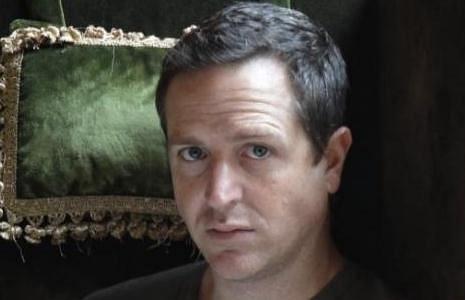
Author Hugh Howey
Howey focuses his attention, in the first five entries in the series, on Silo 18 and the political machinations and social interactions therein. The series is broken down into 5 interconnected short stories and novels of increasing length. The first tells the story of Sheriff Holston and his reaction to his wife’s decision to be sent into the cleaning. Books 2-5 pick up and run with the story following Mayor Jahns and Deputy Marne’s search for a new sheriff. They believe Juliette, a mechanic from down deep, will be perfect for the job. But the powers in IT, led by Bernard, have a different opinion. As the power struggle plays out and lives are lost, we learn more about not only Silo 17’s history but the existence of other silos.
There’s much to reflect on in Howey’s brilliant series. It’s sci-fi page-turner of the first order. The strength of his narrative lies in effective characters and the silo setting, which both feel supremely real. He walks the fine line of foregrounding life in the silo and of letting it simply be the fact-of-life backdrop against which an intriguing tale of politics and survival plays out. Howey seems to be more concerned with developing accessible characters and a captivating narrative than creating a world for us to get lost in…even though that’s easy to do too. I found it almost impossible to put down.
Howey’s imaginative vision of how his humans survive the apocalypse is interesting. That they have done so in relative peace and comfort is a welcome addition to the genre in which cannibalism often so quickly rears its head. However, all is not well in Silo 17, where most of the action takes place, nor have survivors in other silos experienced such long periods of peace and “prosperity.” There are hierarchies and dissension in the ranks. The ways in which, and the rapidity with which, these survivors can resort to violence of mass destruction is a disturbing reflection on our own pre-apocalyptic violent tendencies, ones that we are yet unwilling to honestly encounter.
The whole notion of cleaning as a form of punishment recalls philosopher and literary critic Renee Girard’s scapegoat theory, complete with ritual killing and subsequent celebration. It is as if there has to be a “state-sanctioned” death to help keep the peace in the silos lest the natives grow restless. There seems to be palpable tension and release around cleanings and odd frustrations when they do not occur. Later in the series, we learn about the guide book that instructs the powers-that-be in the silos. It’s called The Order and it offers this advice for a failed cleaning: “Prepare for War.”
Howey’s Wool series also has contemporary implications beyond the violent and should raise several questions for attentive readers. In what ways are we prisoners in our own communities? In what ways do we imprison others? There are lies being told to and by us on a daily basis that help to preserve order. But at what expense? I am reminded of the line in The Cabin in the Woods in which stoner Marty says, “Society needs to crumble. Maybe we’re just too chickenshit to let it.” Silo society doesn’t necessarily need to crumble, especially if we want the human race to continue, but truth must be spoken to the masses. At the end of the 5th volume, the conclusion to the Wool Omnibus, Howey leaves the narrative wide open for just such truth-telling. Like thousands of other readers, I’m anxious to see what happens…after we learn about how they all got there, of course.
Take my advice, buy the Wool Omnibus now! You’ll be scrambling for the rest as soon as you finish. This is one independent author that deserves readers’ support!
Previous Post

August 4, 2012
Classic Documentary: Common Threads: Stories from the Quilt
Next Post
August 10, 2012 Prophecy and Imagination
Browse Our Archives
Select a Category Classics DVD Film Music News Pop Culture Events Print Sports Television Uncategorized Video Games
Select a Month March 2017 February 2017 January 2017 December 2016 November 2016 October 2016 September 2016 August 2016 July 2016 June 2016 May 2016 April 2016 March 2016 February 2016 January 2016 December 2015 November 2015 October 2015 September 2015 August 2015 July 2015 June 2015 May 2015 April 2015 March 2015 February 2015 January 2015 December 2014 November 2014 October 2014 September 2014 August 2014 July 2014 June 2014 May 2014 April 2014 March 2014 February 2014 January 2014 December 2013 November 2013 October 2013 September 2013 August 2013 July 2013 June 2013 May 2013 April 2013 March 2013 February 2013 January 2013 December 2012 November 2012 October 2012 September 2012 August 2012 July 2012 June 2012 May 2012 April 2012 March 2012 February 2012 January 2012 December 2011 November 2011 October 2011 September 2011 August 2011 July 2011 June 2011 May 2011 April 2011 March 2011 February 2011 January 2011 December 2010 November 2010 October 2010 September 2010 August 2010 July 2010 June 2010 May 2010 April 2010 March 2010 February 2010 January 2010 December 2009 November 2009 October 2009 September 2009 August 2009 July 2009 June 2009 May 2009 April 2009 March 2009 February 2009 January 2009 December 2008 November 2008 October 2008 September 2008 August 2008 July 2008 June 2008 May 2008 April 2008 March 2008 February 2008 January 2008 December 2007 November 2007 October 2007 September 2007 August 2007 July 2007 June 2007 May 2007 April 2007 March 2007
Follow Us!
TAKE THE
Religious Wisdom Quiz
What does "Jubilee" mean?
Select your answer to see how you score.
Blessed year Restoration Offering Ram's horn
Related posts from Pop Theology


#KillerSerials: An Interview with Kutter Callaway

Book Review: MUSLIMS AND THE MAKING OF AMERICA

TRENDING AT PATHEOS Progressive Christian

Why Christians Have a Sacred Duty to Vote:...
The Bible offers strong support for the sacred duty to vote. Here...

What Being a Modern-Day Apostle Means to Me
In my last column, I discussed the ins and outs of modern-day...

Did Ancient China Once Worship the God of...
Across human history, a common thread weaves through the origins of the...

Love Your Neighbor – Including Earth-Kin: Lev. 19,...
God’s command to love your neighbor means acting in an ethical and...

Lead a Church Study of “Jesus and Lao...
Guest writer Jack Thomas (The Irreverent Reverend) reflects on leading his church...

Principles for Understanding the Apostolic Ministry Today
Whenever people discover that my formal ministry title is "apostle," as in...
view all Progressive Christian blogs
Ad-Free & Subscriber Log-In Subscription Support
- About Us
- 2026 Calendar
- Videos
- Podcasts
- Library of World Religions
- Faith In Media Tracker
- Advertise With Us
- Write for Us
- Privacy Policy
- Terms of Service
- Do Not Sell My Data
- Contact Us
- Radiant Digital
- Manage Newsletter Subscriptions
- Unsubscribe From Notifications
- Sitemap
Copyright 2008-2026, Patheos. All rights reserved.
Subscription Support Ad-Free & Subscriber Log-In
Follow Patheos