
BuddhistCatholicContemplativeEvangelicalGeneral ChristianHinduJewishLatter-day SaintMuslimNew VisionsProgressive Christian
Beliefs
- Buddhist
- Catholic
- Contemplative
- Evangelical
- General Christian
- Hindu
- Jewish
- Latter-day Saint
- More Voices
- Muslim
- New Visions
- Pagan
- Progressive Christian
Topics
- Religion News
- Food and Religion
- Sports and Religion
- Religious Art
- Religious Music and Entertainment
- Religious Events
- History and Religion
- Style and Religion
- Politics and Religion
- Women in Religion
- Recreation Outdoors and Religion
- Business Finance and Religion
- Careers Workplace and Religion
- Education and Religion
- Family Parenting and Religion
- Health Fitness and Religion
- Home and Religion
- Relationships and Religion
- Technology and Religion
- Travel and Religion
Columnists
- Buddhist Columnists
- Business Finance and Religion Columnists
- Careers Workplace and Religion Columnists
- Catholic Columnists
- Contemplative Columnists
- Education and Religion Columnists
- Evangelists Columnists
- Family Parenting and Religion Columnists
- General Christian Columnists
- Health Fitness and Religion Columnists
- Hindu Columnists
- History and Religion Columnists
- Home and Religion Columnists
- Jewish Columnists
- More Voices Columnists
- Latter Day Columnists
- Muslim Columnists
- New Visions Columnists
- Nonreligious Columnists
- Pagan Columnists
- Politics and Religion Columnists
- Progressive Columnists
- Recreation Outdoors and Religion Columnists
- Relationships and Religion Columnists
- Religion News Columnists
- Religious Art Columnists
- Religious Events Columnists
- Religious Music and Entertainment Columnists
- Sports and Religion Columnists
- Style and Religion Columnists
- Technology and Religion Columnists
- Travel and Religion Columnists
- Women in Religion Columnists
Resource Library
- 2026 Calendar
- Library of World Religions
- The 100 Most Holy Places on Earth
- Patheos Answers
- Podcasts
- Videos
- Faith Leaders Database
- Anglican Episcopalian
- Bahai
- Baptist
- Buddhism
- Christianity
- Confucianism
- Eastern Orthodoxy
- Hinduism
- Holiness and Pentecostal
- ISKCON
- Islam
- Judaism
- Lutheran
- Methodist
- The Church of Jesus Christ of Latter-day Saints
- New Age
- Paganism
- Presbytarian and Reformed
- Protestantism
- Religion Behind the Scenes
- Roman Catholic
- Scientology
- Shia Islam
- Sikhism
- Sufism
- Sunni Islam
- Taoism
- Zen
- See all religions
Research Tools
 Ad-Free & Subscriber Log-In Subscription Support
Ad-Free & Subscriber Log-In Subscription Support
Follow Patheos 

- Trending:
- Forgiveness
- |
- Marriage
- |
- Consciousness
- |
- Death Penalty
- |
- Election
- |
- Halloween
 Pop Theology
- Home
- Progressive Christian
- Religious Music & Entertainment
- It's a Work of Art…But Much More
It's a Work of Art…But Much More
Last updated on: March 9, 2012 at 8:30 am by J. Ryan Parker
It's a Work of Art…But Much More 2012-03-09T08:30:31-08:00 J. Ryan Parker
Patheos Explore the world's faith through different perspectives on religion and spirituality! Patheos has the views of the prevalent religions and spiritualities of the world.
It’s a good thing for American filmmakers nominated for Best Picture this year that the award can only go to American films. If nominations were opened up globally, they all would have surely fallen behind the Best Foreign Film winner, A Separation. This Iranian film is both a beautiful work of art and an important (potentially) diplomatic voice.
Simin (Leila Hatami) wants a divorce from her husband because he will not move out of Iran with her. Nader (Peyman Moadi) can’t leave because he is the primary caregiver for his Alzheimer’s stricken father. Their daughter, Termeh (Sarina Farhadi, the director’s daughter), also wants to stay with her father. Simini moves out, but only into her parents’ house. Nader hires a pregnant woman, Razieh (Sareh Bayat) to help take care of his father. Razieh and her husband, Hodjat (Shahab Hosseini), are in dire economic straits; he owes several creditors quite a bit of money. When Nader arrives home to find Razieh gone and his father tied to the bed, he panics. Razieh eventually returns, and in a heated argument, Nader throws her out of his apartment and creates a situation that lands both families in court and threatens to rip both of them further apart.
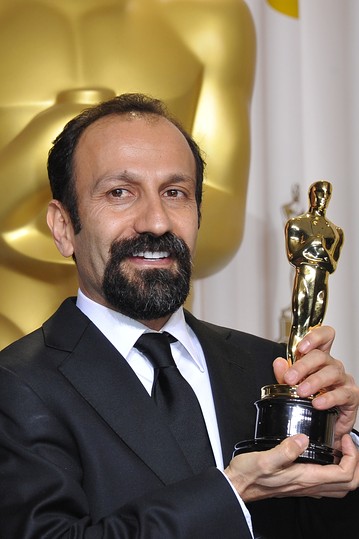
Award-winning writer/director Asghar Farhadi.
A Separation is really working on two levels, first as a film in and of itself (one of the very best of the year) and, second, as a bit of (un)intentional international diplomacy. Given writer/director Asghar Farhadi’s acceptance speeches at both The Golden Globes and the Oscars, we have to consider that second level. Consider his Oscar speech:
At this time, many Iranians all over the world are watching us and I imagine them to be very happy. They are happy not just because of an important award or a film or filmmaker, but because at the time when talk of war, intimidation, and aggression is exchanged between politicians, the name of their country Iran is spoken here through her glorious culture, a rich and ancient culture that has been hidden under the heavy dust of politics. I proudly offer this award to the people of my country, a people who respect all cultures and civilizations and despise hostility and resentment.
To be sure, there are dangerous political nuts and religious extremists in Iran…just like there are in every country. But, here, Farhadi is more concerned about the more human(e) problems that Iranians, like everyone else, face. Yet they are smothered by politics both domestically and abroad. I would imagine that, for many people, this is their first glimpse into life in Iran, a life that might seem surprisingly banal. Farhadi presents us with individuals and couples facing tough life decisions, strained relationships, and getting on with neighbors who think and believe differently than they do. The great hope here is that, once again, film can serve a unifying and peace-promoting function. It remains to be seen whether Frahadi’s creative voice can drown out the unimaginative sabre rattling that continues to plague relationships between Iran and much of the western world. Hopefully, it will at least encourage many viewers to seek out other Iranian films that testify to the rich filmmaking history and culture of that country.
But before A Separation is a work of diplomacy, it is first and foremost a work of art that excels at every level. Much of its success hinges on writer/director Farhadi’s confidence in his audience, which allows him a level of narrative restraint that is so often missing from the work of his contemporaries. His film is much better for the withholding, although it also forces reviewers to withhold quite a bit so as to not spoil the experience. All of the actors give what are surely career-defining performances. It’s hard to single out one actor’s performance, because when you find yourself so drawn to one character, Farhadi refocuses your attention on another. The courtroom scenes and kitchen scenes in which so much of the film takes place are tightly composed and both simmer and explode with energy. Although many viewers will no doubt connect with much of the film’s story (we’re all facing, or soon will, the task of taking care of aging and ill parents), this is no simple “they’re just like us” film. So much of the difficulties that both the men and women face in the setting of the film is bound up in conservative religious dogma and, the characters imply, an increasingly threatening, conservative political environment.

Not everyone is a devout Muslim. Nader and his wife Simin aren’t, which creates tension between them and Razieh and her husband Hodjat (left). Part of this tension is class- and economic-based. A Separation hints at, subtly and brilliantly, the threat of wedding economic destitution with religious fundamentalism. The film also seems to speak to the absurdity of hyper-conservative religious dogma. In one scene, Razieh calls (a cleric?) to ask if it would be a sin to clean Nader’s father who had just wet himself and his bed. To be sure, a respect for elders and a sense of propriety might be at play here, but the hesitance to immediately help someone in desperate need runs contrary to that respect. Nevertheless, Razieh and Hodjat are committed to their religious ideals, but both of them fall short. Razieh lies (or doesn’t tell the whole truth), and Hodjat is in trouble with massive debt and not a few anger issues. Of course, Nader has his own ideals (although not religious) to which he cannot fully live up to. There are chinks in his armor of integrity and honesty.
For me, the thrill of A Separation is the almost inimitable moral and ethical quandary that it presents. The events that spiral out of control when Nader thrown Razieh out of his apartment simultaneously open up a potential space for grace, healing, and reconciliation across religious, class, and economic borders. Unfortunately, both sides are held prisoner by their own beliefs. Nader sticks to his own “humanist” guns, demanding respect from his peers, but not respecting them enough to be fully honest with them. Razieh’s adherence to the strict doctrines of her faith prevent her from fully revealing her situation to her own husband. Of course, much of that has to do with his tendency toward violent outbursts as well. Razieh’s fear of divine punishment clearly parallels her fear of her husband.
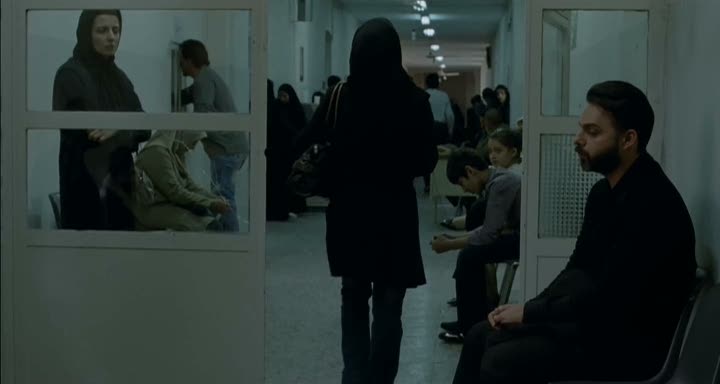
Farhadi has said that this is first and foremost a detective film in which the audience must work to figure out what is going on. He also says that he doesn’t intend this to be a political statement and that art should not first serve that purpose. Yet we (he) cannot ignore that art (especially the great variety) carries with it those implications. As such, A Separation is a welcome voice from an often stereotyped and compartmentalized culture. At the same time, it shows that while what is lost can never be replaced, opportunities for healing and restitution exist in these broken places. Unfortunately, the people who need it so much are often the most significant obstacles standing in the way.
A Separation (123 minutes) is rated PG-13 for mature thematic material and is in limited release. Look for it on DVD as soon as you can.
Previous Post

March 5, 2012
Don't Worry Donny, These Men Are Nihilists
Next Post
March 16, 2012 Angelic Mini-Myths
Browse Our Archives
Select a Category Classics DVD Film Music News Pop Culture Events Print Sports Television Uncategorized Video Games
Select a Month March 2017 February 2017 January 2017 December 2016 November 2016 October 2016 September 2016 August 2016 July 2016 June 2016 May 2016 April 2016 March 2016 February 2016 January 2016 December 2015 November 2015 October 2015 September 2015 August 2015 July 2015 June 2015 May 2015 April 2015 March 2015 February 2015 January 2015 December 2014 November 2014 October 2014 September 2014 August 2014 July 2014 June 2014 May 2014 April 2014 March 2014 February 2014 January 2014 December 2013 November 2013 October 2013 September 2013 August 2013 July 2013 June 2013 May 2013 April 2013 March 2013 February 2013 January 2013 December 2012 November 2012 October 2012 September 2012 August 2012 July 2012 June 2012 May 2012 April 2012 March 2012 February 2012 January 2012 December 2011 November 2011 October 2011 September 2011 August 2011 July 2011 June 2011 May 2011 April 2011 March 2011 February 2011 January 2011 December 2010 November 2010 October 2010 September 2010 August 2010 July 2010 June 2010 May 2010 April 2010 March 2010 February 2010 January 2010 December 2009 November 2009 October 2009 September 2009 August 2009 July 2009 June 2009 May 2009 April 2009 March 2009 February 2009 January 2009 December 2008 November 2008 October 2008 September 2008 August 2008 July 2008 June 2008 May 2008 April 2008 March 2008 February 2008 January 2008 December 2007 November 2007 October 2007 September 2007 August 2007 July 2007 June 2007 May 2007 April 2007 March 2007
Follow Us!
TAKE THE
Religious Wisdom Quiz
I am an animal that chews the cud and has split hooves. What am I?
Select your answer to see how you score.
A sacrifical animal A protected animal An unclean animal A clean animal
Related posts from Pop Theology


At SXSW2017: May It Last: A Portrait of...

At SXSW 2017: "Untold Tales of Armistead Maupin"
TRENDING AT PATHEOS Progressive Christian

Why Christians Have a Sacred Duty to Vote:...
The Bible offers strong support for the sacred duty to vote. Here...

What Being a Modern-Day Apostle Means to Me
In my last column, I discussed the ins and outs of modern-day...

Did Ancient China Once Worship the God of...
Across human history, a common thread weaves through the origins of the...

Love Your Neighbor – Including Earth-Kin: Lev. 19,...
God’s command to love your neighbor means acting in an ethical and...

Lead a Church Study of “Jesus and Lao...
Guest writer Jack Thomas (The Irreverent Reverend) reflects on leading his church...

Principles for Understanding the Apostolic Ministry Today
Whenever people discover that my formal ministry title is "apostle," as in...
view all Progressive Christian blogs
Ad-Free & Subscriber Log-In Subscription Support
- About Us
- 2026 Calendar
- Videos
- Podcasts
- Library of World Religions
- Faith In Media Tracker
- Advertise With Us
- Write for Us
- Privacy Policy
- Terms of Service
- Do Not Sell My Data
- Contact Us
- Radiant Digital
- Manage Newsletter Subscriptions
- Unsubscribe From Notifications
- Sitemap
Copyright 2008-2026, Patheos. All rights reserved.
Subscription Support Ad-Free & Subscriber Log-In
Follow Patheos