
BuddhistCatholicContemplativeEvangelicalGeneral ChristianHinduJewishLatter-day SaintMuslimNew VisionsProgressive Christian
Beliefs
- Buddhist
- Catholic
- Contemplative
- Evangelical
- General Christian
- Hindu
- Jewish
- Latter-day Saint
- More Voices
- Muslim
- New Visions
- Pagan
- Progressive Christian
Topics
- Religion News
- Food and Religion
- Sports and Religion
- Religious Art
- Religious Music and Entertainment
- Religious Events
- History and Religion
- Style and Religion
- Politics and Religion
- Women in Religion
- Recreation Outdoors and Religion
- Business Finance and Religion
- Careers Workplace and Religion
- Education and Religion
- Family Parenting and Religion
- Health Fitness and Religion
- Home and Religion
- Relationships and Religion
- Technology and Religion
- Travel and Religion
Columnists
- Buddhist Columnists
- Business Finance and Religion Columnists
- Careers Workplace and Religion Columnists
- Catholic Columnists
- Contemplative Columnists
- Education and Religion Columnists
- Evangelists Columnists
- Family Parenting and Religion Columnists
- General Christian Columnists
- Health Fitness and Religion Columnists
- Hindu Columnists
- History and Religion Columnists
- Home and Religion Columnists
- Jewish Columnists
- More Voices Columnists
- Latter Day Columnists
- Muslim Columnists
- New Visions Columnists
- Nonreligious Columnists
- Pagan Columnists
- Politics and Religion Columnists
- Progressive Columnists
- Recreation Outdoors and Religion Columnists
- Relationships and Religion Columnists
- Religion News Columnists
- Religious Art Columnists
- Religious Events Columnists
- Religious Music and Entertainment Columnists
- Sports and Religion Columnists
- Style and Religion Columnists
- Technology and Religion Columnists
- Travel and Religion Columnists
- Women in Religion Columnists
Resource Library
- 2026 Calendar
- Library of World Religions
- The 100 Most Holy Places on Earth
- Patheos Answers
- Podcasts
- Videos
- Faith Leaders Database
- Anglican Episcopalian
- Bahai
- Baptist
- Buddhism
- Christianity
- Confucianism
- Eastern Orthodoxy
- Hinduism
- Holiness and Pentecostal
- ISKCON
- Islam
- Judaism
- Lutheran
- Methodist
- The Church of Jesus Christ of Latter-day Saints
- New Age
- Paganism
- Presbytarian and Reformed
- Protestantism
- Religion Behind the Scenes
- Roman Catholic
- Scientology
- Shia Islam
- Sikhism
- Sufism
- Sunni Islam
- Taoism
- Zen
- See all religions
Research Tools
 Ad-Free & Subscriber Log-In Subscription Support
Ad-Free & Subscriber Log-In Subscription Support
Follow Patheos 

- Trending:
- Forgiveness
- |
- Marriage
- |
- Consciousness
- |
- Death Penalty
- |
- Election
- |
- Halloween
 Pop Theology
- Home
- Progressive Christian
- Religious Music & Entertainment
- Mad Men: Dream Come True TV (Review)
Mad Men: Dream Come True TV (Review)
Last updated on: December 29, 2011 at 2:50 pm by J. Ryan Parker
Mad Men: Dream Come True TV (Review) 2011-12-29T14:50:10-08:00 J. Ryan Parker
Patheos Explore the world's faith through different perspectives on religion and spirituality! Patheos has the views of the prevalent religions and spiritualities of the world.
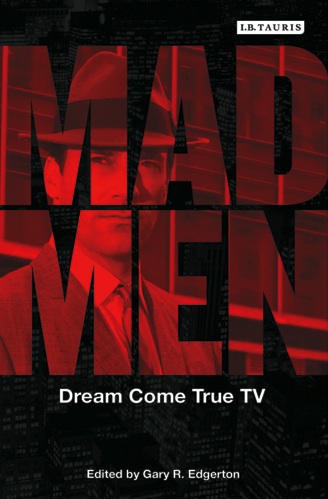
Who knows when Mad Men will return. Reports say “early 2012.” If you can’t wait, you can always relive your favorite episodes on AMC or pop in a DVD. For fans who want to give a little extra thought to the series, you should check out Gary R. Edgerton‘s collection of essays, Mad Men: Dream Come True TV.
Mad Men: Dream Come True TV is really a mixed bag of essays. I found some to be a bit convoluted and direction-less while others were most informative. The last two sections of the book, which cover race, gender, and politics, will be of interest, I would imagine, to most visitors to this site. Fans of the series will no doubt flock to the first two essays that offer the most behind-the-scenes perspectives on the show. If anything, the essays collected here remind us why good television matters and why we should care about and watch it so closely. Whether at an ad agency in 1960s New York or on an intergalactic battleship, the drama of good television is, more often than not, more about us than it is the objects on the screen. As Edgerton points out in his introduction to the book, “[The characters in Mad Men] are merely an earlier, confused and conflicted version of us, trying to make the best of a future that is unfolding before them at breakneck speed” (xxvii). The brilliance of Mad Men, according to many of these contributors, is that it simultaneously portrays and critiques a seemingly distant time while showing us that we have much farther to go to get to where we already think we are. A brief summary of the book follows.
In a Foreword, Introduction, and fifteen essays, the contributors to this collection cover the series from a wide array of perspectives, all bunched into five larger themes. In the first, “Industry and Authorship,” Edgerton discusses the production history of Mad Men…how the series came to be. Brian Rose interviews executive producer Scott Hornbacher on both the birth of the series and the day-to-day, or episode-to-episode, work on it. Finally, Ron Simon puts, or reflects on, Don Draper in conversation with Bob Dylan and George Lois.
 The second section addresses visual and aural style and their influences on the series. Jeremy G. Butler discusses the series’ style and the ways in which it compares to other popular ’60s fare like The Apartment or Ben-Hur. Tim Anderson analyzes the ways in which music and sound critique the idealism of the series and the time in which it is set. Finally, Maurice Yacowar, in brilliant fashion, extends this study to consider how moments of silence in particular episodes continues this critique. Yacowar observes, “If our awareness makes us feel superior to the characters we fall into Weiner’s trap. For it is his advertising men’s sense of superiority […] that renders them hollow. These suggestive silences draw on our privileged knowledge and pull us into Weiner’s satire” (86).
The third section, “Narrative Dynamics and Genealogy,” places the series in historical context in relation to its structure and development. Horace Newcomb considers the role that television plays within the series and, by extension, in our own lives. Sean O’Sullivan points to the serial nature of the series and its relation to other serialized narratives and even The Odyssey. O’Sullivan realizes that, much like Yacowar’s discussion of silence, the moments of nothingness in between each season and the time that elapses in the narrative have implications for how we view the events that take place in each episode. David Lavery discusses the poetic nature of the series and Frank O’Hara‘s influence on the ’60s, the series, and series creator Matthew Weiner.
In the fourth section, contributors mine the rich sexual politics and gender themes in Mad Men. In this section, contributors offer insightful essays that shed light on the brilliance of the series but that also reveal conflicting interpretations of the series. Mimi White analyzes the series’ “Mad Women” and argues that they are so for completely different, and sometimes self-imposed, reasons. Mary Beth Haralovich discusses the ways in which Mad Men‘s women characters open up conversations about feminism and how they can bridge the three different waves of it. Finally, Kim Akass and Janet McCabe point to the opportunities for and limitations on “the working girl” in Mad Men, the ’60s, and our world today.
Finally, three contributors focus on “Cultural Memory and the American Dream.” William Siska shows how the “boyish” nature of the men in Mad Men is a critique of American capitalism and consumerism as well as an embodiment of the tension between “gemeinschaft” and “gesellschaft.” Allison Perlman extends her analysis beyond the series, placing it in conversation with “paratexts” like DVD featurettes and accompanying documentaries about race and gender in American history to look at the ways in which the series offers a revisionist history of racism in America while simultaneously undermining that history. David Marc considers the series to be a “Roots Tale of the Information Age” and analyzes it in the context of broadcast advertising, the birth of the radio, and McLuhan‘s observations on advertising.
Previous Post

December 21, 2011
Faithful Doubt
Next Post
January 4, 2012 Oh My God, They're (Demi)Gods!
Browse Our Archives
Select a Category Classics DVD Film Music News Pop Culture Events Print Sports Television Uncategorized Video Games
Select a Month March 2017 February 2017 January 2017 December 2016 November 2016 October 2016 September 2016 August 2016 July 2016 June 2016 May 2016 April 2016 March 2016 February 2016 January 2016 December 2015 November 2015 October 2015 September 2015 August 2015 July 2015 June 2015 May 2015 April 2015 March 2015 February 2015 January 2015 December 2014 November 2014 October 2014 September 2014 August 2014 July 2014 June 2014 May 2014 April 2014 March 2014 February 2014 January 2014 December 2013 November 2013 October 2013 September 2013 August 2013 July 2013 June 2013 May 2013 April 2013 March 2013 February 2013 January 2013 December 2012 November 2012 October 2012 September 2012 August 2012 July 2012 June 2012 May 2012 April 2012 March 2012 February 2012 January 2012 December 2011 November 2011 October 2011 September 2011 August 2011 July 2011 June 2011 May 2011 April 2011 March 2011 February 2011 January 2011 December 2010 November 2010 October 2010 September 2010 August 2010 July 2010 June 2010 May 2010 April 2010 March 2010 February 2010 January 2010 December 2009 November 2009 October 2009 September 2009 August 2009 July 2009 June 2009 May 2009 April 2009 March 2009 February 2009 January 2009 December 2008 November 2008 October 2008 September 2008 August 2008 July 2008 June 2008 May 2008 April 2008 March 2008 February 2008 January 2008 December 2007 November 2007 October 2007 September 2007 August 2007 July 2007 June 2007 May 2007 April 2007 March 2007
Follow Us!
TAKE THE
Religious Wisdom Quiz
What theme is central to both Isaiah and Jeremiah's prophecies?
Select your answer to see how you score.
Judgment and restoration Genealogy Priestly leadership Military conquest
Related posts from Pop Theology

#KillerSerials: THE PATH, S2 Ep. 11
#KillerSerials: THE PATH, S2 Ep. 10

#KillerSerials: THE PATH S2, E8
TRENDING AT PATHEOS Progressive Christian

Why Christians Have a Sacred Duty to Vote:...
The Bible offers strong support for the sacred duty to vote. Here...

What Being a Modern-Day Apostle Means to Me
In my last column, I discussed the ins and outs of modern-day...

Did Ancient China Once Worship the God of...
Across human history, a common thread weaves through the origins of the...

Love Your Neighbor – Including Earth-Kin: Lev. 19,...
God’s command to love your neighbor means acting in an ethical and...

Lead a Church Study of “Jesus and Lao...
Guest writer Jack Thomas (The Irreverent Reverend) reflects on leading his church...

Principles for Understanding the Apostolic Ministry Today
Whenever people discover that my formal ministry title is "apostle," as in...
view all Progressive Christian blogs
Ad-Free & Subscriber Log-In Subscription Support
- About Us
- 2026 Calendar
- Videos
- Podcasts
- Library of World Religions
- Faith In Media Tracker
- Advertise With Us
- Write for Us
- Privacy Policy
- Terms of Service
- Do Not Sell My Data
- Contact Us
- Radiant Digital
- Manage Newsletter Subscriptions
- Unsubscribe From Notifications
- Sitemap
Copyright 2008-2026, Patheos. All rights reserved.
Subscription Support Ad-Free & Subscriber Log-In
Follow Patheos