
BuddhistCatholicContemplativeEvangelicalGeneral ChristianHinduJewishLatter-day SaintMuslimNew VisionsProgressive Christian
Beliefs
- Buddhist
- Catholic
- Contemplative
- Evangelical
- General Christian
- Hindu
- Jewish
- Latter-day Saint
- More Voices
- Muslim
- New Visions
- Pagan
- Progressive Christian
Topics
- Religion News
- Food and Religion
- Sports and Religion
- Religious Art
- Religious Music and Entertainment
- Religious Events
- History and Religion
- Style and Religion
- Politics and Religion
- Women in Religion
- Recreation Outdoors and Religion
- Business Finance and Religion
- Careers Workplace and Religion
- Education and Religion
- Family Parenting and Religion
- Health Fitness and Religion
- Home and Religion
- Relationships and Religion
- Technology and Religion
- Travel and Religion
Columnists
- Buddhist Columnists
- Business Finance and Religion Columnists
- Careers Workplace and Religion Columnists
- Catholic Columnists
- Contemplative Columnists
- Education and Religion Columnists
- Evangelists Columnists
- Family Parenting and Religion Columnists
- General Christian Columnists
- Health Fitness and Religion Columnists
- Hindu Columnists
- History and Religion Columnists
- Home and Religion Columnists
- Jewish Columnists
- More Voices Columnists
- Latter Day Columnists
- Muslim Columnists
- New Visions Columnists
- Nonreligious Columnists
- Pagan Columnists
- Politics and Religion Columnists
- Progressive Columnists
- Recreation Outdoors and Religion Columnists
- Relationships and Religion Columnists
- Religion News Columnists
- Religious Art Columnists
- Religious Events Columnists
- Religious Music and Entertainment Columnists
- Sports and Religion Columnists
- Style and Religion Columnists
- Technology and Religion Columnists
- Travel and Religion Columnists
- Women in Religion Columnists
Resource Library
- 2026 Calendar
- Library of World Religions
- The 100 Most Holy Places on Earth
- Patheos Answers
- Podcasts
- Videos
- Faith Leaders Database
- Anglican Episcopalian
- Bahai
- Baptist
- Buddhism
- Christianity
- Confucianism
- Eastern Orthodoxy
- Hinduism
- Holiness and Pentecostal
- ISKCON
- Islam
- Judaism
- Lutheran
- Methodist
- The Church of Jesus Christ of Latter-day Saints
- New Age
- Paganism
- Presbytarian and Reformed
- Protestantism
- Religion Behind the Scenes
- Roman Catholic
- Scientology
- Shia Islam
- Sikhism
- Sufism
- Sunni Islam
- Taoism
- Zen
- See all religions
Research Tools
 Ad-Free & Subscriber Log-In Subscription Support
Ad-Free & Subscriber Log-In Subscription Support
Follow Patheos 

- Trending:
- Forgiveness
- |
- Marriage
- |
- Consciousness
- |
- Death Penalty
- |
- Election
- |
- Halloween
 Pop Theology
- Home
- Progressive Christian
- Religious Music & Entertainment
- Kicking Off My Sunday Shoes: Footloose and the Church’s Dancing History
Kicking Off My Sunday Shoes: Footloose and the Church’s Dancing History
Last updated on: October 21, 2011 at 12:06 pm by J. Ryan Parker
Kicking Off My Sunday Shoes: Footloose and the Church’s Dancing History 2011-10-21T12:06:55-07:00 J. Ryan Parker
Patheos Explore the world's faith through different perspectives on religion and spirituality! Patheos has the views of the prevalent religions and spiritualities of the world.
Sometime Pop Theology contributor and dancer extraordinaire, the Rev. Dr. Angela Yarber, gives us her thoughts on the new Footloose remake and a brief history of dancing in the church. Check it out after the jump.
After the classic focus-on-the-dancing-feet montage reminiscent of the 1984 version of Footloose, the film opens with a close-up on the preacher’s grief-stricken face. Rev. Shaw Moore (Dennis Quaid) stands behind the pulpit of his South Georgia church and proclaims, “God is testing us…there is a lesson we can learn from this tragedy.” As in the 1984 classic, five teenagers from Bomont High are tragically killed while driving home from a dance. Rev. Moore’s son, Bobby, is one of the five teens who dies. As a response, the city council banns loud music and unsupervised public dancing by minors. With no one to blame, dancing becomes the scapegoat of tragedy. Ren MacCormack (Kenny Wormald) moves to Bomont from Boston after the death of his mother. He challenges the city’s antiquated law and wins the heart of the preacher’s daughter, Ariel (Julianne Hough).

I’ll admit my own hesitation in watching a remake of a movie that defined my adolescence as a Gen-Xer. I entered the theatre wondering if Kenny Wormald could compete with his predecessor, the beloved Kevin Bacon. Would his solo dancing in the abandoned warehouse compare with the classic 80s moves of Bacon? Would I want to show the clip of his impassioned speech at town council when teaching about the intersections of dance and religion? Could he be so cheesy, yet so effective?
While it seemed that the dialogue was copied almost word-for-word from the 1984 version and the dancing was simply updated to include more booty dance and krumping, I was surprised at some of my own visceral reactions to the new rendition of my beloved classic. Interestingly, a large part of this meaningful reaction stems from my own experience introducing dance in a South Georgia Baptist church. Apparently, Ren MacCormack and I share more than an affinity for vintage knock-off Ray-Ban sunglasses.
At the age of 18 I was hired by a Baptist church in South Georgia to serve as their youth minister. I was also a professional dancer at the time. It was the beginning of my time fusing together these seemingly disparate professions: dancer and minister. Like MacCormack, I’ve given many impassioned speeches about the role of dance in scripture to wary audiences.
Miriam, Jephthah’s daughter, David, the Psalmist, the Shulamite, Judith, Salome, and even Jesus in the Apocryphal Acts of John were all dancers found in scripture. In the same way that Rev. Moore neglected and ignored these dancers that fill the bible, so too, do most preachers and scholars of religion forget our dancing tradition. Would the county-seat church in Bomont have banned dancing if these dancing stories from scripture were preached from the pulpit on a regular basis? Would these Southern Christians decry dancing if they’d learned that there are eleven Hebrew verbs for our one English word “dance” found in the Hebrew bible and that every Hebrew and Greek word for “worship” and “praise” is embodied? If the folks in the pews knew that the word for “worship” literally means to “prostrate and bow down,” that the words translated as “praise” literally means “to kneel, bless,” or “to confess with outstretched hands,” would they be so skeptical and fearful of dance and embodiment? If the church acknowledged that the Apocryphal Acts of John 94-95 records Jesus as saying, “Grace dances, so dance ye all…those who dance not, know not what is to come,” then we may not detest dancing and the body quite so much. The scriptural and historical reasons could continue.
For example a myriad of early church fathers wrote about the importance of dance in the Christian church. Lucian of Samosata (125-180) stated, “Dance is not merely a pleasure; it is an act good for the soul.”[1] Clement of Alexandria (150-216) in his Address to the Heathens, said, “This is the mountain beloved of God…and there revel on it…daughters of God, the fair lambs, who celebrate the holy rites of the Word, raising a sober choral dance.”[2] Furthermore, Ambrose (338-397) requested that persons about to be baptized approach the font dancing.[3] And even Augustine (354-430), a theologian responsible for shaping much of Christianity, spoke of the relationship between dance and faith, writing, “He [sic] who dances obeys…In our case dancing means changing the manner of our life…when God called the tune, he [sic] hearkened and began to dance.”[4] For more reflections on dance from early church fathers, see the quotes at the end of the article.
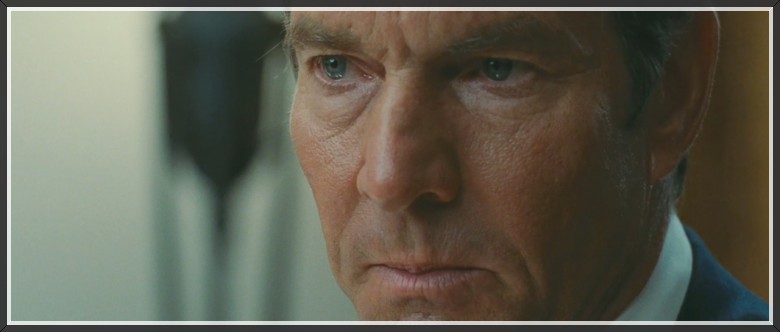
Rev. Shaw Moore (Dennis Quaid) represents a certain type of Christianity that ignores a significant pro-dance history.
Not only did the early church support dance as worship, but it continued into the Early Medieval period. Archbishop Isidore of Seville composed sacred choreography and incorporated it into the Mozarabic Rite that is still celebrated three times per year in the Cathedral of Seville.[5] Another example is that Pope Gregory IV (827-844) inaugurated the Children’s Festival in honor of Pope Gregory the Great where children danced in worship.[6] Continuing into the Late Medieval Period (1100-1400), the most prominent form of dance was the Dance of Death, “danse macabre,” where death dances forth to claim the lives of those stricken with the Bubonic Plague.[7] Also during the Late Medieval Period, cloistered nuns danced on the Feasts of Holy Innocents, priests danced on the Feast of St. Nicholas, Pope Urban IV (1264) created the Corpus Christi procession dance to celebrate the Eucharist, and labyrinth dances were popular in church yards.[8] A dance step that has continued until today, the oldest liturgical dance step, stems from the work of John Beleth, the University of Paris rector, who inaugurated the tripudia.[9] And it is during this period that Dante describes dancing as “the occupation of those in paradise.”[10]
We move from the Late Medieval Period into the Renaissance (1400-1700) where processionals, moral ballets, and dance as hymn and psalm interpretation are prevalent in worship. Cardinal Ximenes (1436-1517) choreographed “seises” dances to be performed seven time per year and Pope Eugenius IV saw these seises and issued a papal bull authorizing their dances.[11] Beginning the Protestant tradition, Martin Luther, admonishes dance in his 1525 carol “On Heaven High” in addition to writing about it in a letter to his little son, Hans, describing heaven as a place of happy dancing. (See another Luther quote on dance below). Additionally, Cardinal Borromeo, commissioned a dance for the canonization of Ignatius of Loyola in 1610.[12] And as the Renaissance draws to a close, the Council of Trent (1545-1563) condemned dance, even though it ended with a lavish ball.[13]
During the Post Renaissance, the Jesuits stylized the famous five positions of ballet under the leadership of Charles Beauchamp, and the Jesuit’s college ballets could be compared to the court ballets of their day. In fact, King Louis XIV said, “there is no one like the Jesuits for doing pirouettes.”[14] On the whole there was a decline in liturgical dancing due to the shift toward word oriented liturgy, as the Roman Catholic Church became more centrally authoritative, and Puritans condemned the lust of the flesh; however, John Cotton, a New England Puritan, stated, “Dancing I would not simply condemn, for I see two sorts of dancing in use with God’s people in the OT.”[15] Cotton Mather, another Puritan, wrote “An Arrow Against Profane and Promiscuous Dancing,” and condemned only dancing that aroused the passions.[16] Furthermore, the Shakers, founded 1747, were known for their unique, shaking dances in worship.[17] There were circle dances in camp meetings of Baptists, Methodists, and Presbyterians during the Second Great Awakening.
I share these glimpses into the dancing history of Christianity simply to say that Ren MacCormack is not alone in quoting from Ecclesiastes, reminding the people of Bomont that there is a time weep and a time to dance. “There was a time for those laws, but not anymore,” Ren claims, “this is our time to live, our time to dance.” Ren experienced resistance from a small town in South Georgia and so did I, but ultimately, we both danced. And I am convinced that our dancing made those small towns better places.
Was the new Footloose fantastically cheesy? Yes. Does it compare with the iconic performances from 1984? Maybe. Do more small towns and more churches need to acknowledge the vast witness of dance in our histories? Absolutely. As a scholar of dance and religion and a pastor of a Baptist church, I see Footloose as a gateway into discussions about the importance of dance in our lives, our worship, and our history. So, kick off your Sunday shoes…and dance!
Footloose (113 mins.) is rated PG-13 for some teen drug and alcohol use, sexual content, violence, and language and is currently playing in theaters everywhere.
If you’re interested, here are some further reflections on dance and the church:
- Hippolytus’s (170-236) Easter hymn of praise sings, “O thou leader of the mystic round dance” when referring to God. [18]
- Eusebius of Caesarea (264-339) speaks of dance as worship when he says, “With dances and hymns, in city and country, they glorified first of all God the universal King.” [19]
- Jerome (340-407), who is known for disdaining the body, stated, “In the Church the joy of the spirit finds expression in bodily gestures and her children shall say with David as they dance the solemn step: ‘I will dance and play before the face of the Lord.’” [20]
- Basil the Great (344-407) described dance in the church beautifully when he writes, “We remember those who now, together with the Angels, dance the dance of the Angels around God, just as in the heavenly dance…Could there be anything more blessed than to imitate on earth the ring-dance of the angels and at dawn to raise our voices in prayer and by hymns and song glorify the rising Creator.” [21]
- In Gregory of Nyssa’s Homily on the Psalms he writes, “Once there was a time when the whole of rational creation formed a single dancing chorus looking upwards to the one leader of this dance. And the harmony of that motion which was imparted to them by reason of his [sic] law found its way into their dancing.” [22]
- Luther writes about dance in a sermon for Epiphany II: “…because it is the custom of the country, just like inviting guests, dressing up, eating, drinking, and making merry, I can’t bring myself to condemn it, unless it gets out of hand, and so causes immoralities or excess. And even though sin has taken place in this way, it’s not the fault of dancing alone. Provided they don’t jump on tables dancing in the church…But so long as it’s done decently, I respect the rights and customs of weddings—and I dance, anyway!” [23]
[1] Ronald Gagne, Thomas Kane, and Robert VerEecke, Introducing Dance in Christian Worship (Portland: Pastoral Press, 1999), 30.
[2] Roberts, The Ante-Nicene Fathers, as quoted in Gagne, Kane, and VerEecke, 30.
[3] Ambrose, “On Repentance,” as quoted in Gagne, Kane, and VerEecke, 31.
[4] Gagne, Kane, and VerEcke, 41.
[5] Taylor, 19.
[6] Gagne, Kane, and VerEcke, 43.
[7] Taylor, 23.
[8] Gagne, Kane, and VerEcke, 46.
[9] The tripudia is traditionally used in processionals and involves stepping forward with the right foot, then stepping forward with the left foot, then shifting the weight back onto the right foot and repeating the steps over and over.
[10] Canto VII lines 7-9 in Dante Alighieri, Paradiso, trans. John Ciardi (New York: New American Library, 1997), 62.
[11] Gagne, Kane, and VerEcke, 49.
[12] Taylor, 28.
[13] Gagne, Kane, and VerEcke, 49.
[14] Judith Rock, Terpsichore at Louis-le-Grand: Baroque Dance on the Jesuit Stage in Paris (Saint Louis: The Institute of Jesuit Sources, 1996), 39.
[15] Taylor, 29.
[16] Ibid.
[17] Ibid, 30.
[18] Hippolytus, Homily in Pascha as quoted in Gagne, Kane, and VerEecke, 31.
[19] Gagne, Kane, and VerEecke, 37.
[20] Gagne, Kane, and VerEecke, 39.
[21] Iris Stewart, Sacred Woman Sacred Dance (Rochester: Inner Traditions, 2000), 64.
[22] Gagne, Kane, and VerEecke, 41.
[23] This sermon appeared in a pamphlet entitled, “The Difference Between True and False Worship,” Martin Luther, 1522 and was accessed online on December 1, 2008 via [http://www.godrules.net/library/luther/129luther_a12.htm].
Previous Post

October 20, 2011
A Review of Marzi: A Memoir
Next Post
October 31, 2011 Tebowing Tebow
Browse Our Archives
Select a Category Classics DVD Film Music News Pop Culture Events Print Sports Television Uncategorized Video Games
Select a Month March 2017 February 2017 January 2017 December 2016 November 2016 October 2016 September 2016 August 2016 July 2016 June 2016 May 2016 April 2016 March 2016 February 2016 January 2016 December 2015 November 2015 October 2015 September 2015 August 2015 July 2015 June 2015 May 2015 April 2015 March 2015 February 2015 January 2015 December 2014 November 2014 October 2014 September 2014 August 2014 July 2014 June 2014 May 2014 April 2014 March 2014 February 2014 January 2014 December 2013 November 2013 October 2013 September 2013 August 2013 July 2013 June 2013 May 2013 April 2013 March 2013 February 2013 January 2013 December 2012 November 2012 October 2012 September 2012 August 2012 July 2012 June 2012 May 2012 April 2012 March 2012 February 2012 January 2012 December 2011 November 2011 October 2011 September 2011 August 2011 July 2011 June 2011 May 2011 April 2011 March 2011 February 2011 January 2011 December 2010 November 2010 October 2010 September 2010 August 2010 July 2010 June 2010 May 2010 April 2010 March 2010 February 2010 January 2010 December 2009 November 2009 October 2009 September 2009 August 2009 July 2009 June 2009 May 2009 April 2009 March 2009 February 2009 January 2009 December 2008 November 2008 October 2008 September 2008 August 2008 July 2008 June 2008 May 2008 April 2008 March 2008 February 2008 January 2008 December 2007 November 2007 October 2007 September 2007 August 2007 July 2007 June 2007 May 2007 April 2007 March 2007
Follow Us!
TAKE THE
Religious Wisdom Quiz
True or False: Thomas doubted Jesus' resurrection until he saw and touched Jesus' wounds.
Select your answer to see how you score.
FALSE TRUE
Related posts from Pop Theology


At SXSW2017: May It Last: A Portrait of...

At SXSW 2017: "Untold Tales of Armistead Maupin"
TRENDING AT PATHEOS Progressive Christian

Why Christians Have a Sacred Duty to Vote:...
The Bible offers strong support for the sacred duty to vote. Here...

What Being a Modern-Day Apostle Means to Me
In my last column, I discussed the ins and outs of modern-day...

Did Ancient China Once Worship the God of...
Across human history, a common thread weaves through the origins of the...

Love Your Neighbor – Including Earth-Kin: Lev. 19,...
God’s command to love your neighbor means acting in an ethical and...

Lead a Church Study of “Jesus and Lao...
Guest writer Jack Thomas (The Irreverent Reverend) reflects on leading his church...

Principles for Understanding the Apostolic Ministry Today
Whenever people discover that my formal ministry title is "apostle," as in...
view all Progressive Christian blogs
Ad-Free & Subscriber Log-In Subscription Support
- About Us
- 2026 Calendar
- Videos
- Podcasts
- Library of World Religions
- Faith In Media Tracker
- Advertise With Us
- Write for Us
- Privacy Policy
- Terms of Service
- Do Not Sell My Data
- Contact Us
- Radiant Digital
- Manage Newsletter Subscriptions
- Unsubscribe From Notifications
- Sitemap
Copyright 2008-2026, Patheos. All rights reserved.
Subscription Support Ad-Free & Subscriber Log-In
Follow Patheos