
BuddhistCatholicContemplativeEvangelicalGeneral ChristianHinduJewishLatter-day SaintMuslimNew VisionsProgressive Christian
Beliefs
- Buddhist
- Catholic
- Contemplative
- Evangelical
- General Christian
- Hindu
- Jewish
- Latter-day Saint
- More Voices
- Muslim
- New Visions
- Pagan
- Progressive Christian
Topics
- Religion News
- Food and Religion
- Sports and Religion
- Religious Art
- Religious Music and Entertainment
- Religious Events
- History and Religion
- Style and Religion
- Politics and Religion
- Women in Religion
- Recreation Outdoors and Religion
- Business Finance and Religion
- Careers Workplace and Religion
- Education and Religion
- Family Parenting and Religion
- Health Fitness and Religion
- Home and Religion
- Relationships and Religion
- Technology and Religion
- Travel and Religion
Columnists
- Buddhist Columnists
- Business Finance and Religion Columnists
- Careers Workplace and Religion Columnists
- Catholic Columnists
- Contemplative Columnists
- Education and Religion Columnists
- Evangelists Columnists
- Family Parenting and Religion Columnists
- General Christian Columnists
- Health Fitness and Religion Columnists
- Hindu Columnists
- History and Religion Columnists
- Home and Religion Columnists
- Jewish Columnists
- More Voices Columnists
- Latter Day Columnists
- Muslim Columnists
- New Visions Columnists
- Nonreligious Columnists
- Pagan Columnists
- Politics and Religion Columnists
- Progressive Columnists
- Recreation Outdoors and Religion Columnists
- Relationships and Religion Columnists
- Religion News Columnists
- Religious Art Columnists
- Religious Events Columnists
- Religious Music and Entertainment Columnists
- Sports and Religion Columnists
- Style and Religion Columnists
- Technology and Religion Columnists
- Travel and Religion Columnists
- Women in Religion Columnists
Resource Library
- 2026 Calendar
- Library of World Religions
- The 100 Most Holy Places on Earth
- Patheos Answers
- Podcasts
- Videos
- Faith Leaders Database
- Anglican Episcopalian
- Bahai
- Baptist
- Buddhism
- Christianity
- Confucianism
- Eastern Orthodoxy
- Hinduism
- Holiness and Pentecostal
- ISKCON
- Islam
- Judaism
- Lutheran
- Methodist
- The Church of Jesus Christ of Latter-day Saints
- New Age
- Paganism
- Presbytarian and Reformed
- Protestantism
- Religion Behind the Scenes
- Roman Catholic
- Scientology
- Shia Islam
- Sikhism
- Sufism
- Sunni Islam
- Taoism
- Zen
- See all religions
Research Tools
 Ad-Free & Subscriber Log-In Subscription Support
Ad-Free & Subscriber Log-In Subscription Support
Follow Patheos 

- Trending:
- Forgiveness
- |
- Marriage
- |
- Consciousness
- |
- Death Penalty
- |
- Election
- |
- Halloween
 Pop Theology
- Home
- Progressive Christian
- Religious Music & Entertainment
- Sufjan Stevens Stretches Out
Sufjan Stevens Stretches Out
Last updated on: March 10, 2011 at 7:01 am by J. Ryan Parker
Sufjan Stevens Stretches Out 2011-03-10T07:01:20-08:00 J. Ryan Parker
Patheos Explore the world's faith through different perspectives on religion and spirituality! Patheos has the views of the prevalent religions and spiritualities of the world.
Richard Lindsay reviews Sufjan Stevens’ latest album, The Age of Adz, after the jump.
“God must get awfully tired of hearing the same thing over and over again, and in His all-embracing wisdom could certainly embrace a dissonance—might even enjoy one now and again.” – Charles Ives
“Stop being such a God-damned sissy! Why can’t you stand up before fine strong music like this and use your ears like a man!” – Also Charles Ives (presumably in a fouler mood).
At my undergraduate music school in the early nineties, we spent a significant portion of our theory and history classes wrapping our heads around the avant-garde sounds of the Twentieth Century. These were the composers our instructors told us were now “important,” as opposed to the classical Beethoven and Bach, pop-classic John Williams and John Rutter, and concert bandmasters like Alfred Reed that had motivated us to go into music in the first place. We feigned a knowing appreciation of Charles Ives’ dissonant polytonality, John Cage’s chance music (one piece involved people walking around tuning radios to different stations) and the tape loops of Steve Reich and Karlheinz Stockhausen. Our professors self-assuredly told us this was the “classical” music of the future.
What I think they imagined is that one day we would go to concert halls and listen to abstract acoustic and electronic soundscapes that would challenge our notions of musical theory and form. What they, and we, didn’t realize was the “music of the future” would happen according to its own anarchic patterns. As electronic mixing technology spread, innovative musicians like Aphex Twin, Nullsleep, Deadmau5, Daft Punk, Moby, and Bjork, would not wait for the stuffy approval of the “formal” music world. The “serious” composers we studied in music school, when drained through pop music’s democratizing sieve, would become what we now know as electronica.

In The Age of Adz (pronounced “odds”) Sufjan Stevens (pronounced SOOF-yan STEEV…you get the idea) has produced a remarkable album of acoustic and electronic soundscapes that represent a clear break from his previous work. Already the songwriter/performer of what may be the best indie album of the last ten years (Illinois, 2005) Stevens put his growing audience on the line to produce a wild song cycle of clashing beats and electro-noise. The response from the fans that know him as the aching, banjo-playing, latter-day Elliott Smith who wrote such exquisitely produced chamber pop as “Come on! Feel the Illinoise!,” “John Wayne Gacy, Jr.” and “The Predatory Wasp of the Palisades is Out to Get Us!” has been nothing short of consternation.
To understand this reaction, you have to know who Stevens’ audience is (or used to be). An alumnus of both an evangelical Christian high school and college, Stevens has been an Emerging-church poster boy. His previous albums have included spiritual music that has caught on with both the secular indie scene and the post-Christian-pop crowd. For evangelicals of a certain hipness who were tired of defending the artistic merit of (or lack thereof) of CCM, Stevens was proof that “Christian” music could produce a real innovator. The fact that several of his songs have homoerotic undertones that would have sent their culture-warrior parents into fits of banshee-like rage only added to Stevens’ appeal for evangelical X-ers and Millennials. But after waiting for five years for his post-Illinois LP, only to be confronted by the experimental musique concrete of The Age of Adz, it is his young Christian fans who have been thrown into a rage, and a palpable sense of betrayal.
The opening song on Adz, “Futile Devices,” lulls the listener with a more typical Stevens sound: acoustic guitar and piano, and vaguely homoerotic lyrics. “You are the life I needed all along/ I think of you as my brother although that sounds dumb/ and words are futile devices.” Is this written to a friend? A lover? Jesus? Who knows?
“Get Real Get Right” is pretty inoffensive as well, dedicated to the album’s muse, African-American outsider artist Royal Robertson, whose work adorns the album cover and booklet. The song is a funky groove with drum machines, willowy woodwinds and a horn line. It refers to Robertson’s apocalyptic obsessions: “Prophet, brother, priest and king/ Snake-skinned master at your feet/Barricade the bathroom doors/ Find some things you can’t ignore.” But the chorus is a classic gospel music message, “Get real, get right with the Lord.”
“Too Much,” when not overwhelmed by scratchy white noise, seemed to be channeling Stevens’ inner Devo, at least when I saw the clip of him on Jimmy Fallon. “Vesuvius” is a repeated chant that builds in intensity like a lava flow, slowly erupting with strange, bubbling electronic sounds popping around the vocal line, culminating in a descant of elementary-school plastic recorders. Just as the chaos is about to explode, an anti-climax of chopped-up vocal and electronic shards brings us down the other side of the mountain.
Stevens has said in interviews that Adz reflects an evolving interest away from long-form narrative songwriting towards the musical gesture. There are plenty of musical gestures—repeated vocal lines, riffs, and patterns—on this album. This is not entirely a departure, as Stevens’ previous album, while sounding much more conventional, also showed a tendency toward the kind of looping American minimalism of composers like Steve Reich and Terry Reilly.
“I Walked” demonstrates Stevens has not lost his narrative skill in the midst of the new electronic tone-world he is creating. Addressed again to a nebulous “lover,” the song has remarkable lines like “For when you went away I went crazy/I was wild with the breast of a dog/I ran through the night/With the knife in my chest/With the lust of your loveless life.” If that’s musical gesture over narrative, I’ll take it.
“Now That I’m Older” starts with a remarkable wordless arrangement for voices that has the doleful, bluesy sound of a field chant or spiritual. (Perhaps a musical theater version of a field chant or spiritual). Either way, it’s haunting. If a middle-class guy from the Michigan suburbs can sing the blues, this is it. “All for Myself” benefits from a similar repeated scratched-record blues riff.
This Sufjan-in-a-blue-funk vocal style is used to less positive effect in “Bad Communication,” which plods like a funeral march being led by a Casio keyboard. Other songs that don’t “communicate” so well are “The Age of Adz,” which starts with a grinding robotic apocalypse and morphs into several other overwrought innovations during its seemingly interminable eight minutes. It’s a bad sign when you’re checking your iPod for the number of minutes left in a song because you can’t believe the thing is still going.
A song that definitely challenges a pop-music listener’s sense of time, but is more likely to reward patience, is the 25-minute epic, “Impossible Soul,” that rounds out the album. This is the kind of musical adventure that would have covered the B-side of an album back in the days of vinyl. (Look it up on Wikipedia, kids.) The song seems to be about woes in a relationship using some nebulous, possibly closeted gender-switching language. (The song is addressed to someone Stevens calls “Woman,” but is spoken like a man who has never addressed a lover as “Woman.”) The song might just be Stevens’ version of Bob Dylan plugging in at Monterey (look it up on Wikipedia, kids) with the folk singer shredding a spiky, screechy electric guitar solo, and even using (gasp) auto-tune. Even more remarkable, it sort of works. I doubt we’ve heard anyone with Stevens’ musical skill and vocal sensitivity use auto-tune before; it’s usually a tool of rappers and tonally-challenged soul divas.
There are times when Stevens’ range-straining Bobby-Brady-hits-puberty vocal stylings are too weak for the sheer muscle of the horns, beats, and bleats he has amassed. It would take a considerably more powerful singer—perhaps Tom Jones—to out-sing some of this cacophony. Stevens the producer and arranger also continues the penchant for his clatch of “just the girls” backup singers (one imagines three white Brooklyn women-hipsters with requisite nose piercings and tattoos) with perfect diction but no sass or jazz in their voices. Their bland vocalizing eventually grates when used in nearly every song, both on Adz, and on the more listenable Illinoise.
“Listenable” is less the description of Adz than “challenging.” But opening your ears to an artist stretching his talent can be an enlightening experience. Stevens’ next album, however and whenever that comes about, will hopefully combine the best of this new sound and some of the old sound that his fans love (unless he’s really a sucker for art at the expense of financial success). The noise of The Age of Adz may very come from the construction of something quite exciting and new.
One more word about the gendered address of Stevens’ songs. An indie folk singer was never hurt by a little sexual ambiguity. Presumably, at the age of 35, Stevens knows which way his sexuality trends—and it doesn’t appear to be exclusively heterosexual. This would be nobody’s business but his own, except folk singers tend to sing about relationships a lot, leading to natural curiosity. And LGBT people are not yet free. There are queer evangelical kids marooned at Christian academies and colleges who could use a role model. Some of them would rather kill themselves than face their families, churches, and friends with the truth of their sexuality. If they could see a man with immense God-given talent, who tours around the world performing creative and sensitive music, and who just happens to be queer, it would them a lot of good. The Age of Adz represents a bold new beginning, what may be seen as the first of the mature work of an important musician. It will be interesting to see if Stevens matches this adult album with an adult admission of who he is.
Previous Post

March 7, 2011
An Epic Life
Next Post
March 14, 2011 Let It (Them) Be...
Browse Our Archives
Select a Category Classics DVD Film Music News Pop Culture Events Print Sports Television Uncategorized Video Games
Select a Month March 2017 February 2017 January 2017 December 2016 November 2016 October 2016 September 2016 August 2016 July 2016 June 2016 May 2016 April 2016 March 2016 February 2016 January 2016 December 2015 November 2015 October 2015 September 2015 August 2015 July 2015 June 2015 May 2015 April 2015 March 2015 February 2015 January 2015 December 2014 November 2014 October 2014 September 2014 August 2014 July 2014 June 2014 May 2014 April 2014 March 2014 February 2014 January 2014 December 2013 November 2013 October 2013 September 2013 August 2013 July 2013 June 2013 May 2013 April 2013 March 2013 February 2013 January 2013 December 2012 November 2012 October 2012 September 2012 August 2012 July 2012 June 2012 May 2012 April 2012 March 2012 February 2012 January 2012 December 2011 November 2011 October 2011 September 2011 August 2011 July 2011 June 2011 May 2011 April 2011 March 2011 February 2011 January 2011 December 2010 November 2010 October 2010 September 2010 August 2010 July 2010 June 2010 May 2010 April 2010 March 2010 February 2010 January 2010 December 2009 November 2009 October 2009 September 2009 August 2009 July 2009 June 2009 May 2009 April 2009 March 2009 February 2009 January 2009 December 2008 November 2008 October 2008 September 2008 August 2008 July 2008 June 2008 May 2008 April 2008 March 2008 February 2008 January 2008 December 2007 November 2007 October 2007 September 2007 August 2007 July 2007 June 2007 May 2007 April 2007 March 2007
Follow Us!
TAKE THE
Religious Wisdom Quiz
Which Orthodox celebration marks the resurrection of Christ?
Select your answer to see how you score.
Transfiguration Pentecost Epiphany Pascha
Related posts from Pop Theology
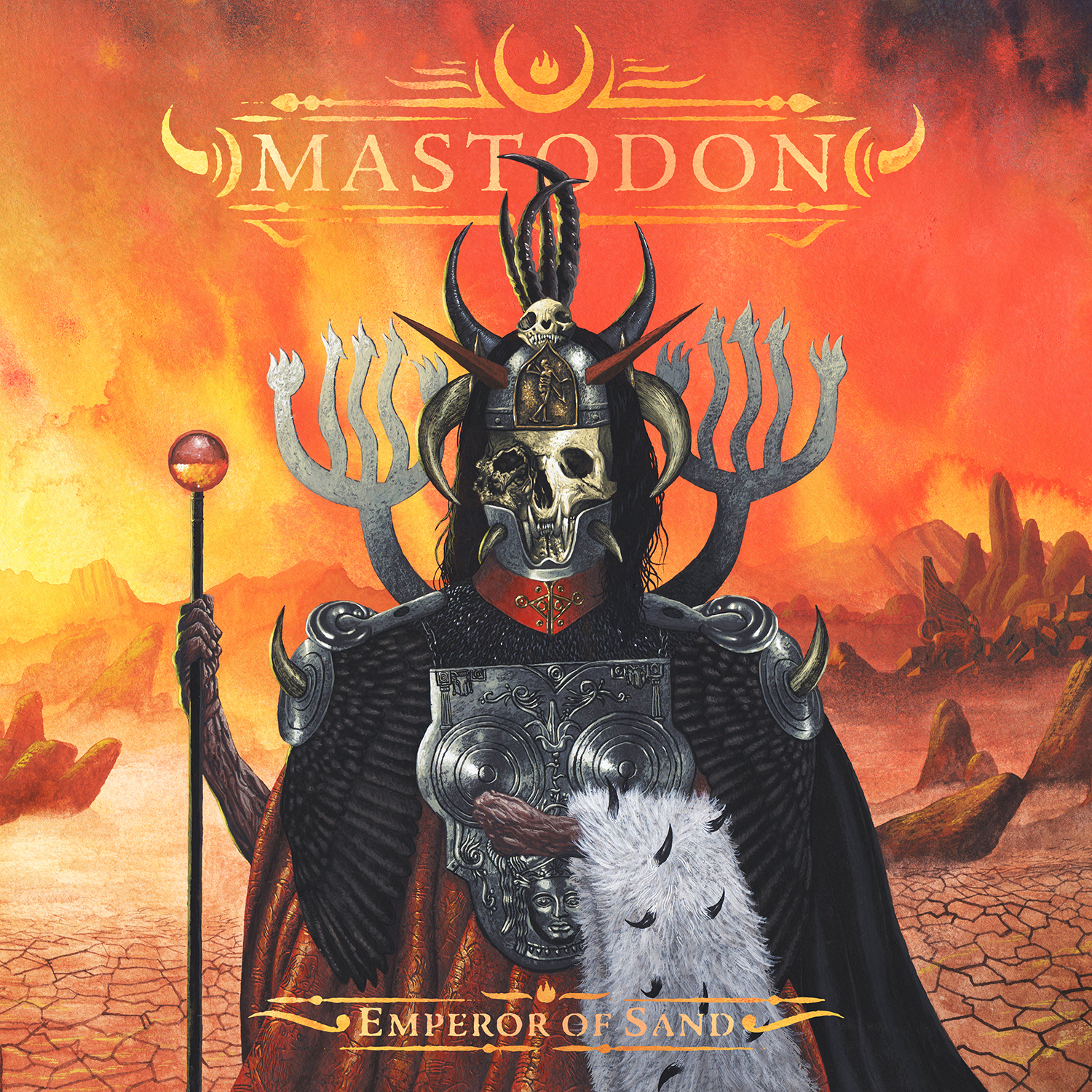
The Mastodon In The Room: A Conversation with...

At SXSW2017: Music Festival Day 5
At SXSW2017: Music Festival Day 4
At SXSW2017: Music Festival Day 3
TRENDING AT PATHEOS Progressive Christian

Why Christians Have a Sacred Duty to Vote:...
The Bible offers strong support for the sacred duty to vote. Here...

What Being a Modern-Day Apostle Means to Me
In my last column, I discussed the ins and outs of modern-day...

Did Ancient China Once Worship the God of...
Across human history, a common thread weaves through the origins of the...

Love Your Neighbor – Including Earth-Kin: Lev. 19,...
God’s command to love your neighbor means acting in an ethical and...

Lead a Church Study of “Jesus and Lao...
Guest writer Jack Thomas (The Irreverent Reverend) reflects on leading his church...

Principles for Understanding the Apostolic Ministry Today
Whenever people discover that my formal ministry title is "apostle," as in...
view all Progressive Christian blogs
Ad-Free & Subscriber Log-In Subscription Support
- About Us
- 2026 Calendar
- Videos
- Podcasts
- Library of World Religions
- Faith In Media Tracker
- Advertise With Us
- Write for Us
- Privacy Policy
- Terms of Service
- Do Not Sell My Data
- Contact Us
- Radiant Digital
- Manage Newsletter Subscriptions
- Unsubscribe From Notifications
- Sitemap
Copyright 2008-2026, Patheos. All rights reserved.
Subscription Support Ad-Free & Subscriber Log-In
Follow Patheos