
BuddhistCatholicContemplativeEvangelicalGeneral ChristianHinduJewishLatter-day SaintMuslimNew VisionsProgressive Christian
Beliefs
- Buddhist
- Catholic
- Contemplative
- Evangelical
- General Christian
- Hindu
- Jewish
- Latter-day Saint
- More Voices
- Muslim
- New Visions
- Pagan
- Progressive Christian
Topics
- Religion News
- Food and Religion
- Sports and Religion
- Religious Art
- Religious Music and Entertainment
- Religious Events
- History and Religion
- Style and Religion
- Politics and Religion
- Women in Religion
- Recreation Outdoors and Religion
- Business Finance and Religion
- Careers Workplace and Religion
- Education and Religion
- Family Parenting and Religion
- Health Fitness and Religion
- Home and Religion
- Relationships and Religion
- Technology and Religion
- Travel and Religion
Columnists
- Buddhist Columnists
- Business Finance and Religion Columnists
- Careers Workplace and Religion Columnists
- Catholic Columnists
- Contemplative Columnists
- Education and Religion Columnists
- Evangelists Columnists
- Family Parenting and Religion Columnists
- General Christian Columnists
- Health Fitness and Religion Columnists
- Hindu Columnists
- History and Religion Columnists
- Home and Religion Columnists
- Jewish Columnists
- More Voices Columnists
- Latter Day Columnists
- Muslim Columnists
- New Visions Columnists
- Nonreligious Columnists
- Pagan Columnists
- Politics and Religion Columnists
- Progressive Columnists
- Recreation Outdoors and Religion Columnists
- Relationships and Religion Columnists
- Religion News Columnists
- Religious Art Columnists
- Religious Events Columnists
- Religious Music and Entertainment Columnists
- Sports and Religion Columnists
- Style and Religion Columnists
- Technology and Religion Columnists
- Travel and Religion Columnists
- Women in Religion Columnists
Resource Library
- 2026 Calendar
- Library of World Religions
- The 100 Most Holy Places on Earth
- Patheos Answers
- Podcasts
- Videos
- Faith Leaders Database
- Anglican Episcopalian
- Bahai
- Baptist
- Buddhism
- Christianity
- Confucianism
- Eastern Orthodoxy
- Hinduism
- Holiness and Pentecostal
- ISKCON
- Islam
- Judaism
- Lutheran
- Methodist
- The Church of Jesus Christ of Latter-day Saints
- New Age
- Paganism
- Presbytarian and Reformed
- Protestantism
- Religion Behind the Scenes
- Roman Catholic
- Scientology
- Shia Islam
- Sikhism
- Sufism
- Sunni Islam
- Taoism
- Zen
- See all religions
Research Tools
 Ad-Free & Subscriber Log-In Subscription Support
Ad-Free & Subscriber Log-In Subscription Support
Follow Patheos 

- Trending:
- Forgiveness
- |
- Marriage
- |
- Consciousness
- |
- Death Penalty
- |
- Election
- |
- Halloween
 Pop Theology
- Home
- Progressive Christian
- Religious Music & Entertainment
- The Destruction of Innocence
The Destruction of Innocence
Last updated on: February 15, 2011 at 11:00 am by J. Ryan Parker
The Destruction of Innocence 2011-02-15T11:00:06-08:00 J. Ryan Parker
Patheos Explore the world's faith through different perspectives on religion and spirituality! Patheos has the views of the prevalent religions and spiritualities of the world.
Recovering from a dissertation defense, starting a new job, and prepping weekly lectures for my religion and the cinema course have left little time for movie watching these days. However, I finally got to see Never Let Me Go recently. This is one of those rare cases where the film adaptation of a book actually brings something fresh to the story on which it is based, and it’s a shame it hasn’t gotten more attention during awards season.
Based on Kazuo Ishiguro‘s book of the same name, Never Let Me Go tells the story of a group of friends, Kathy (Carey Mulligan), Tommy (Andrew Garfield), and Ruth (Keira Knightley), who seem to have an idyllic childhood in a British boarding school; however, all is not as it initially seems. A grim future awaits them as they live in a world in which certain medical and scientific advancements have been made. Kathy, Tommy, and Ruth, and others like them, are not “originals” they are clones who exist to provide vital organs when those of their originals wear down. They move from boarding schools to cottages and eventually to hospitals. When they come of age, they begin their donation process which only requires two or three cycles to complete.
The film follows the arc of the book but focuses on different phases at different lengths. Where the book dwells a bit more on Kathy, Tommy, and Ruth as children, the film necessarily has to speed things up a bit. In doing so, however, it telescopes the moment at which they learn their true identities, forcing Miss Lucy (Sally Hawkins) to tell them of their future much earlier rather than letting them gradually realize what happens to them. On the other hand, the film can do things that the book simply can’t, and director Mark Romanek exploits this potential to great effect. He pays great attention to the performances of the supporting cast, all the way down to the extras. For example, the reactions of the delivery men to the children’s excitement over the “bumper crop” of items at one of their “sales” offers insight into the world that surrounds these children and its opinion of them…of which they are all, of course, unaware. A judgmental glance or a slight shudder of disgust brings about further sympathy for their situation. Beyond these minor performances, the film’s attention to costuming is brilliant as well. As children and teenagers, none of their clothes ever fight just right. Like the items they purchase at their “sales,” these too are cast-offs, hand-me-downs from a society that isn’t willing to give them anything, but willing to take everything from them.
Both the book and the film hint at debates taking place in society over whether or not these children are actually people…whether or not they have souls. The strength of both the book and the film is that they just hint at these conversations and their theological and ethical implications without ever really hammering them home. Ishiguro and Romanek both seem content to leave it up to the audience to hash out those conversations and, in doing so, ask us to consider what society has become or is in danger of becoming. When, as a child, Ruth tells Miss Lucy the evils of what happens to the children if they go beyond the fence that surrounds Hailsham, Miss Lucy is disgusted at the horror she describes and claims that they must be fairy tales. Ruth replies, “Who’d make up stories like that?” Neither of them realize the irony of this exchange, Ruth because she is simply naive, and Miss Lucy because she is in denial.
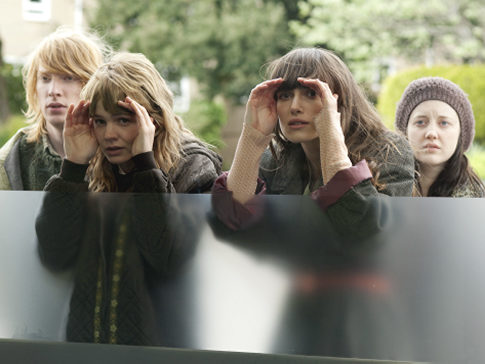
I appreciated the book’s depiction of the slow destruction of innocence and wish there could have been a way in which the film could have mirrored that as well. However, the ultimate destruction of this innocence, death, gets more attention in the film. Romanek turns his attention to “medical homicide” in ways Ishiguro does not. The lack of IVs or monitors during the donation surgeries make them seem less like medical procedures and more like ritualistic killings or sacrifices to some unnamed deity. The questions then become what deity or deities would require or approve of such actions? Some viewers will no doubt appreciate this “alteration” to the narrative while others will not.
Ishiguro’s work is a daring book and Romanek’s film is a moving experience as well. Again, this is one of those rare experiences where either reading the book or watching the film before the other will not adversely affect the experience of either. In fact, the book and the film enhance one another, making the world that Ishiguro has envisioned even more engrossing…and disturbing.
Previous Post

January 31, 2011
Enter at Your Own Risk...
Next Post
February 17, 2011 Gaga Does God's Work
Browse Our Archives
Select a Category Classics DVD Film Music News Pop Culture Events Print Sports Television Uncategorized Video Games
Select a Month March 2017 February 2017 January 2017 December 2016 November 2016 October 2016 September 2016 August 2016 July 2016 June 2016 May 2016 April 2016 March 2016 February 2016 January 2016 December 2015 November 2015 October 2015 September 2015 August 2015 July 2015 June 2015 May 2015 April 2015 March 2015 February 2015 January 2015 December 2014 November 2014 October 2014 September 2014 August 2014 July 2014 June 2014 May 2014 April 2014 March 2014 February 2014 January 2014 December 2013 November 2013 October 2013 September 2013 August 2013 July 2013 June 2013 May 2013 April 2013 March 2013 February 2013 January 2013 December 2012 November 2012 October 2012 September 2012 August 2012 July 2012 June 2012 May 2012 April 2012 March 2012 February 2012 January 2012 December 2011 November 2011 October 2011 September 2011 August 2011 July 2011 June 2011 May 2011 April 2011 March 2011 February 2011 January 2011 December 2010 November 2010 October 2010 September 2010 August 2010 July 2010 June 2010 May 2010 April 2010 March 2010 February 2010 January 2010 December 2009 November 2009 October 2009 September 2009 August 2009 July 2009 June 2009 May 2009 April 2009 March 2009 February 2009 January 2009 December 2008 November 2008 October 2008 September 2008 August 2008 July 2008 June 2008 May 2008 April 2008 March 2008 February 2008 January 2008 December 2007 November 2007 October 2007 September 2007 August 2007 July 2007 June 2007 May 2007 April 2007 March 2007
Follow Us!
TAKE THE
Religious Wisdom Quiz
Who wrote the book of Genesis?
Select your answer to see how you score.
Adam Moses Paul Eve
Related posts from Pop Theology


At SXSW2017: May It Last: A Portrait of...

At SXSW 2017: "Untold Tales of Armistead Maupin"
TRENDING AT PATHEOS Progressive Christian

Why Christians Have a Sacred Duty to Vote:...
The Bible offers strong support for the sacred duty to vote. Here...

What Being a Modern-Day Apostle Means to Me
In my last column, I discussed the ins and outs of modern-day...

Did Ancient China Once Worship the God of...
Across human history, a common thread weaves through the origins of the...

Love Your Neighbor – Including Earth-Kin: Lev. 19,...
God’s command to love your neighbor means acting in an ethical and...

Lead a Church Study of “Jesus and Lao...
Guest writer Jack Thomas (The Irreverent Reverend) reflects on leading his church...

Principles for Understanding the Apostolic Ministry Today
Whenever people discover that my formal ministry title is "apostle," as in...
view all Progressive Christian blogs
Ad-Free & Subscriber Log-In Subscription Support
- About Us
- 2026 Calendar
- Videos
- Podcasts
- Library of World Religions
- Faith In Media Tracker
- Advertise With Us
- Write for Us
- Privacy Policy
- Terms of Service
- Do Not Sell My Data
- Contact Us
- Radiant Digital
- Manage Newsletter Subscriptions
- Unsubscribe From Notifications
- Sitemap
Copyright 2008-2026, Patheos. All rights reserved.
Subscription Support Ad-Free & Subscriber Log-In
Follow Patheos