
BuddhistCatholicContemplativeEvangelicalGeneral ChristianHinduJewishLatter-day SaintMuslimNew VisionsProgressive Christian
Beliefs
- Buddhist
- Catholic
- Contemplative
- Evangelical
- General Christian
- Hindu
- Jewish
- Latter-day Saint
- More Voices
- Muslim
- New Visions
- Pagan
- Progressive Christian
Topics
- Religion News
- Food and Religion
- Sports and Religion
- Religious Art
- Religious Music and Entertainment
- Religious Events
- History and Religion
- Style and Religion
- Politics and Religion
- Women in Religion
- Recreation Outdoors and Religion
- Business Finance and Religion
- Careers Workplace and Religion
- Education and Religion
- Family Parenting and Religion
- Health Fitness and Religion
- Home and Religion
- Relationships and Religion
- Technology and Religion
- Travel and Religion
Columnists
- Buddhist Columnists
- Business Finance and Religion Columnists
- Careers Workplace and Religion Columnists
- Catholic Columnists
- Contemplative Columnists
- Education and Religion Columnists
- Evangelists Columnists
- Family Parenting and Religion Columnists
- General Christian Columnists
- Health Fitness and Religion Columnists
- Hindu Columnists
- History and Religion Columnists
- Home and Religion Columnists
- Jewish Columnists
- More Voices Columnists
- Latter Day Columnists
- Muslim Columnists
- New Visions Columnists
- Nonreligious Columnists
- Pagan Columnists
- Politics and Religion Columnists
- Progressive Columnists
- Recreation Outdoors and Religion Columnists
- Relationships and Religion Columnists
- Religion News Columnists
- Religious Art Columnists
- Religious Events Columnists
- Religious Music and Entertainment Columnists
- Sports and Religion Columnists
- Style and Religion Columnists
- Technology and Religion Columnists
- Travel and Religion Columnists
- Women in Religion Columnists
Resource Library
- 2026 Calendar
- Library of World Religions
- The 100 Most Holy Places on Earth
- Patheos Answers
- Podcasts
- Videos
- Faith Leaders Database
- Anglican Episcopalian
- Bahai
- Baptist
- Buddhism
- Christianity
- Confucianism
- Eastern Orthodoxy
- Hinduism
- Holiness and Pentecostal
- ISKCON
- Islam
- Judaism
- Lutheran
- Methodist
- The Church of Jesus Christ of Latter-day Saints
- New Age
- Paganism
- Presbytarian and Reformed
- Protestantism
- Religion Behind the Scenes
- Roman Catholic
- Scientology
- Shia Islam
- Sikhism
- Sufism
- Sunni Islam
- Taoism
- Zen
- See all religions
Research Tools
 Ad-Free & Subscriber Log-In Subscription Support
Ad-Free & Subscriber Log-In Subscription Support
Follow Patheos 

- Trending:
- Forgiveness
- |
- Marriage
- |
- Consciousness
- |
- Death Penalty
- |
- Election
- |
- Halloween
 Pop Theology
- Home
- Progressive Christian
- Religious Music & Entertainment
- Blessed are the Socially Awkward
Blessed are the Socially Awkward
Last updated on: October 5, 2010 at 7:56 am by J. Ryan Parker
Blessed are the Socially Awkward 2010-10-05T07:56:41-07:00 J. Ryan Parker
Patheos Explore the world's faith through different perspectives on religion and spirituality! Patheos has the views of the prevalent religions and spiritualities of the world.
Make no mistake about it, The Social Network is a great film. It has a wonderful script, compelling characters, and an intriguing story. The performance by Jesse Eisenberg as Facebook creator Mark Zuckerberg is worth revisiting a few times over. However, there is something missing that prevents it from entering that pantheon of classic films like The Godfather and Citizen Kane to which many critics have compared it.
Unless you’re currently living under a rock, then you’re on Facebook. Hell, you might want to check and see if you’ve got access to Facebook under that rock after all. As one of Mark Zuckerberg’s (Jesse Eisenberg) lawyers says when he tells her that he’s checking in on how things are going in Bosnia, “Bosnia? They don’t have roads in Bosnia, but they have Facebook.” Though the origins of the website that allows you to tell others what you are currently doing or to look at pictures of your nieces and nephews might seem as boring as reading thousands of lines of computer code, in the hands of writer Aaron Sorkin and director David Fincher, it becomes nothing less than a modern day mythology. The film traces the development of Facebook by cutting between the two lawsuits that Zuckerberg faced as the website began to grow. Cameron and Tyler Winklevoss (both played by Armie Hammer) along with Divya Narendra (Max Minghella) sue Zuckerberg for intellectual property theft, while Eduardo Saverin (Andrew Garfield) sues him for being screwed out of the company. The brilliance of this narrative structure is that Sorkin and Fincher use the Winklevoss lawsuit to cover the professional side of the site’s creation, while Eduardo’s law suit reveals the personal toll it took on Zuckerberg and any friends he may have had. From a revenge website to a billion-dollar business, the story of the creation of Facebook reveals just as much about the world in which we now live as it does the friends and foes involved in its development.
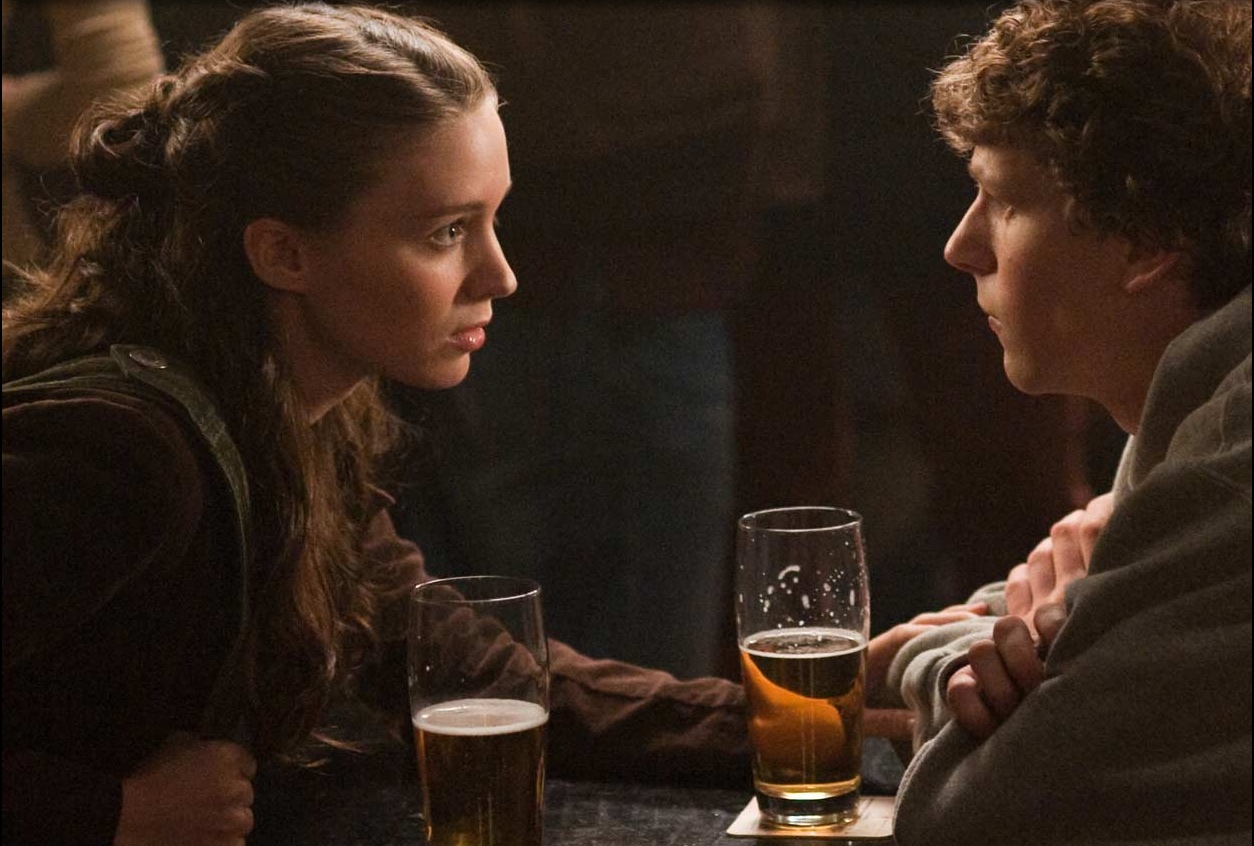
The end of this relationship is a fantastic start to a film.
The Social Network does everything right. The acting, by literally everyone involved, is pitch-perfect, and you’d be hard-pressed to convince me there’s a poor performance in the lot. This script is full of rapid, witty dialogue epitomized by the opening conversation between Zuckerberg and then girlfriend Erica Albright (Rooney Mara). I began to wonder how the film would be able to keep this up until I remembered that Sorkin wrote it. Though there’s rarely a quiet moment in the film, it’s never exhausting. The cinematography throws us between the conversants and never moves us to a more safe place: we are caught in the middle of verbal crossfire for over two hours. Yet despite its strengths, there seems to be something missing from the film that would elevate it from a great film to one of the greats. A friend, who I keep up with on Facebook, suggested that we won’t be talking about The Social Network in 30 years. However, I think we will, but not for the reasons we still discuss Citizen Kane or The Godfather, for example. Those films are timeless, The Social Network is timely, which isn’t necessarily a bad thing. It captures the essence of our wired generation and all its highs (Facebook in Bosnia) and lows (we can instantaneously humiliate someone in front of millions of people).
But the more I think about it, the more I feel like comparisons to The Godfather or Citizen Kane are actually good entry points into a discussion of The Social Network and what makes a great film. If you think about the greats, they’re often populated with larger than life characters like Charles Foster Kane, Michael Corleone, Scarlett O’Hara, etc. These characters overcome impossible odds or make monumental sacrifices on their way to fame, fortune, power, or recovery. Though Zuckerberg is a compelling character, he’s not like most lead characters in great films…he’s far too petty. Part of this is not Zuckerberg’s fault. There’s just not much at stake here, despite the potential billions of dollars which Zuckerberg doesn’t even care about. The Winklevoss twins come from money, Saverin made $350,000 during break, and Zuckerberg could create any number of computer programs and strike it rich. But perhaps this is the point…more on that in a moment. Unlike its classic cinematic predecessors, The Social Network also lacks those artistic moments that often make a film one of the greats. There are no scenes like the opening of Citizen Kane or the christening scene at the conclusion of The Godfather, even though the editing throughout The Social Network is fine.
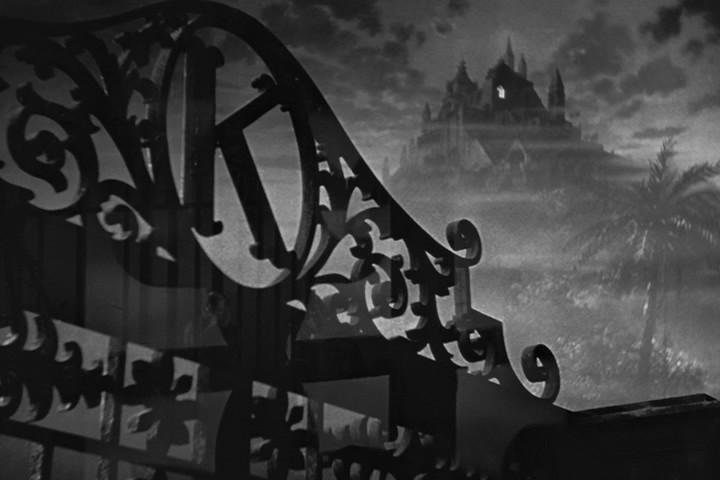
Just part of the beautiful opening shots of CITIZEN KANE.
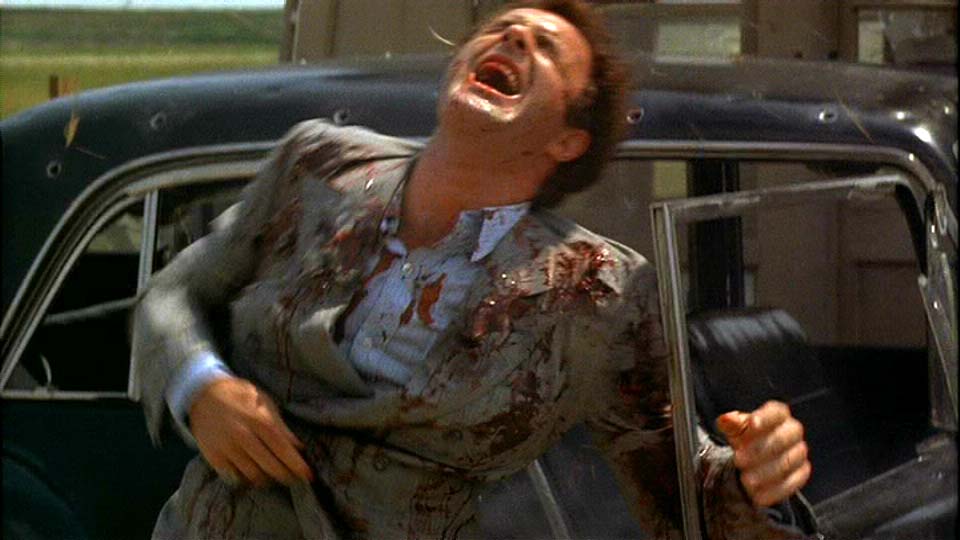
Editing between life and death in THE GODFATHER.

Brutal consequences in THE GODFATHER II.
Whether or not the film’s portrayal of these real life people are factually true is irrelevant. As characters in a film they are completely believable, fully realized, consistent and therefore present deeper, larger truths. The common theme behind Zuckerberg’s creation of Facebook, the Winklevoss’ desire to take it from him, and Sean Parker’s (Napster founder played by Justin Timberlake) attempts to weasel his way in is a desire for notoriety, fame, and social impact. However, we might argue that all of these are symptoms of a deeper longing…a desire to be in community, to be in relationship with another person/other people. The truth behind The Social Network is that we are social beings and that we crave networks, be they digital or real. Parker creates Napster to get a girl, and Zuckerberg creates Facebook to get back at one. People join and “live” on Facebook for both reasons.
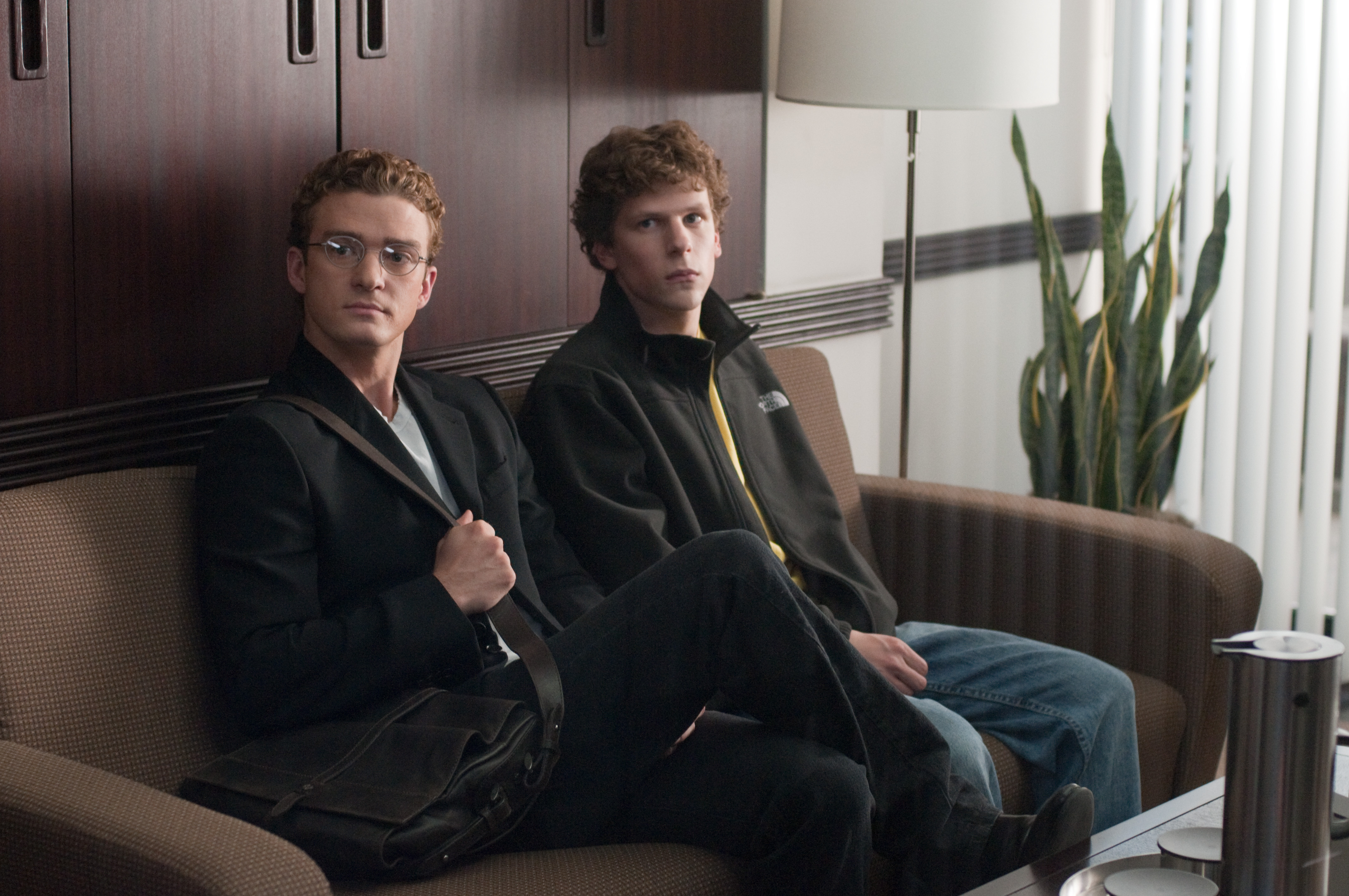
Sean Parker (Justin Tumberlake) might be a devil, but he's one with a vision.
The Social Network embodies the generation from which it emerges better than most of its cinematic peers. This is a generation of know-it-all’s and do-it-all’s who can know and do it all because of the networked culture in which they live. As such, it seems that there is a strong dichotomy between independence and interdependence. That one person can land a billion dollars by getting back at a scorned lover is as much a sign of the times as it is the person. In a way, Zuckerberg bumbles his way to billionairehood, but though the film doesn’t make of it what it should, he doesn’t do it alone. He needed co-workers like Dustin Moskovitz (Joseph Mazzello) to be wired in, high on cocaine or Mountain Dew, writing thousands of lines of computer code. The Winklevoss twins needed Zuckerberg and offered him the very thing that he craved, but he spurned them. Zuckerberg’s nose-thumbing simultaneously leads to the development of Facebook and further complexifies this character. And make no mistake about it, the old ways of doing business, of running to the university president or hiding behind a harvard.edu email address when things don’t go your way, are long gone. Yes Winklevoss twins, it’s just that easy…go out and come up with a new idea.
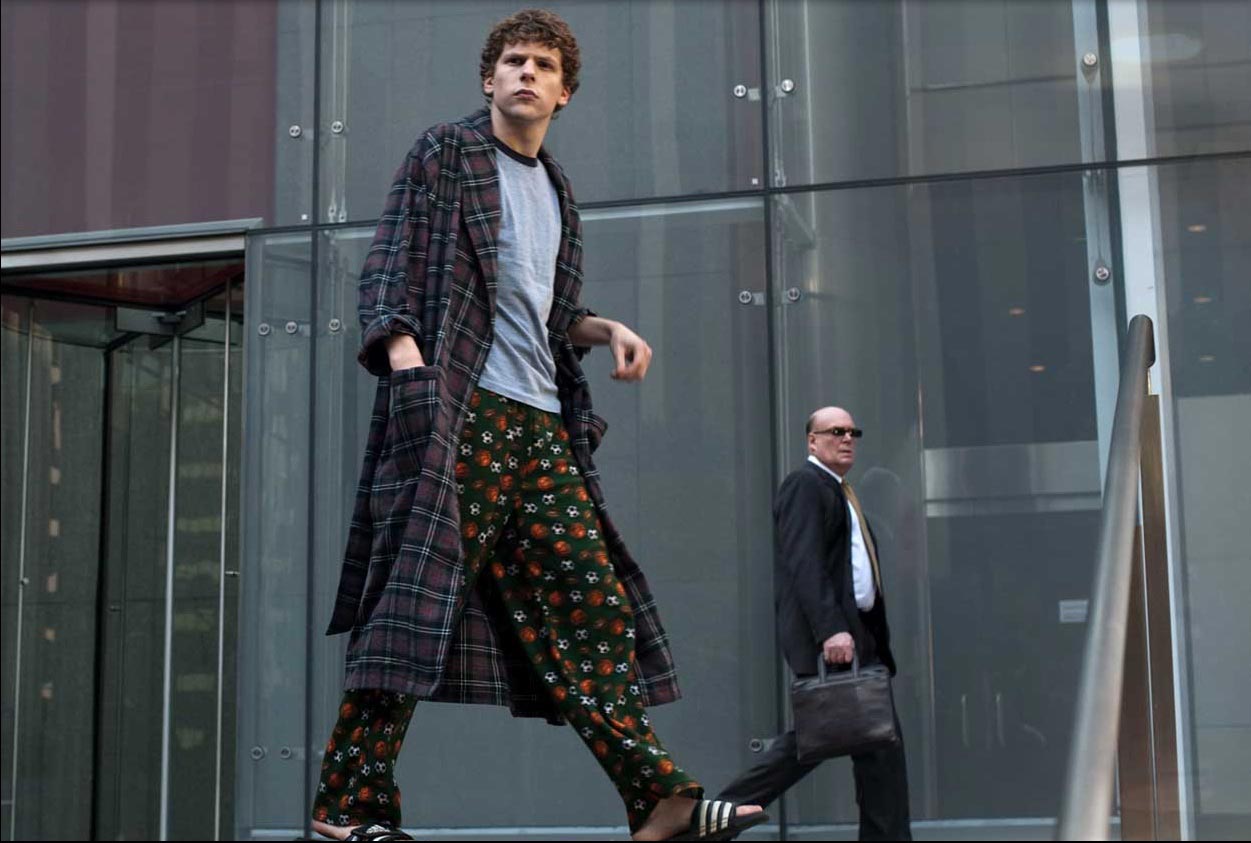
New and old ways of going to work.
One of the final strengths of The Social Network is that it never forgets from whence it comes. I don’t want to give away what is a brilliant ending, but it comes back full circle to that conversation between Zuckerberg and Erica. The conclusion warns us that while we may be part of or participate in a network of over 500 million users, we can still be and feel brutally alone.
The Social Network (120 mins) is rated PG-13 for sexual content, drug and alcohol use, and language and is in theaters everywhere.
Previous Post

September 28, 2010
An Epic Journey
Next Post
October 11, 2010 Who's the Real Monster?
Browse Our Archives
Select a Category Classics DVD Film Music News Pop Culture Events Print Sports Television Uncategorized Video Games
Select a Month March 2017 February 2017 January 2017 December 2016 November 2016 October 2016 September 2016 August 2016 July 2016 June 2016 May 2016 April 2016 March 2016 February 2016 January 2016 December 2015 November 2015 October 2015 September 2015 August 2015 July 2015 June 2015 May 2015 April 2015 March 2015 February 2015 January 2015 December 2014 November 2014 October 2014 September 2014 August 2014 July 2014 June 2014 May 2014 April 2014 March 2014 February 2014 January 2014 December 2013 November 2013 October 2013 September 2013 August 2013 July 2013 June 2013 May 2013 April 2013 March 2013 February 2013 January 2013 December 2012 November 2012 October 2012 September 2012 August 2012 July 2012 June 2012 May 2012 April 2012 March 2012 February 2012 January 2012 December 2011 November 2011 October 2011 September 2011 August 2011 July 2011 June 2011 May 2011 April 2011 March 2011 February 2011 January 2011 December 2010 November 2010 October 2010 September 2010 August 2010 July 2010 June 2010 May 2010 April 2010 March 2010 February 2010 January 2010 December 2009 November 2009 October 2009 September 2009 August 2009 July 2009 June 2009 May 2009 April 2009 March 2009 February 2009 January 2009 December 2008 November 2008 October 2008 September 2008 August 2008 July 2008 June 2008 May 2008 April 2008 March 2008 February 2008 January 2008 December 2007 November 2007 October 2007 September 2007 August 2007 July 2007 June 2007 May 2007 April 2007 March 2007
Follow Us!
TAKE THE
Religious Wisdom Quiz
What did God make on the fourth day of creation?
Select your answer to see how you score.
Sun, moon, and stars Man Fish and birds Plants
Related posts from Pop Theology


At SXSW2017: May It Last: A Portrait of...

At SXSW 2017: "Untold Tales of Armistead Maupin"
TRENDING AT PATHEOS Progressive Christian

Why Christians Have a Sacred Duty to Vote:...
The Bible offers strong support for the sacred duty to vote. Here...

What Being a Modern-Day Apostle Means to Me
In my last column, I discussed the ins and outs of modern-day...

Did Ancient China Once Worship the God of...
Across human history, a common thread weaves through the origins of the...

Love Your Neighbor – Including Earth-Kin: Lev. 19,...
God’s command to love your neighbor means acting in an ethical and...

Lead a Church Study of “Jesus and Lao...
Guest writer Jack Thomas (The Irreverent Reverend) reflects on leading his church...

Principles for Understanding the Apostolic Ministry Today
Whenever people discover that my formal ministry title is "apostle," as in...
view all Progressive Christian blogs
Ad-Free & Subscriber Log-In Subscription Support
- About Us
- 2026 Calendar
- Videos
- Podcasts
- Library of World Religions
- Faith In Media Tracker
- Advertise With Us
- Write for Us
- Privacy Policy
- Terms of Service
- Do Not Sell My Data
- Contact Us
- Radiant Digital
- Manage Newsletter Subscriptions
- Unsubscribe From Notifications
- Sitemap
Copyright 2008-2026, Patheos. All rights reserved.
Subscription Support Ad-Free & Subscriber Log-In
Follow Patheos