
BuddhistCatholicContemplativeEvangelicalGeneral ChristianHinduJewishLatter-day SaintMuslimNew VisionsProgressive Christian
Beliefs
- Buddhist
- Catholic
- Contemplative
- Evangelical
- General Christian
- Hindu
- Jewish
- Latter-day Saint
- More Voices
- Muslim
- New Visions
- Pagan
- Progressive Christian
Topics
- Religion News
- Food and Religion
- Sports and Religion
- Religious Art
- Religious Music and Entertainment
- Religious Events
- History and Religion
- Style and Religion
- Politics and Religion
- Women in Religion
- Recreation Outdoors and Religion
- Business Finance and Religion
- Careers Workplace and Religion
- Education and Religion
- Family Parenting and Religion
- Health Fitness and Religion
- Home and Religion
- Relationships and Religion
- Technology and Religion
- Travel and Religion
Columnists
- Buddhist Columnists
- Business Finance and Religion Columnists
- Careers Workplace and Religion Columnists
- Catholic Columnists
- Contemplative Columnists
- Education and Religion Columnists
- Evangelists Columnists
- Family Parenting and Religion Columnists
- General Christian Columnists
- Health Fitness and Religion Columnists
- Hindu Columnists
- History and Religion Columnists
- Home and Religion Columnists
- Jewish Columnists
- More Voices Columnists
- Latter Day Columnists
- Muslim Columnists
- New Visions Columnists
- Nonreligious Columnists
- Pagan Columnists
- Politics and Religion Columnists
- Progressive Columnists
- Recreation Outdoors and Religion Columnists
- Relationships and Religion Columnists
- Religion News Columnists
- Religious Art Columnists
- Religious Events Columnists
- Religious Music and Entertainment Columnists
- Sports and Religion Columnists
- Style and Religion Columnists
- Technology and Religion Columnists
- Travel and Religion Columnists
- Women in Religion Columnists
Resource Library
- 2026 Calendar
- Library of World Religions
- The 100 Most Holy Places on Earth
- Patheos Answers
- Podcasts
- Videos
- Faith Leaders Database
- Anglican Episcopalian
- Bahai
- Baptist
- Buddhism
- Christianity
- Confucianism
- Eastern Orthodoxy
- Hinduism
- Holiness and Pentecostal
- ISKCON
- Islam
- Judaism
- Lutheran
- Methodist
- The Church of Jesus Christ of Latter-day Saints
- New Age
- Paganism
- Presbytarian and Reformed
- Protestantism
- Religion Behind the Scenes
- Roman Catholic
- Scientology
- Shia Islam
- Sikhism
- Sufism
- Sunni Islam
- Taoism
- Zen
- See all religions
Research Tools
 Ad-Free & Subscriber Log-In Subscription Support
Ad-Free & Subscriber Log-In Subscription Support
Follow Patheos 

- Trending:
- Forgiveness
- |
- Marriage
- |
- Consciousness
- |
- Death Penalty
- |
- Election
- |
- Halloween
 Pop Theology
- Home
- Progressive Christian
- Religious Music & Entertainment
- Road to Recovery…and a Higher Power
Road to Recovery…and a Higher Power
Last updated on: June 24, 2013 at 7:30 pm by J. Ryan Parker
Road to Recovery…and a Higher Power 2013-06-24T19:30:16-07:00 J. Ryan Parker
Patheos Explore the world's faith through different perspectives on religion and spirituality! Patheos has the views of the prevalent religions and spiritualities of the world.
Pop Theology contributor Richard Lindsay offers a review of Eminem’s new album, Recovery. It’s the first review of a rap album here at Pop Theology. Let’s see how it goes after the jump.
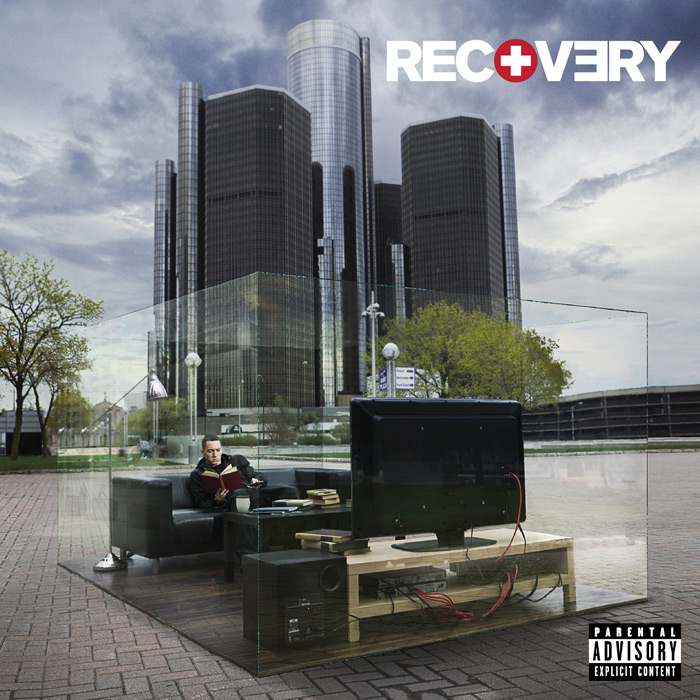 Eminem wraps (and raps) his latest effort in the language of one of the most popular religious movements of the last century, “Recovery.” Although Recovery has five more tracks than the Twelve Steps, it’s notable for the Steps it covers, and for those it leaves out.
First, any serious critic has to pause and name the most problematic element of Eminem’s music—his vicious and unrepentant misogyny. It’s a problem throughout hip-hop, but Eminem revels in and illustrates his fantasies of abuse of women beyond the usual feral “b-word” boasts of most rappers. His insistence on devolving into violence damages good songs on Recovery about the vulnerability of relationships like “Space Bound” and “Love the Way You Lie,” and permeates almost everything else on this album like a poison haze.
That being said, it’s important to see the irony in Eminem’s offensive lyrics—to understand a performance is not necessarily a literal endorsement of an action, but rather a take, a perspective, a voice on it. Furthermore, we point the finger at Eminem only to find it pointing back at ourselves. Eminem is as much a reflection as a cause of a culture of violence against women. For some reason, he relishes embodying this societal shadow of sexism and misogyny, perhaps as a means of purging his own tendencies toward violence, perhaps as a means of attracting the disapproval that brings about the self-martyrdom he seems to need like oxygen.
On the first track, “Cold Wind Blows,” he says this is just the way he is: “I’ll be nicer to women/When Aqua Man drowns and the Human Torch starts swimming.” Although I don’t believe Eminem’s misogyny is immutable, I breathe the Serenity Prayer, “Lord, grant me the serenity to accept the things I cannot change…” and move on to explore the rest of the album.
Recovery features a lot of rap about Eminem’s recent drug problems, particularly his near-fatal overdose on methadone. The recording booklet also features Eminem sitting in a glass house (the kind from which one should not throw stones?) in the middle of downtown Detroit, his hometown. The visual joke frames the album title with the kind of double meaning Eminem relishes in his rap–it’s about Recovery from drugs, Recovery of the economy, Recovery of a career.
Eminem starts his comeback in the first song. Although his bluster is as strong as ever, halfway through the song, he gets a smack from above, in the form of a lightning sound effect interrupting his rhymes.
“Cause you’re fake, [lightning crack] ahh what the fuck, that hurt wait!
[Lightning crack] Ahh what the fuck, I just got struck by lightning.
Alright then I quit, God I give up.
Call it evil that men do, Lord forgive me for what my pen do.”
Not exactly a “decision to turn our will and our lives over to the care of God as we understood God.” But there’s at least a recognition that some Higher Power might be affecting his life.
The three songs that show Eminem at his most vulnerable are “Talkin’ 2 Myself,” “Going through Changes,” and “Not Afraid.” Taken together, this trio might parallel the dark night of the soul and transformation that those in recovery go through in the Twelve Steps.
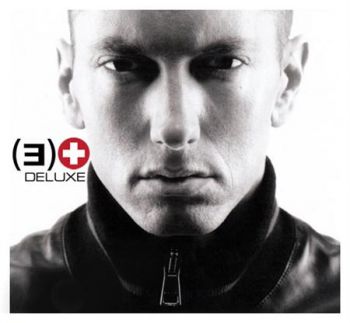
In “Talkin’ 2 Myself,” Eminem raps: “You’re lying to yourself, you’re slowly dying, you’re denying/Your health is declining with your self esteem, you’re crying out for help.” In another line he says, “Hit bottom so hard I bounce twice suffice this time around/It’s different them last two albums didn’t count/Encore I was on drugs, Relapse I was flushing ‘em out.” This sounds like Step 1: “We admitted we were powerless over drugs—that our lives had become unmanageable.”
Eminem continues to Step 4, conducting a “searching and fearless moral inventory,” admonishing himself by his birth name:
“Marshall you’re no longer the man, that’s a bitter pill to swallow/All I know is I’m wallowin’, self-loathing and hollow/ Bottoms up of pill bottle maybe I’ll hit my bottom tomorrow… I’ve turned into a hater, I’ve put up a false bravado.”
A deeply moving account of Eminem’s struggle with considering suicide, “I’m Going through Changes,” features Ozzy Osbourne on the chorus track. This song continues the self-reflection theme and the cry for help:
“I feel like I’m losing control of myself,
I sincerely apologize if all that I sound like, is I’m complaining,
But life keeps on complicating, an’ I’m debating,
On leaving this world, this evening, even my girls,
Can see I’m grievin’, I try and hide it,
But I can’t, why do I act like I’m all high and mighty,
When inside, I’m dying, I am finally realizing I need help.”
Eminem also covers steps 8 and 9: “We made a list of all persons we had harmed, and became willing to make amends to them all. We made direct amends to such people wherever possible, except when to do so would injure them or others.” In “Talkin’ 2 Myself,” he admits:
“Hatred was flowing through my veins
On the verge of going insane
I almost made a song dissin Lil Wayne
It’s like I was jealous of him cause of the attention he was gettin’
I felt horrible about myself
He was spittin and I wasn’t
Anyone who was buzzin back then coulda got it
Almost went at Kanye too.”
In the Top 40 hit, “Not Afraid” he continues these steps by apologizing to his fans:
“And to the fans, I’ll never let you down again, I’m back/I promise to never go back on that promise, in fact/Let’s be honest, that last Relapse CD was ‘ehhhh’”
The chorus has some of the same, us-against-the-world feel of his Oscar-winning song, “Lose Yourself.” As he reaches out to fans that might be in pain (the album is dedicated: “2 anyone who’s in a dark place tryin’ 2 get out. Keep your head up…It does get better!”), he even intimates the Twelfth Step: “Having had a spiritual awakening as the result of these steps, we tried to carry this message to others…”
“I’m not afraid to take a stand
Everybody come take my hand
We’ll walk this road together, through the storm.”
There’s still that matter of where Eminem’s Higher Power comes in, beyond a lightning bolt, but first let’s take a look at some of the other album highlights.
“W.T.P.” is a funny and roof-raising groove (the initials stand for “White Trash Party”) that gets Eminem back to his working-class roots. “Pull up to the club in a Pinto like it’s a Porsche/Garbage bag for one of the windows, spray painted doors/ With the flames on ‘em, Michigan plates and my names on ‘em…” The song’s a tribute to low rent fun, “tramp stamps,” doing doughnuts in a parking lot in a Gremlin, and the curious chemistry of “Mixing Hennessey and Fanta with Pepto and Mylanta.”
The genius of hip-hop rests in both its reuse of recorded music, samples rather than individual notes becoming the building blocks of a song, and in the wildly creative use of words, what MC’s call “flow.” On the latter quality, no one’s better than Eminem. Wordplay flies at the listener—sometimes in quick spurts, sometimes taking several lines for extended metaphors to evolve. In “W.T.P.,” he explains, “I’ll rip a tree out the ground and flip it upside down/‘fore I turn over a new leaf clown.” In a boast over other rappers in “almost Famous,” he raps, “Ya’ll are Eminem backwards, you’re menime’s” (mini me’s). Explaining his superior oratorical skills in “Won’t Back Down,” he raps, “these other cats ain’t metaphorically where I’m at man/I gave Bruce Wayne a Valium and said/settle ya fuckin ass down I’m ready for combat-man/get it “calm Batman?” Yes, Eminem, we get it. You pun more than the French.
Eminem’s delivery varies between a rat-a-tat spit and a drawl that mashes words together, shouted through a nasal punk tenor that still sounds adolescent despite his pushing forty. Nowhere is the contrast between rap voices more acute than “No Love,” in which he teams up with (the currently incarcerated) ‘Lil Wayne, who croaks his lines in a Dirty South twang. The sample in this case is the head-bobbing disco hit “What is Love,” by Haddaway, which Eminem and Wayne twist into a chest-thumping rebuke to other rappers that show them “no love.”
If there’s such a thing as a rap ballad, Rihanna and Eminem pull off a good one on Love the Way You Lie. Rihanna’s pretty chorus is accompanied by piano and acoustic guitar. Eminem’s words are about the pain and frustration of a “can’t live with it, can’t live without it” relationship. Even some of his more aggressive lyrics work within this doomed relationship in obsessional mode. Until the end. And then the misogyny takes over. And an otherwise good track is ruined.
So where is Eminem’s Higher Power? It seems like he skips steps 2,3,5,6, and 11, which have to do with letting go to God, and having God remove your “defects of character.” But I can’t help but feel this album represents some kind of turning point for Eminem. He’s come to some pretty difficult conclusions about himself and his own limitations. Where did his “salvation,” if that’s what we want to call it, come from?
I read an article recently in which Eminem spoke of rap as the drug that saves his life. And maybe here is his Higher Power. Part of the reason the recovery movement uses the language of a Higher Power is precisely that an inability to conceive of a theistic God should not be a stumbling block to recovery. Sometimes the sharing and compassion felt in an AA group meeting is the Higher Power. It might be a parent’s responsibility to a child, which Eminem seems to feel. I’ve heard of one case for an addict where a doorknob was his Higher Power, because it was the only thing working in his life. The Higher Power is that which draws you out of yourself, your problems, your addictions, and encourages you to live into the fullness of your being. For Eminem, this talented but troubling performer, rap is what saves his soul. Maybe someday, it will enlighten him enough that “Aqua Man drowns, and the Human Torch starts swimmin’,” and Eminem finds respect for women.
Previous Post

September 17, 2010
A Prophetic Fame
Next Post
September 28, 2010 An Epic Journey
Browse Our Archives
Select a Category Classics DVD Film Music News Pop Culture Events Print Sports Television Uncategorized Video Games
Select a Month March 2017 February 2017 January 2017 December 2016 November 2016 October 2016 September 2016 August 2016 July 2016 June 2016 May 2016 April 2016 March 2016 February 2016 January 2016 December 2015 November 2015 October 2015 September 2015 August 2015 July 2015 June 2015 May 2015 April 2015 March 2015 February 2015 January 2015 December 2014 November 2014 October 2014 September 2014 August 2014 July 2014 June 2014 May 2014 April 2014 March 2014 February 2014 January 2014 December 2013 November 2013 October 2013 September 2013 August 2013 July 2013 June 2013 May 2013 April 2013 March 2013 February 2013 January 2013 December 2012 November 2012 October 2012 September 2012 August 2012 July 2012 June 2012 May 2012 April 2012 March 2012 February 2012 January 2012 December 2011 November 2011 October 2011 September 2011 August 2011 July 2011 June 2011 May 2011 April 2011 March 2011 February 2011 January 2011 December 2010 November 2010 October 2010 September 2010 August 2010 July 2010 June 2010 May 2010 April 2010 March 2010 February 2010 January 2010 December 2009 November 2009 October 2009 September 2009 August 2009 July 2009 June 2009 May 2009 April 2009 March 2009 February 2009 January 2009 December 2008 November 2008 October 2008 September 2008 August 2008 July 2008 June 2008 May 2008 April 2008 March 2008 February 2008 January 2008 December 2007 November 2007 October 2007 September 2007 August 2007 July 2007 June 2007 May 2007 April 2007 March 2007
Follow Us!
TAKE THE
Religious Wisdom Quiz
Who said, "Faith without works is dead"?
Select your answer to see how you score.
Peter James Paul John
Related posts from Pop Theology
The Mastodon In The Room: A Conversation with...

At SXSW2017: Music Festival Day 5
At SXSW2017: Music Festival Day 4
At SXSW2017: Music Festival Day 3
TRENDING AT PATHEOS Progressive Christian

Why Christians Have a Sacred Duty to Vote:...
The Bible offers strong support for the sacred duty to vote. Here...

What Being a Modern-Day Apostle Means to Me
In my last column, I discussed the ins and outs of modern-day...

Did Ancient China Once Worship the God of...
Across human history, a common thread weaves through the origins of the...

Love Your Neighbor – Including Earth-Kin: Lev. 19,...
God’s command to love your neighbor means acting in an ethical and...

Lead a Church Study of “Jesus and Lao...
Guest writer Jack Thomas (The Irreverent Reverend) reflects on leading his church...

Principles for Understanding the Apostolic Ministry Today
Whenever people discover that my formal ministry title is "apostle," as in...
view all Progressive Christian blogs
Ad-Free & Subscriber Log-In Subscription Support
- About Us
- 2026 Calendar
- Videos
- Podcasts
- Library of World Religions
- Faith In Media Tracker
- Advertise With Us
- Write for Us
- Privacy Policy
- Terms of Service
- Do Not Sell My Data
- Contact Us
- Radiant Digital
- Manage Newsletter Subscriptions
- Unsubscribe From Notifications
- Sitemap
Copyright 2008-2026, Patheos. All rights reserved.
Subscription Support Ad-Free & Subscriber Log-In
Follow Patheos