
BuddhistCatholicContemplativeEvangelicalGeneral ChristianHinduJewishLatter-day SaintMuslimNew VisionsProgressive Christian
Beliefs
- Buddhist
- Catholic
- Contemplative
- Evangelical
- General Christian
- Hindu
- Jewish
- Latter-day Saint
- More Voices
- Muslim
- New Visions
- Pagan
- Progressive Christian
Topics
- Religion News
- Food and Religion
- Sports and Religion
- Religious Art
- Religious Music and Entertainment
- Religious Events
- History and Religion
- Style and Religion
- Politics and Religion
- Women in Religion
- Recreation Outdoors and Religion
- Business Finance and Religion
- Careers Workplace and Religion
- Education and Religion
- Family Parenting and Religion
- Health Fitness and Religion
- Home and Religion
- Relationships and Religion
- Technology and Religion
- Travel and Religion
Columnists
- Buddhist Columnists
- Business Finance and Religion Columnists
- Careers Workplace and Religion Columnists
- Catholic Columnists
- Contemplative Columnists
- Education and Religion Columnists
- Evangelists Columnists
- Family Parenting and Religion Columnists
- General Christian Columnists
- Health Fitness and Religion Columnists
- Hindu Columnists
- History and Religion Columnists
- Home and Religion Columnists
- Jewish Columnists
- More Voices Columnists
- Latter Day Columnists
- Muslim Columnists
- New Visions Columnists
- Nonreligious Columnists
- Pagan Columnists
- Politics and Religion Columnists
- Progressive Columnists
- Recreation Outdoors and Religion Columnists
- Relationships and Religion Columnists
- Religion News Columnists
- Religious Art Columnists
- Religious Events Columnists
- Religious Music and Entertainment Columnists
- Sports and Religion Columnists
- Style and Religion Columnists
- Technology and Religion Columnists
- Travel and Religion Columnists
- Women in Religion Columnists
Resource Library
- 2026 Calendar
- Library of World Religions
- The 100 Most Holy Places on Earth
- Patheos Answers
- Podcasts
- Videos
- Faith Leaders Database
- Anglican Episcopalian
- Bahai
- Baptist
- Buddhism
- Christianity
- Confucianism
- Eastern Orthodoxy
- Hinduism
- Holiness and Pentecostal
- ISKCON
- Islam
- Judaism
- Lutheran
- Methodist
- The Church of Jesus Christ of Latter-day Saints
- New Age
- Paganism
- Presbytarian and Reformed
- Protestantism
- Religion Behind the Scenes
- Roman Catholic
- Scientology
- Shia Islam
- Sikhism
- Sufism
- Sunni Islam
- Taoism
- Zen
- See all religions
Research Tools
 Ad-Free & Subscriber Log-In Subscription Support
Ad-Free & Subscriber Log-In Subscription Support
Follow Patheos 

- Trending:
- Forgiveness
- |
- Marriage
- |
- Consciousness
- |
- Death Penalty
- |
- Election
- |
- Halloween
 Pop Theology
- Home
- Progressive Christian
- Religious Music & Entertainment
- Get A(n Extra) Life
Get A(n Extra) Life
Last updated on: August 3, 2010 at 3:22 pm by J. Ryan Parker
Get A(n Extra) Life 2010-08-03T15:22:09-07:00 J. Ryan Parker
Patheos Explore the world's faith through different perspectives on religion and spirituality! Patheos has the views of the prevalent religions and spiritualities of the world.
Later this year, I’ll be presenting a paper on the ethical/theological/moral implications of video games. As luck would have it, a public discussion over whether or not video games qualify as art broke out in on-line and print media over the past few months. Film critic Roger Ebert oppossed this notion while arguments for it appeared in readers’ comments to his posts and in video game publications like Kotaku.com and Game Informer. Writer, professor, video game addict Tom Bissell‘s latest book, Extra Lives: Why Video Games Matter, is less concerned with arguing over whether or not video games can be classified as art and is more concerned with what/how they make us feel and think. While Bissell doesn’t list out a series of specific explanations of just why they matter, after reading his book, it is impossible to ignore the fact that they are increasingly one of the more important elements of our popular culture.
Bissell’s response to the “are they/are they not art” debate is crystal clear: “It seems to me that anyone passionate about video games has better things to do than walk chin-first into sucker-punch arguments about whether they qualify as art. Those who do not believe video games are or ever will be art deserve nothing more goading or indulgent than a smile” (34). Though Bissell loves (some might argue too much) video games, his love for them does not blind him to the medium’s inherent difficulties with narrative/storytelling, lingering frustrating gameplay, and other aesthetic shortcomings. Bissell is concerned, however, with a much deeper conversation. He writes, “I am uninterested in whether games are better or worse than movies or novels or any other form of entertainment. More interesting to me is what games can do and how they make me feel while they are doing it” (13).

Braid: beautiful, yes, but too frustrating?
We can discuss to no end the differences between and the importance of “framed narratives” and “ludonarratives,” but this is about as interesting and entertaining as an academic conference on sex. The brilliance of his book, and the joy of reading it, lies in his critiques of the medium, its games, and his own behavior while playing them. His self-awareness reveals the many ways that video games, given a fervent devotion to them, can having lingering effects on their players. Moreover, he is also aware that these effects carry with them the potential for ethical/moral reflection and dialogue. For example, what is our culpability of killing within a first-person-shooter like Modern Warfare 2? Are these types of video games, and the deaths and injuries within them, realistically violent enough? What are the relationships between freedom and power in both the narrative and the gameplay of BioShock? What type of morality governs the world of Grand Theft Auto IV and the behavior of its lead character within it? Moreover, the evolution in gameplay itself has implications for how we can think about morality and faith in the real world. Bissell writes, “Anyone who plays modern games such as Gears [of War] does not so much learn the rules as develop a kind of intuition for how the game operates. Often, there is no single way to accomplish a given task; improvisation is rewarded. Older games, like Super Mario, punish improvisation: You live or die according to their algebra alone” (55). In his latest edited work, Halos and Avatars: Playing Video Games with God, Craig Detweiller takes a more specific, theological approach to Bissell’s argument and claims that a teenager’s limited use of a video game’s instruction manual might parallel the ways in which (s)he approaches Scripture.

Heavy Rain: the closest link between narrative and gameplay yet?
The key point that Bissell makes regarding the distinction between video games and other forms of entertainment involves what video games set out to do and how we can judge them. Video games contain an element that novels and films do not: gameplay. Unlike novels and many films, story is not, nor does it have to be, at the center of a video game. Bissell writes, “A game with an involving story and poor gameplay cannot be considered a successful game, whereas a game with superb gameplay and a laughable story can see its spine bend from the weight of many accolades–and those who praise the latter game will not be wrong” (81). Nevertheless, many of the best games still have a compelling narrative or, despite a weak narrative, create worlds as engrossing as their literary or cinematic counterparts. Resident Evil, the game, was just as adept at creating and sustaining horror or terror as any of its horror film counterparts. It’s certainly more effective than the films based on it.
Bissell’s book further reveals that we are in a current Golden Age of video games as others, Detweiller, have suggested. Nearly every game that Bissell writes about in any great detail has released in the last decade or so. However, he is aware of those gaming highlights of years previous, like the first Resident Evil, for example. The games that he highlights include Grand Theft Auto IV, Fallout 3, Far Cry 2, BioShock, and Braid. Though the medium boasts such sophisticated examples, as a whole, it is still limited by both imagination and technology necessary to more effectively further and unite gameplay and narrative. However, given the speed with which the medium has developed (Bissell argues that it has gone from cave drawings to the ceiling of the Sistine Chapel in only two and a half decades), the future is bright indeed. As Bissell writes, “The generation of game designers currently at work is the first to have a comprehensive growth chart of the already accomplished” (71).
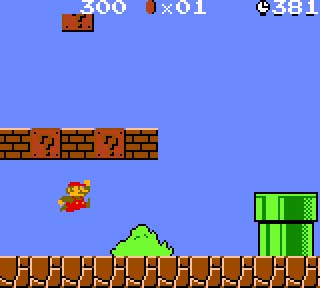
From this...

...to this.
In the author’s note at the beginning of Extra Lives, Bissell writes, “It may be years before anyone arrives at a true understanding of what games are, what they have done to popular entertainment, and how they have shaped the wider expectations of their many and increasingly divergent audiences” (xiv). Thanks to his work, Bissell has brought us a little closer to that understanding. For hard-core gamers to anyone remotely interested in the medium, this will be a highly entertaining read.
Previous Post

July 26, 2010
Yes They Are...
Next Post
August 9, 2010 Being (Really) Human
Browse Our Archives
Select a Category Classics DVD Film Music News Pop Culture Events Print Sports Television Uncategorized Video Games
Select a Month March 2017 February 2017 January 2017 December 2016 November 2016 October 2016 September 2016 August 2016 July 2016 June 2016 May 2016 April 2016 March 2016 February 2016 January 2016 December 2015 November 2015 October 2015 September 2015 August 2015 July 2015 June 2015 May 2015 April 2015 March 2015 February 2015 January 2015 December 2014 November 2014 October 2014 September 2014 August 2014 July 2014 June 2014 May 2014 April 2014 March 2014 February 2014 January 2014 December 2013 November 2013 October 2013 September 2013 August 2013 July 2013 June 2013 May 2013 April 2013 March 2013 February 2013 January 2013 December 2012 November 2012 October 2012 September 2012 August 2012 July 2012 June 2012 May 2012 April 2012 March 2012 February 2012 January 2012 December 2011 November 2011 October 2011 September 2011 August 2011 July 2011 June 2011 May 2011 April 2011 March 2011 February 2011 January 2011 December 2010 November 2010 October 2010 September 2010 August 2010 July 2010 June 2010 May 2010 April 2010 March 2010 February 2010 January 2010 December 2009 November 2009 October 2009 September 2009 August 2009 July 2009 June 2009 May 2009 April 2009 March 2009 February 2009 January 2009 December 2008 November 2008 October 2008 September 2008 August 2008 July 2008 June 2008 May 2008 April 2008 March 2008 February 2008 January 2008 December 2007 November 2007 October 2007 September 2007 August 2007 July 2007 June 2007 May 2007 April 2007 March 2007
Follow Us!
TAKE THE
Religious Wisdom Quiz
Who said, "I do not know how to speak; I am too young"?
Select your answer to see how you score.
Isaiah Jeremiah Samuel Moses
Related posts from Pop Theology


#KillerSerials: An Interview with Kutter Callaway

Book Review: MUSLIMS AND THE MAKING OF AMERICA

TRENDING AT PATHEOS Progressive Christian

Why Christians Have a Sacred Duty to Vote:...
The Bible offers strong support for the sacred duty to vote. Here...

What Being a Modern-Day Apostle Means to Me
In my last column, I discussed the ins and outs of modern-day...

Did Ancient China Once Worship the God of...
Across human history, a common thread weaves through the origins of the...

Love Your Neighbor – Including Earth-Kin: Lev. 19,...
God’s command to love your neighbor means acting in an ethical and...

Lead a Church Study of “Jesus and Lao...
Guest writer Jack Thomas (The Irreverent Reverend) reflects on leading his church...

Principles for Understanding the Apostolic Ministry Today
Whenever people discover that my formal ministry title is "apostle," as in...
view all Progressive Christian blogs
Ad-Free & Subscriber Log-In Subscription Support
- About Us
- 2026 Calendar
- Videos
- Podcasts
- Library of World Religions
- Faith In Media Tracker
- Advertise With Us
- Write for Us
- Privacy Policy
- Terms of Service
- Do Not Sell My Data
- Contact Us
- Radiant Digital
- Manage Newsletter Subscriptions
- Unsubscribe From Notifications
- Sitemap
Copyright 2008-2026, Patheos. All rights reserved.
Subscription Support Ad-Free & Subscriber Log-In
Follow Patheos