
BuddhistCatholicContemplativeEvangelicalGeneral ChristianHinduJewishLatter-day SaintMuslimNew VisionsProgressive Christian
Beliefs
- Buddhist
- Catholic
- Contemplative
- Evangelical
- General Christian
- Hindu
- Jewish
- Latter-day Saint
- More Voices
- Muslim
- New Visions
- Pagan
- Progressive Christian
Topics
- Religion News
- Food and Religion
- Sports and Religion
- Religious Art
- Religious Music and Entertainment
- Religious Events
- History and Religion
- Style and Religion
- Politics and Religion
- Women in Religion
- Recreation Outdoors and Religion
- Business Finance and Religion
- Careers Workplace and Religion
- Education and Religion
- Family Parenting and Religion
- Health Fitness and Religion
- Home and Religion
- Relationships and Religion
- Technology and Religion
- Travel and Religion
Columnists
- Buddhist Columnists
- Business Finance and Religion Columnists
- Careers Workplace and Religion Columnists
- Catholic Columnists
- Contemplative Columnists
- Education and Religion Columnists
- Evangelists Columnists
- Family Parenting and Religion Columnists
- General Christian Columnists
- Health Fitness and Religion Columnists
- Hindu Columnists
- History and Religion Columnists
- Home and Religion Columnists
- Jewish Columnists
- More Voices Columnists
- Latter Day Columnists
- Muslim Columnists
- New Visions Columnists
- Nonreligious Columnists
- Pagan Columnists
- Politics and Religion Columnists
- Progressive Columnists
- Recreation Outdoors and Religion Columnists
- Relationships and Religion Columnists
- Religion News Columnists
- Religious Art Columnists
- Religious Events Columnists
- Religious Music and Entertainment Columnists
- Sports and Religion Columnists
- Style and Religion Columnists
- Technology and Religion Columnists
- Travel and Religion Columnists
- Women in Religion Columnists
Resource Library
- 2026 Calendar
- Library of World Religions
- The 100 Most Holy Places on Earth
- Patheos Answers
- Podcasts
- Videos
- Faith Leaders Database
- Anglican Episcopalian
- Bahai
- Baptist
- Buddhism
- Christianity
- Confucianism
- Eastern Orthodoxy
- Hinduism
- Holiness and Pentecostal
- ISKCON
- Islam
- Judaism
- Lutheran
- Methodist
- The Church of Jesus Christ of Latter-day Saints
- New Age
- Paganism
- Presbytarian and Reformed
- Protestantism
- Religion Behind the Scenes
- Roman Catholic
- Scientology
- Shia Islam
- Sikhism
- Sufism
- Sunni Islam
- Taoism
- Zen
- See all religions
Research Tools
 Ad-Free & Subscriber Log-In Subscription Support
Ad-Free & Subscriber Log-In Subscription Support
Follow Patheos 

- Trending:
- Forgiveness
- |
- Marriage
- |
- Consciousness
- |
- Death Penalty
- |
- Election
- |
- Halloween
 Pop Theology
- Home
- Progressive Christian
- Religious Music & Entertainment
- The Power to Unite and Divide
The Power to Unite and Divide
Last updated on: July 7, 2010 at 6:58 am by J. Ryan Parker
The Power to Unite and Divide 2010-07-07T06:58:00-07:00 J. Ryan Parker
Patheos Explore the world's faith through different perspectives on religion and spirituality! Patheos has the views of the prevalent religions and spiritualities of the world.
At times, many of us have reacted to a professional sporting event as if it were a matter of life and death. For professional soccer players in Colombia during the ’80s and ’90s it was. The recent ESPN 30 for 30 documentary, The Two Escobars, focuses on Pablo Escobar and Andres Escobar (no relation) and their drastically different views of and impacts on Colombian soccer. Not only is the film ripe with discussion material for sports and religion/theology, it is one of the best documentaries I have seen in quite a while.
Before Andres Escobar and Pablo Escobar arrived on the scene, Colombian soccer was irrelevant. The professional teams were in shambles and all of the country’s best players left to play elsewhere. At best, soccer served as a distraction from the daily troubles of life for Colombia’s poorest citizens. Yet Andres and Pablo rose to prominence at roughly the same time. Pablo would build an empire on cocaine, at his height earning over $50 million a day. Andres showed promise on the field and became one of the country’s greatest players, a defender who would captain both his professional and national teams.

Andres Escobar
As Pablo needed to launder his illegal earnings, he turned to Colombia’s professional soccer teams to do so, purchasing teams, paying players, and cooking the books int he process. Of course, he wasn’t the only drug king looking to clean up some money. Other dealers got into the business and birthed what would become known as narco-soccer. Suddenly, Colombian soccer was on the map because teams could keep or hire and train the best players. The national team benefited from this “trickle up” success as well and made a stunning run to qualify for the 1994 World Cup in the United States…their first time to do so.
Yet Pablo’s love for soccer did not show itself at the height of his empire. All along the way, he loved soccer and the poor of Colombia. In fact, his life of crime developed out of a desire to stand for the poor. As soon as he began making large sums of money, he used part of it to build soccer fields in every poor neighborhood of Colombia. He built clinics, schools, housing projects, and businesses. Pablo felt a special connection to many of the professional players, including Andres, whose salaries he would later pay because many of them learned the game and honed their talent on his fields. Yet Pablo and other drug dealers often used these same players as pawns in multi-million dollar bets over private or league matches. As a result, the players often endured unspeakable pressures to succeed. At times, their lives and the livers of family and friends were on the line should they fail.
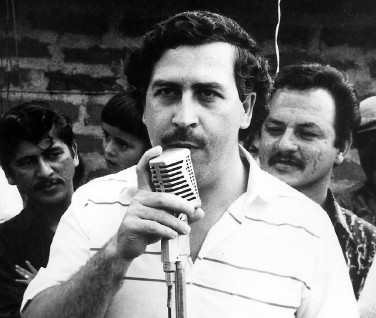
Pablo Escobar
Andres, a quiet presence on and off the field, had great hopes for soccer as a place of unity, forgiveness, and opportunity for the poor of Colombia. He too used his success and money for the betterment of his fellow citizens, setting up scholarships for promising students. Though he knew from whence his benefits came, he was never as comfortable consorting with Pablo as were many of his teammates. He attended parties and played in private matches because he knew that to not do so would be a sign of disrespect that would most certainly be met with violence. Though he and his team made a beautiful run to the 1994 World Cup, their performance in the first round suffered because of the intense pressures they were under to perform. At the same time, the drug lords’ arguments back home over who should start for the national team prevented them from ever having their best team on the field at all times. After their first loss to Romania, one of the players’ relatives was murdered. In the second game against the United States, Andres accidentally scored an own goal. As soon as it happens, he, and by now the viewers of the documentary, are all too aware of the fate that awaits him in Colombia.
The Two Escobars benefits mightily from archival footage of both Escobars, professional and national Colombian soccer, and the violent effects of the drug trade in Colombia at that time. Nearly every minute of the film is constructed with this footage, except for the interviews with Andres’ surviving family and teammates and Pablo’s closest cronies and family members as well. The filmmakers, Jeff and Michael Zimbalist, weave all of this footage together to create a captivating narrative that raises significant questions.
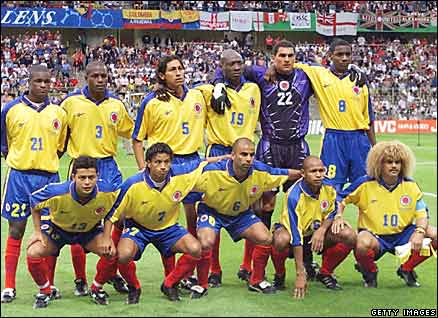
The Colombian National Team
As I was watching it, I recalled a section of Jonathan Wilson-Hartgrove’s book, God’s Economy, which I had just finished reading. He writes, “People who are starving and dressed in rags don’t want to hear someone read a list of propositional ‘good news.’ They want to see the good news in action. The church doesn’t hold revival meetings and call it a day–we feed the hungry, clothe the naked, dig wells, and staff medical clinics. Social actions isn’t an optional part of evangelism; it is evangelism” (163-164). A scene in the film that struck me focused on the deep sadness and mourning experienced by the poor people of Colombia when Pablo Escobar was killed. One of the interviewees commented that many of Colombian’s poorest citizens looked upon him as a type of savior. Now I am not about to make a comparison between Pablo and Jesus. Pablo’s life and work lead to the destruction of countless lives arond the world that, perhaps, far outweighs the good he did in his own country. However, I believe that the film asks us to consider that the good he did not be forgotten or ignored, just as it is most certainly not by the people who benefited from it.
At the same time, I was mindful of the prominence of liberation theology at around the same time and its emphasis on Jesus and God’s preferential option for the poor. I was also mindful of the ways in which this theology was both a threat to political and economic structures and the church itself that had developed too close of a relationship with these structures. It is worth remembering that many of the priests who advocated liberation theology were under threat from the authorities of their own faith. The Two Escobars opens up a potentially fascinating conversation about the relationships between Pablo’s and the church’s work for the poor at this time.
Of course, finally, The Two Escobars reveals the power of sport in our world to heal, unite, and empower. It also shows its destructive side as well. Pablo and Andres embodied both.
The Two Escobars re-airs on ESPN Classic on Saturday, July 10th, at 6-8 pm (Eastern Time), on ESPN 2 on Sunday, July 18th, at 2-4 pm (Eastern Time), and on ESPN Classic on Thursday, August 5th, at 10 pm (Eastern Time). It is also available on DVD. You simply must watch it.
Previous Post

July 6, 2010
GOD'S ECONOMY: A Review
Next Post
July 10, 2010 Leading and Belonging
Browse Our Archives
Select a Category Classics DVD Film Music News Pop Culture Events Print Sports Television Uncategorized Video Games
Select a Month March 2017 February 2017 January 2017 December 2016 November 2016 October 2016 September 2016 August 2016 July 2016 June 2016 May 2016 April 2016 March 2016 February 2016 January 2016 December 2015 November 2015 October 2015 September 2015 August 2015 July 2015 June 2015 May 2015 April 2015 March 2015 February 2015 January 2015 December 2014 November 2014 October 2014 September 2014 August 2014 July 2014 June 2014 May 2014 April 2014 March 2014 February 2014 January 2014 December 2013 November 2013 October 2013 September 2013 August 2013 July 2013 June 2013 May 2013 April 2013 March 2013 February 2013 January 2013 December 2012 November 2012 October 2012 September 2012 August 2012 July 2012 June 2012 May 2012 April 2012 March 2012 February 2012 January 2012 December 2011 November 2011 October 2011 September 2011 August 2011 July 2011 June 2011 May 2011 April 2011 March 2011 February 2011 January 2011 December 2010 November 2010 October 2010 September 2010 August 2010 July 2010 June 2010 May 2010 April 2010 March 2010 February 2010 January 2010 December 2009 November 2009 October 2009 September 2009 August 2009 July 2009 June 2009 May 2009 April 2009 March 2009 February 2009 January 2009 December 2008 November 2008 October 2008 September 2008 August 2008 July 2008 June 2008 May 2008 April 2008 March 2008 February 2008 January 2008 December 2007 November 2007 October 2007 September 2007 August 2007 July 2007 June 2007 May 2007 April 2007 March 2007
Follow Us!
TAKE THE
Religious Wisdom Quiz
What does the Black Horse in Revelations represent?
Select your answer to see how you score.
War Famine The End Times Death
Related posts from Pop Theology


At SXSW2017: May It Last: A Portrait of...

At SXSW 2017: "Untold Tales of Armistead Maupin"
TRENDING AT PATHEOS Progressive Christian

Why Christians Have a Sacred Duty to Vote:...
The Bible offers strong support for the sacred duty to vote. Here...

What Being a Modern-Day Apostle Means to Me
In my last column, I discussed the ins and outs of modern-day...

Did Ancient China Once Worship the God of...
Across human history, a common thread weaves through the origins of the...

Love Your Neighbor – Including Earth-Kin: Lev. 19,...
God’s command to love your neighbor means acting in an ethical and...

Lead a Church Study of “Jesus and Lao...
Guest writer Jack Thomas (The Irreverent Reverend) reflects on leading his church...

Principles for Understanding the Apostolic Ministry Today
Whenever people discover that my formal ministry title is "apostle," as in...
view all Progressive Christian blogs
Ad-Free & Subscriber Log-In Subscription Support
- About Us
- 2026 Calendar
- Videos
- Podcasts
- Library of World Religions
- Faith In Media Tracker
- Advertise With Us
- Write for Us
- Privacy Policy
- Terms of Service
- Do Not Sell My Data
- Contact Us
- Radiant Digital
- Manage Newsletter Subscriptions
- Unsubscribe From Notifications
- Sitemap
Copyright 2008-2026, Patheos. All rights reserved.
Subscription Support Ad-Free & Subscriber Log-In
Follow Patheos