
BuddhistCatholicContemplativeEvangelicalGeneral ChristianHinduJewishLatter-day SaintMuslimNew VisionsProgressive Christian
Beliefs
- Buddhist
- Catholic
- Contemplative
- Evangelical
- General Christian
- Hindu
- Jewish
- Latter-day Saint
- More Voices
- Muslim
- New Visions
- Pagan
- Progressive Christian
Topics
- Religion News
- Food and Religion
- Sports and Religion
- Religious Art
- Religious Music and Entertainment
- Religious Events
- History and Religion
- Style and Religion
- Politics and Religion
- Women in Religion
- Recreation Outdoors and Religion
- Business Finance and Religion
- Careers Workplace and Religion
- Education and Religion
- Family Parenting and Religion
- Health Fitness and Religion
- Home and Religion
- Relationships and Religion
- Technology and Religion
- Travel and Religion
Columnists
- Buddhist Columnists
- Business Finance and Religion Columnists
- Careers Workplace and Religion Columnists
- Catholic Columnists
- Contemplative Columnists
- Education and Religion Columnists
- Evangelists Columnists
- Family Parenting and Religion Columnists
- General Christian Columnists
- Health Fitness and Religion Columnists
- Hindu Columnists
- History and Religion Columnists
- Home and Religion Columnists
- Jewish Columnists
- More Voices Columnists
- Latter Day Columnists
- Muslim Columnists
- New Visions Columnists
- Nonreligious Columnists
- Pagan Columnists
- Politics and Religion Columnists
- Progressive Columnists
- Recreation Outdoors and Religion Columnists
- Relationships and Religion Columnists
- Religion News Columnists
- Religious Art Columnists
- Religious Events Columnists
- Religious Music and Entertainment Columnists
- Sports and Religion Columnists
- Style and Religion Columnists
- Technology and Religion Columnists
- Travel and Religion Columnists
- Women in Religion Columnists
Resource Library
- 2026 Calendar
- Library of World Religions
- The 100 Most Holy Places on Earth
- Patheos Answers
- Podcasts
- Videos
- Faith Leaders Database
- Anglican Episcopalian
- Bahai
- Baptist
- Buddhism
- Christianity
- Confucianism
- Eastern Orthodoxy
- Hinduism
- Holiness and Pentecostal
- ISKCON
- Islam
- Judaism
- Lutheran
- Methodist
- The Church of Jesus Christ of Latter-day Saints
- New Age
- Paganism
- Presbytarian and Reformed
- Protestantism
- Religion Behind the Scenes
- Roman Catholic
- Scientology
- Shia Islam
- Sikhism
- Sufism
- Sunni Islam
- Taoism
- Zen
- See all religions
Research Tools
 Ad-Free & Subscriber Log-In Subscription Support
Ad-Free & Subscriber Log-In Subscription Support
Follow Patheos 

- Trending:
- Forgiveness
- |
- Marriage
- |
- Consciousness
- |
- Death Penalty
- |
- Election
- |
- Halloween
 Pop Theology
- Home
- Progressive Christian
- Religious Music & Entertainment
- THE DUDE ABIDES: A REVIEW
THE DUDE ABIDES: A REVIEW
Last updated on: June 28, 2010 at 7:44 am by J. Ryan Parker
THE DUDE ABIDES: A REVIEW 2010-06-28T07:44:13-07:00 J. Ryan Parker
Patheos Explore the world's faith through different perspectives on religion and spirituality! Patheos has the views of the prevalent religions and spiritualities of the world.
There can be no doubt that brothers Joel and Ethan Coen are perhaps two of the most original, visionary filmmakers working today. In fact, when they have run their course, their filmography will no doubt stand out as one of the greatest in American film history. If there is any credence to the auteur theory, then certainly they contribute to it. Their films, though never espousing any particular theology, are deeply theological and spiritual. In her book, The Dude Abides: The Gospel According to the Coen Brothers, Cathleen Falsani attempts to unpack some of the deeper meanings and themes behind these enigmatic films.
One might initially find it difficult to think of “the gospel” and the Coen brothers in the same sentence. After all, they are Jewish. However, Falsani here employs a broader understanding of gospel, not necessarily the particular gospel of Jesus Christ, but the more universal notions of good news or spiritual truths. Falsani regards the Coen brothers as secular theologians, even as she recognizes that they would most likely disagree with her on this point. Nevertheless, she writes, “[…The] Coens have boldly engaged serious existential questions with darkly intelligent humor. […] Each of their fourteen feature-length films is marked by theological, philosophical, and mythological touchstones that enrich even the slapstickiest moments” (16). Unlike many theologians, the Coen brothers are content to just ask the questions, dangerous though they may be, without providing answers, thus leaving “the door to interpretation (spiritual, artistic, stylistic, and otherwise) wide open” (17).
After a brief introduction, Falsani moves to the heart of the text, an exegesis of all 14 feature-length Coen brothers films. In each case, the chapters are divided into three sections, “The Forest,” “The Trees,” and “The Moral of the Story…”. In “The Forest,” the briefest of the sections, she gives a broad (couple of sentences) overview of the plot and theme of the particular film. In “The Trees,” the longest of the sections, Falsani gives an extremely detailed account of the action and characters in each film, lifting out particularly important aspects of each that enforce the larger theme. In “The Moral of the Story…,” as you might expect, she gives a brief spiritual, theological reflection on just what it all might mean in the end.
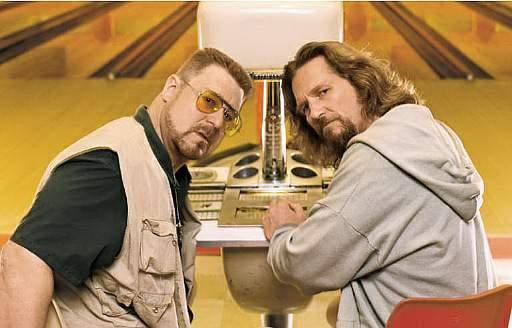
One thing is perfectly clear: Falsani loves Coen brothers films. Her summaries of the films are all-encompassing, and she doesn’t miss a beat. Any fan of these films will thoroughly enjoy re-living these cinematic experiences yet again. Occasionally, her assessment of a character or a particular plot point opens up the door to a potentially engaging theological conversation. Unfortunately, and this is my main problem with Falsani’s book, is that she never follows up on these potential conversations to any great degree, moving on quickly with her summaries of the plots. By the time she concluded these significant overviews, I was dying for some deeper exegesis, yet when she arrived at “The Moral of the Story…,” it was often far too brief, and dare I say trite, to do justice to the films that certainly must inspire deeper theological interpretation.
Falsani gives the most attention to Fargo (1996) and The Big Lebowski (1998), certainly two of their best and most famous films, and what appear to be her favorites as well. Of Fargo, she writes, it is “perhaps the finest example of a Judeo-Christian morality play in all of American cinema” (95). She offers a great assessment of Marge Gunderson (Frances McDormand) and her ability to face incomprehensible evil without being corrupted by it. Falsani writes, “In a Wittgensteinian way, Marge, who is unfailingly good, cannot comprehend such unrestrained evil” (104). There is a hint that Falsani knows more than what she is willing to let on, theologically and scholarly speaking, however she doesn’t flesh that out in the rest of the text. Referencing Wittgenstein here appears to be more theological name-dropping than an effort to enter into a deeper analysis of the film. For Fargo, she argues that “The Moral of the Story…” is that “love wins.” This is a bold claim, with which I deeply agree, but it almost sounds and plays too easy against the blood-stained snow at the foot of a wood chipper.
In the end, I found the above dissonance to be characteristic of most chapters in The Dude Abides. There is a great build-up of anticipation and potential followed by un-fulfilling spiritual reflection. Falsani’s summaries of each film, however, will no doubt please and entertain even the most die-hard Coen brothers fans and just might make some new ones as well. The book also benefits from some fabulous illustrations by Erik Rose that introduce each chapter (see two examples below).
You can purchase The Dude Abides and all 14 Coen brothers films at the Pop Theology Shop.


Previous Post

June 23, 2010
A Heavenly Battle
Next Post
July 6, 2010 GOD'S ECONOMY: A Review
Browse Our Archives
Select a Category Classics DVD Film Music News Pop Culture Events Print Sports Television Uncategorized Video Games
Select a Month March 2017 February 2017 January 2017 December 2016 November 2016 October 2016 September 2016 August 2016 July 2016 June 2016 May 2016 April 2016 March 2016 February 2016 January 2016 December 2015 November 2015 October 2015 September 2015 August 2015 July 2015 June 2015 May 2015 April 2015 March 2015 February 2015 January 2015 December 2014 November 2014 October 2014 September 2014 August 2014 July 2014 June 2014 May 2014 April 2014 March 2014 February 2014 January 2014 December 2013 November 2013 October 2013 September 2013 August 2013 July 2013 June 2013 May 2013 April 2013 March 2013 February 2013 January 2013 December 2012 November 2012 October 2012 September 2012 August 2012 July 2012 June 2012 May 2012 April 2012 March 2012 February 2012 January 2012 December 2011 November 2011 October 2011 September 2011 August 2011 July 2011 June 2011 May 2011 April 2011 March 2011 February 2011 January 2011 December 2010 November 2010 October 2010 September 2010 August 2010 July 2010 June 2010 May 2010 April 2010 March 2010 February 2010 January 2010 December 2009 November 2009 October 2009 September 2009 August 2009 July 2009 June 2009 May 2009 April 2009 March 2009 February 2009 January 2009 December 2008 November 2008 October 2008 September 2008 August 2008 July 2008 June 2008 May 2008 April 2008 March 2008 February 2008 January 2008 December 2007 November 2007 October 2007 September 2007 August 2007 July 2007 June 2007 May 2007 April 2007 March 2007
Follow Us!
TAKE THE
Religious Wisdom Quiz
What was Peter's original profession?
Select your answer to see how you score.
Shepherd Fisherman Tentmaker Carpenter
Related posts from Pop Theology


#KillerSerials: An Interview with Kutter Callaway

Book Review: MUSLIMS AND THE MAKING OF AMERICA

TRENDING AT PATHEOS Progressive Christian

Why Christians Have a Sacred Duty to Vote:...
The Bible offers strong support for the sacred duty to vote. Here...

What Being a Modern-Day Apostle Means to Me
In my last column, I discussed the ins and outs of modern-day...

Did Ancient China Once Worship the God of...
Across human history, a common thread weaves through the origins of the...

Love Your Neighbor – Including Earth-Kin: Lev. 19,...
God’s command to love your neighbor means acting in an ethical and...

Lead a Church Study of “Jesus and Lao...
Guest writer Jack Thomas (The Irreverent Reverend) reflects on leading his church...

Principles for Understanding the Apostolic Ministry Today
Whenever people discover that my formal ministry title is "apostle," as in...
view all Progressive Christian blogs
Ad-Free & Subscriber Log-In Subscription Support
- About Us
- 2026 Calendar
- Videos
- Podcasts
- Library of World Religions
- Faith In Media Tracker
- Advertise With Us
- Write for Us
- Privacy Policy
- Terms of Service
- Do Not Sell My Data
- Contact Us
- Radiant Digital
- Manage Newsletter Subscriptions
- Unsubscribe From Notifications
- Sitemap
Copyright 2008-2026, Patheos. All rights reserved.
Subscription Support Ad-Free & Subscriber Log-In
Follow Patheos