
BuddhistCatholicContemplativeEvangelicalGeneral ChristianHinduJewishLatter-day SaintMuslimNew VisionsProgressive Christian
Beliefs
- Buddhist
- Catholic
- Contemplative
- Evangelical
- General Christian
- Hindu
- Jewish
- Latter-day Saint
- More Voices
- Muslim
- New Visions
- Pagan
- Progressive Christian
Topics
- Religion News
- Food and Religion
- Sports and Religion
- Religious Art
- Religious Music and Entertainment
- Religious Events
- History and Religion
- Style and Religion
- Politics and Religion
- Women in Religion
- Recreation Outdoors and Religion
- Business Finance and Religion
- Careers Workplace and Religion
- Education and Religion
- Family Parenting and Religion
- Health Fitness and Religion
- Home and Religion
- Relationships and Religion
- Technology and Religion
- Travel and Religion
Columnists
- Buddhist Columnists
- Business Finance and Religion Columnists
- Careers Workplace and Religion Columnists
- Catholic Columnists
- Contemplative Columnists
- Education and Religion Columnists
- Evangelists Columnists
- Family Parenting and Religion Columnists
- General Christian Columnists
- Health Fitness and Religion Columnists
- Hindu Columnists
- History and Religion Columnists
- Home and Religion Columnists
- Jewish Columnists
- More Voices Columnists
- Latter Day Columnists
- Muslim Columnists
- New Visions Columnists
- Nonreligious Columnists
- Pagan Columnists
- Politics and Religion Columnists
- Progressive Columnists
- Recreation Outdoors and Religion Columnists
- Relationships and Religion Columnists
- Religion News Columnists
- Religious Art Columnists
- Religious Events Columnists
- Religious Music and Entertainment Columnists
- Sports and Religion Columnists
- Style and Religion Columnists
- Technology and Religion Columnists
- Travel and Religion Columnists
- Women in Religion Columnists
Resource Library
- 2026 Calendar
- Library of World Religions
- The 100 Most Holy Places on Earth
- Patheos Answers
- Podcasts
- Videos
- Faith Leaders Database
- Anglican Episcopalian
- Bahai
- Baptist
- Buddhism
- Christianity
- Confucianism
- Eastern Orthodoxy
- Hinduism
- Holiness and Pentecostal
- ISKCON
- Islam
- Judaism
- Lutheran
- Methodist
- The Church of Jesus Christ of Latter-day Saints
- New Age
- Paganism
- Presbytarian and Reformed
- Protestantism
- Religion Behind the Scenes
- Roman Catholic
- Scientology
- Shia Islam
- Sikhism
- Sufism
- Sunni Islam
- Taoism
- Zen
- See all religions
Research Tools
 Ad-Free & Subscriber Log-In Subscription Support
Ad-Free & Subscriber Log-In Subscription Support
Follow Patheos 

- Trending:
- Forgiveness
- |
- Marriage
- |
- Consciousness
- |
- Death Penalty
- |
- Election
- |
- Halloween
 Pop Theology
- Home
- Progressive Christian
- Religious Music & Entertainment
- An Evangelical Pop Culture Expedition
An Evangelical Pop Culture Expedition
Last updated on: June 17, 2010 at 11:19 am by J. Ryan Parker
An Evangelical Pop Culture Expedition 2010-06-17T11:19:50-07:00 J. Ryan Parker
Patheos Explore the world's faith through different perspectives on religion and spirituality! Patheos has the views of the prevalent religions and spiritualities of the world.
A secular, humanist, non-practicing Jewish writer from New York takes a year-long tour through evangelical Christian pop-culture? Yeah…I know how that book’s going to turn out…or at least I thought I did. Daniel Radosh‘s Rapture Ready! Adventures in the Parallel Universe of Christian Pop Culture is one of the most insightful, entertaining books I’ve ever read concerning this branch of Christianity.
Radosh crisscrosses the United States in search of Christian pop culture, both its seemingly mainstream and craziest, most separatist iterations. At the time of his writing (2007), Christian pop culture was a $7 billion industry increasingly crossing over to the mainstream. By Christian pop culture, Radosh refers to film, television, music, stand-up comedy, books, T-shirts, gifts, toys, etc. He gives extensive attention to the music and publishing industries, the Christian abstinence movement, the Christian sex advice movement, Christian rave/electronic music, Christian wrestling, creation museums, Bibleman, and Christian music festivals, to name a few. He does not, however, “pretend to offer a definitive overview or history of this entire subculture,” yet his writing is grounded in solid historical/religious/theological research. Radosh makes some concessions, recognizing that he is examining a highly defined group, Protestant, largely white and middle class (6-8). For the most part, his discussions of Christian pop culture crossover success means that such merchandise is now readily available at mainstream retailers like Barnes & Noble, Wal-Mart, etc., where it was once only available at Christian bookstores.
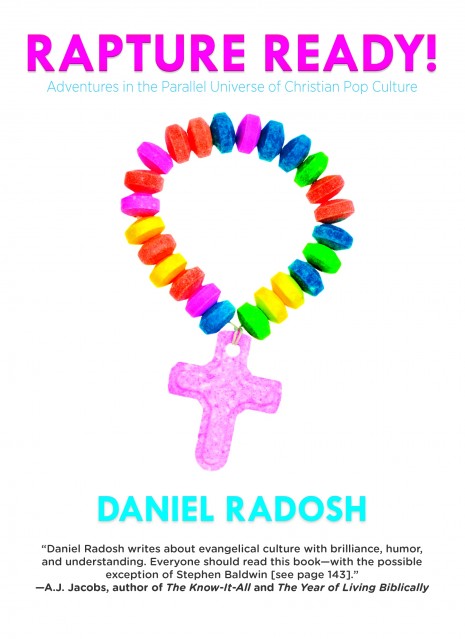
Radosh reveals, in pop-culture fashion, what Barry Hankins discusses in his book, American Evangelicals: A Contemporary History of a Mainstream Religious Movement. Hankins writes, “[…There] is much more complexity and diversity among evangelicals than one might expect. This is because evangelicals in America are quite at home in the culture, even as some of them insist that the culture is hostile to them” (ix). Radosh shows that, for the most part, American evangelical Christians are engaged in dialogue with pop culture, rather than simple resistance. In the creation of their own pop sub-culture, they inevitably relate to secular pop culture. How much of the secular pop culture can they “safely” engage? How closely can their own pop culture mirror its secular counterpart? How does this negotiation affect their message? Radosh shows Christians who cover the spectrum of answers to these questions and others like them. From interviews and conversations with the likes of Jay Bakker, Mark Powell, and Linda Dillow, we see that there are a host of committed, evangelical Christians who are much more moderate, and open-minded, than their brothers and sisters who often fill newscasts and who are often derided in secular pop culture.
The strength of Radosh’s text is his ability to move between scathing critiques of evangelical Christian pop culture and a compassionate understanding of many of the individual Christians who embrace and participate in it. In his discussions of evangelical apocalypticism, he writes, “[…] There is no sense in the Left Behind books that the authors actually wish we’d all been ready [for the rapture]. They’re far more invested in having someone around to get their asses kicked” (84). Yet in a subsequent chapter on Contemporary Christian Music vs. mainstream music, he writes about the intensity with which many young evangelicals listen to the lyrics of both Christian and secular music. Radosh adds, “[…More] non-Christian kids would do well to develop the kind of critical listening skills that Christians bring to secular rock” (167).
Doubtless, Radosh was just as surprised by his conclusions as I was. He exhibits great compassion and hopefulness for Christian pop culture when he concludes that it is potentially redemptive for secular pop culture. Radosh writes, “[…We’re] coming to a point when the parallel universe of Christian pop culture is going to collide with secular pop culture” (301). But what will happen? Radosh hopes that the moderate forces within American evangelicalism will push out its more ardent, right-wing fundamentalists. As Christian pop culture breaks out of its insularity, which Radosh argues “breeds intolerance,” it can have a transformative effect on the larger culture (305). Perhaps more boldly, he concludes, “I loved American pop culture going into this project, and for the most part I still do. But the best aspects of Christian culture–the unabashed celebration of the transcendent, the challenge to crass materialism, the commitment to personal responsibility–helped me see more clearly what is too often lacking in secular entertainment and media. Jesus’s radical message of brotherhood, selflessness, and dignity may be just the antidote to our contemporary ethos of shamelessness and overindulgence” (308).
I cannot recommend Radosh’s Rapture Ready! highly enough. Throughout, his writing is insightful, scathingly critical, humbly compassionate, and damn funny. Don’t miss this one.
Previous Post

June 16, 2010
We Don't Get Another Hero
Next Post
June 22, 2010 Love Thy Neighbor
Browse Our Archives
Select a Category Classics DVD Film Music News Pop Culture Events Print Sports Television Uncategorized Video Games
Select a Month March 2017 February 2017 January 2017 December 2016 November 2016 October 2016 September 2016 August 2016 July 2016 June 2016 May 2016 April 2016 March 2016 February 2016 January 2016 December 2015 November 2015 October 2015 September 2015 August 2015 July 2015 June 2015 May 2015 April 2015 March 2015 February 2015 January 2015 December 2014 November 2014 October 2014 September 2014 August 2014 July 2014 June 2014 May 2014 April 2014 March 2014 February 2014 January 2014 December 2013 November 2013 October 2013 September 2013 August 2013 July 2013 June 2013 May 2013 April 2013 March 2013 February 2013 January 2013 December 2012 November 2012 October 2012 September 2012 August 2012 July 2012 June 2012 May 2012 April 2012 March 2012 February 2012 January 2012 December 2011 November 2011 October 2011 September 2011 August 2011 July 2011 June 2011 May 2011 April 2011 March 2011 February 2011 January 2011 December 2010 November 2010 October 2010 September 2010 August 2010 July 2010 June 2010 May 2010 April 2010 March 2010 February 2010 January 2010 December 2009 November 2009 October 2009 September 2009 August 2009 July 2009 June 2009 May 2009 April 2009 March 2009 February 2009 January 2009 December 2008 November 2008 October 2008 September 2008 August 2008 July 2008 June 2008 May 2008 April 2008 March 2008 February 2008 January 2008 December 2007 November 2007 October 2007 September 2007 August 2007 July 2007 June 2007 May 2007 April 2007 March 2007
Follow Us!
TAKE THE
Religious Wisdom Quiz
Which Christian movement is called "Holiness" and focuses on personal sanctification?
Select your answer to see how you score.
Anglican Eastern Orthodox Pentecostal Wesleyan/Methodist
Related posts from Pop Theology


#KillerSerials: An Interview with Kutter Callaway

Book Review: MUSLIMS AND THE MAKING OF AMERICA

TRENDING AT PATHEOS Progressive Christian

Why Christians Have a Sacred Duty to Vote:...
The Bible offers strong support for the sacred duty to vote. Here...

What Being a Modern-Day Apostle Means to Me
In my last column, I discussed the ins and outs of modern-day...

Did Ancient China Once Worship the God of...
Across human history, a common thread weaves through the origins of the...

Love Your Neighbor – Including Earth-Kin: Lev. 19,...
God’s command to love your neighbor means acting in an ethical and...

Lead a Church Study of “Jesus and Lao...
Guest writer Jack Thomas (The Irreverent Reverend) reflects on leading his church...

Principles for Understanding the Apostolic Ministry Today
Whenever people discover that my formal ministry title is "apostle," as in...
view all Progressive Christian blogs
Ad-Free & Subscriber Log-In Subscription Support
- About Us
- 2026 Calendar
- Videos
- Podcasts
- Library of World Religions
- Faith In Media Tracker
- Advertise With Us
- Write for Us
- Privacy Policy
- Terms of Service
- Do Not Sell My Data
- Contact Us
- Radiant Digital
- Manage Newsletter Subscriptions
- Unsubscribe From Notifications
- Sitemap
Copyright 2008-2026, Patheos. All rights reserved.
Subscription Support Ad-Free & Subscriber Log-In
Follow Patheos