
BuddhistCatholicContemplativeEvangelicalGeneral ChristianHinduJewishLatter-day SaintMuslimNew VisionsProgressive Christian
Beliefs
- Buddhist
- Catholic
- Contemplative
- Evangelical
- General Christian
- Hindu
- Jewish
- Latter-day Saint
- More Voices
- Muslim
- New Visions
- Pagan
- Progressive Christian
Topics
- Religion News
- Food and Religion
- Sports and Religion
- Religious Art
- Religious Music and Entertainment
- Religious Events
- History and Religion
- Style and Religion
- Politics and Religion
- Women in Religion
- Recreation Outdoors and Religion
- Business Finance and Religion
- Careers Workplace and Religion
- Education and Religion
- Family Parenting and Religion
- Health Fitness and Religion
- Home and Religion
- Relationships and Religion
- Technology and Religion
- Travel and Religion
Columnists
- Buddhist Columnists
- Business Finance and Religion Columnists
- Careers Workplace and Religion Columnists
- Catholic Columnists
- Contemplative Columnists
- Education and Religion Columnists
- Evangelists Columnists
- Family Parenting and Religion Columnists
- General Christian Columnists
- Health Fitness and Religion Columnists
- Hindu Columnists
- History and Religion Columnists
- Home and Religion Columnists
- Jewish Columnists
- More Voices Columnists
- Latter Day Columnists
- Muslim Columnists
- New Visions Columnists
- Nonreligious Columnists
- Pagan Columnists
- Politics and Religion Columnists
- Progressive Columnists
- Recreation Outdoors and Religion Columnists
- Relationships and Religion Columnists
- Religion News Columnists
- Religious Art Columnists
- Religious Events Columnists
- Religious Music and Entertainment Columnists
- Sports and Religion Columnists
- Style and Religion Columnists
- Technology and Religion Columnists
- Travel and Religion Columnists
- Women in Religion Columnists
Resource Library
- 2026 Calendar
- Library of World Religions
- The 100 Most Holy Places on Earth
- Patheos Answers
- Podcasts
- Videos
- Faith Leaders Database
- Anglican Episcopalian
- Bahai
- Baptist
- Buddhism
- Christianity
- Confucianism
- Eastern Orthodoxy
- Hinduism
- Holiness and Pentecostal
- ISKCON
- Islam
- Judaism
- Lutheran
- Methodist
- The Church of Jesus Christ of Latter-day Saints
- New Age
- Paganism
- Presbytarian and Reformed
- Protestantism
- Religion Behind the Scenes
- Roman Catholic
- Scientology
- Shia Islam
- Sikhism
- Sufism
- Sunni Islam
- Taoism
- Zen
- See all religions
Research Tools
 Ad-Free & Subscriber Log-In Subscription Support
Ad-Free & Subscriber Log-In Subscription Support
Follow Patheos 

- Trending:
- Forgiveness
- |
- Marriage
- |
- Consciousness
- |
- Death Penalty
- |
- Election
- |
- Halloween
 Pop Theology
- Home
- Progressive Christian
- Religious Music & Entertainment
- A Review of SAINT 9/11
A Review of SAINT 9/11
Last updated on: May 12, 2010 at 6:43 am by J. Ryan Parker
A Review of SAINT 9/11 2010-05-12T06:43:43-07:00 J. Ryan Parker
Patheos Explore the world's faith through different perspectives on religion and spirituality! Patheos has the views of the prevalent religions and spiritualities of the world.
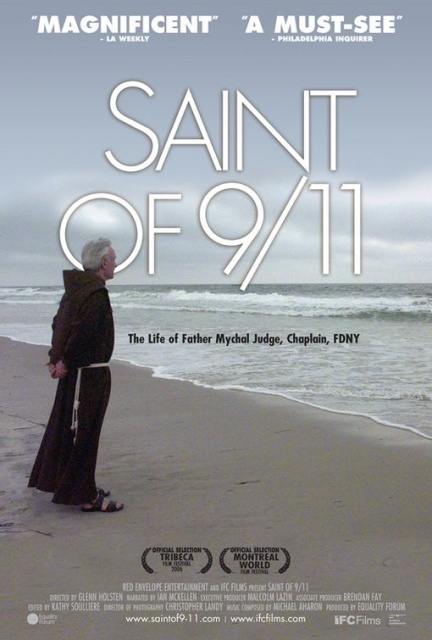
Pop Theology contributor Richard Lindsay reviews the documentary, Saint of 9/11, after the jump.
W.H. Auden once described his spiritual mentor as a man of such genuine piety that you did not feel compelled to be upright or good around him, but when you were in his presence, you never imagined you would want to do anything wrong.
I’ve been lucky to meet a few such people in my life. They’re not what institutional religion has taught us to expect from “saints.” They’re quick to laugh, often at their own earthy humor. You’re likely to learn as much from them sharing a drink or a meal as you are from any sermon they could preach. They’ve often wrestled with significant personal demons, but with such incredible honesty that those around them learn from their struggles. Sometimes in their presence, but often in reflection, and sometimes not until after their death, you realize these personalities offered you a window into something greater. And if somehow we could all be a little more like these people–as honest, funny, wise, and vulnerable–we might just find ourselves as close as we’ll get in this life to a kingdom of God.
Saint of 9/11 tells the story of such a figure: Father Mychal Judge, a Franciscan priest and chaplain of the New York Fire Department who was killed in the terrorist attacks on the World Trade Center. An iconic photo, which appeared in publications across the country after the attacks, showed his lifeless but serene body being taken from the wreckage by distraught firefighters. I was skeptical of this film, particularly because its title seemed like too much of a canonization. But after watching it, I was convinced of what an incredible person Father Mychal must have been, and I have no doubt that as much as we can say there are saints, he was one.
Stories abound in this film about his goodness. How a friend gave him a coat to get through the frigid New York winter and the next time he saw Father Mychal he didn’t have the coat, and his friend knew immediately he had given it away to a street person. How when faced with the AIDS crisis, Father Mychal gave solace to the sick and the dying, sometimes rubbing their feet with holy oil as a way of easing into conversation with those who had been despised and rejected by their churches and families. The heart-wrenching story of Father Mychal giving last rights to a dying gay man as his partner and friends looked on, giving him communion, then holding him in a healing embrace. His lifeless body being placed in the altar of a nearby Catholic church in a way that reminded the firefighters of a modern Pieta. These are the kinds of stories that get retold and magnified about “saints,” until some generations removed, when their everyday acts get turned into performing miracles and raising the dead.
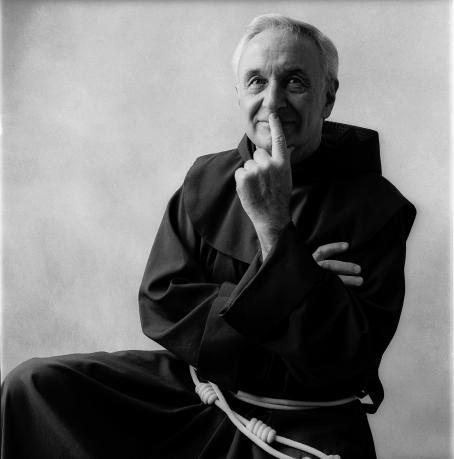
But what convinces me of this man’s inherent goodness is not the stories themselves, although they’re certainly believable, but the wonder and joy with which his friends tell them. The filmmakers do a fantastic job of letting those who knew him best drive the narrative of the film with their stories. And, as might be expected of such a genuinely kind and decent person, his friends come from all walks of life. There are lots of ruddy Irish American New Yorkers that tell the stories, but also street people, AIDS activists, nuns and priests, then-Senator Hillary Clinton (speaking at his funeral) and of course, the New York firefighters whom he loved and served so devotedly.
The stories form a kind of gospel around this man, as his friends spread the word about his acts of goodness and mercy. It reminds me of Bishop Spong’s admonition that we should not concern ourselves with discerning the absolute historical authenticity of everything Jesus did, but focus instead on the “Christ event.” What was it that was so remarkable about this man that people told stories about him healing the sick and walking on water? What was it that made them say after he was gone, “Were not our hearts burning within us while he talked with us?” (Luke 24:32)
That the film comes off so well is a testament to the dedication of Father Mychal’s friends. After the re-election of George W. Bush, rightly or wrongly attributed to the influence of conservative “values voters,” there was a rush from religious liberals to start getting their stories into the media, and as so many filmmakers did during the ‘aughts, many of these stories took the form of documentary. Some of the results were good and some were bad—but the labor of love that this film must have been comes shining through in the quality of every scene. The one questionable choice was enlisting Ian McKellan to read passages from Father Mychal’s sermons, letters, and journals. I’d listen to Sir Ian read the phone book, but the point of the film was what a down to earth, human “saint” this man was, which is a little hard to imagine when his words are illuminated by the stentorian tones of a Shakespearian actor.
If Father Mychal were any ordinary saint, the canonization drums would have already begun beating, no doubt with miracle stories popping up to be investigated by the Vatican. But even here, the man was so extraordinarily honest, he blew his chances at official beatification. As far as anybody knows, Father Mychal was always faithful to his priestly vows, but Father Mychal was also a self-identified gay man. He took issue with the Church’s policy on homosexuality, was disgusted by the Church’s spiritually callous reaction to the AIDS crisis, and is on record as stating to bereaved families of victims of the plague that their gay sons and their gay sons’ lovers and partners, were blessed and accepted by God. Something about this Irishman and Franciscan (an ornery combination if there ever was one) would not let the institutional church get in the way of telling the truth and ministering with genuine love. Here’s hoping there will one day be a church that can recognize what a saint Father Mychal must have been to lovingly and passionately disagree with the most damaging structures of religion while still dedicating himself so selflessly to the Christian Gospel.
When this film came out, several more orthodox friends of Father Mychal were shocked–shocked–that gay rights radicals would try to exploit this holy man’s death by spreading the “lie” that he was gay. But even their ignorance was a sign of the man’s piety. He only told people about his sexuality who wanted or needed to hear about it; he would never have imposed this information on anyone if he thought it would make them uncomfortable, or if it would compromise his ministry.
And besides, the New York fire commissioner says he knew. And I don’t have the gall or the boxing moves to call him a liar.
Previous Post

May 10, 2010
Read Them, Read Them, Read Them!
Next Post
May 17, 2010 Atoning for Trouble
Browse Our Archives
Select a Category Classics DVD Film Music News Pop Culture Events Print Sports Television Uncategorized Video Games
Select a Month March 2017 February 2017 January 2017 December 2016 November 2016 October 2016 September 2016 August 2016 July 2016 June 2016 May 2016 April 2016 March 2016 February 2016 January 2016 December 2015 November 2015 October 2015 September 2015 August 2015 July 2015 June 2015 May 2015 April 2015 March 2015 February 2015 January 2015 December 2014 November 2014 October 2014 September 2014 August 2014 July 2014 June 2014 May 2014 April 2014 March 2014 February 2014 January 2014 December 2013 November 2013 October 2013 September 2013 August 2013 July 2013 June 2013 May 2013 April 2013 March 2013 February 2013 January 2013 December 2012 November 2012 October 2012 September 2012 August 2012 July 2012 June 2012 May 2012 April 2012 March 2012 February 2012 January 2012 December 2011 November 2011 October 2011 September 2011 August 2011 July 2011 June 2011 May 2011 April 2011 March 2011 February 2011 January 2011 December 2010 November 2010 October 2010 September 2010 August 2010 July 2010 June 2010 May 2010 April 2010 March 2010 February 2010 January 2010 December 2009 November 2009 October 2009 September 2009 August 2009 July 2009 June 2009 May 2009 April 2009 March 2009 February 2009 January 2009 December 2008 November 2008 October 2008 September 2008 August 2008 July 2008 June 2008 May 2008 April 2008 March 2008 February 2008 January 2008 December 2007 November 2007 October 2007 September 2007 August 2007 July 2007 June 2007 May 2007 April 2007 March 2007
Follow Us!
TAKE THE
Religious Wisdom Quiz
What animal was most often sacrificed for a sin offering in the Old Testament?
Select your answer to see how you score.
A lamb A goat A bull A bird
Related posts from Pop Theology


At SXSW2017: May It Last: A Portrait of...

At SXSW 2017: "Untold Tales of Armistead Maupin"
TRENDING AT PATHEOS Progressive Christian

Why Christians Have a Sacred Duty to Vote:...
The Bible offers strong support for the sacred duty to vote. Here...

What Being a Modern-Day Apostle Means to Me
In my last column, I discussed the ins and outs of modern-day...

Did Ancient China Once Worship the God of...
Across human history, a common thread weaves through the origins of the...

Love Your Neighbor – Including Earth-Kin: Lev. 19,...
God’s command to love your neighbor means acting in an ethical and...

Lead a Church Study of “Jesus and Lao...
Guest writer Jack Thomas (The Irreverent Reverend) reflects on leading his church...

Principles for Understanding the Apostolic Ministry Today
Whenever people discover that my formal ministry title is "apostle," as in...
view all Progressive Christian blogs
Ad-Free & Subscriber Log-In Subscription Support
- About Us
- 2026 Calendar
- Videos
- Podcasts
- Library of World Religions
- Faith In Media Tracker
- Advertise With Us
- Write for Us
- Privacy Policy
- Terms of Service
- Do Not Sell My Data
- Contact Us
- Radiant Digital
- Manage Newsletter Subscriptions
- Unsubscribe From Notifications
- Sitemap
Copyright 2008-2026, Patheos. All rights reserved.
Subscription Support Ad-Free & Subscriber Log-In
Follow Patheos