
BuddhistCatholicContemplativeEvangelicalGeneral ChristianHinduJewishLatter-day SaintMuslimNew VisionsProgressive Christian
Beliefs
- Buddhist
- Catholic
- Contemplative
- Evangelical
- General Christian
- Hindu
- Jewish
- Latter-day Saint
- More Voices
- Muslim
- New Visions
- Pagan
- Progressive Christian
Topics
- Religion News
- Food and Religion
- Sports and Religion
- Religious Art
- Religious Music and Entertainment
- Religious Events
- History and Religion
- Style and Religion
- Politics and Religion
- Women in Religion
- Recreation Outdoors and Religion
- Business Finance and Religion
- Careers Workplace and Religion
- Education and Religion
- Family Parenting and Religion
- Health Fitness and Religion
- Home and Religion
- Relationships and Religion
- Technology and Religion
- Travel and Religion
Columnists
- Buddhist Columnists
- Business Finance and Religion Columnists
- Careers Workplace and Religion Columnists
- Catholic Columnists
- Contemplative Columnists
- Education and Religion Columnists
- Evangelists Columnists
- Family Parenting and Religion Columnists
- General Christian Columnists
- Health Fitness and Religion Columnists
- Hindu Columnists
- History and Religion Columnists
- Home and Religion Columnists
- Jewish Columnists
- More Voices Columnists
- Latter Day Columnists
- Muslim Columnists
- New Visions Columnists
- Nonreligious Columnists
- Pagan Columnists
- Politics and Religion Columnists
- Progressive Columnists
- Recreation Outdoors and Religion Columnists
- Relationships and Religion Columnists
- Religion News Columnists
- Religious Art Columnists
- Religious Events Columnists
- Religious Music and Entertainment Columnists
- Sports and Religion Columnists
- Style and Religion Columnists
- Technology and Religion Columnists
- Travel and Religion Columnists
- Women in Religion Columnists
Resource Library
- 2026 Calendar
- Library of World Religions
- The 100 Most Holy Places on Earth
- Patheos Answers
- Podcasts
- Videos
- Faith Leaders Database
- Anglican Episcopalian
- Bahai
- Baptist
- Buddhism
- Christianity
- Confucianism
- Eastern Orthodoxy
- Hinduism
- Holiness and Pentecostal
- ISKCON
- Islam
- Judaism
- Lutheran
- Methodist
- The Church of Jesus Christ of Latter-day Saints
- New Age
- Paganism
- Presbytarian and Reformed
- Protestantism
- Religion Behind the Scenes
- Roman Catholic
- Scientology
- Shia Islam
- Sikhism
- Sufism
- Sunni Islam
- Taoism
- Zen
- See all religions
Research Tools
 Ad-Free & Subscriber Log-In Subscription Support
Ad-Free & Subscriber Log-In Subscription Support
Follow Patheos 

- Trending:
- Forgiveness
- |
- Marriage
- |
- Consciousness
- |
- Death Penalty
- |
- Election
- |
- Halloween
 Pop Theology
- Home
- Progressive Christian
- Religious Music & Entertainment
- TOYING WITH GOD: A Review
TOYING WITH GOD: A Review
Last updated on: April 8, 2010 at 11:23 am by J. Ryan Parker
TOYING WITH GOD: A Review 2010-04-08T11:23:36-07:00 J. Ryan Parker
Patheos Explore the world's faith through different perspectives on religion and spirituality! Patheos has the views of the prevalent religions and spiritualities of the world.
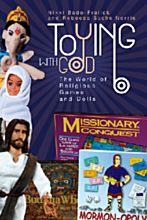
When most of us think of religious toys and games, we probably go straight to the satirical…the Looking Good for Jesus makeup kit, the Buddy Christ, or even the controversial Left Behind video game. The authors of Toying With God: The World of Religious Games and Dolls, Nikki Bado-Fralick and Rebecca Sachs Norris, address these games but also take readers on a journey into a world rich with both satirical and serious religious components, uncovering implications for religious expression/experience and cultural values along the way.


 After finishing Toying With God, I felt that the authors faced a decision in how to structure the book. Should they begin with a discussion of examples of religious games and toys and then follow it with theoretical underpinning or vice versa? I think either way would have worked. They chose the former as the first two chapters feature a host of detailed descriptions and critiques of religious games and dolls. In between those two chapters and two more theory-focused ones, they devote a chapter to commerce and its often problematic relationship with religion. Their theory-driven chapters focus on differing notions of fun and the notion of ritualized playfulness. Their conclusion does a masterful job of drawing together main points from each chapter into a succinct defense of the necessity of continued study of religious games and toys.

The strength, one of many, of their text is the contributions it makes to the study of religion by turning the focus away from texts or established rituals to the lived experiences of so many religious folk. Bado-Fralick and Norris write, “No religion exists in a book. Religion exists in the lives and practices of embodied, sensing, feeling, thinking beings. Because we are sensing, feeling, and thinking beings we need to experience and express our religions or spiritualities through our bodies, and one way we experience religion is through objects” (96). They point out that objects of play have been a part of human experience for millenia and, in fact, weren’t even primarily for children as adults used them for religious or cultic practices. They do a good job of drawing parallels between those early games and our own. These games are used for a variety of purposes including “divination, determination of skill, entertainment, farce, […and] education” (24). No matter their purpose, they are all problematic on one level because of the notion of competition and the necessity of a “winner.” How do we hold this in tension with Jesus’ assertions of and teaching about humility? Even within this tension, and perhaps because of it, we can discern ways in which these games and toys both transmit and reflect cultural values.

Bado-Fralick and Norris’ discussion of religious dolls begins with the assertion, again, that these didn’t exist primarily for children in their earliest expressions. Today, they claim, it is more fruitful to examine the use of dolls in non-Abrahamic traditions because they often do not include prohibitions against the creation of graven images (a prohibition that Christianity hasn’t followed too closely). Their discussions of Fulla (seen above), the Muslim equivalent to Barbie, are fascinating. They write, “Fulla, created as a role model for Muslim girls, has the same accessorized lifestyle as Barbie, in spite of being designed to contrast with her consumeristic approach to life […]. The differences between these dolls are only skin deep” (173).

The authors remind readers that the relationship between religion and commerce has always been present, and even thrived, in religious practice (70). The two often make for complicated bedfellows: it seems that one of them is always kicking the other. Unfortunately, consumerism seems to have kicked Christianity right out of the bed. Bado-Fralick and Norris ask, “How did Christianity get from an ideal of poverty and discipline to the Christian theme park Heritage USA and the mega-churches of the twenty-first century” (72). While the authors recognize that a certain level of consumerism must accompany religious experience in contemporary culture, they bemoan the ways in which the scales have tipped in favor of the former: “[…It] is not the relationship between religion and money that is the problem, but rather the relationship between religion and a consumerism perceived as wildly out of control–buying and having as a way of life–that unsettles many of us” (99-100). Lest we think that this is simply a secular spending problem, they point to research that reports that during 2004 the retail market for religious-themed products was about $7 billion (103).
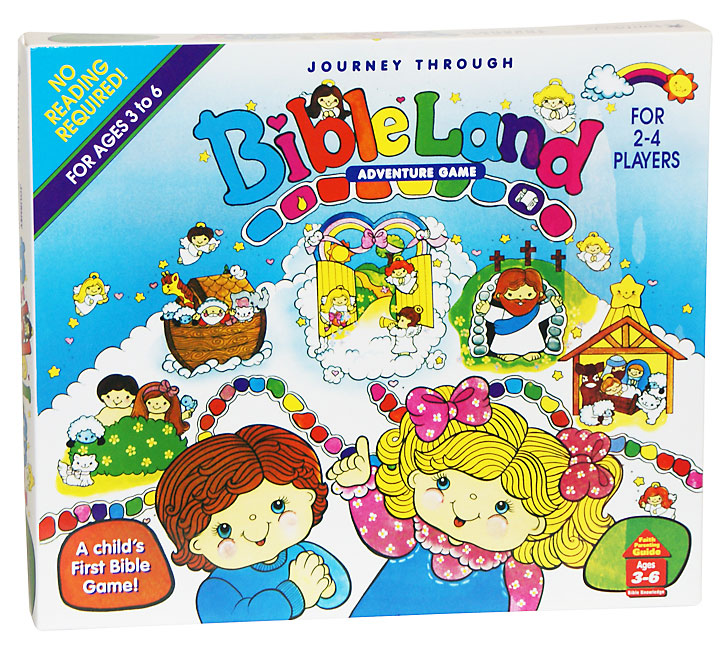
Bado-Fralick and Norris outline the competing notions and definitions of fun, alerting us to the reality that some of these religious games might be anything but fun, despite their creators and marketers’ best intentions. They offer interesting comments on the relationship between fun and religious institutions as well. They write, “In short, fun is dangerous. This is another reason that fun and religion–like play and religion–occasionally come into conflict, since a central concern of religious institutions is control. […] Control of fun in today’s society ensures social and economic control” (113). On the other hand, some religions have ritualized fun, but the authors assert that it is easier to find this by looking outside the Abrahamic faiths and Western expressions of them. In the end, they argue that playfulness is ‘therefore not without its risks, to both self and community. It may challenge boundaries and undermine traditional religious structures of authority and practice in favor of the creation of new ones” (155).
This is a fascinating book. The authors clearly have a handle on the subject matter and the religious and cultural implications of these games. Parents of young children that engage any of these games would do well to read this book and consider some of the questions and issues that the authors raise. Childrens ministers who might actively engage in these games or supply them for their faith communities would do well to pick this up too.
Previous Post

April 7, 2010
Slapped Senseless
Next Post
April 12, 2010 Act Now! For Only $9.99
Browse Our Archives
Select a Category Classics DVD Film Music News Pop Culture Events Print Sports Television Uncategorized Video Games
Select a Month March 2017 February 2017 January 2017 December 2016 November 2016 October 2016 September 2016 August 2016 July 2016 June 2016 May 2016 April 2016 March 2016 February 2016 January 2016 December 2015 November 2015 October 2015 September 2015 August 2015 July 2015 June 2015 May 2015 April 2015 March 2015 February 2015 January 2015 December 2014 November 2014 October 2014 September 2014 August 2014 July 2014 June 2014 May 2014 April 2014 March 2014 February 2014 January 2014 December 2013 November 2013 October 2013 September 2013 August 2013 July 2013 June 2013 May 2013 April 2013 March 2013 February 2013 January 2013 December 2012 November 2012 October 2012 September 2012 August 2012 July 2012 June 2012 May 2012 April 2012 March 2012 February 2012 January 2012 December 2011 November 2011 October 2011 September 2011 August 2011 July 2011 June 2011 May 2011 April 2011 March 2011 February 2011 January 2011 December 2010 November 2010 October 2010 September 2010 August 2010 July 2010 June 2010 May 2010 April 2010 March 2010 February 2010 January 2010 December 2009 November 2009 October 2009 September 2009 August 2009 July 2009 June 2009 May 2009 April 2009 March 2009 February 2009 January 2009 December 2008 November 2008 October 2008 September 2008 August 2008 July 2008 June 2008 May 2008 April 2008 March 2008 February 2008 January 2008 December 2007 November 2007 October 2007 September 2007 August 2007 July 2007 June 2007 May 2007 April 2007 March 2007
Follow Us!
TAKE THE
Religious Wisdom Quiz
Who urged Esther to approach the king, saying, "For such a time as this"?
Select your answer to see how you score.
Mordecai Haggai Ezra Nehemiah
Related posts from Pop Theology


#KillerSerials: An Interview with Kutter Callaway

Book Review: MUSLIMS AND THE MAKING OF AMERICA

TRENDING AT PATHEOS Progressive Christian

Why Christians Have a Sacred Duty to Vote:...
The Bible offers strong support for the sacred duty to vote. Here...

What Being a Modern-Day Apostle Means to Me
In my last column, I discussed the ins and outs of modern-day...

Did Ancient China Once Worship the God of...
Across human history, a common thread weaves through the origins of the...

Love Your Neighbor – Including Earth-Kin: Lev. 19,...
God’s command to love your neighbor means acting in an ethical and...

Lead a Church Study of “Jesus and Lao...
Guest writer Jack Thomas (The Irreverent Reverend) reflects on leading his church...

Principles for Understanding the Apostolic Ministry Today
Whenever people discover that my formal ministry title is "apostle," as in...
view all Progressive Christian blogs
Ad-Free & Subscriber Log-In Subscription Support
- About Us
- 2026 Calendar
- Videos
- Podcasts
- Library of World Religions
- Faith In Media Tracker
- Advertise With Us
- Write for Us
- Privacy Policy
- Terms of Service
- Do Not Sell My Data
- Contact Us
- Radiant Digital
- Manage Newsletter Subscriptions
- Unsubscribe From Notifications
- Sitemap
Copyright 2008-2026, Patheos. All rights reserved.
Subscription Support Ad-Free & Subscriber Log-In
Follow Patheos