
BuddhistCatholicContemplativeEvangelicalGeneral ChristianHinduJewishLatter-day SaintMuslimNew VisionsProgressive Christian
Beliefs
- Buddhist
- Catholic
- Contemplative
- Evangelical
- General Christian
- Hindu
- Jewish
- Latter-day Saint
- More Voices
- Muslim
- New Visions
- Pagan
- Progressive Christian
Topics
- Religion News
- Food and Religion
- Sports and Religion
- Religious Art
- Religious Music and Entertainment
- Religious Events
- History and Religion
- Style and Religion
- Politics and Religion
- Women in Religion
- Recreation Outdoors and Religion
- Business Finance and Religion
- Careers Workplace and Religion
- Education and Religion
- Family Parenting and Religion
- Health Fitness and Religion
- Home and Religion
- Relationships and Religion
- Technology and Religion
- Travel and Religion
Columnists
- Buddhist Columnists
- Business Finance and Religion Columnists
- Careers Workplace and Religion Columnists
- Catholic Columnists
- Contemplative Columnists
- Education and Religion Columnists
- Evangelists Columnists
- Family Parenting and Religion Columnists
- General Christian Columnists
- Health Fitness and Religion Columnists
- Hindu Columnists
- History and Religion Columnists
- Home and Religion Columnists
- Jewish Columnists
- More Voices Columnists
- Latter Day Columnists
- Muslim Columnists
- New Visions Columnists
- Nonreligious Columnists
- Pagan Columnists
- Politics and Religion Columnists
- Progressive Columnists
- Recreation Outdoors and Religion Columnists
- Relationships and Religion Columnists
- Religion News Columnists
- Religious Art Columnists
- Religious Events Columnists
- Religious Music and Entertainment Columnists
- Sports and Religion Columnists
- Style and Religion Columnists
- Technology and Religion Columnists
- Travel and Religion Columnists
- Women in Religion Columnists
Resource Library
- 2026 Calendar
- Library of World Religions
- The 100 Most Holy Places on Earth
- Patheos Answers
- Podcasts
- Videos
- Faith Leaders Database
- Anglican Episcopalian
- Bahai
- Baptist
- Buddhism
- Christianity
- Confucianism
- Eastern Orthodoxy
- Hinduism
- Holiness and Pentecostal
- ISKCON
- Islam
- Judaism
- Lutheran
- Methodist
- The Church of Jesus Christ of Latter-day Saints
- New Age
- Paganism
- Presbytarian and Reformed
- Protestantism
- Religion Behind the Scenes
- Roman Catholic
- Scientology
- Shia Islam
- Sikhism
- Sufism
- Sunni Islam
- Taoism
- Zen
- See all religions
Research Tools
 Ad-Free & Subscriber Log-In Subscription Support
Ad-Free & Subscriber Log-In Subscription Support
Follow Patheos 

- Trending:
- Forgiveness
- |
- Marriage
- |
- Consciousness
- |
- Death Penalty
- |
- Election
- |
- Halloween
 Pop Theology
- Home
- Progressive Christian
- Religious Music & Entertainment
- VAMPIRE GOD: A Review
VAMPIRE GOD: A Review
Last updated on: March 25, 2010 at 10:23 am by J. Ryan Parker
VAMPIRE GOD: A Review 2010-03-25T10:23:29-07:00 J. Ryan Parker
Patheos Explore the world's faith through different perspectives on religion and spirituality! Patheos has the views of the prevalent religions and spiritualities of the world.
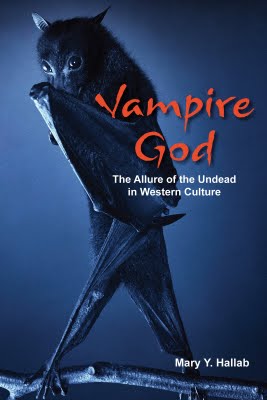
In preparation for an upcoming conference on vampires and the undead in popular culture, I’ve been catching up on vampire literature. Via Theofantastique, I came across a new book, Vampire God: The Allure of the Undead in Western Culture, by Mary Y. Hallab. In only 136 pages, Hallab takes readers from vampire folklore up to the Twilight series, unpacking the needs, desire, and fears that vampire literature (folktales, novels, and movies) embodies.After her introduction, Hallab explores the scientific, social, psychological, religious, and theological implications of vampires. In doing so, she reveals that little has changed between our obsession with vampires and the obsessions of our human predecessors centuries ago. Thus, the highlight of Hallab’s text is her ability to hold those “ancient” texts/tales/needs and uses of them in continual tension with ours. The major thesis of Hallab’s (as well as many other scholars’) study of vampires is that they have the ability to morph into whatever society both shuns and demands. As a result, Hallab asks what “hidden void” contemporary vampires seek to fill today. Hallab argues throughout her text that the “fascination of the vampire lies in his being both human and supernatural” (4). Furthermore, the vampire “provides a fictitious and mythical focus for universal concerns about death and its reasons,” a “symbolic and metaphorical means to apprehend, contemplate, and deal with death within the larger context of life” (6, 7). Death, as we are well aware, has scientific, social, psychological, and religious/theological implications. Vampire literature speaks to all of these.
In terms of the scientific, Hallab is concerned with how vampire literature provides “practical understanding of aspects of life that simply do not seem to have any reasonable explanations,” both for us and our less scientifically minded predecessors (13). The evolving scientific explanations throughout vampire literature that attempt to apprehend the existence of vampires are both entertaining and enlightening, as are the scientific means by which vampire hunters attempt to dispatch these pollutants, diseases, and embodiments of death.
Regarding vampires literature’s social implications, Hallab shows that it reinforces notions of community and how accompanying social mores dictate insiders and outsiders. As Tony Campolo says, a movement can survive without a God, but it cannot survive without a devil. Throughout history, vampires (both those in literature and metaphorical ones in the real world) have often helped solidify a group as it provides an evil against which to fight. Hallab writes, “In some cases becoming a vampire is a punishment for wrongdoing” (36). In other cases, folk might have performed burial rites incorrectly which could lead to the emergence of vampires. An important aspect to social life is our relationship with the past, and Hallab reveals how vampire literature embodies ways in which we learn from, fear, love, and romanticize our pasts.
Psychologically, vampires provide a means of “exploring and possibly dealing with personal loss and acceptance of death,” Hallab argues (14). In this chapter, she explores, among other things, the relationship between the soul and body and sexuality. She notes the dominance of sexual interpretations of the vampire genre and unpacks their implications.
For Hallab, and myself, the religious/theological implications of vampires are most interesting, and she devotes the most significant portion of her text to this discussion. First, they raise questions about the meaning of the soul, life, and the afterlife and the existence, nature, and role of God in these worlds. Furthermore, she draws parallels between Christians’ devotion to Jesus and our fascination with vampires: both of whom promise immortality and the consumption of whose blood is a significant ritual in the attainment of that immortality. She writes, “The vampire, as a kind of evil Christ–that is, both human and supernatural, both dead and yet alive, both offering a kind of redemption of humankind into another life–is a popular representative of the Dark Side in the endless cosmic struggle” (73).
Hallab’s book is a fascinating read that is expansive and informative without ever being boring. On top of that, she has a great sense of humor (especially when it comes to religion) that is a welcome ingredient to such an academically engaged text. Fans of the horror genre in general or vampires in particularly would do well to pick this one up.
Previous Post

March 25, 2010
Forget LOST, Get BAD
Next Post
March 29, 2010 Save the Next One
Browse Our Archives
Select a Category Classics DVD Film Music News Pop Culture Events Print Sports Television Uncategorized Video Games
Select a Month March 2017 February 2017 January 2017 December 2016 November 2016 October 2016 September 2016 August 2016 July 2016 June 2016 May 2016 April 2016 March 2016 February 2016 January 2016 December 2015 November 2015 October 2015 September 2015 August 2015 July 2015 June 2015 May 2015 April 2015 March 2015 February 2015 January 2015 December 2014 November 2014 October 2014 September 2014 August 2014 July 2014 June 2014 May 2014 April 2014 March 2014 February 2014 January 2014 December 2013 November 2013 October 2013 September 2013 August 2013 July 2013 June 2013 May 2013 April 2013 March 2013 February 2013 January 2013 December 2012 November 2012 October 2012 September 2012 August 2012 July 2012 June 2012 May 2012 April 2012 March 2012 February 2012 January 2012 December 2011 November 2011 October 2011 September 2011 August 2011 July 2011 June 2011 May 2011 April 2011 March 2011 February 2011 January 2011 December 2010 November 2010 October 2010 September 2010 August 2010 July 2010 June 2010 May 2010 April 2010 March 2010 February 2010 January 2010 December 2009 November 2009 October 2009 September 2009 August 2009 July 2009 June 2009 May 2009 April 2009 March 2009 February 2009 January 2009 December 2008 November 2008 October 2008 September 2008 August 2008 July 2008 June 2008 May 2008 April 2008 March 2008 February 2008 January 2008 December 2007 November 2007 October 2007 September 2007 August 2007 July 2007 June 2007 May 2007 April 2007 March 2007
Follow Us!
TAKE THE
Religious Wisdom Quiz
According to 1 Timothy, what is a trustworthy saying deserving of full acceptance?
Select your answer to see how you score.
Christ Jesus came into the world to save sinners God is love The Lord is our shepherd Faith without works is dead
Related posts from Pop Theology


#KillerSerials: An Interview with Kutter Callaway

Book Review: MUSLIMS AND THE MAKING OF AMERICA

TRENDING AT PATHEOS Progressive Christian

Why Christians Have a Sacred Duty to Vote:...
The Bible offers strong support for the sacred duty to vote. Here...

What Being a Modern-Day Apostle Means to Me
In my last column, I discussed the ins and outs of modern-day...

Did Ancient China Once Worship the God of...
Across human history, a common thread weaves through the origins of the...

Love Your Neighbor – Including Earth-Kin: Lev. 19,...
God’s command to love your neighbor means acting in an ethical and...

Lead a Church Study of “Jesus and Lao...
Guest writer Jack Thomas (The Irreverent Reverend) reflects on leading his church...

Principles for Understanding the Apostolic Ministry Today
Whenever people discover that my formal ministry title is "apostle," as in...
view all Progressive Christian blogs
Ad-Free & Subscriber Log-In Subscription Support
- About Us
- 2026 Calendar
- Videos
- Podcasts
- Library of World Religions
- Faith In Media Tracker
- Advertise With Us
- Write for Us
- Privacy Policy
- Terms of Service
- Do Not Sell My Data
- Contact Us
- Radiant Digital
- Manage Newsletter Subscriptions
- Unsubscribe From Notifications
- Sitemap
Copyright 2008-2026, Patheos. All rights reserved.
Subscription Support Ad-Free & Subscriber Log-In
Follow Patheos