
BuddhistCatholicContemplativeEvangelicalGeneral ChristianHinduJewishLatter-day SaintMuslimNew VisionsProgressive Christian
Beliefs
- Buddhist
- Catholic
- Contemplative
- Evangelical
- General Christian
- Hindu
- Jewish
- Latter-day Saint
- More Voices
- Muslim
- New Visions
- Pagan
- Progressive Christian
Topics
- Religion News
- Food and Religion
- Sports and Religion
- Religious Art
- Religious Music and Entertainment
- Religious Events
- History and Religion
- Style and Religion
- Politics and Religion
- Women in Religion
- Recreation Outdoors and Religion
- Business Finance and Religion
- Careers Workplace and Religion
- Education and Religion
- Family Parenting and Religion
- Health Fitness and Religion
- Home and Religion
- Relationships and Religion
- Technology and Religion
- Travel and Religion
Columnists
- Buddhist Columnists
- Business Finance and Religion Columnists
- Careers Workplace and Religion Columnists
- Catholic Columnists
- Contemplative Columnists
- Education and Religion Columnists
- Evangelists Columnists
- Family Parenting and Religion Columnists
- General Christian Columnists
- Health Fitness and Religion Columnists
- Hindu Columnists
- History and Religion Columnists
- Home and Religion Columnists
- Jewish Columnists
- More Voices Columnists
- Latter Day Columnists
- Muslim Columnists
- New Visions Columnists
- Nonreligious Columnists
- Pagan Columnists
- Politics and Religion Columnists
- Progressive Columnists
- Recreation Outdoors and Religion Columnists
- Relationships and Religion Columnists
- Religion News Columnists
- Religious Art Columnists
- Religious Events Columnists
- Religious Music and Entertainment Columnists
- Sports and Religion Columnists
- Style and Religion Columnists
- Technology and Religion Columnists
- Travel and Religion Columnists
- Women in Religion Columnists
Resource Library
- 2026 Calendar
- Library of World Religions
- The 100 Most Holy Places on Earth
- Patheos Answers
- Podcasts
- Videos
- Faith Leaders Database
- Anglican Episcopalian
- Bahai
- Baptist
- Buddhism
- Christianity
- Confucianism
- Eastern Orthodoxy
- Hinduism
- Holiness and Pentecostal
- ISKCON
- Islam
- Judaism
- Lutheran
- Methodist
- The Church of Jesus Christ of Latter-day Saints
- New Age
- Paganism
- Presbytarian and Reformed
- Protestantism
- Religion Behind the Scenes
- Roman Catholic
- Scientology
- Shia Islam
- Sikhism
- Sufism
- Sunni Islam
- Taoism
- Zen
- See all religions
Research Tools
 Ad-Free & Subscriber Log-In Subscription Support
Ad-Free & Subscriber Log-In Subscription Support
Follow Patheos 

- Trending:
- Forgiveness
- |
- Marriage
- |
- Consciousness
- |
- Death Penalty
- |
- Election
- |
- Halloween
 Pop Theology
- Home
- Progressive Christian
- Religious Music & Entertainment
- FROM ANGELS TO ALIENS: A Review
FROM ANGELS TO ALIENS: A Review
Last updated on: March 31, 2010 at 7:06 am by J. Ryan Parker
FROM ANGELS TO ALIENS: A Review 2010-03-31T07:06:58-07:00 J. Ryan Parker
Patheos Explore the world's faith through different perspectives on religion and spirituality! Patheos has the views of the prevalent religions and spiritualities of the world.
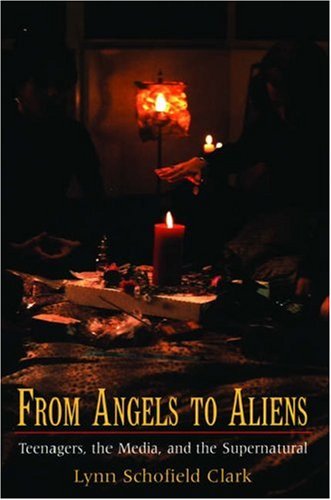
In keeping with my recent academic obsession with the undead, I came across Lynn Schofield Clark‘s From Angels to Aliens: Teenagers, the Media, and the Supernatural. In this book she explores the rising interest in the supernatural among teenagers and the potential roles that American evangelicalism might play in its resurgence in pop culture.
After an introduction to her research and methodology, Clark offers two general chapters before discussing teenagers’ reactions to religion and the supernatural. In the first, she discusses the dark side of evangelicalism and how this has or has not contributed to the increasing interest in the supernatural. Such a relationship is not new. She writes, “Extending back to the writings of Jonathan Edwards, there has been a long tradition of using horror to introduce those they refer to as the ‘unchurched’ to the gospel” (17). The relationship might even be more complex. Clark adds later, “Yet despite the evangelical insistence upon the dichotomy between orthodox religious beliefs and fictional stories of the supernatural that highlight witchcraft, demon possession, and gruesome death scenes, the latter might not have existed, or at least not gained widespread popularity, without the former. […] It is important to consider, therefore, the way in which the writings of American Protestantism gave a very specific frame of reference to the topics of evil, hell, the Rapture, and, more generally, the realm beyond this world” (25). She looks at the emergence of Hell Houses at evangelical faith communities and how they often rely on gruesome images of the supernatural in order to increase their effectiveness. While evangelicalism might have provided a framework by which to make sense of the evil in the world, it has had little control over the ways in which pop culture entertainment has interpreted and re-fashioned this framework in their own ways.
In the second chapter, Clark looks at the supernatural in contemporary teen popular culture, particularly through two television series, Buffy and Angel. She begins this chapter by asserting that the relationship between religion and the media is a two-way street, one influences the other. Clark also argues that popular entertainment often symbolically resolves real-world conflicts that don’t necessarily have easy answers. She writes, “The resolution that occurs on the symbolic level is one reason even the most horrific films and television programs are often reassuring: they reaffirm for us that ‘no matter how dreadful things look, there really is nothing to fear'” (47). Of course, she recognizes that all such scholarly work is bound to be somewhat behind the pop culture curve. That is, teenagers especially will have already moved on to new programs by the time her work has been published. Yet such an analysis is still important, especially if it is placed in an on-going conversation with teenagers and their new pop culture fixations.

In her ethnographic study (small though it may be), Clark arrives at five different “types” of teenagers based on their interactions with both religion and the supernatural. These are 1) resisters who love the supernatural but hate organized religion; 2) “mysticals” who blur the boundaries between the religious and the supernatural; 3) experimenters who appreciate both religion and the supernatural; 4) traditionalists who affirm the boundary between the religious and the supernatural; and 5) the intrigued who want to keep religion and the supernatural separate but have difficulty doing so. In the end, she argues that these aren’t meant to be definitive observations but rather provocative statements to help encourage both further investigation and conversation. As always one particular teenager might, over time, move in between each of these types.
Clark argues that this study is important, and I agree, because it provides us with a greater understanding of teenagers, respecting both their diversity and their interests in popular culture. I would also add that this text is vitally important for our interactions with both historic and emerging fundamentalisms and American evangelicalism. What does it say about the latter when it offers prominent images of, or extensively focuses on, evil, hell, and the Rapture (for example) as opposed to models of love, peace, hospitality, etc.? From Angels to Aliens is another must read for a diverse audience from parents of teenagers to youth pastors and, finally, to anyone interested in the relationship between religion and popular culture.
Previous Post

March 30, 2010
The Time is Now
Next Post
April 1, 2010 Broken but Healing
Browse Our Archives
Select a Category Classics DVD Film Music News Pop Culture Events Print Sports Television Uncategorized Video Games
Select a Month March 2017 February 2017 January 2017 December 2016 November 2016 October 2016 September 2016 August 2016 July 2016 June 2016 May 2016 April 2016 March 2016 February 2016 January 2016 December 2015 November 2015 October 2015 September 2015 August 2015 July 2015 June 2015 May 2015 April 2015 March 2015 February 2015 January 2015 December 2014 November 2014 October 2014 September 2014 August 2014 July 2014 June 2014 May 2014 April 2014 March 2014 February 2014 January 2014 December 2013 November 2013 October 2013 September 2013 August 2013 July 2013 June 2013 May 2013 April 2013 March 2013 February 2013 January 2013 December 2012 November 2012 October 2012 September 2012 August 2012 July 2012 June 2012 May 2012 April 2012 March 2012 February 2012 January 2012 December 2011 November 2011 October 2011 September 2011 August 2011 July 2011 June 2011 May 2011 April 2011 March 2011 February 2011 January 2011 December 2010 November 2010 October 2010 September 2010 August 2010 July 2010 June 2010 May 2010 April 2010 March 2010 February 2010 January 2010 December 2009 November 2009 October 2009 September 2009 August 2009 July 2009 June 2009 May 2009 April 2009 March 2009 February 2009 January 2009 December 2008 November 2008 October 2008 September 2008 August 2008 July 2008 June 2008 May 2008 April 2008 March 2008 February 2008 January 2008 December 2007 November 2007 October 2007 September 2007 August 2007 July 2007 June 2007 May 2007 April 2007 March 2007
Follow Us!
TAKE THE
Religious Wisdom Quiz
What New Testament book is known for its chapter on charity?
Select your answer to see how you score.
1 Corinthians Hebrews Romans Philippians
Related posts from Pop Theology


#KillerSerials: An Interview with Kutter Callaway

Book Review: MUSLIMS AND THE MAKING OF AMERICA

TRENDING AT PATHEOS Progressive Christian

Why Christians Have a Sacred Duty to Vote:...
The Bible offers strong support for the sacred duty to vote. Here...

What Being a Modern-Day Apostle Means to Me
In my last column, I discussed the ins and outs of modern-day...

Did Ancient China Once Worship the God of...
Across human history, a common thread weaves through the origins of the...

Love Your Neighbor – Including Earth-Kin: Lev. 19,...
God’s command to love your neighbor means acting in an ethical and...

Lead a Church Study of “Jesus and Lao...
Guest writer Jack Thomas (The Irreverent Reverend) reflects on leading his church...

Principles for Understanding the Apostolic Ministry Today
Whenever people discover that my formal ministry title is "apostle," as in...
view all Progressive Christian blogs
Ad-Free & Subscriber Log-In Subscription Support
- About Us
- 2026 Calendar
- Videos
- Podcasts
- Library of World Religions
- Faith In Media Tracker
- Advertise With Us
- Write for Us
- Privacy Policy
- Terms of Service
- Do Not Sell My Data
- Contact Us
- Radiant Digital
- Manage Newsletter Subscriptions
- Unsubscribe From Notifications
- Sitemap
Copyright 2008-2026, Patheos. All rights reserved.
Subscription Support Ad-Free & Subscriber Log-In
Follow Patheos