
BuddhistCatholicContemplativeEvangelicalGeneral ChristianHinduJewishLatter-day SaintMuslimNew VisionsProgressive Christian
Beliefs
- Buddhist
- Catholic
- Contemplative
- Evangelical
- General Christian
- Hindu
- Jewish
- Latter-day Saint
- More Voices
- Muslim
- New Visions
- Pagan
- Progressive Christian
Topics
- Religion News
- Food and Religion
- Sports and Religion
- Religious Art
- Religious Music and Entertainment
- Religious Events
- History and Religion
- Style and Religion
- Politics and Religion
- Women in Religion
- Recreation Outdoors and Religion
- Business Finance and Religion
- Careers Workplace and Religion
- Education and Religion
- Family Parenting and Religion
- Health Fitness and Religion
- Home and Religion
- Relationships and Religion
- Technology and Religion
- Travel and Religion
Columnists
- Buddhist Columnists
- Business Finance and Religion Columnists
- Careers Workplace and Religion Columnists
- Catholic Columnists
- Contemplative Columnists
- Education and Religion Columnists
- Evangelists Columnists
- Family Parenting and Religion Columnists
- General Christian Columnists
- Health Fitness and Religion Columnists
- Hindu Columnists
- History and Religion Columnists
- Home and Religion Columnists
- Jewish Columnists
- More Voices Columnists
- Latter Day Columnists
- Muslim Columnists
- New Visions Columnists
- Nonreligious Columnists
- Pagan Columnists
- Politics and Religion Columnists
- Progressive Columnists
- Recreation Outdoors and Religion Columnists
- Relationships and Religion Columnists
- Religion News Columnists
- Religious Art Columnists
- Religious Events Columnists
- Religious Music and Entertainment Columnists
- Sports and Religion Columnists
- Style and Religion Columnists
- Technology and Religion Columnists
- Travel and Religion Columnists
- Women in Religion Columnists
Resource Library
- 2026 Calendar
- Library of World Religions
- The 100 Most Holy Places on Earth
- Patheos Answers
- Podcasts
- Videos
- Faith Leaders Database
- Anglican Episcopalian
- Bahai
- Baptist
- Buddhism
- Christianity
- Confucianism
- Eastern Orthodoxy
- Hinduism
- Holiness and Pentecostal
- ISKCON
- Islam
- Judaism
- Lutheran
- Methodist
- The Church of Jesus Christ of Latter-day Saints
- New Age
- Paganism
- Presbytarian and Reformed
- Protestantism
- Religion Behind the Scenes
- Roman Catholic
- Scientology
- Shia Islam
- Sikhism
- Sufism
- Sunni Islam
- Taoism
- Zen
- See all religions
Research Tools
 Ad-Free & Subscriber Log-In Subscription Support
Ad-Free & Subscriber Log-In Subscription Support
Follow Patheos 

- Trending:
- Forgiveness
- |
- Marriage
- |
- Consciousness
- |
- Death Penalty
- |
- Election
- |
- Halloween
 Pop Theology
- Home
- Progressive Christian
- Religious Music & Entertainment
- The Religious Film: A Review
The Religious Film: A Review
Last updated on: February 5, 2010 at 8:38 am by J. Ryan Parker
The Religious Film: A Review 2010-02-05T08:38:50-08:00 J. Ryan Parker
Patheos Explore the world's faith through different perspectives on religion and spirituality! Patheos has the views of the prevalent religions and spiritualities of the world.
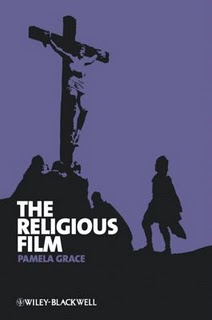
In only 156 pages, Pamela Grace sets forth on a bold undertaking to create a new film genre, the hagiopic. In her book, The Religious Film: Christianity and the Hagiopic, she gives a brief description of this new genre and places it in a historical and critical framework but allows her insightful critiques of particular hagiopics to make the case for the genre themselves.

Grace begins by discussing her distinction between the religious film and the hagiopic. Religious films can cover a variety of topics, but the hagiopic film represents “the life, or part of the life, of a recognized religious hero” (1). Obviously there are similarities between the hagiopic and the bipic but the former has a greater emphasis on the divine or the mysterious than the latter. Grace makes an important distinction about sites of exhibition and their influence on a hagiopic’s success: “The audience for hagiopics far exceeds the number of ticket-buyers, since churches, religious schools, and missionaries regularly show these movies to groups in the United States and other parts of the world” (2). This is an extremely interesting point about exhibition of religious films to which she unfortunately does not return. Grace argues that such films appeal to viewers not only because they can be uplifting but because they also mirror the audience’s own “spiritual questioning” (3). Grace then highlights a few features of the hagiopic: wish-fulfillment, miracle-time (miraculous events take place), suffering, and sacrifice. She claims that hagiopics are a form of “ritualoid entertainment,” “a hybrid response evoked by their admixture of commercial religiosity, narrative, and spectacle [,…] a pseudo-ritual experience” (12, 13).
Chapter 2 of Grace’s book is a historical overview of the genre on which she elaborates over the next several chapters. She runs through a gamut of films here that fit the bill. She traces a long history from the earliest Passion Plays to Gibson’s The Passion of the Christ (2004). Grace points out that the most popular (in terms of numbers) hagiopics are Jesus and Joan of Arc films. Chapter 3 provides an overview of the criticism of religious cinema. She adds, “Scholars have not written on the hagiopic per se, since the genre is being introduced in this book” (47). Here, she provides an interesting engagement with three film styles, the spiritual, transcendental, and sacramental and how they do or do not impact the hagiopic. She also runs over texts about Jesus, saints, and biblical films, concluding with brief attention to the on-going discussion of Christ figures in secular films.
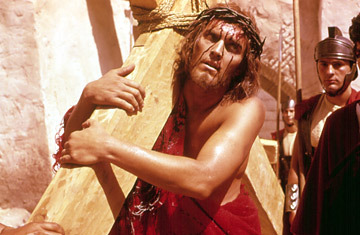
Chapters 4-9 are engaged criticisms of several films including, King of Kings (1961), The Song of Bernadette (1943), Jesus Christ Superstar (1973) and its 2000 remake, The Gospel According to Matthew (1964), Jesus of Montreal (1989), The Passion of Joan of Arc (1928), The Messenger: The Story of Joan of Arc (1999), The Last Temptation of Christ (1988), and The Passion of the Christ. Even though most of these films have been criticized from a host of angles, Grace manages to provide something new in hers, particularly her review of King of Kings which is often quickly dismissed by far too many historians. Of the film, she writes, “In its celebration of the human body, the film rejects overall cinematic tradition by focusing far more on men than on women; and it reverses hagiopic tradition by focusing more on Jews than on pagans” (65). Later, she adds, “Ray’s shot of numerous crosses asserts the historical fact that crucifixion was common practice, and that Jesus was one of many who suffered that form of torture and death” (67). She accuses most Jesus films of presenting Jesus’ crucifixion as a unique historical event which drastically influences the misinterpretation of that death.
Grace refers to The Song of Bernadette as a religious comfort film. Films like this, “places believers in the right [… and affirm] the values of humility, absolute faith, and courage in the face of suffering” (78). She points to the influence of Tommy (1969) and Hair (1967) on the emergence of the Jesus musical. Yet Jesus Christ Superstar (1973) reverses the typical musical format: “Jesus Christ Superstar reverses the narrative trajectory of the traditional musical. The story is about the fragmentation of a close-knit group, the end of a romance, and the destruction of a friendship” (92).
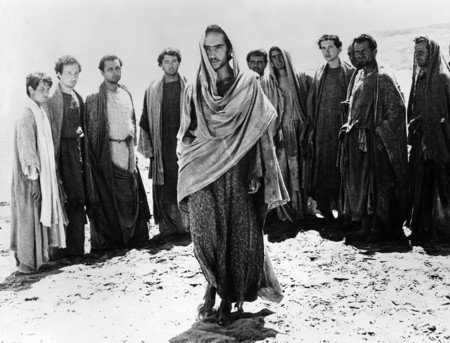
Grace looks at The Gospel According to Matthew and Jesus of Montreal as alternative hagiopics which “deliberately reject many or all of the ideas and stylistic conventions associated with popular religious films […and virtually all of which] risk financial loss” (103). She concludes on this topic, “[…Alternative] hagiopics with unorthodox material are often more profoundly religious than films that follow the guidelines established by the Church or Hollywood” (119). Her Joan of Arc discussions are interesting, but The Last Temptation of Christ and The Passion of the Christ offer nothing new aside from a substantial refutation of atonement theory in terms of the latter.
This is a welcome addition to the growing library of books on film and religion both because of Grace’s introduction of a new genre and her fresh takes on some well-worn films. Hopefully other scholars will pay attention to this genre and contribute more works to it. The films of St. Francis readily jump to mind.
Previous Post

February 4, 2010
Crazy Good...
Next Post
February 9, 2010 Moments of Grace...
Browse Our Archives
Select a Category Classics DVD Film Music News Pop Culture Events Print Sports Television Uncategorized Video Games
Select a Month March 2017 February 2017 January 2017 December 2016 November 2016 October 2016 September 2016 August 2016 July 2016 June 2016 May 2016 April 2016 March 2016 February 2016 January 2016 December 2015 November 2015 October 2015 September 2015 August 2015 July 2015 June 2015 May 2015 April 2015 March 2015 February 2015 January 2015 December 2014 November 2014 October 2014 September 2014 August 2014 July 2014 June 2014 May 2014 April 2014 March 2014 February 2014 January 2014 December 2013 November 2013 October 2013 September 2013 August 2013 July 2013 June 2013 May 2013 April 2013 March 2013 February 2013 January 2013 December 2012 November 2012 October 2012 September 2012 August 2012 July 2012 June 2012 May 2012 April 2012 March 2012 February 2012 January 2012 December 2011 November 2011 October 2011 September 2011 August 2011 July 2011 June 2011 May 2011 April 2011 March 2011 February 2011 January 2011 December 2010 November 2010 October 2010 September 2010 August 2010 July 2010 June 2010 May 2010 April 2010 March 2010 February 2010 January 2010 December 2009 November 2009 October 2009 September 2009 August 2009 July 2009 June 2009 May 2009 April 2009 March 2009 February 2009 January 2009 December 2008 November 2008 October 2008 September 2008 August 2008 July 2008 June 2008 May 2008 April 2008 March 2008 February 2008 January 2008 December 2007 November 2007 October 2007 September 2007 August 2007 July 2007 June 2007 May 2007 April 2007 March 2007
Follow Us!
TAKE THE
Religious Wisdom Quiz
What does "Genesis" mean?
Select your answer to see how you score.
Origin or beginning Wisdom History Law
Related posts from Pop Theology


#KillerSerials: An Interview with Kutter Callaway

Book Review: MUSLIMS AND THE MAKING OF AMERICA

TRENDING AT PATHEOS Progressive Christian

Why Christians Have a Sacred Duty to Vote:...
The Bible offers strong support for the sacred duty to vote. Here...

What Being a Modern-Day Apostle Means to Me
In my last column, I discussed the ins and outs of modern-day...

Did Ancient China Once Worship the God of...
Across human history, a common thread weaves through the origins of the...

Love Your Neighbor – Including Earth-Kin: Lev. 19,...
God’s command to love your neighbor means acting in an ethical and...

Lead a Church Study of “Jesus and Lao...
Guest writer Jack Thomas (The Irreverent Reverend) reflects on leading his church...

Principles for Understanding the Apostolic Ministry Today
Whenever people discover that my formal ministry title is "apostle," as in...
view all Progressive Christian blogs
Ad-Free & Subscriber Log-In Subscription Support
- About Us
- 2026 Calendar
- Videos
- Podcasts
- Library of World Religions
- Faith In Media Tracker
- Advertise With Us
- Write for Us
- Privacy Policy
- Terms of Service
- Do Not Sell My Data
- Contact Us
- Radiant Digital
- Manage Newsletter Subscriptions
- Unsubscribe From Notifications
- Sitemap
Copyright 2008-2026, Patheos. All rights reserved.
Subscription Support Ad-Free & Subscriber Log-In
Follow Patheos