
BuddhistCatholicContemplativeEvangelicalGeneral ChristianHinduJewishLatter-day SaintMuslimNew VisionsProgressive Christian
Beliefs
- Buddhist
- Catholic
- Contemplative
- Evangelical
- General Christian
- Hindu
- Jewish
- Latter-day Saint
- More Voices
- Muslim
- New Visions
- Pagan
- Progressive Christian
Topics
- Religion News
- Food and Religion
- Sports and Religion
- Religious Art
- Religious Music and Entertainment
- Religious Events
- History and Religion
- Style and Religion
- Politics and Religion
- Women in Religion
- Recreation Outdoors and Religion
- Business Finance and Religion
- Careers Workplace and Religion
- Education and Religion
- Family Parenting and Religion
- Health Fitness and Religion
- Home and Religion
- Relationships and Religion
- Technology and Religion
- Travel and Religion
Columnists
- Buddhist Columnists
- Business Finance and Religion Columnists
- Careers Workplace and Religion Columnists
- Catholic Columnists
- Contemplative Columnists
- Education and Religion Columnists
- Evangelists Columnists
- Family Parenting and Religion Columnists
- General Christian Columnists
- Health Fitness and Religion Columnists
- Hindu Columnists
- History and Religion Columnists
- Home and Religion Columnists
- Jewish Columnists
- More Voices Columnists
- Latter Day Columnists
- Muslim Columnists
- New Visions Columnists
- Nonreligious Columnists
- Pagan Columnists
- Politics and Religion Columnists
- Progressive Columnists
- Recreation Outdoors and Religion Columnists
- Relationships and Religion Columnists
- Religion News Columnists
- Religious Art Columnists
- Religious Events Columnists
- Religious Music and Entertainment Columnists
- Sports and Religion Columnists
- Style and Religion Columnists
- Technology and Religion Columnists
- Travel and Religion Columnists
- Women in Religion Columnists
Resource Library
- 2026 Calendar
- Library of World Religions
- The 100 Most Holy Places on Earth
- Patheos Answers
- Podcasts
- Videos
- Faith Leaders Database
- Anglican Episcopalian
- Bahai
- Baptist
- Buddhism
- Christianity
- Confucianism
- Eastern Orthodoxy
- Hinduism
- Holiness and Pentecostal
- ISKCON
- Islam
- Judaism
- Lutheran
- Methodist
- The Church of Jesus Christ of Latter-day Saints
- New Age
- Paganism
- Presbytarian and Reformed
- Protestantism
- Religion Behind the Scenes
- Roman Catholic
- Scientology
- Shia Islam
- Sikhism
- Sufism
- Sunni Islam
- Taoism
- Zen
- See all religions
Research Tools
 Ad-Free & Subscriber Log-In Subscription Support
Ad-Free & Subscriber Log-In Subscription Support
Follow Patheos 

- Trending:
- Forgiveness
- |
- Marriage
- |
- Consciousness
- |
- Death Penalty
- |
- Election
- |
- Halloween
 Pop Theology
- Home
- Progressive Christian
- Religious Music & Entertainment
- What the Church Can Learn from Facebook
What the Church Can Learn from Facebook
Last updated on: January 26, 2010 at 12:36 pm by J. Ryan Parker
What the Church Can Learn from Facebook 2010-01-26T12:36:36-08:00 J. Ryan Parker
Patheos Explore the world's faith through different perspectives on religion and spirituality! Patheos has the views of the prevalent religions and spiritualities of the world.
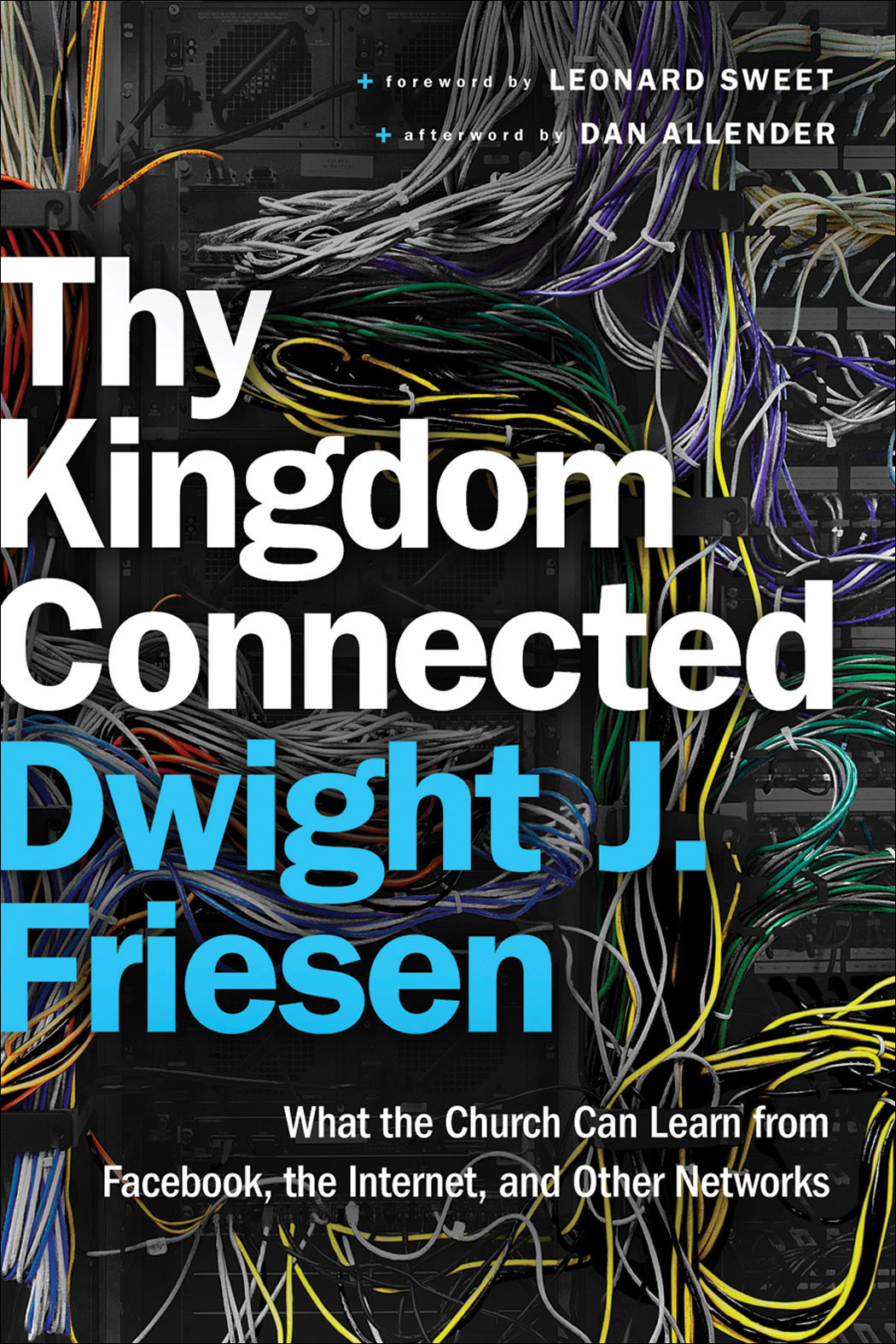
In their book, Transforming Christian Theology for Church and Society, Tripp Fuller and Philip Clayton argue for the necessity of local congregations to connect the work they do with deep, sustained theological reflection. I have been thinking about other areas of life that should be linked with deep theological reflection, and for me one of these areas is popular culture. Another aspect is the changing nature of technology and communication in the culture in which we live. In Thy Kingdom Connected: What the Church Can Learn from Facebook, the Internet, and Other Networks, Dwight J. Friesen provides rich theological reflection on the state of “relationality” today, providing one of the most insightful accounts of how the church not only should be, but truly is, that you are likely to find.
Friesen’s book is not a how-to. He does not lay out a seven-point plan for successful congregational life in the twenty-first century…thank God! What he invites readers into is something much more complex, rewarding, and life changing. He encourages us to embrace new eyes with which to see the world around us…specifically new lenses to see the reality of our interconnectedness and interdependence on each other and everything in the created order. Friesen reveals that new advances in technology, communications, and science reveal what has been true all along…existence is relational. Even though this is not a how-to resource, Thy Kingdom Connected is rich with practical implications for denominations, local congregations, cohorts, and individual believers.
He divides his text into five clusters each containing two or three chapters. After he opens by adjusting our eyesight to see connectedness, he reveals the depth and complexity of “God’s Networked Kingdom.” Here, he draws heavily on Martin Buber’s notions of “I & It,” “I & You” relationships, for example, to reveal the selfish exploitative relationships we must transcend to become a communal “We.” Friesen then considers the implications of such interconnectedness on leadership. Can hierarchies and individual leaders exist any longer in this networked kingdom, or must our notions of leadership undergo fundamental changes? For Friesen, leaders become less like “imparters” of knowledge and more like active connectors putting people together with each other and with ideas to produce life-giving, transformative relationships.
The nature of our local churches changes as well. Friesen proposes a notion of “Christ-Commons” where “Christ-Clusters,” enlivened by the Holy Spirit, meet to grow spiritually and advance the Kingdom of God on earth. Put more directly, “Through the dynamic union of Christ-Commons and Christ-Clustering, the local church lives. The Christ-Commons provides form for clustering, while the Christ-Clustering animates the Christ-Commons” (126). Finally, Friesen discusses “Connective Practices,” which include what he cleverly calls “Missional And’ing” (“living as an agent in God’s mission of reconciliation” (133)), practicing “Network Ecology” (caring for the connections), and then spiritual formation (privileging notions of networked-set configurations over open- or bounded-set configurations.
Being deeply immersed in popular culture…as many of us are…I was particularly struck by one comment that Friesen made early in his book. He writes, “The good news of Christ invites us to wholeness, uniting body and soul, sacred and secular, male and female, Jew and Gentile, even God and humanity: one God, one creation. It even unites church and world in such a way that releases the gospel from the control of the church” (28). This is a bold claim indeed…but what an exciting one! While this might frighten some readers, it comes as something of a relief to me. Think of the potential for gospel-encounters in this now widened, yet simultaneously closer, world. No matter the networks in which we live and move, this assertion encourages us to see the work, voice, or movement of the gospel beyond our congregations, denominational viewpoints, or cohort gatherings, even in the movie theaters, at the art galleries, through iPods, and on television programs with which we are already engaged.
Friesen’s book is, quite simply, a must-read for everyone either inside or outside a “traditional” community of faith (but perhaps more for the former!). It truly will be amazing to see what types of communities and connections flourish around this most important book.
Dwight J. Friesen will be participating in Theology After Google, March 10-12, 2012, at Claremont School of Theology. I look forward to hearing more of his thoughts there and hope many of you can attend as well.
Previous Post

January 20, 2010
A Post-Apocalyptic Bible
Next Post
January 27, 2010 The Bubble: A Review
Browse Our Archives
Select a Category Classics DVD Film Music News Pop Culture Events Print Sports Television Uncategorized Video Games
Select a Month March 2017 February 2017 January 2017 December 2016 November 2016 October 2016 September 2016 August 2016 July 2016 June 2016 May 2016 April 2016 March 2016 February 2016 January 2016 December 2015 November 2015 October 2015 September 2015 August 2015 July 2015 June 2015 May 2015 April 2015 March 2015 February 2015 January 2015 December 2014 November 2014 October 2014 September 2014 August 2014 July 2014 June 2014 May 2014 April 2014 March 2014 February 2014 January 2014 December 2013 November 2013 October 2013 September 2013 August 2013 July 2013 June 2013 May 2013 April 2013 March 2013 February 2013 January 2013 December 2012 November 2012 October 2012 September 2012 August 2012 July 2012 June 2012 May 2012 April 2012 March 2012 February 2012 January 2012 December 2011 November 2011 October 2011 September 2011 August 2011 July 2011 June 2011 May 2011 April 2011 March 2011 February 2011 January 2011 December 2010 November 2010 October 2010 September 2010 August 2010 July 2010 June 2010 May 2010 April 2010 March 2010 February 2010 January 2010 December 2009 November 2009 October 2009 September 2009 August 2009 July 2009 June 2009 May 2009 April 2009 March 2009 February 2009 January 2009 December 2008 November 2008 October 2008 September 2008 August 2008 July 2008 June 2008 May 2008 April 2008 March 2008 February 2008 January 2008 December 2007 November 2007 October 2007 September 2007 August 2007 July 2007 June 2007 May 2007 April 2007 March 2007
Follow Us!
TAKE THE
Religious Wisdom Quiz
How did Job's life end according to the book?
Select your answer to see how you score.
He lived many more years and prospered He became a king He died in misery He went to Egypt
Related posts from Pop Theology


#KillerSerials: An Interview with Kutter Callaway

Book Review: MUSLIMS AND THE MAKING OF AMERICA

TRENDING AT PATHEOS Progressive Christian

Why Christians Have a Sacred Duty to Vote:...
The Bible offers strong support for the sacred duty to vote. Here...

What Being a Modern-Day Apostle Means to Me
In my last column, I discussed the ins and outs of modern-day...

Did Ancient China Once Worship the God of...
Across human history, a common thread weaves through the origins of the...

Love Your Neighbor – Including Earth-Kin: Lev. 19,...
God’s command to love your neighbor means acting in an ethical and...

Lead a Church Study of “Jesus and Lao...
Guest writer Jack Thomas (The Irreverent Reverend) reflects on leading his church...

Principles for Understanding the Apostolic Ministry Today
Whenever people discover that my formal ministry title is "apostle," as in...
view all Progressive Christian blogs
Ad-Free & Subscriber Log-In Subscription Support
- About Us
- 2026 Calendar
- Videos
- Podcasts
- Library of World Religions
- Faith In Media Tracker
- Advertise With Us
- Write for Us
- Privacy Policy
- Terms of Service
- Do Not Sell My Data
- Contact Us
- Radiant Digital
- Manage Newsletter Subscriptions
- Unsubscribe From Notifications
- Sitemap
Copyright 2008-2026, Patheos. All rights reserved.
Subscription Support Ad-Free & Subscriber Log-In
Follow Patheos