
BuddhistCatholicContemplativeEvangelicalGeneral ChristianHinduJewishLatter-day SaintMuslimNew VisionsProgressive Christian
Beliefs
- Buddhist
- Catholic
- Contemplative
- Evangelical
- General Christian
- Hindu
- Jewish
- Latter-day Saint
- More Voices
- Muslim
- New Visions
- Pagan
- Progressive Christian
Topics
- Religion News
- Food and Religion
- Sports and Religion
- Religious Art
- Religious Music and Entertainment
- Religious Events
- History and Religion
- Style and Religion
- Politics and Religion
- Women in Religion
- Recreation Outdoors and Religion
- Business Finance and Religion
- Careers Workplace and Religion
- Education and Religion
- Family Parenting and Religion
- Health Fitness and Religion
- Home and Religion
- Relationships and Religion
- Technology and Religion
- Travel and Religion
Columnists
- Buddhist Columnists
- Business Finance and Religion Columnists
- Careers Workplace and Religion Columnists
- Catholic Columnists
- Contemplative Columnists
- Education and Religion Columnists
- Evangelists Columnists
- Family Parenting and Religion Columnists
- General Christian Columnists
- Health Fitness and Religion Columnists
- Hindu Columnists
- History and Religion Columnists
- Home and Religion Columnists
- Jewish Columnists
- More Voices Columnists
- Latter Day Columnists
- Muslim Columnists
- New Visions Columnists
- Nonreligious Columnists
- Pagan Columnists
- Politics and Religion Columnists
- Progressive Columnists
- Recreation Outdoors and Religion Columnists
- Relationships and Religion Columnists
- Religion News Columnists
- Religious Art Columnists
- Religious Events Columnists
- Religious Music and Entertainment Columnists
- Sports and Religion Columnists
- Style and Religion Columnists
- Technology and Religion Columnists
- Travel and Religion Columnists
- Women in Religion Columnists
Resource Library
- 2026 Calendar
- Library of World Religions
- The 100 Most Holy Places on Earth
- Patheos Answers
- Podcasts
- Videos
- Faith Leaders Database
- Anglican Episcopalian
- Bahai
- Baptist
- Buddhism
- Christianity
- Confucianism
- Eastern Orthodoxy
- Hinduism
- Holiness and Pentecostal
- ISKCON
- Islam
- Judaism
- Lutheran
- Methodist
- The Church of Jesus Christ of Latter-day Saints
- New Age
- Paganism
- Presbytarian and Reformed
- Protestantism
- Religion Behind the Scenes
- Roman Catholic
- Scientology
- Shia Islam
- Sikhism
- Sufism
- Sunni Islam
- Taoism
- Zen
- See all religions
Research Tools
 Ad-Free & Subscriber Log-In Subscription Support
Ad-Free & Subscriber Log-In Subscription Support
Follow Patheos 

- Trending:
- Forgiveness
- |
- Marriage
- |
- Consciousness
- |
- Death Penalty
- |
- Election
- |
- Halloween
 Pop Theology
- Home
- Progressive Christian
- Religious Music & Entertainment
- The Hurt Locker
The Hurt Locker
Last updated on: January 19, 2010 at 10:17 am by J. Ryan Parker
The Hurt Locker 2010-01-19T10:17:06-08:00 J. Ryan Parker
Patheos Explore the world's faith through different perspectives on religion and spirituality! Patheos has the views of the prevalent religions and spiritualities of the world.
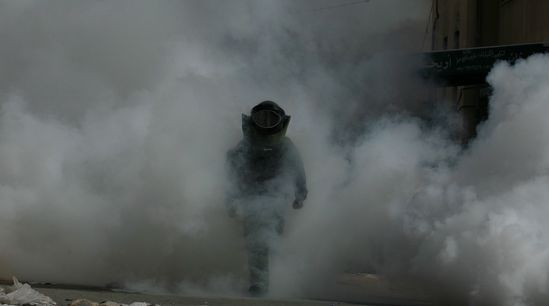
Many of the films that focus on the war in Iraq look at the effects of the war on soldiers returning from battle, think In the Valley of Elah, Brothers, Stop-Loss, etc. Few films have yet to consistently place audiences in the heat of battle. One of the most recent films to do so is Kathryn Bigelow‘s The Hurt Locker, a film being touted by many critics as one of the best films of the year.
The Hurt Locker, based on the personal wartime experiences of journalist Mark Boal, follows Sgt. William James (Jeremy Renner), a bomb disposal technician with legendary skills who shows up on the scene after his predecessor meets an untimely end. Sgt. James works with Sgt. J T Sanborn (Anthony Mackie) and Spc. Owen Eldridge (Brian Geraghty), and the trinity reveals three, perhaps prevalent, different types of soldiers. Sgt. James represents a reckless, devil-may-care type, Sgt. Sanborn is a by-the-book soldier counting down the days until he goes home, and Spc. Eldridge is a nervous young soldier struggling to process the arbitrariness of death that surrounds him. The film focuses on the various types of IED‘s, and locations where they are placed, that Sgt. James and his crew defuse. Though Sgt. Sanborn and Spc. Eldridge play key roles (and Mackie and Geraghty give fine performances in them), the film really is a character study of Sgt. James, whose “at-homeness” in his vulnerability before a live bomb destructs every aspect of his personal life.
Much has been made of The Hurt Locker and rightfully so, yet to call it the best film of the year or the greatest war film ever made is to say too much. The brilliance of the film is simply its subject matter…a bomb disposal unit and the tension that automatically comes with the territory. Bigelow does this extreme justice, ratcheting up the fear and anxiety that only rarely explodes. Yet when Sgt. James isn’t cowered in front of a live bomb, except in a couple of cases, the film loses much of its effectiveness. It feels as if we’ve seen some of these emotions in other films. This isn’t a bad thing, it’s just nothing new or groundbreaking as many people seem to think the film is. There are at least two entire scenes that could have been left out altogether, one of which works against Bigelow’s portrayal of American soldiers as heroes, but in a way that distracts from the tone of the rest of the film.
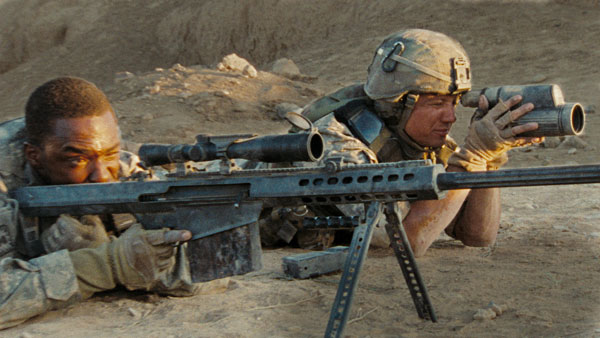
Speaking of heroism, The Hurt Locker adds to this notion by presenting the situation in Iraq in realistic fashion. One of the film’s strengths is the lack of assurance of just who is who in terms of the Iraqis. Anyone can be a suicide bomber. Unfortunately, a correlation of such a reality…or at least this portrayal of it…is that everyone can be/is a threat. As such, The Hurt Locker suffers from a lack of diversity on the part of the non-military presence, which is again to say the Iraqis. Still, the willingness to put one’s self in harm’s way, to endure harsh conditions in extreme danger (the image from the sniper scene above is especially poignant) remains at the forefront of the film.
Bigelow has proven her hand at fast-paced action, suspenseful action, and explosive set pieces. It would be interesting to see what kind of drama she could craft with the Iraqi citizens in the forefront and the American military presence in the background. On the other hand, I realize that this story belongs to the Iraqi filmmakers themselves, and I doubt that we will have to wait long to see it.
The Hurt Locker (131 mins) is rated R for war violence and language and is available on DVD.
Previous Post

January 15, 2010
The Earthquake in Haiti, God, and the Arbitrariness of Life
Next Post
January 20, 2010 A Post-Apocalyptic Bible
Browse Our Archives
Select a Category Classics DVD Film Music News Pop Culture Events Print Sports Television Uncategorized Video Games
Select a Month March 2017 February 2017 January 2017 December 2016 November 2016 October 2016 September 2016 August 2016 July 2016 June 2016 May 2016 April 2016 March 2016 February 2016 January 2016 December 2015 November 2015 October 2015 September 2015 August 2015 July 2015 June 2015 May 2015 April 2015 March 2015 February 2015 January 2015 December 2014 November 2014 October 2014 September 2014 August 2014 July 2014 June 2014 May 2014 April 2014 March 2014 February 2014 January 2014 December 2013 November 2013 October 2013 September 2013 August 2013 July 2013 June 2013 May 2013 April 2013 March 2013 February 2013 January 2013 December 2012 November 2012 October 2012 September 2012 August 2012 July 2012 June 2012 May 2012 April 2012 March 2012 February 2012 January 2012 December 2011 November 2011 October 2011 September 2011 August 2011 July 2011 June 2011 May 2011 April 2011 March 2011 February 2011 January 2011 December 2010 November 2010 October 2010 September 2010 August 2010 July 2010 June 2010 May 2010 April 2010 March 2010 February 2010 January 2010 December 2009 November 2009 October 2009 September 2009 August 2009 July 2009 June 2009 May 2009 April 2009 March 2009 February 2009 January 2009 December 2008 November 2008 October 2008 September 2008 August 2008 July 2008 June 2008 May 2008 April 2008 March 2008 February 2008 January 2008 December 2007 November 2007 October 2007 September 2007 August 2007 July 2007 June 2007 May 2007 April 2007 March 2007
Follow Us!
TAKE THE
Religious Wisdom Quiz
What did God use to speak to Moses in the wilderness?
Select your answer to see how you score.
A mighty wind A pillar of fire A thunderstorm A burning bush
Related posts from Pop Theology


At SXSW2017: May It Last: A Portrait of...

At SXSW 2017: "Untold Tales of Armistead Maupin"
TRENDING AT PATHEOS Progressive Christian

Why Christians Have a Sacred Duty to Vote:...
The Bible offers strong support for the sacred duty to vote. Here...

What Being a Modern-Day Apostle Means to Me
In my last column, I discussed the ins and outs of modern-day...

Did Ancient China Once Worship the God of...
Across human history, a common thread weaves through the origins of the...

Love Your Neighbor – Including Earth-Kin: Lev. 19,...
God’s command to love your neighbor means acting in an ethical and...

Lead a Church Study of “Jesus and Lao...
Guest writer Jack Thomas (The Irreverent Reverend) reflects on leading his church...

Principles for Understanding the Apostolic Ministry Today
Whenever people discover that my formal ministry title is "apostle," as in...
view all Progressive Christian blogs
Ad-Free & Subscriber Log-In Subscription Support
- About Us
- 2026 Calendar
- Videos
- Podcasts
- Library of World Religions
- Faith In Media Tracker
- Advertise With Us
- Write for Us
- Privacy Policy
- Terms of Service
- Do Not Sell My Data
- Contact Us
- Radiant Digital
- Manage Newsletter Subscriptions
- Unsubscribe From Notifications
- Sitemap
Copyright 2008-2026, Patheos. All rights reserved.
Subscription Support Ad-Free & Subscriber Log-In
Follow Patheos