
BuddhistCatholicContemplativeEvangelicalGeneral ChristianHinduJewishLatter-day SaintMuslimNew VisionsProgressive Christian
Beliefs
- Buddhist
- Catholic
- Contemplative
- Evangelical
- General Christian
- Hindu
- Jewish
- Latter-day Saint
- More Voices
- Muslim
- New Visions
- Pagan
- Progressive Christian
Topics
- Religion News
- Food and Religion
- Sports and Religion
- Religious Art
- Religious Music and Entertainment
- Religious Events
- History and Religion
- Style and Religion
- Politics and Religion
- Women in Religion
- Recreation Outdoors and Religion
- Business Finance and Religion
- Careers Workplace and Religion
- Education and Religion
- Family Parenting and Religion
- Health Fitness and Religion
- Home and Religion
- Relationships and Religion
- Technology and Religion
- Travel and Religion
Columnists
- Buddhist Columnists
- Business Finance and Religion Columnists
- Careers Workplace and Religion Columnists
- Catholic Columnists
- Contemplative Columnists
- Education and Religion Columnists
- Evangelists Columnists
- Family Parenting and Religion Columnists
- General Christian Columnists
- Health Fitness and Religion Columnists
- Hindu Columnists
- History and Religion Columnists
- Home and Religion Columnists
- Jewish Columnists
- More Voices Columnists
- Latter Day Columnists
- Muslim Columnists
- New Visions Columnists
- Nonreligious Columnists
- Pagan Columnists
- Politics and Religion Columnists
- Progressive Columnists
- Recreation Outdoors and Religion Columnists
- Relationships and Religion Columnists
- Religion News Columnists
- Religious Art Columnists
- Religious Events Columnists
- Religious Music and Entertainment Columnists
- Sports and Religion Columnists
- Style and Religion Columnists
- Technology and Religion Columnists
- Travel and Religion Columnists
- Women in Religion Columnists
Resource Library
- 2026 Calendar
- Library of World Religions
- The 100 Most Holy Places on Earth
- Patheos Answers
- Podcasts
- Videos
- Faith Leaders Database
- Anglican Episcopalian
- Bahai
- Baptist
- Buddhism
- Christianity
- Confucianism
- Eastern Orthodoxy
- Hinduism
- Holiness and Pentecostal
- ISKCON
- Islam
- Judaism
- Lutheran
- Methodist
- The Church of Jesus Christ of Latter-day Saints
- New Age
- Paganism
- Presbytarian and Reformed
- Protestantism
- Religion Behind the Scenes
- Roman Catholic
- Scientology
- Shia Islam
- Sikhism
- Sufism
- Sunni Islam
- Taoism
- Zen
- See all religions
Research Tools
 Ad-Free & Subscriber Log-In Subscription Support
Ad-Free & Subscriber Log-In Subscription Support
Follow Patheos 

- Trending:
- Forgiveness
- |
- Marriage
- |
- Consciousness
- |
- Death Penalty
- |
- Election
- |
- Halloween
 Pop Theology
- Home
- Progressive Christian
- Religious Music & Entertainment
- A New Pop Theology Contributor and the Problem of Geeky Authority
A New Pop Theology Contributor and the Problem of Geeky Authority
Last updated on: October 30, 2009 at 9:44 am by J. Ryan Parker
A New Pop Theology Contributor and the Problem of Geeky Authority 2009-10-30T09:44:36-07:00 J. Ryan Parker
Patheos Explore the world's faith through different perspectives on religion and spirituality! Patheos has the views of the prevalent religions and spiritualities of the world.
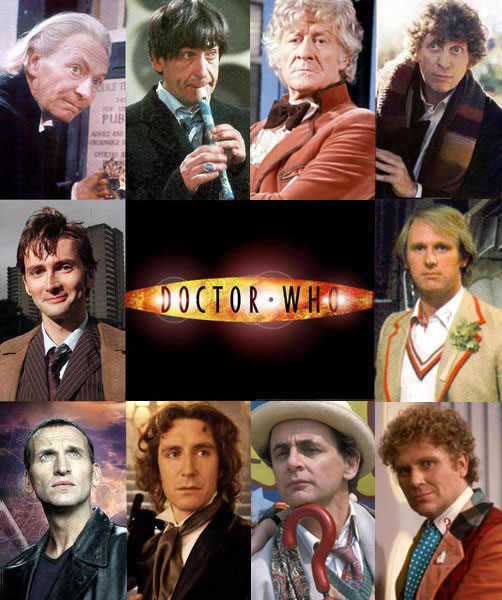
Pop Theology is thrilled to welcome its newest contributor, Jason Derr. Jason has extensively studied creative writing and has an AS in Film/Video Production and an MA in Theological Studies from the Vancouver School of Theology. He is a theologian-in-affiliation with the Progressive Christian Alliance and has contributed writing to the Canada Lutheran. Several of his works in short fiction and poetry have also been published. Check out his first article, “Doctor Who and The Challenge of Community-Centered Hermenutics,” which examines Doctor Who and the Gospels, after the jump.
The Challenge of Geeky Authority
Any geek worth her or his salt knows Doctor Who. While the good crews of the Federation were establishing an all-seeing, all-benevolent government, the Doctor was playing the cosmic troublemaker and troubleshooter, a rebel who made his own rules. Running from 1963 to 1989 in its original run and featuring seven actors in the title role, Doctor Who is the longest running science fiction series in TV history. The series was revived with a 1996 TV movie with an 8th actor in the role, and starting in 2005, a renewed TV series returned and has featured two actors in the role, with a third about to debut.
The Doctor is an enigmatic character who travels in space-time in an old police call box that is larger on the inside than on the outside. At times he has been portrayed as a grumpy old homeless man, a galactic hobo, a dashing adventurer, or the most ADHD man in the galaxy. With his companions, he stumbles through any series of problems usually caused, wherever he lands, by alien or inter-dimensional beings. Death is never a risk for him because his people–Time Lords–can die and regenerate 12 times, allowing them 13 incarnations.
Starting in 2000, when hope for a revived Doctor Who series was thought to be a lost cause, the UKs Big Finish Productions got permission to produce a new Audio Theater series based on the Doctor Who universe. Starting first with “Sirens of Time” featuring the 5th, 6th and 7th actors to play the role, Big Finish has kept Doctor Who alive. A short time later Paul McGann joined the ranks as the 8th Doctor, revising the role he had played only once before in the 1996 TV movie. The 5th-8th Doctors continue their work in audio with Big Finish while Doctors 9, 10 and soon-to-be 11 do the good work on TV. The great actors to play Doctors 1, 2, and 3 have passed on while Tom Baker has so far declined to return as the 4th Doctor.
The presence of the Doctor Who audio programs, featuring returning cast members and their own story arcs that fit neatly–or not so neatly–into the established continuity raises the question of Canon. Fans of the Whoniverse–a term, some argue, that includes not only the ‘official’ stories but the behind the scenes work, spin-off media, and highly regarded fan-media–argue that all of this equates to a “canon.”
Argument ranges over which stories should be included, even within the original TV series. A show that runs for more than 20 years is bound to have its contradictions. Others posit that the Whoniverse itself contains a multiverse. How else do you factor in three different official 9th Doctors like Christopher Eccleston‘s portrayal in the 2005 TV series, Richard E. Grant‘s portrayal in the BBC webcast animated series, and Rowan Atkinson‘s performance as the doctor in the Comic Relief sketch “Curse of Fatal Death?” With the 8th doctor portrayed in a TV movie, on audio, and in comic strip, do these each then lead to other possible outcomes for the Doctor? Is each official, BBC produced 9th Doctor in fact, in continuity, part of the canon?
The issue of canon for fans of Doctor Who has now found its solution in the idea of a Multiverse. Each strain and variation on the narrative functions as its own continuity. This allows for multiple forms and formats for the story to be told while maintaining all of it, contradictions included, as canon by means of a community-centered hermeneutic.
Text and Canon
The challenge for some Christians is maintaining canon in the midst of contradictions and in the midst of interpretive strategies which seek to harmonize contradictions, thus denying us the rich heritage of the text. The gospels, for instance present, us with four distinct views of Jesus. On the one hand, he is the God-like being of John’s gospel and also the very human son of man in Mark’s gospel. While each contains similar through-lines, the narratives and theologies within vary. Genesis presents two accounts of creation and the Hebrew Bible gives two reasons for the destruction of Gomorrah as either attempted male rape (Genesis 19:4-5) or the treatment of the poor (Ezekiel 16: 48-50) with early Jewish commentary referring to inhospitality as the sin that leads to the cities’ destruction.
Canon always exists in community. Variations appear among Catholic and Protestant bibles, with Martin Luther going as far as to suggest the removal of James and Revelation. But in each community, for a variety of reasons, these texts are considered to be Canon and are the narrative by which the community is shaped.
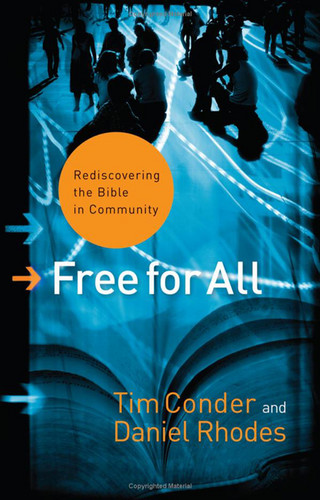 In this manner Tim Conder in his book, Free for All: Rediscovering the Bible in Community, and a recent Emergent Village podcast, advocates that scripture be read in community. This works, he suggests, if we view scripture itself–the Canon of tradition–as being itself a community of texts. This works better, I feel, than say the United Church of Christ’s comments on scripture which view them as a ‘library of early Christian experience.’ A community of texts lets us engage in a ‘Choral Theology,’ a lifting of diverse voices in the song of faith.
In this way, what is not important is which texts are in or out or in establishing a consistent theological interpretation that dictates an optive by which we read the text. To apply this to the Doctor Who universe, what is not important is what stories or media are ‘in or out’ but instead the multiverse of texts that exist in tension. They are mutually exclusive and mutually revealing. These texts belong to the community of fans and have a shared history and narrativity.
Doctor Who fans are then a people united in a common dialogue of what it means to be a fan. To engage in the conversation is to participate in the faith of Whodom. Likewise for Christians, with so many conflicting ideas in the text and a weight of history that includes in it a variety of interpreters and interpretations, to be a Christian is not to subscribe to one view over another but to instead engage in deep listening to the text and its conflicts.
The Gospel as Multiverse
The problem of canon among diverse and contradictory texts in Doctor Who has been solved by the notion of Multiverese. In this way a handful of mutually exclusive narratives can be held together despite their contradictions. This can only happen when those who participate in the conversation realize that the narrative is common property–or common space–that belongs to the community.
Christian holy texts, in their Protestant and Catholic forms, are themselves a multiverse. Instead of presenting a unified story we are instead presented an anthology, a library–a community of texts. From the diversity of the biblical texts, from the conflicts in Paul’s writing (the so-called Non-Contested Paul and Contested Paul) to the variety of letter writers and the spectrum of apocalypses and diversity of Gospels, the Holy Book sets out not to provide answers but rather a diversity of expression.
The gospels, in this sense, begin a conversation with us. We have the option of harmonizing the texts–smoothing out their rough spots, their contradictions, and their hesitations–or allowing the text to be a Canon with contradictions. This moves past an inerrant text and to an inspired/ing text, or in other words an in-spirited text, one whose goal is not absolute truth but conversation that leads to a deepening of community held together in diversity. As Martin Luther said, scripture is not the word of God but the manger that contains it.
Diversity in this manner is important as a community-based hermeneutic will lead to a diversity of conversations and points of view. Conder says in the Emergent Village podcast that a community-based hermeneutic among ten people will lead naturally to the diversity of thought found in scholarship of the same text! Diverse canon and diverse viewpoints work as a multiverse when we realize that the complexity of the inherited text is a communal property of those engaged in the community of conversation.
If we set out to present a text of unified and absolute answers, then we are not engaging with the text’s own experiment. We can point to any number of verses to support a Bibliolatry, but to do so misses the project the text presents, a community of texts with diverse voices.
A multiverse approach to biblical reading allows us to reclaim the bible as community and place it back as an organizing and inspiring narrative without making it the absolute end all of theological and faith formation. Gospel as Multiverse does not mean we abandon the historical-critical, redaction, or other forms of criticism, but instead allow each of them to speak to us and reveal the text to us in ways that lets us push back against the text in such a manner that our own experience can speak as well.
Conder talks about his community-hermeneutic as a way for the diversity of his own worshiping community to safely step forward and speak of their own spiritual identities. To read the bible in community is to allow our community members to step forward in such a way that their own experience and identity is valid. It is permission to push back against the text when it does not line up with our experience of humanity and God.
In this manner, we can ask if a certain reading is healthy or helpful. Additionally, it allows us to bring perspectives and questions to the text not normally encountered in a way that gifts us all. This allows ‘liberal’ and ‘conservative,’ ‘modern’ and ‘postmodern’ perspectives to exist side by side in a way that enriches all participants in the conversation.
Previous Post

October 28, 2009
The Family that Sits Together, Stays Together
Next Post
November 4, 2009 Two Films in One...
Browse Our Archives
Select a Category Classics DVD Film Music News Pop Culture Events Print Sports Television Uncategorized Video Games
Select a Month March 2017 February 2017 January 2017 December 2016 November 2016 October 2016 September 2016 August 2016 July 2016 June 2016 May 2016 April 2016 March 2016 February 2016 January 2016 December 2015 November 2015 October 2015 September 2015 August 2015 July 2015 June 2015 May 2015 April 2015 March 2015 February 2015 January 2015 December 2014 November 2014 October 2014 September 2014 August 2014 July 2014 June 2014 May 2014 April 2014 March 2014 February 2014 January 2014 December 2013 November 2013 October 2013 September 2013 August 2013 July 2013 June 2013 May 2013 April 2013 March 2013 February 2013 January 2013 December 2012 November 2012 October 2012 September 2012 August 2012 July 2012 June 2012 May 2012 April 2012 March 2012 February 2012 January 2012 December 2011 November 2011 October 2011 September 2011 August 2011 July 2011 June 2011 May 2011 April 2011 March 2011 February 2011 January 2011 December 2010 November 2010 October 2010 September 2010 August 2010 July 2010 June 2010 May 2010 April 2010 March 2010 February 2010 January 2010 December 2009 November 2009 October 2009 September 2009 August 2009 July 2009 June 2009 May 2009 April 2009 March 2009 February 2009 January 2009 December 2008 November 2008 October 2008 September 2008 August 2008 July 2008 June 2008 May 2008 April 2008 March 2008 February 2008 January 2008 December 2007 November 2007 October 2007 September 2007 August 2007 July 2007 June 2007 May 2007 April 2007 March 2007
Follow Us!
TAKE THE
Religious Wisdom Quiz
What baby was placed in a basket in the river?
Select your answer to see how you score.
Moses Samuel Joseph Jesus
Related posts from Pop Theology

#KillerSerials: THE PATH, S2 Ep. 11
#KillerSerials: THE PATH, S2 Ep. 10

#KillerSerials: THE PATH S2, E8
TRENDING AT PATHEOS Progressive Christian

Why Christians Have a Sacred Duty to Vote:...
The Bible offers strong support for the sacred duty to vote. Here...

What Being a Modern-Day Apostle Means to Me
In my last column, I discussed the ins and outs of modern-day...

Did Ancient China Once Worship the God of...
Across human history, a common thread weaves through the origins of the...

Love Your Neighbor – Including Earth-Kin: Lev. 19,...
God’s command to love your neighbor means acting in an ethical and...

Lead a Church Study of “Jesus and Lao...
Guest writer Jack Thomas (The Irreverent Reverend) reflects on leading his church...

Principles for Understanding the Apostolic Ministry Today
Whenever people discover that my formal ministry title is "apostle," as in...
view all Progressive Christian blogs
Ad-Free & Subscriber Log-In Subscription Support
- About Us
- 2026 Calendar
- Videos
- Podcasts
- Library of World Religions
- Faith In Media Tracker
- Advertise With Us
- Write for Us
- Privacy Policy
- Terms of Service
- Do Not Sell My Data
- Contact Us
- Radiant Digital
- Manage Newsletter Subscriptions
- Unsubscribe From Notifications
- Sitemap
Copyright 2008-2026, Patheos. All rights reserved.
Subscription Support Ad-Free & Subscriber Log-In
Follow Patheos