
BuddhistCatholicContemplativeEvangelicalGeneral ChristianHinduJewishLatter-day SaintMuslimNew VisionsProgressive Christian
Beliefs
- Buddhist
- Catholic
- Contemplative
- Evangelical
- General Christian
- Hindu
- Jewish
- Latter-day Saint
- More Voices
- Muslim
- New Visions
- Pagan
- Progressive Christian
Topics
- Religion News
- Food and Religion
- Sports and Religion
- Religious Art
- Religious Music and Entertainment
- Religious Events
- History and Religion
- Style and Religion
- Politics and Religion
- Women in Religion
- Recreation Outdoors and Religion
- Business Finance and Religion
- Careers Workplace and Religion
- Education and Religion
- Family Parenting and Religion
- Health Fitness and Religion
- Home and Religion
- Relationships and Religion
- Technology and Religion
- Travel and Religion
Columnists
- Buddhist Columnists
- Business Finance and Religion Columnists
- Careers Workplace and Religion Columnists
- Catholic Columnists
- Contemplative Columnists
- Education and Religion Columnists
- Evangelists Columnists
- Family Parenting and Religion Columnists
- General Christian Columnists
- Health Fitness and Religion Columnists
- Hindu Columnists
- History and Religion Columnists
- Home and Religion Columnists
- Jewish Columnists
- More Voices Columnists
- Latter Day Columnists
- Muslim Columnists
- New Visions Columnists
- Nonreligious Columnists
- Pagan Columnists
- Politics and Religion Columnists
- Progressive Columnists
- Recreation Outdoors and Religion Columnists
- Relationships and Religion Columnists
- Religion News Columnists
- Religious Art Columnists
- Religious Events Columnists
- Religious Music and Entertainment Columnists
- Sports and Religion Columnists
- Style and Religion Columnists
- Technology and Religion Columnists
- Travel and Religion Columnists
- Women in Religion Columnists
Resource Library
- 2026 Calendar
- Library of World Religions
- The 100 Most Holy Places on Earth
- Patheos Answers
- Podcasts
- Videos
- Faith Leaders Database
- Anglican Episcopalian
- Bahai
- Baptist
- Buddhism
- Christianity
- Confucianism
- Eastern Orthodoxy
- Hinduism
- Holiness and Pentecostal
- ISKCON
- Islam
- Judaism
- Lutheran
- Methodist
- The Church of Jesus Christ of Latter-day Saints
- New Age
- Paganism
- Presbytarian and Reformed
- Protestantism
- Religion Behind the Scenes
- Roman Catholic
- Scientology
- Shia Islam
- Sikhism
- Sufism
- Sunni Islam
- Taoism
- Zen
- See all religions
Research Tools
 Ad-Free & Subscriber Log-In Subscription Support
Ad-Free & Subscriber Log-In Subscription Support
Follow Patheos 

- Trending:
- Forgiveness
- |
- Marriage
- |
- Consciousness
- |
- Death Penalty
- |
- Election
- |
- Halloween
 Pop Theology
- Home
- Progressive Christian
- Religious Music & Entertainment
- The Gospel According to U2
The Gospel According to U2
Last updated on: August 13, 2009 at 1:01 pm by J. Ryan Parker
The Gospel According to U2 2009-08-13T13:01:27-07:00 J. Ryan Parker
Patheos Explore the world's faith through different perspectives on religion and spirituality! Patheos has the views of the prevalent religions and spiritualities of the world.
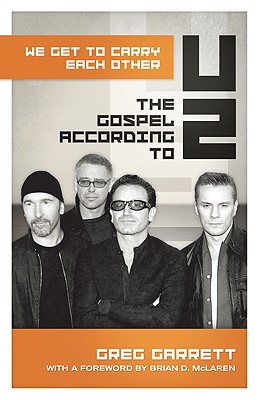
While I was living in London in Spring 2004, I came across a selection of sermons entitled Get Up Off Your Knees: Preaching the U2 Catalog, which highlighted, in part, the very significant role that the Psalms play in the band’s creation of their songs and their role as contemporary prophets. This sent my thinking about the band and their music into a whole different and more theological direction. Another, more recent book about the band, We Get To Carry Each Other: The Gospel According to U2 by Greg Garrett, has taken me a little bit further along that road.
First and foremost, Garrett’s book is a perfect example of what can happen when religious folk take pop culture seriously. Our experiences of both pop culture products and our religious reflections or theologizing are the richer for such engagement. Though Garrett concludes his book with a list of ten spiritual lessons we can learn from U2 (I will not recount them here…get your own copy!), he spends his greatest amount of attention on three key theological principles that shape and are shaped by the band: belief, communion, and social justice.

In their life and work, Garrett argues, these three issues reign supreme. One can trace throughout their music a wrestling with belief and faith thanks in large part, as Garrett repeatedly reminds us, to their experiences of having been burned by organized religion. Their music becomes a place where many people can turn for consolation and inspiration because, Garrett claims, they are asking the deeper questions that plague the wider society.
In the second chapter, Garrett boldly claims that we might look at U2 as a model of ecclesia…a community of believers…even though they often struggle with belief themselves. In her latest book, The Great Emergence, Phyllis Tickle talks about the tension in church involvement between the progressions of believing, behaving, and belonging vs. belonging, behaving, and believing. Rev. Jim Hopkins, the pastor of Lakeshore Avenue Baptist Church in Oakland, fleshed this tension out in a recent sermon highlighting the account of Thomas, the disciple who doubted Jesus’ identity but yet was counted among his followers despite this disbelief. So in a sense, if we look to Garrett’s claims of U2 as a model of communion with one another, we see that this community transcends belief. He gives numerous accounts of when the various members of the band have been at odds with one another and yet stuck it out…or when they have stood beside one another in difficult times, most notably when Adam willingly stood in front of Bono during the singing of “Pride (In the Name of Love)” at a concert in Arizona lest a sniper follow up on his death threats.
Finally, Garrett shows us that U2 embodies the realization that belief in a higher power and community with fellow travellers on the journey is all pointless if we’re not working to make the world a better place…living a commitment to social justice. He cites their involvement with numerous social justice organizations, especially Bono’s well-known commitment to Africa.
Throughout, Garrett backs up his claims with scriptural and theological parallels from past and contemporary sources. In only a few places does he skirt in-depth theological analysis, particularly regarding the nature of salvation. His text also suffers from gender-exclusive language although he is ironically willing to admit that the terminology of “kingdom of God” is somewhat sexist. In the end, however, his book is a quick yet inspirational read. It would make for great devotional reading over the course of a week. His listening suggestions (track lists) at the beginning of each chapter are great resources for some devotional listening as well.
Check out the tour video of “I’ll Go Crazy if I Don’t Go Crazy Tonight” on the home page to get a glimpse of the worshipfulness and celebration at a U2 concert that Garrett frequently cites in his book.
Previous Post

August 6, 2009
Teaching Religion and Film: A Review
Next Post
August 18, 2009 Michael Vick: On Judgement and Participation
Browse Our Archives
Select a Category Classics DVD Film Music News Pop Culture Events Print Sports Television Uncategorized Video Games
Select a Month March 2017 February 2017 January 2017 December 2016 November 2016 October 2016 September 2016 August 2016 July 2016 June 2016 May 2016 April 2016 March 2016 February 2016 January 2016 December 2015 November 2015 October 2015 September 2015 August 2015 July 2015 June 2015 May 2015 April 2015 March 2015 February 2015 January 2015 December 2014 November 2014 October 2014 September 2014 August 2014 July 2014 June 2014 May 2014 April 2014 March 2014 February 2014 January 2014 December 2013 November 2013 October 2013 September 2013 August 2013 July 2013 June 2013 May 2013 April 2013 March 2013 February 2013 January 2013 December 2012 November 2012 October 2012 September 2012 August 2012 July 2012 June 2012 May 2012 April 2012 March 2012 February 2012 January 2012 December 2011 November 2011 October 2011 September 2011 August 2011 July 2011 June 2011 May 2011 April 2011 March 2011 February 2011 January 2011 December 2010 November 2010 October 2010 September 2010 August 2010 July 2010 June 2010 May 2010 April 2010 March 2010 February 2010 January 2010 December 2009 November 2009 October 2009 September 2009 August 2009 July 2009 June 2009 May 2009 April 2009 March 2009 February 2009 January 2009 December 2008 November 2008 October 2008 September 2008 August 2008 July 2008 June 2008 May 2008 April 2008 March 2008 February 2008 January 2008 December 2007 November 2007 October 2007 September 2007 August 2007 July 2007 June 2007 May 2007 April 2007 March 2007
Follow Us!
TAKE THE
Religious Wisdom Quiz
What did the Israelites put on their doorposts during Passover?
Select your answer to see how you score.
Lamb’s blood Gold dust Incense Olive oil
Related posts from Pop Theology


#KillerSerials: An Interview with Kutter Callaway

Book Review: MUSLIMS AND THE MAKING OF AMERICA

TRENDING AT PATHEOS Progressive Christian

Why Christians Have a Sacred Duty to Vote:...
The Bible offers strong support for the sacred duty to vote. Here...

What Being a Modern-Day Apostle Means to Me
In my last column, I discussed the ins and outs of modern-day...

Did Ancient China Once Worship the God of...
Across human history, a common thread weaves through the origins of the...

Love Your Neighbor – Including Earth-Kin: Lev. 19,...
God’s command to love your neighbor means acting in an ethical and...

Lead a Church Study of “Jesus and Lao...
Guest writer Jack Thomas (The Irreverent Reverend) reflects on leading his church...

Principles for Understanding the Apostolic Ministry Today
Whenever people discover that my formal ministry title is "apostle," as in...
view all Progressive Christian blogs
Ad-Free & Subscriber Log-In Subscription Support
- About Us
- 2026 Calendar
- Videos
- Podcasts
- Library of World Religions
- Faith In Media Tracker
- Advertise With Us
- Write for Us
- Privacy Policy
- Terms of Service
- Do Not Sell My Data
- Contact Us
- Radiant Digital
- Manage Newsletter Subscriptions
- Unsubscribe From Notifications
- Sitemap
Copyright 2008-2026, Patheos. All rights reserved.
Subscription Support Ad-Free & Subscriber Log-In
Follow Patheos