
BuddhistCatholicContemplativeEvangelicalGeneral ChristianHinduJewishLatter-day SaintMuslimNew VisionsProgressive Christian
Beliefs
- Buddhist
- Catholic
- Contemplative
- Evangelical
- General Christian
- Hindu
- Jewish
- Latter-day Saint
- More Voices
- Muslim
- New Visions
- Pagan
- Progressive Christian
Topics
- Religion News
- Food and Religion
- Sports and Religion
- Religious Art
- Religious Music and Entertainment
- Religious Events
- History and Religion
- Style and Religion
- Politics and Religion
- Women in Religion
- Recreation Outdoors and Religion
- Business Finance and Religion
- Careers Workplace and Religion
- Education and Religion
- Family Parenting and Religion
- Health Fitness and Religion
- Home and Religion
- Relationships and Religion
- Technology and Religion
- Travel and Religion
Columnists
- Buddhist Columnists
- Business Finance and Religion Columnists
- Careers Workplace and Religion Columnists
- Catholic Columnists
- Contemplative Columnists
- Education and Religion Columnists
- Evangelists Columnists
- Family Parenting and Religion Columnists
- General Christian Columnists
- Health Fitness and Religion Columnists
- Hindu Columnists
- History and Religion Columnists
- Home and Religion Columnists
- Jewish Columnists
- More Voices Columnists
- Latter Day Columnists
- Muslim Columnists
- New Visions Columnists
- Nonreligious Columnists
- Pagan Columnists
- Politics and Religion Columnists
- Progressive Columnists
- Recreation Outdoors and Religion Columnists
- Relationships and Religion Columnists
- Religion News Columnists
- Religious Art Columnists
- Religious Events Columnists
- Religious Music and Entertainment Columnists
- Sports and Religion Columnists
- Style and Religion Columnists
- Technology and Religion Columnists
- Travel and Religion Columnists
- Women in Religion Columnists
Resource Library
- 2026 Calendar
- Library of World Religions
- The 100 Most Holy Places on Earth
- Patheos Answers
- Podcasts
- Videos
- Faith Leaders Database
- Anglican Episcopalian
- Bahai
- Baptist
- Buddhism
- Christianity
- Confucianism
- Eastern Orthodoxy
- Hinduism
- Holiness and Pentecostal
- ISKCON
- Islam
- Judaism
- Lutheran
- Methodist
- The Church of Jesus Christ of Latter-day Saints
- New Age
- Paganism
- Presbytarian and Reformed
- Protestantism
- Religion Behind the Scenes
- Roman Catholic
- Scientology
- Shia Islam
- Sikhism
- Sufism
- Sunni Islam
- Taoism
- Zen
- See all religions
Research Tools
 Ad-Free & Subscriber Log-In Subscription Support
Ad-Free & Subscriber Log-In Subscription Support
Follow Patheos 

- Trending:
- Forgiveness
- |
- Marriage
- |
- Consciousness
- |
- Death Penalty
- |
- Election
- |
- Halloween
 Pop Theology
- Home
- Progressive Christian
- Religious Music & Entertainment
- Religion and Film: A Review
Religion and Film: A Review
Last updated on: June 5, 2009 at 9:44 am by J. Ryan Parker
Religion and Film: A Review 2009-06-05T09:44:38-07:00 J. Ryan Parker
Patheos Explore the world's faith through different perspectives on religion and spirituality! Patheos has the views of the prevalent religions and spiritualities of the world.
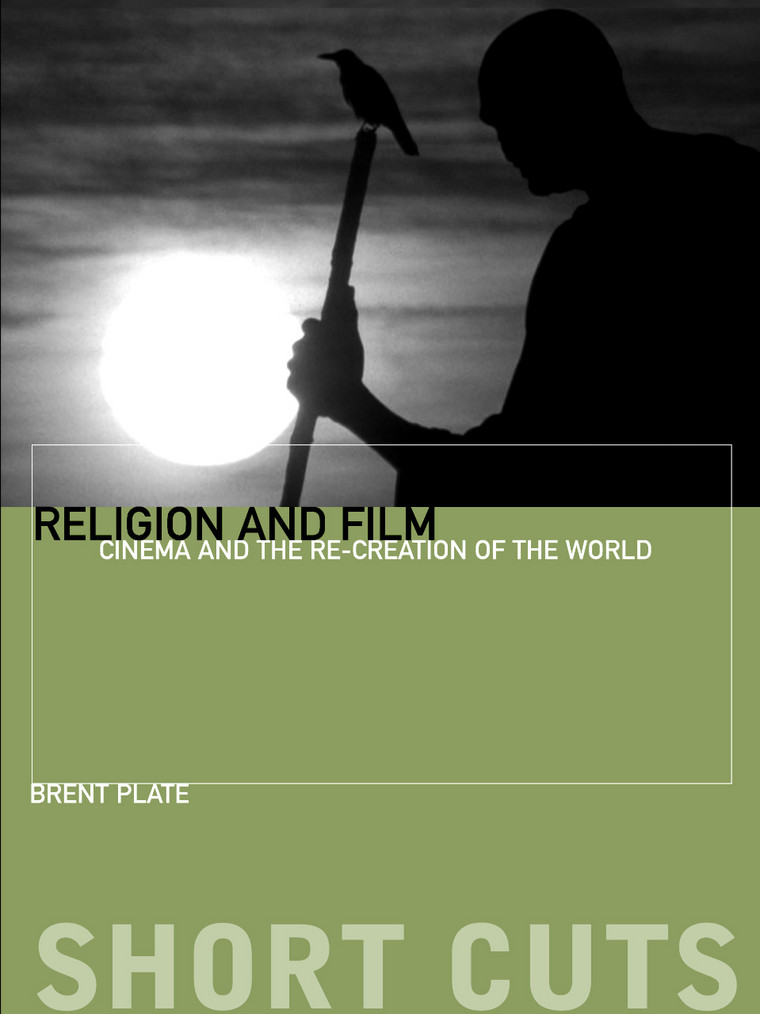
Don’t let the length fool you…S. Brent Plate‘s latest book, Religion and Film: Cinema and the Re-Creation of the World, packs a serious punch. It represents yet another accomplished work of religion and film scholarship that 1) moves beyond a narrative-centered approach to film studies and 2) reveals that an in-depth analysis of film has direct implications for our understanding and practice of religion.
From the start, Plate argues that film and religion share significant formal similarities. Primarily, they both shape and are shaped by myth and ritual. Since its beginnings in the late 1800s, film has borrowed from religion, and in the decades since, religion has returned the favor. In the process, their myths and rituals re-create…re-frame…the worlds in which we live to either critique them or to help us make sense of them. Unfortunately, sometimes film and religion simply mirror the corrupt worlds from which they emerge.
Plate divides his book into two parts, the first of which explores the relationship between theories of film and religion while the second part focuses on the ways in which films “affect viewers in bodily and ritualistic ways” (x). While Plate’s book is highly academic, it is also extremely accessible. Not only does it provide us with yet another example of the interdisciplinary nature of religion and film studies, it will also introduce some readers to new conceptions of ritual and myth.
Plate’s engagement with film theories and religion theories are most helpful; however, the book’s payoff lies in the concluding chapters where he engages a variety of films and audience reactions to them to show their potential to affect our daily lives. For example, Plate argues that in the United States, our experience of death has largely been pushed to the margins of human experience and, despite the blood and guts of slasher films, has been sanitized in mainstream Hollywood films as well. However, film does have the potential to re-awaken our senses, and Plate turns to an avant-garde film, Stan Brakhage‘s The Act of Seeing with One’s Own Eyes (1971), which gives a close-up view of autopsises, to illustrate his point.
His concluding chapter, “The Footprints of Film: After-Images of Religion in Space and Time,” reveals how “film has stepped down from the screen to infiltrate political, social and religious lives,” even entering “the religious landscapes of present-day society and contemporary ritualising practices” (79). Plate discusses the b’nai mitzvahs and weddings that have taken on Hollywood themes and the tendency of even the most conservative Christian churhces to employ Hollywood film clips during worship services. He reveals that this is just the latest chapter in the process of re-ritualization: “New media alter old rituals, but they also produce brand new rituals, in places and times the traditionally-minded religious person would not think to look” (85).
As part of Wallflower Press’s Short Cuts series of books about film, Plate’s contribution is a concise entry that transcends a simple introduction to or overview of the field of film and religion. Plate raises and unpacks significant theoretical questions that plague both film and religion. Throughout, he moves comfortably between analyses of both mainstream Hollywood films and avant-garde and independent films. Few scholars in the field of film and religion are doing better work than Plate.
Previous Post

June 4, 2009
Up-lifting the Spirit
Next Post
June 8, 2009 The World's Worst Movie?
Browse Our Archives
Select a Category Classics DVD Film Music News Pop Culture Events Print Sports Television Uncategorized Video Games
Select a Month March 2017 February 2017 January 2017 December 2016 November 2016 October 2016 September 2016 August 2016 July 2016 June 2016 May 2016 April 2016 March 2016 February 2016 January 2016 December 2015 November 2015 October 2015 September 2015 August 2015 July 2015 June 2015 May 2015 April 2015 March 2015 February 2015 January 2015 December 2014 November 2014 October 2014 September 2014 August 2014 July 2014 June 2014 May 2014 April 2014 March 2014 February 2014 January 2014 December 2013 November 2013 October 2013 September 2013 August 2013 July 2013 June 2013 May 2013 April 2013 March 2013 February 2013 January 2013 December 2012 November 2012 October 2012 September 2012 August 2012 July 2012 June 2012 May 2012 April 2012 March 2012 February 2012 January 2012 December 2011 November 2011 October 2011 September 2011 August 2011 July 2011 June 2011 May 2011 April 2011 March 2011 February 2011 January 2011 December 2010 November 2010 October 2010 September 2010 August 2010 July 2010 June 2010 May 2010 April 2010 March 2010 February 2010 January 2010 December 2009 November 2009 October 2009 September 2009 August 2009 July 2009 June 2009 May 2009 April 2009 March 2009 February 2009 January 2009 December 2008 November 2008 October 2008 September 2008 August 2008 July 2008 June 2008 May 2008 April 2008 March 2008 February 2008 January 2008 December 2007 November 2007 October 2007 September 2007 August 2007 July 2007 June 2007 May 2007 April 2007 March 2007
Follow Us!
TAKE THE
Religious Wisdom Quiz
"Thou preparest a table for me in the presence of mine _____."
Select your answer to see how you score.
Kinsmen Friends Children Enemies
Related posts from Pop Theology


#KillerSerials: An Interview with Kutter Callaway

Book Review: MUSLIMS AND THE MAKING OF AMERICA

TRENDING AT PATHEOS Progressive Christian

Why Christians Have a Sacred Duty to Vote:...
The Bible offers strong support for the sacred duty to vote. Here...

What Being a Modern-Day Apostle Means to Me
In my last column, I discussed the ins and outs of modern-day...

Did Ancient China Once Worship the God of...
Across human history, a common thread weaves through the origins of the...

Love Your Neighbor – Including Earth-Kin: Lev. 19,...
God’s command to love your neighbor means acting in an ethical and...

Lead a Church Study of “Jesus and Lao...
Guest writer Jack Thomas (The Irreverent Reverend) reflects on leading his church...

Principles for Understanding the Apostolic Ministry Today
Whenever people discover that my formal ministry title is "apostle," as in...
view all Progressive Christian blogs
Ad-Free & Subscriber Log-In Subscription Support
- About Us
- 2026 Calendar
- Videos
- Podcasts
- Library of World Religions
- Faith In Media Tracker
- Advertise With Us
- Write for Us
- Privacy Policy
- Terms of Service
- Do Not Sell My Data
- Contact Us
- Radiant Digital
- Manage Newsletter Subscriptions
- Unsubscribe From Notifications
- Sitemap
Copyright 2008-2026, Patheos. All rights reserved.
Subscription Support Ad-Free & Subscriber Log-In
Follow Patheos