
BuddhistCatholicContemplativeEvangelicalGeneral ChristianHinduJewishLatter-day SaintMuslimNew VisionsProgressive Christian
Beliefs
- Buddhist
- Catholic
- Contemplative
- Evangelical
- General Christian
- Hindu
- Jewish
- Latter-day Saint
- More Voices
- Muslim
- New Visions
- Pagan
- Progressive Christian
Topics
- Religion News
- Food and Religion
- Sports and Religion
- Religious Art
- Religious Music and Entertainment
- Religious Events
- History and Religion
- Style and Religion
- Politics and Religion
- Women in Religion
- Recreation Outdoors and Religion
- Business Finance and Religion
- Careers Workplace and Religion
- Education and Religion
- Family Parenting and Religion
- Health Fitness and Religion
- Home and Religion
- Relationships and Religion
- Technology and Religion
- Travel and Religion
Columnists
- Buddhist Columnists
- Business Finance and Religion Columnists
- Careers Workplace and Religion Columnists
- Catholic Columnists
- Contemplative Columnists
- Education and Religion Columnists
- Evangelists Columnists
- Family Parenting and Religion Columnists
- General Christian Columnists
- Health Fitness and Religion Columnists
- Hindu Columnists
- History and Religion Columnists
- Home and Religion Columnists
- Jewish Columnists
- More Voices Columnists
- Latter Day Columnists
- Muslim Columnists
- New Visions Columnists
- Nonreligious Columnists
- Pagan Columnists
- Politics and Religion Columnists
- Progressive Columnists
- Recreation Outdoors and Religion Columnists
- Relationships and Religion Columnists
- Religion News Columnists
- Religious Art Columnists
- Religious Events Columnists
- Religious Music and Entertainment Columnists
- Sports and Religion Columnists
- Style and Religion Columnists
- Technology and Religion Columnists
- Travel and Religion Columnists
- Women in Religion Columnists
Resource Library
- 2026 Calendar
- Library of World Religions
- The 100 Most Holy Places on Earth
- Patheos Answers
- Podcasts
- Videos
- Faith Leaders Database
- Anglican Episcopalian
- Bahai
- Baptist
- Buddhism
- Christianity
- Confucianism
- Eastern Orthodoxy
- Hinduism
- Holiness and Pentecostal
- ISKCON
- Islam
- Judaism
- Lutheran
- Methodist
- The Church of Jesus Christ of Latter-day Saints
- New Age
- Paganism
- Presbytarian and Reformed
- Protestantism
- Religion Behind the Scenes
- Roman Catholic
- Scientology
- Shia Islam
- Sikhism
- Sufism
- Sunni Islam
- Taoism
- Zen
- See all religions
Research Tools
 Ad-Free & Subscriber Log-In Subscription Support
Ad-Free & Subscriber Log-In Subscription Support
Follow Patheos 

- Trending:
- Forgiveness
- |
- Marriage
- |
- Consciousness
- |
- Death Penalty
- |
- Election
- |
- Halloween
 Pop Theology
- Home
- Progressive Christian
- Religious Music & Entertainment
- Frozen River
Frozen River
Last updated on: March 25, 2009 at 12:41 pm by J. Ryan Parker
Frozen River 2009-03-25T12:41:34-07:00 J. Ryan Parker
Patheos Explore the world's faith through different perspectives on religion and spirituality! Patheos has the views of the prevalent religions and spiritualities of the world.

Pop Theology contributor Wendy Arce reviews last year’s independent hit, Frozen River.
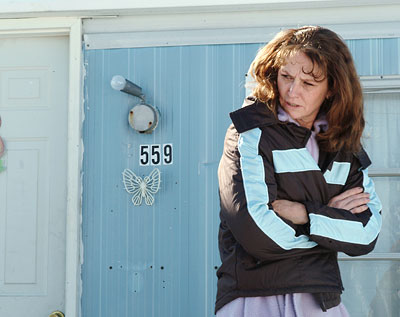 The independent film, Frozen River (directed by Courtney Hunt), caught the Academy’s eye last year because of Melissa Leo‘s performance as Ray Eddy, a poor white woman living in upstate New York. Even when she wasn’t talking, her face said everything in some of her best scenes in the film. Ray is the mother of two children whose husband has recently robbed and abandoned her. When we first meet her, she stands outside her trailer smoking a cigarette, distressed. She is waiting on the brand new double wide home that would have been delivered that very day had her husband not run off with their savings a week before Christmas. She can either find her husband or beg her boss for a promotion. She is unsuccessful at both.
As she aimlessly drives around, she spots her husband’s car outside a bingo gaming hall in Mohawk territory. She sees a Mohawk, Lila Littlewolf (Misty Upham), drive off in it and follows her home. Lila confirms Ray’s worst fears–her husband fled to Atlantic City and abandoned the car with the keys in it. Lila offers to buy Ray’s car because it has a large trunk that can be opened from the inside. When Ray refuses, Lila says that her cousin will pay $2000 cash for the car. Lila takes Ray through Mohawk territory and towards a river that has frozen solid. Although Canada lies across the border, Lila does not recognize this boundary because, to her, it is all Mohawk land. They drive across the river, and instead of buying the car, Lila’s cousin fills the trunk with two Asian men and gives Ray $1200. Ray is in a difficult position here because, while she desperately needs the money, she will have to break the law to get it. The money wins out and she drives the two Asian men across the frozen river and into the U.S.
While Ray has her reservations about these “missions,” Lila assuages her fears by saying: “You won’t get pulled over. You’re white.” Although they are both impoverished women, this gives Ray a distinct advantage over Lila. Lila explains that in most cases, the people they ferry across the river have debts of tens of thousands of dollars that they have accrued just to come to the states. These people must then work off these debts as indentured servants. This creates a vicious cycle of oppression to which Ray and Lila contribute and from which they benefit.
We learn that Lila has had a tough go of it as well. Although she lives alone in a camper, she too has a child. Her husband died tragically as he was crossing the river to buy Lila a new crib for their baby. As soon as she gave birth to her son, her mother-in-law stole the baby from her and, powerless to get him back, she must watch him from afar. If Melissa Leo’s silent expressions demonstrated her acting abilities, the Misty Upham’s are simply priceless. She perfectly embodies an indigenous woman who has lost everything, both in her silence and when she reminds Ray of the privilege associated with her whiteness.
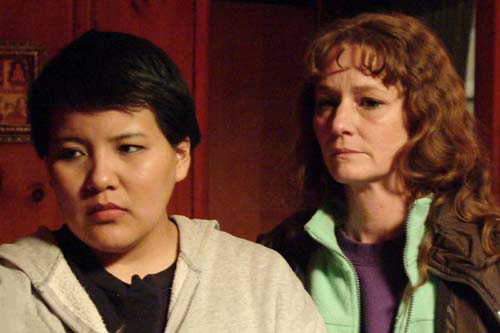 On their final run, everything goes wrong. Ray persuades Lila to cross one last time so she can finally have enough money to buy her double wide trailer. Unfortunately, the highway patrol learns of their smuggling but cannot apprehend Lila because of her sovereignty as a Mohawk on Mohawk land. However, as the tribal authorities begin proceedings to kick Lila out of the tribe, the patrolmen try to strike up a deal with Ray. If Ray will hand over Lila to the authorities, they will let her go. This obviously places Ray in a perilous position in which she can take advantage of her privilege and go free or sacrifice it for the sake of another.
In the end, the film looks critically at the oppressive and cyclical structures that take advantage of the impoverished and powerless. From immigrants to single women to native American women, the film gives us an uncomfortable look at the difficult choices people have to make when they are forced to act for their livelihood. Melissa Leo was nominated for Best Actress, and rightly so. Her portrayal of a poor, white woman demonstrated the intricate layers of oppression that she faced. However, I am left wondering why Misty Upham was left out in the cold regarding a best supporting actress nomination, especially when Viola Davis received a nomination for her extremely brief turn in Doubt. While Leo’s performance was moving, Upham’s was soul-shattering. The complexities of her character and the troubles she faced as a poor Native American woman were just as powerful, or more so, than those of Davis’ character. Perhaps Upham’s performance will convince our film community, especially awards voters, to pay attention to the acting talent from this ignored community. This “blindness” seems ironic in an awards season in which a film that featured the third world garnered so many awards (Slumdog Millionaire). It seems that, this year, while giving so much attention to Slumdog, the Academy continued to ingore one of the most marginalized groups within our own borders. The Academy often displays an image of open-mindedness and opportunity, but shuts its doors to the oppressed within. While our society often focuses on the border to the south, and a recent wildly popular film “exoticizes” urban poverty, Frozen River reminds us to consider our northern border and the injustices and need that dwell there or pass through.
Frozen River (97 mins.) is rated R for some language and is available on DVD. Apparently this is another case of the ratings board’s efforts to prevent children under 17 from learning that life can be tough.
Previous Post

March 24, 2009
Let the Right One In
Next Post
March 26, 2009 This Cross Was Made for Walking...
Browse Our Archives
Select a Category Classics DVD Film Music News Pop Culture Events Print Sports Television Uncategorized Video Games
Select a Month March 2017 February 2017 January 2017 December 2016 November 2016 October 2016 September 2016 August 2016 July 2016 June 2016 May 2016 April 2016 March 2016 February 2016 January 2016 December 2015 November 2015 October 2015 September 2015 August 2015 July 2015 June 2015 May 2015 April 2015 March 2015 February 2015 January 2015 December 2014 November 2014 October 2014 September 2014 August 2014 July 2014 June 2014 May 2014 April 2014 March 2014 February 2014 January 2014 December 2013 November 2013 October 2013 September 2013 August 2013 July 2013 June 2013 May 2013 April 2013 March 2013 February 2013 January 2013 December 2012 November 2012 October 2012 September 2012 August 2012 July 2012 June 2012 May 2012 April 2012 March 2012 February 2012 January 2012 December 2011 November 2011 October 2011 September 2011 August 2011 July 2011 June 2011 May 2011 April 2011 March 2011 February 2011 January 2011 December 2010 November 2010 October 2010 September 2010 August 2010 July 2010 June 2010 May 2010 April 2010 March 2010 February 2010 January 2010 December 2009 November 2009 October 2009 September 2009 August 2009 July 2009 June 2009 May 2009 April 2009 March 2009 February 2009 January 2009 December 2008 November 2008 October 2008 September 2008 August 2008 July 2008 June 2008 May 2008 April 2008 March 2008 February 2008 January 2008 December 2007 November 2007 October 2007 September 2007 August 2007 July 2007 June 2007 May 2007 April 2007 March 2007
Follow Us!
TAKE THE
Religious Wisdom Quiz
Who said, "Cast all your anxiety on him because he cares for you"?
Select your answer to see how you score.
Paul James Peter Jesus
Related posts from Pop Theology


At SXSW2017: May It Last: A Portrait of...

At SXSW 2017: "Untold Tales of Armistead Maupin"
TRENDING AT PATHEOS Progressive Christian

Why Christians Have a Sacred Duty to Vote:...
The Bible offers strong support for the sacred duty to vote. Here...

What Being a Modern-Day Apostle Means to Me
In my last column, I discussed the ins and outs of modern-day...

Did Ancient China Once Worship the God of...
Across human history, a common thread weaves through the origins of the...

Love Your Neighbor – Including Earth-Kin: Lev. 19,...
God’s command to love your neighbor means acting in an ethical and...

Lead a Church Study of “Jesus and Lao...
Guest writer Jack Thomas (The Irreverent Reverend) reflects on leading his church...

Principles for Understanding the Apostolic Ministry Today
Whenever people discover that my formal ministry title is "apostle," as in...
view all Progressive Christian blogs
Ad-Free & Subscriber Log-In Subscription Support
- About Us
- 2026 Calendar
- Videos
- Podcasts
- Library of World Religions
- Faith In Media Tracker
- Advertise With Us
- Write for Us
- Privacy Policy
- Terms of Service
- Do Not Sell My Data
- Contact Us
- Radiant Digital
- Manage Newsletter Subscriptions
- Unsubscribe From Notifications
- Sitemap
Copyright 2008-2026, Patheos. All rights reserved.
Subscription Support Ad-Free & Subscriber Log-In
Follow Patheos