
BuddhistCatholicContemplativeEvangelicalGeneral ChristianHinduJewishLatter-day SaintMuslimNew VisionsProgressive Christian
Beliefs
- Buddhist
- Catholic
- Contemplative
- Evangelical
- General Christian
- Hindu
- Jewish
- Latter-day Saint
- More Voices
- Muslim
- New Visions
- Pagan
- Progressive Christian
Topics
- Religion News
- Food and Religion
- Sports and Religion
- Religious Art
- Religious Music and Entertainment
- Religious Events
- History and Religion
- Style and Religion
- Politics and Religion
- Women in Religion
- Recreation Outdoors and Religion
- Business Finance and Religion
- Careers Workplace and Religion
- Education and Religion
- Family Parenting and Religion
- Health Fitness and Religion
- Home and Religion
- Relationships and Religion
- Technology and Religion
- Travel and Religion
Columnists
- Buddhist Columnists
- Business Finance and Religion Columnists
- Careers Workplace and Religion Columnists
- Catholic Columnists
- Contemplative Columnists
- Education and Religion Columnists
- Evangelists Columnists
- Family Parenting and Religion Columnists
- General Christian Columnists
- Health Fitness and Religion Columnists
- Hindu Columnists
- History and Religion Columnists
- Home and Religion Columnists
- Jewish Columnists
- More Voices Columnists
- Latter Day Columnists
- Muslim Columnists
- New Visions Columnists
- Nonreligious Columnists
- Pagan Columnists
- Politics and Religion Columnists
- Progressive Columnists
- Recreation Outdoors and Religion Columnists
- Relationships and Religion Columnists
- Religion News Columnists
- Religious Art Columnists
- Religious Events Columnists
- Religious Music and Entertainment Columnists
- Sports and Religion Columnists
- Style and Religion Columnists
- Technology and Religion Columnists
- Travel and Religion Columnists
- Women in Religion Columnists
Resource Library
- 2026 Calendar
- Library of World Religions
- The 100 Most Holy Places on Earth
- Patheos Answers
- Podcasts
- Videos
- Faith Leaders Database
- Anglican Episcopalian
- Bahai
- Baptist
- Buddhism
- Christianity
- Confucianism
- Eastern Orthodoxy
- Hinduism
- Holiness and Pentecostal
- ISKCON
- Islam
- Judaism
- Lutheran
- Methodist
- The Church of Jesus Christ of Latter-day Saints
- New Age
- Paganism
- Presbytarian and Reformed
- Protestantism
- Religion Behind the Scenes
- Roman Catholic
- Scientology
- Shia Islam
- Sikhism
- Sufism
- Sunni Islam
- Taoism
- Zen
- See all religions
Research Tools
 Ad-Free & Subscriber Log-In Subscription Support
Ad-Free & Subscriber Log-In Subscription Support
Follow Patheos 

- Trending:
- Forgiveness
- |
- Marriage
- |
- Consciousness
- |
- Death Penalty
- |
- Election
- |
- Halloween
 Pop Theology
- Home
- Progressive Christian
- Religious Music & Entertainment
- Jesus at the Movies: A Review
Jesus at the Movies: A Review
Last updated on: January 7, 2009 at 7:32 am by J. Ryan Parker
Jesus at the Movies: A Review 2009-01-07T07:32:42-08:00 J. Ryan Parker
Patheos Explore the world's faith through different perspectives on religion and spirituality! Patheos has the views of the prevalent religions and spiritualities of the world.

In her book, Jesus of Hollywood, Adele Reinhartz claimed that Jesus films often tell us more about the socio-cultural locations of their filmmakers than they do about the character whose story they purport to tell. W. Barnes Tatum, in his equally fascinating book on Jesus films, Jesus at the Movies: A Guide to the First Hundred Years, would perhaps agree. At least his in-depth research reveals such a reality.
In his book, Tatum discusses the significant Jesus films of the first one hundred years or so of cinema, form Sidney Olcott’s From the Manger to the Cross (1912) to Mel Gibson’s The Passion of the Christ (2004). Of course, Tatum cannot discuss all Jesus films ever made because many have unfortunately been lost due to lack of preservation while others, those made for educational or evangelistic purposes, do not merit sufficient social capital to warrant his attention.
From the beginning, Tatum distinguishes between Jesus-story films (those that narrate Jesus’ life) and Christ-figure films (those with characters, events, etc. that recall the story of Jesus). Though a couple of the films that Tatum discusses do contain elements of the Christ-figure film, they are all, primarily, Jesus-story films. He does devote a concluding section to Christ-figure films to further clarify the difference.

Within Jesus-story films, Tatum notes two narrative trajectories, what he terms “harmony” and “alternative.” Films of the former seek to draw material from all four of the gospels to construct their cinematic representations of Jesus. These include Olcott’s film, Cecil B. DeMille’s The King of Kings (1927), and Franco Zeffirelli’s Jesus of Nazareth (1977). Films that take an alternative approach tell the Jesus story in more imaginative or selective ways, either through comedy (Life of Brian (1979)), the use of one gospel (Pier Paolo Pasolini’s The Gospel According to St. Matthew (1966)), or by drawing from literature (Martin Scorsese’s The Last Temptaiton of Christ (1988) based on Nikos Kazantzakis’ novel of the same name). Filmmakers are forced to choose one of these two directions (and then make a myriad of choices from casting to setting to decoration that both necessitate) because of four problems of Jesus in film: artistic, literary, historical, and theological.
The first problem, the artistic, recognizes that Jesus films are films and must be visually pleasing and reveal a competence of skill. Secondly, the literary problem recognizes that while the four gospels are confessions of faith, they are poor visual aides. Moreover, these confessions of faith also differ drastically, particularly between John and the synoptics. Third, the historical problem arises because of the distinction made between the historical Jesus that lived in first-century Palestine and the Christ of faith. The ability to or ways in which filmmakers choose to treat the former will necessarily influence the latter. Finally, the theological problem emerges because the diverse audiences that view these films all have a personal stake in the story. These films will inevitably conflict with not only a host of Christologies but with beliefs in the infallibility or inerrancy of scripture as well.
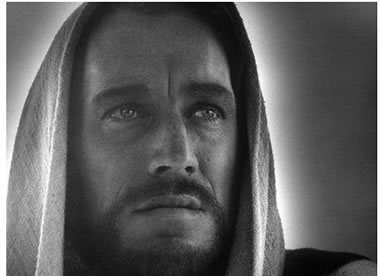
After this brief but insightful introduction, Tatum sets out exploring fifteen Jesus films and how their producers responded to, and even influenced later responses to, these problems. Unlike Reinhartz, Tatum also pays close attention to the changing techniques in the movie industry that influenced the ways in which filmmakers could respond to these problems. Throughout each analysis, Tatum provides an introduction to the production of the film, a discussion of its plot/structure, the type of Jesus presented, and audience/critical responses to the film. While each sub-section is fascinating in its own way, his thoughts on the portrayals of Jesus are most attentive and helpful. From Jesus as Incarnate Word in George Stevens’ The Greatest Story Ever Told (1965) to Jesus as Prophet and Apocalyptist in Denys Arcand’s Jesus of Montreal (1990), these cinematic portrayals of Jesus are as diverse as the sermons about him in churches across the globe.
Jesus at the Movies is a true gift to the field of film and religion because Tatum takes the history of the former so seriously and considers how it responded to and affected religious consciousness. Film buffs and novices alike will appreciate this text, and religious studies students, or religious folk in general, will certainly be challenged by the cinematic Christologies that Tatum uncovers.
Previous Post

January 6, 2009
Little Britain USA: A Review
Next Post
January 12, 2009 Go On, Get Happy!
Browse Our Archives
Select a Category Classics DVD Film Music News Pop Culture Events Print Sports Television Uncategorized Video Games
Select a Month March 2017 February 2017 January 2017 December 2016 November 2016 October 2016 September 2016 August 2016 July 2016 June 2016 May 2016 April 2016 March 2016 February 2016 January 2016 December 2015 November 2015 October 2015 September 2015 August 2015 July 2015 June 2015 May 2015 April 2015 March 2015 February 2015 January 2015 December 2014 November 2014 October 2014 September 2014 August 2014 July 2014 June 2014 May 2014 April 2014 March 2014 February 2014 January 2014 December 2013 November 2013 October 2013 September 2013 August 2013 July 2013 June 2013 May 2013 April 2013 March 2013 February 2013 January 2013 December 2012 November 2012 October 2012 September 2012 August 2012 July 2012 June 2012 May 2012 April 2012 March 2012 February 2012 January 2012 December 2011 November 2011 October 2011 September 2011 August 2011 July 2011 June 2011 May 2011 April 2011 March 2011 February 2011 January 2011 December 2010 November 2010 October 2010 September 2010 August 2010 July 2010 June 2010 May 2010 April 2010 March 2010 February 2010 January 2010 December 2009 November 2009 October 2009 September 2009 August 2009 July 2009 June 2009 May 2009 April 2009 March 2009 February 2009 January 2009 December 2008 November 2008 October 2008 September 2008 August 2008 July 2008 June 2008 May 2008 April 2008 March 2008 February 2008 January 2008 December 2007 November 2007 October 2007 September 2007 August 2007 July 2007 June 2007 May 2007 April 2007 March 2007
Follow Us!
TAKE THE
Religious Wisdom Quiz
Place me like a seal over your heart, for love is as strong as death and burns like what?
Select your answer to see how you score.
The sun Lightning A torch A blazing flame
Related posts from Pop Theology


#KillerSerials: An Interview with Kutter Callaway

Book Review: MUSLIMS AND THE MAKING OF AMERICA

TRENDING AT PATHEOS Progressive Christian

Why Christians Have a Sacred Duty to Vote:...
The Bible offers strong support for the sacred duty to vote. Here...

What Being a Modern-Day Apostle Means to Me
In my last column, I discussed the ins and outs of modern-day...

Did Ancient China Once Worship the God of...
Across human history, a common thread weaves through the origins of the...

Love Your Neighbor – Including Earth-Kin: Lev. 19,...
God’s command to love your neighbor means acting in an ethical and...

Lead a Church Study of “Jesus and Lao...
Guest writer Jack Thomas (The Irreverent Reverend) reflects on leading his church...

Principles for Understanding the Apostolic Ministry Today
Whenever people discover that my formal ministry title is "apostle," as in...
view all Progressive Christian blogs
Ad-Free & Subscriber Log-In Subscription Support
- About Us
- 2026 Calendar
- Videos
- Podcasts
- Library of World Religions
- Faith In Media Tracker
- Advertise With Us
- Write for Us
- Privacy Policy
- Terms of Service
- Do Not Sell My Data
- Contact Us
- Radiant Digital
- Manage Newsletter Subscriptions
- Unsubscribe From Notifications
- Sitemap
Copyright 2008-2026, Patheos. All rights reserved.
Subscription Support Ad-Free & Subscriber Log-In
Follow Patheos