
BuddhistCatholicContemplativeEvangelicalGeneral ChristianHinduJewishLatter-day SaintMuslimNew VisionsProgressive Christian
Beliefs
- Buddhist
- Catholic
- Contemplative
- Evangelical
- General Christian
- Hindu
- Jewish
- Latter-day Saint
- More Voices
- Muslim
- New Visions
- Pagan
- Progressive Christian
Topics
- Religion News
- Food and Religion
- Sports and Religion
- Religious Art
- Religious Music and Entertainment
- Religious Events
- History and Religion
- Style and Religion
- Politics and Religion
- Women in Religion
- Recreation Outdoors and Religion
- Business Finance and Religion
- Careers Workplace and Religion
- Education and Religion
- Family Parenting and Religion
- Health Fitness and Religion
- Home and Religion
- Relationships and Religion
- Technology and Religion
- Travel and Religion
Columnists
- Buddhist Columnists
- Business Finance and Religion Columnists
- Careers Workplace and Religion Columnists
- Catholic Columnists
- Contemplative Columnists
- Education and Religion Columnists
- Evangelists Columnists
- Family Parenting and Religion Columnists
- General Christian Columnists
- Health Fitness and Religion Columnists
- Hindu Columnists
- History and Religion Columnists
- Home and Religion Columnists
- Jewish Columnists
- More Voices Columnists
- Latter Day Columnists
- Muslim Columnists
- New Visions Columnists
- Nonreligious Columnists
- Pagan Columnists
- Politics and Religion Columnists
- Progressive Columnists
- Recreation Outdoors and Religion Columnists
- Relationships and Religion Columnists
- Religion News Columnists
- Religious Art Columnists
- Religious Events Columnists
- Religious Music and Entertainment Columnists
- Sports and Religion Columnists
- Style and Religion Columnists
- Technology and Religion Columnists
- Travel and Religion Columnists
- Women in Religion Columnists
Resource Library
- 2026 Calendar
- Library of World Religions
- The 100 Most Holy Places on Earth
- Patheos Answers
- Podcasts
- Videos
- Faith Leaders Database
- Anglican Episcopalian
- Bahai
- Baptist
- Buddhism
- Christianity
- Confucianism
- Eastern Orthodoxy
- Hinduism
- Holiness and Pentecostal
- ISKCON
- Islam
- Judaism
- Lutheran
- Methodist
- The Church of Jesus Christ of Latter-day Saints
- New Age
- Paganism
- Presbytarian and Reformed
- Protestantism
- Religion Behind the Scenes
- Roman Catholic
- Scientology
- Shia Islam
- Sikhism
- Sufism
- Sunni Islam
- Taoism
- Zen
- See all religions
Research Tools
 Ad-Free & Subscriber Log-In Subscription Support
Ad-Free & Subscriber Log-In Subscription Support
Follow Patheos 

- Trending:
- Forgiveness
- |
- Marriage
- |
- Consciousness
- |
- Death Penalty
- |
- Election
- |
- Halloween
 Pop Theology
- Home
- Progressive Christian
- Religious Music & Entertainment
- Virtual Dystopia
Virtual Dystopia
Last updated on: November 10, 2008 at 11:25 am by J. Ryan Parker
Virtual Dystopia 2008-11-10T11:25:53-08:00 J. Ryan Parker
Patheos Explore the world's faith through different perspectives on religion and spirituality! Patheos has the views of the prevalent religions and spiritualities of the world.

One of the most interesting parts of Conrad Ostwalt’s book, Secular Steeples, is his comparison of secular and sacred apocalyptic films. One of the characteristics of secular apocalyptic films is that humans must and do overcome the apocalyptic threat before them through world unity, technological advancements, military might, etc. Contrary to this, sacred apocalyptic films wait for God to act decisively while humans must endure the violence around them. Lately, I have observed a string of video games that mirror Ostwalt’s secular apocalyptic criteria. Games like Fallout 3 and Resistance 2 might just seem like re-hashed first person shooters, and while Mirror’s Edge abandons weapons for acrobatics, their worlds beg further analysis.
Amid all the election talk last Monday, NPR aired an interview with film critic/historian David Thomson. During the interview, he suggested that some of America’s best films were made during times of great national crisis, like The Great Depression for example. He claimed that during those times, people were starved for truth regarding and firm answers to the problems they faced. Filmmakers, in search of the same, responded with more honest films. Thomson expressed some measured excitement over and hope for the possibility of great filmmaking to emerge during the tough times that our nation currently faces.
I wonder if the same cannot be said of the video game industry. Will creators, faced with the same crises, respond as effectively and as imaginatively? In recent years, creators have focused more intensely on story, seeking out narratives that catch up to graphics in terms of beauty and intrigue. Are games like Fallout 3, Resistance 2, and Mirror’s Edge, all games with some virtual dystopic element, responses to the threat of real world dystopia.
Apocalyptic themes in video games are not unique to the twenty-first century. They can be found throughout the history of video games from the controversial Doom series to the various Terminator film video game remakes. So, in a way, the video games about which I write here are nothing revolutionary. Wikipedia offers a category of post-apocalyptic video games that includes well over 50 titles (and is in need of updating). In fact, the numbers attached to the end of the first two games discussed here should tell us something. Fallout 3 is the third installment in a series of popular apocalyptic video games on the PC. Resistance 2 is a follow up to the surprise success of Resistance: Fall of Man, a first-person shooter exclusively for the PS3.
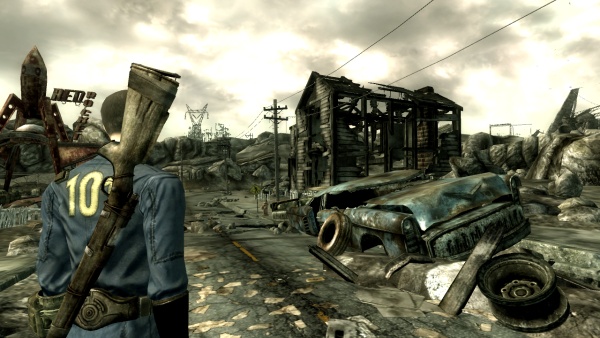 Fallout 3 takes place in a post-apocalyptic Washington, D.C., and, as the main character, you are one of the survivors. Born in a large, sophisticated bomb shelter, you have never seen the outside world until now. As a young adult, you manage to escape and find the outside world ravaged by what was surely an atomic bomb. Survivors have huddled together in shanty towns (villages). The monuments of D.C. off in the horizon are ashen husks of their former glory. You are in search of your father and can find him by interacting with other survivors, helping them with various tasks in return for information. All the while, you have to battle fearsome mutants and gigantic cockroaches (they really do survive nuclear holocaust). Oh, and along the way, you will decide the fate of more than one city through your actions. In the vein of the Grand Theft Auto series, the world is very much open for exploration. You are free to explore as you please, although acquiring certain items, weapons, and skills will make further exploration much more manageable. (I paid dearly for crossing the river to check out the monuments straight out of the bomb shelter). The ways in which you interact with others affects your character’s attributes and just how trusting of you future acquaintances will be. Virtual karma.
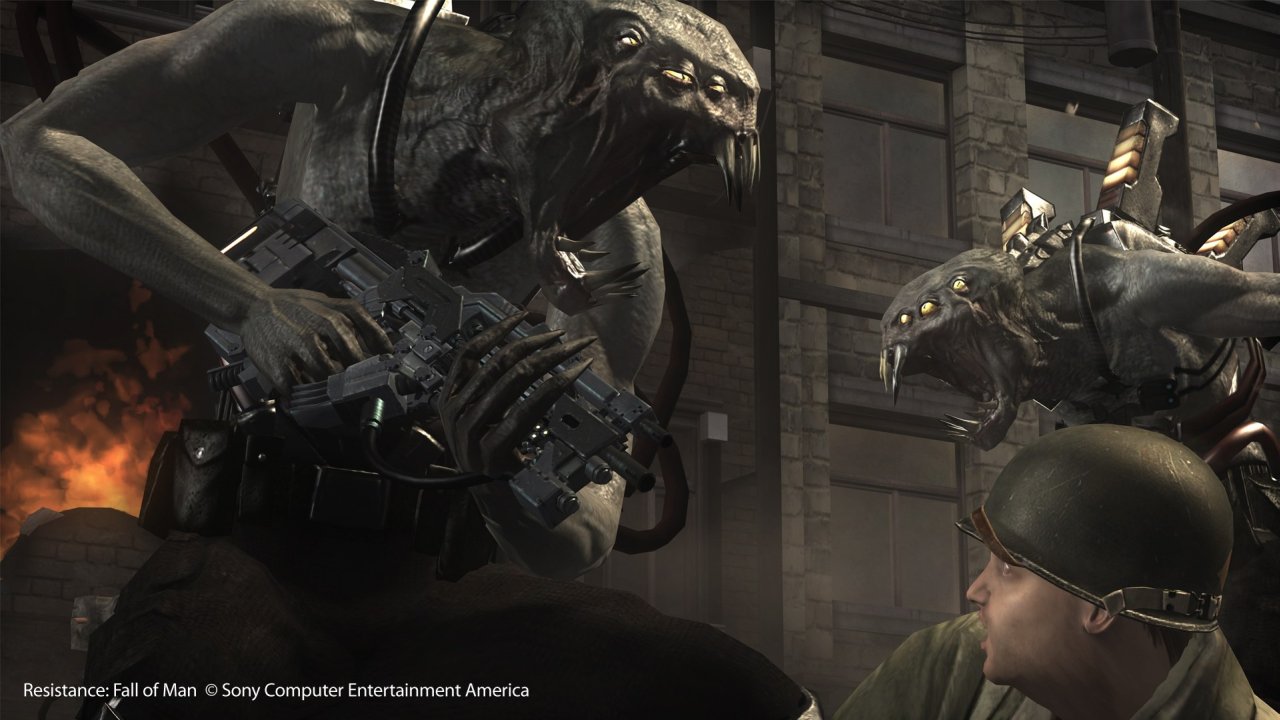
In Resistance 2, the alien Chimera virus that plagued Europe in Resistance: Fall of Man has now spread to the United States. As the main character, Nathan Hale, you find yourself in the midst of the apocalyptic battle with the mutant invaders across the country. Far from waiting on some divine assistance, you arm yourself to the teeth with massively over-sized weapons, a la Gears of War, and meet the enemy head on. Apparently the game’s only shortcoming, according to critics, is its weak story line. The creators have downplayed narrative and clearly emphasized non-stop action with everything larger than life. This too is an apparent short-coming of it’s XBOX 360 counterpart, Gears of War. One of Resistance 2‘s many strengths, however, is its massive online functionality which boasts competitive and cooperative modes that will keep players engaged well beyond the completion of the campaign mode.
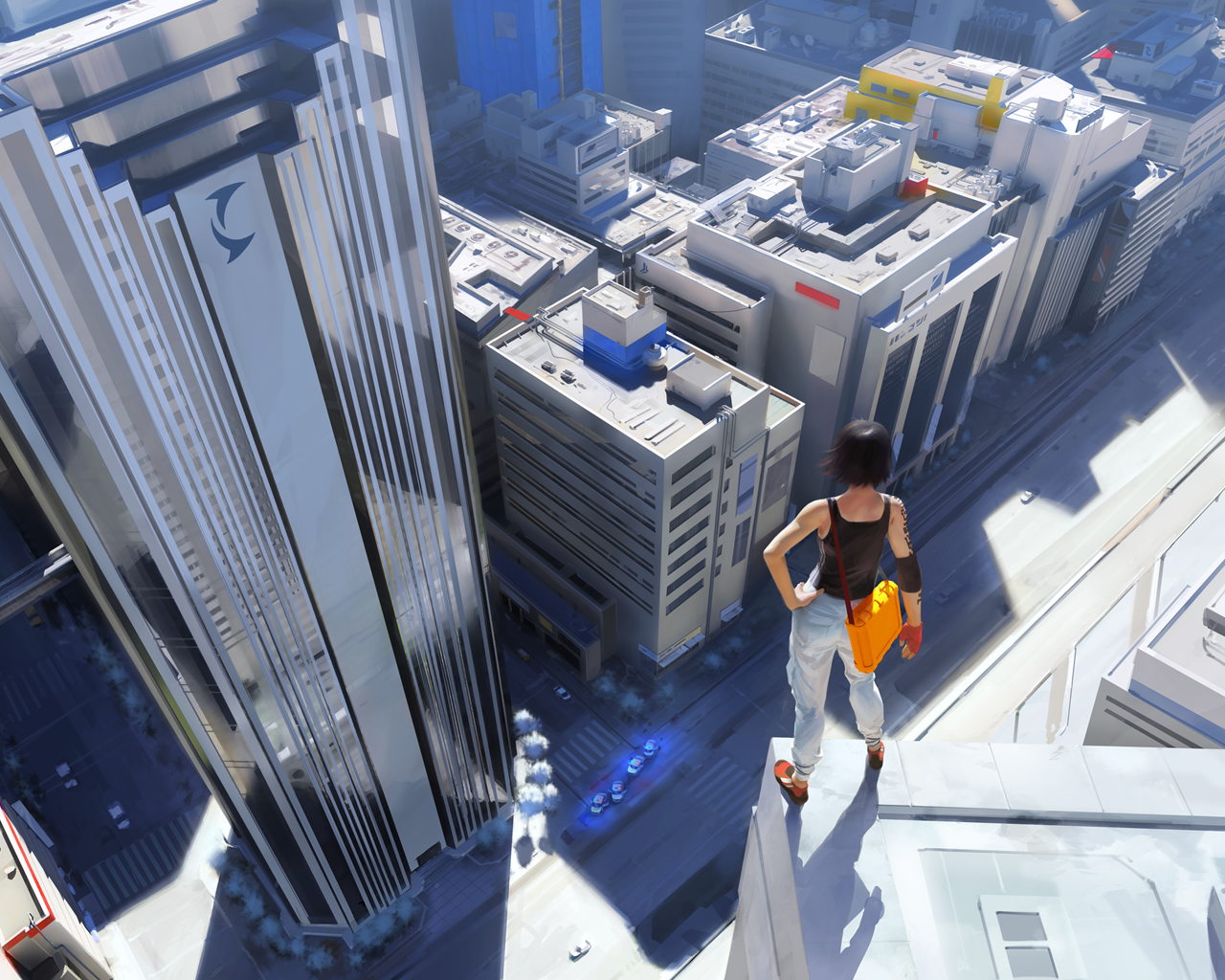 Mirror’s Edge is simply unlike any other game out there. It takes place in a world that is much more beautiful and attractive, and much less explicitly violent, than Fallout 3 or Resistance 2. Set in the not-too-distant future, the game’s glossy, pristine city is a veneer for a much more disturbing reality. The government watches everyone and everything. Behave, and you are fine…step out of line, and you are finished. As the main character, Faith, you operate as a runner transmitting packages and information for your clients. With the police mildly interested in your work, at least enough to shoot at you or pursue you, you get the sense that you are not only serving criminals, but revolutionaries that would seek to overthrow a pseudo-fascist government. The game encourages non-lethal combat to disarm the police as the focus is on the completion of missions as fast as possible. (There will be online competitions and rankings to see who is the fastest at competing each level). Mirror’s Edge draws on the growing popularity of parkour and free running which see cities as giant playgrounds with limitless potential for injury (death?)-defying stunts and movement.
There is no one explanation for the release of these films and their use of (post) apocalyptic, dystopic worlds. Certainly money is an issue, especially where sequels are involved. In the case of Mirror’s Edge, we have a fresh idea and gameplay on our hands. But what of the audience reaction to these films? Their financial viability signals an enthusiastic, eager audience. Perhaps these games simply allow us the ability to literally play out these critical scenarios. Like watching horror films, we can live out, or play out, our fears, or at least these scenarios. Terror does play a crucial role in Fallout 3 and Resistance 2, while the adrenaline from being pursued or shot at in Mirror’s Edge boosts your character’s performance.
These games are violent to varying degrees, with Resistance 2‘s blood-and-guts-shoot-em-up the most over-the-top of the three. You can minimize violent contact in Fallout 3, but if you do engage enemies, you can target heads and limbs for gruesomely explosive shots. In fact, the new combat system and visuals in the game heighten your actions and their consequences. So these games, despite their varying compelling story lines and settings, will still find themselves in the on-going discussion of video game violence and gamers’ obsession with violent product.
Yet these settings and their story lines are no doubt responsible for the overwhelmingly positive reviews that they have garnered thus far. Perhaps these stories and settings provide a welcome break from the World War II re-hashes that have made the Call of Duty war video game series so popular. In fact, this series has quickly and virtually responded to changes in real life warfare and how we fight terrorism. One of the most recent installments, Call of Duty 4: Modern Warfare, has you playing as a team up of British and American special forces in a hunt from Baghdad to Russia for a terrorist mastermind. Perhaps the games discussed here are an extension of that transition and an expression not of how we fight, but of our fears of war and the results of it.
Previous Post

November 7, 2008
New Homebrewed Christianity Podcast
Next Post
November 13, 2008 A Bloody Mess...
Browse Our Archives
Select a Category Classics DVD Film Music News Pop Culture Events Print Sports Television Uncategorized Video Games
Select a Month March 2017 February 2017 January 2017 December 2016 November 2016 October 2016 September 2016 August 2016 July 2016 June 2016 May 2016 April 2016 March 2016 February 2016 January 2016 December 2015 November 2015 October 2015 September 2015 August 2015 July 2015 June 2015 May 2015 April 2015 March 2015 February 2015 January 2015 December 2014 November 2014 October 2014 September 2014 August 2014 July 2014 June 2014 May 2014 April 2014 March 2014 February 2014 January 2014 December 2013 November 2013 October 2013 September 2013 August 2013 July 2013 June 2013 May 2013 April 2013 March 2013 February 2013 January 2013 December 2012 November 2012 October 2012 September 2012 August 2012 July 2012 June 2012 May 2012 April 2012 March 2012 February 2012 January 2012 December 2011 November 2011 October 2011 September 2011 August 2011 July 2011 June 2011 May 2011 April 2011 March 2011 February 2011 January 2011 December 2010 November 2010 October 2010 September 2010 August 2010 July 2010 June 2010 May 2010 April 2010 March 2010 February 2010 January 2010 December 2009 November 2009 October 2009 September 2009 August 2009 July 2009 June 2009 May 2009 April 2009 March 2009 February 2009 January 2009 December 2008 November 2008 October 2008 September 2008 August 2008 July 2008 June 2008 May 2008 April 2008 March 2008 February 2008 January 2008 December 2007 November 2007 October 2007 September 2007 August 2007 July 2007 June 2007 May 2007 April 2007 March 2007
Follow Us!
TAKE THE
Religious Wisdom Quiz
What does "Sabbath" mean?
Select your answer to see how you score.
Worship Sacrifice Rest Holy
Related posts from Pop Theology

The Best Movie You'll Play All Year


TRENDING AT PATHEOS Progressive Christian

Why Christians Have a Sacred Duty to Vote:...
The Bible offers strong support for the sacred duty to vote. Here...

What Being a Modern-Day Apostle Means to Me
In my last column, I discussed the ins and outs of modern-day...

Did Ancient China Once Worship the God of...
Across human history, a common thread weaves through the origins of the...

Love Your Neighbor – Including Earth-Kin: Lev. 19,...
God’s command to love your neighbor means acting in an ethical and...

Lead a Church Study of “Jesus and Lao...
Guest writer Jack Thomas (The Irreverent Reverend) reflects on leading his church...

Principles for Understanding the Apostolic Ministry Today
Whenever people discover that my formal ministry title is "apostle," as in...
view all Progressive Christian blogs
Ad-Free & Subscriber Log-In Subscription Support
- About Us
- 2026 Calendar
- Videos
- Podcasts
- Library of World Religions
- Faith In Media Tracker
- Advertise With Us
- Write for Us
- Privacy Policy
- Terms of Service
- Do Not Sell My Data
- Contact Us
- Radiant Digital
- Manage Newsletter Subscriptions
- Unsubscribe From Notifications
- Sitemap
Copyright 2008-2026, Patheos. All rights reserved.
Subscription Support Ad-Free & Subscriber Log-In
Follow Patheos