
BuddhistCatholicContemplativeEvangelicalGeneral ChristianHinduJewishLatter-day SaintMuslimNew VisionsProgressive Christian
Beliefs
- Buddhist
- Catholic
- Contemplative
- Evangelical
- General Christian
- Hindu
- Jewish
- Latter-day Saint
- More Voices
- Muslim
- New Visions
- Pagan
- Progressive Christian
Topics
- Religion News
- Food and Religion
- Sports and Religion
- Religious Art
- Religious Music and Entertainment
- Religious Events
- History and Religion
- Style and Religion
- Politics and Religion
- Women in Religion
- Recreation Outdoors and Religion
- Business Finance and Religion
- Careers Workplace and Religion
- Education and Religion
- Family Parenting and Religion
- Health Fitness and Religion
- Home and Religion
- Relationships and Religion
- Technology and Religion
- Travel and Religion
Columnists
- Buddhist Columnists
- Business Finance and Religion Columnists
- Careers Workplace and Religion Columnists
- Catholic Columnists
- Contemplative Columnists
- Education and Religion Columnists
- Evangelists Columnists
- Family Parenting and Religion Columnists
- General Christian Columnists
- Health Fitness and Religion Columnists
- Hindu Columnists
- History and Religion Columnists
- Home and Religion Columnists
- Jewish Columnists
- More Voices Columnists
- Latter Day Columnists
- Muslim Columnists
- New Visions Columnists
- Nonreligious Columnists
- Pagan Columnists
- Politics and Religion Columnists
- Progressive Columnists
- Recreation Outdoors and Religion Columnists
- Relationships and Religion Columnists
- Religion News Columnists
- Religious Art Columnists
- Religious Events Columnists
- Religious Music and Entertainment Columnists
- Sports and Religion Columnists
- Style and Religion Columnists
- Technology and Religion Columnists
- Travel and Religion Columnists
- Women in Religion Columnists
Resource Library
- 2026 Calendar
- Library of World Religions
- The 100 Most Holy Places on Earth
- Patheos Answers
- Podcasts
- Videos
- Faith Leaders Database
- Anglican Episcopalian
- Bahai
- Baptist
- Buddhism
- Christianity
- Confucianism
- Eastern Orthodoxy
- Hinduism
- Holiness and Pentecostal
- ISKCON
- Islam
- Judaism
- Lutheran
- Methodist
- The Church of Jesus Christ of Latter-day Saints
- New Age
- Paganism
- Presbytarian and Reformed
- Protestantism
- Religion Behind the Scenes
- Roman Catholic
- Scientology
- Shia Islam
- Sikhism
- Sufism
- Sunni Islam
- Taoism
- Zen
- See all religions
Research Tools
 Ad-Free & Subscriber Log-In Subscription Support
Ad-Free & Subscriber Log-In Subscription Support
Follow Patheos 

- Trending:
- Forgiveness
- |
- Marriage
- |
- Consciousness
- |
- Death Penalty
- |
- Election
- |
- Halloween
 Pop Theology
- Home
- Progressive Christian
- Religious Music & Entertainment
- Jesus of Hollywood, A Review
Jesus of Hollywood, A Review
Last updated on: November 30, 2008 at 9:56 pm by J. Ryan Parker
Jesus of Hollywood, A Review 2008-11-30T21:56:36-08:00 J. Ryan Parker
Patheos Explore the world's faith through different perspectives on religion and spirituality! Patheos has the views of the prevalent religions and spiritualities of the world.

Few books on film and religion are as insightful as Adele Reinhartz’s Jesus of Hollywood. Here, she blends film scholarship with scriptural analysis and cultural studies in seamless fashion. She not only gives close readings of the Jesus story as told in the Gospels, but she shows how close viewings of Jesus films can highlight the differences between the four scriptural accounts as well. In the process, she explodes many preconceived notions that we might have about the scriptural Jesus stories and Jesus films while posing serious questions regarding the theological and cultural implications of each.
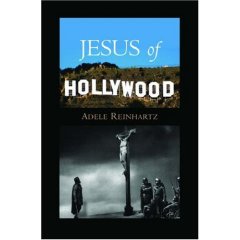 Reinhartz begins her conclusion by writing, “If the historical Jesus of Nazareth was the unique and only Son of God, as the Gospels proclaim, then Jesus of Hollywood is his opposite–multiple, diverse, and born of many parents” (252). All we need to do to verify her claim is watch From the Manger to the Cross (1912) and The Passion of the Christ (2004) to see these differences. Throughout her book, Reinhartz breaks down the Jesus story into its component characters and events. Analyzing nearly everything from Jesus himself to Satan, she discusses the cultural influences on these representations and how they reveal the films’ social locations and their ability to continually speak to audiences today. For the most part, each chapter takes the form of a scriptural and cinematic back-and-forth. Beginning with a theme, say Mary Magdalene for example, Reinhartz chronicles scriptural accounts and then analyzes how filmmakers have adapted them in Jesus movies throughout film history.
Reinhartz begins by discussing Jesus movies as biopics (feature film biographies), drawing from scholar George F. Custen’s book, Bio/Pics: How Hollywood Constructed Public History, in the process. The strong similarities are numerous. These types of film, even the Jesus ones, are “fundamentally fictional narratives.” Though they make claims to historical accuracy, they necessarily and inevitably undermine these claims through their very nature as films. They contain cast members that in no way represent (physically accurately) the characters that they seek to embody and the dialogue/language is never genuine. In the cases of films like Jesus Christ Superstar (1973), Godspell (1973), or Life of Brian (1979), the historical inaccuracies are even more prevalent.
For Reinhartz, the blessing and curse for makers of Jesus films are the overwhelming scriptural gaps regarding nearly every participant in the Jesus story, including the titular character himself. Thus, the ways in which filmmakers choose to fill in these gaps and to adapt the “givens” reveals volumes about their socio-historical locations. For example, Reinhartz’s analysis of the representations of the Jewish public and the Jewish character Caiaphas reveals a stark contrast between pre- and post-World War II Jesus films as public perceptions of or instances of anti-Semitism changed with increasing access to Holocaust news and images. Given the four versions of the scriptural Jesus story and the gaps therein, specifically the lack of visual or aural clues, filmmakers face paramount decisions. As such, Reinhartz concludes, “[…The] Jesus of the biopics reflects our own societies and cultures more than he illuminates the historical Jesus whose story these movies purport to tell” (10).
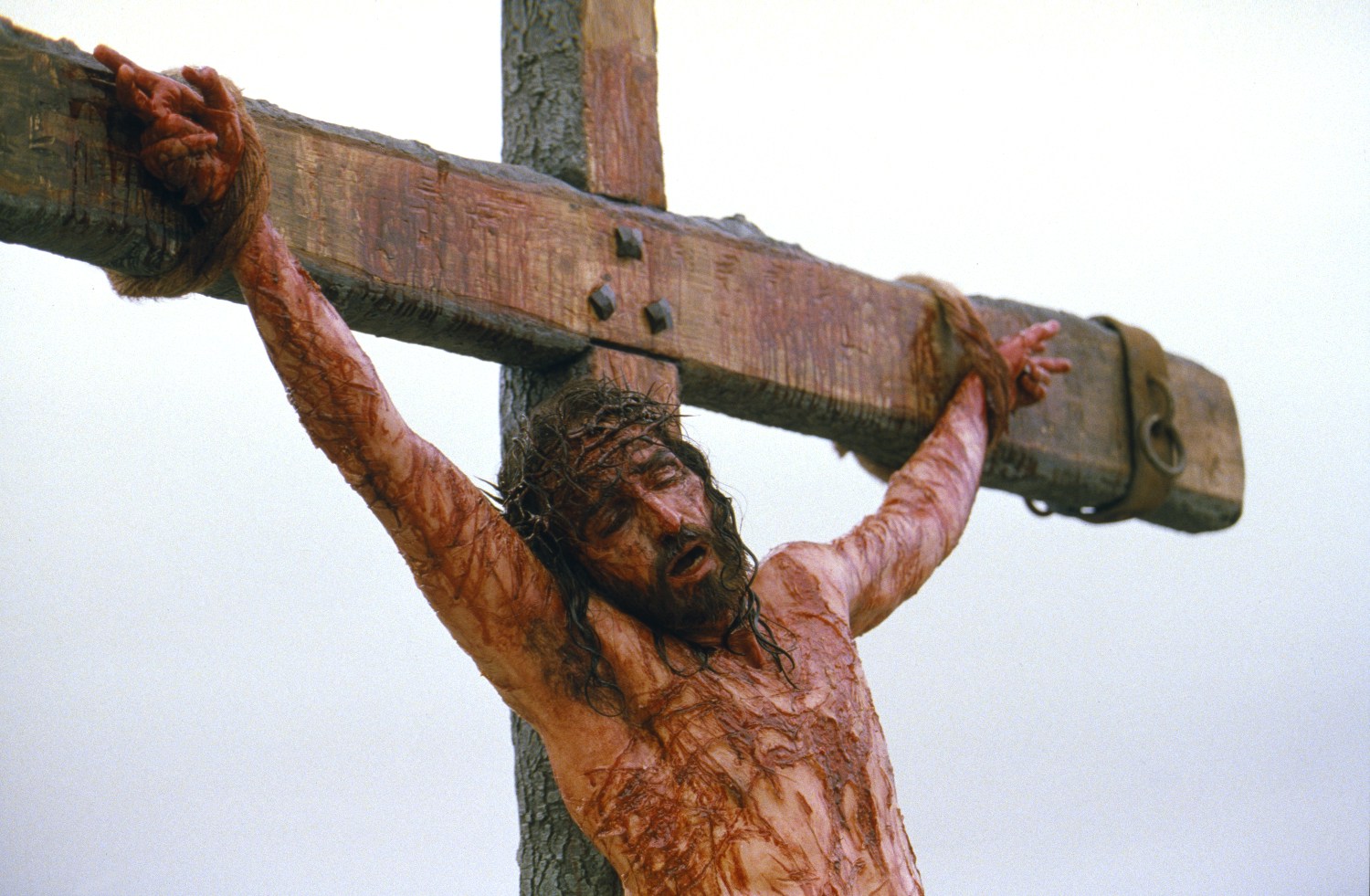
While there is a great amount of truth to her assertion, I also believe that Reinhartz’s scholarship betrays it as well. In her process of screening these Jesus films, she looks at scripture repeatedly and clearly arrives at insightful lessons with each reading. While cinematic Jesuses will never fully enhance our knowledge of the historical Jesus as a person, they can challenge our interaction with scripture and shape our developing theologies and Christologies. For example, filmmakers’ decisions to show or omit Jesus’ miracles and the ways in which they do so have direct implications for our perceptions of Jesus as a divine-human being. So too the films’ representation of Jesus’ death and resurrection. In writing about The Passion of the Christ, Reinhartz argues:
Obviously Gibson himself believes in Jesus’ divinity, and expects that the reader will do the same. But for some viewers, the film has the opposite effect. Far from perceiving Jesus’ identity as the Son of God through his ability to endure the extreme suffering inflicted upon him, some viewers may fail even to perceive his humanity. The reason is simple: the relentless, numbing violence. For most of the film Jesus does not resemble a man so much as a hunk of raw meat. By reducing Jesus to an oozing pulp, Gibson has also demoted him from a human-divine being to a subhuman one. If Gibson intended to show Jesus’ superhuman forbearance, he also made it almost impossible to feel compassion or concern as the relentless beating and bleeding prevent us from seeing Jesus as anything more than the broken body that becomes his own. It is no wonder that some scholars and reviewers have referred to this film as religious pornography. Not only is Jesus’ divine identity erased but his human identity is too. (121)
Reinhartz’s chapters on Judas, Caiaphas, and Pilate are also especially interesting and entertaining. Reinhartz reveals Judas to be the most compelling character in the Jesus story, and one certainly deserving of repeated study and discussion. Her analysis of the cinematic Judas and the close reading of his scriptural appearances paint a far more sympathetic character than many of us may remember. Again, her discussions of Caiaphas and Pilate concentrate on how the Gospel writers and “Jesus filmmakers” use them to either enhance or downplay Jewish involvement in the crucifixion of Jesus.
Some readers will see similarities between Reinhartz’s work and Margaret Miles’ book, Seeing and Believing: Religion and Values in the Movies. However, in an important footnote, Reinhartz stresses their differences. Where Miles is less concerned with films as such, Reinhartz “does not bracket out the films as such but also looks closely at the relationship between the film and the Gospels, characterizations, and other features of the film as a text” (258, fn 12). In her analysis of the representation of Joseph in Jesus films, she notes the relatively consistent distance between Joseph and Jesus compared to the proximity between Jesus and Mary. This repeated mis-en-scene (or framing) is an explicit attribute of the film and a point that a much more cultural studies centered approach like Miles’ might miss.
While Reinhartz is clearly aware of the breadth of Jesus films throughout history, she consistently returns to the “biggies” like The Passion of the Christ, The Last Temptation of Christ (1988), King of Kings (1961), and The King of Kings (1927). However, she does give attention to some lesser known silent versions like INRI (1923) and Der Galilaer (1921). Published before the release of 2006’s The Nativity Story, any subsequent edition of this book will no doubt benefit from this film’s fresh focus on the character of Joseph. Film buffs or novices, religious studies students or lay persons will all find this book a beneficial and challenging read that will no doubt change they way they read about and watch Jesus.
Previous Post

November 27, 2008
Happy Thanksgiving!
Next Post
December 2, 2008 Intergalactic Prolepsis
Browse Our Archives
Select a Category Classics DVD Film Music News Pop Culture Events Print Sports Television Uncategorized Video Games
Select a Month March 2017 February 2017 January 2017 December 2016 November 2016 October 2016 September 2016 August 2016 July 2016 June 2016 May 2016 April 2016 March 2016 February 2016 January 2016 December 2015 November 2015 October 2015 September 2015 August 2015 July 2015 June 2015 May 2015 April 2015 March 2015 February 2015 January 2015 December 2014 November 2014 October 2014 September 2014 August 2014 July 2014 June 2014 May 2014 April 2014 March 2014 February 2014 January 2014 December 2013 November 2013 October 2013 September 2013 August 2013 July 2013 June 2013 May 2013 April 2013 March 2013 February 2013 January 2013 December 2012 November 2012 October 2012 September 2012 August 2012 July 2012 June 2012 May 2012 April 2012 March 2012 February 2012 January 2012 December 2011 November 2011 October 2011 September 2011 August 2011 July 2011 June 2011 May 2011 April 2011 March 2011 February 2011 January 2011 December 2010 November 2010 October 2010 September 2010 August 2010 July 2010 June 2010 May 2010 April 2010 March 2010 February 2010 January 2010 December 2009 November 2009 October 2009 September 2009 August 2009 July 2009 June 2009 May 2009 April 2009 March 2009 February 2009 January 2009 December 2008 November 2008 October 2008 September 2008 August 2008 July 2008 June 2008 May 2008 April 2008 March 2008 February 2008 January 2008 December 2007 November 2007 October 2007 September 2007 August 2007 July 2007 June 2007 May 2007 April 2007 March 2007
Follow Us!
TAKE THE
Religious Wisdom Quiz
Which Psalm contains the phrase, "Be still, and know that I am God"?
Select your answer to see how you score.
Psalm 100 Psalm 8 Psalm 46 Psalm 91
Related posts from Pop Theology


#KillerSerials: An Interview with Kutter Callaway

Book Review: MUSLIMS AND THE MAKING OF AMERICA

TRENDING AT PATHEOS Progressive Christian

Why Christians Have a Sacred Duty to Vote:...
The Bible offers strong support for the sacred duty to vote. Here...

What Being a Modern-Day Apostle Means to Me
In my last column, I discussed the ins and outs of modern-day...

Did Ancient China Once Worship the God of...
Across human history, a common thread weaves through the origins of the...

Love Your Neighbor – Including Earth-Kin: Lev. 19,...
God’s command to love your neighbor means acting in an ethical and...

Lead a Church Study of “Jesus and Lao...
Guest writer Jack Thomas (The Irreverent Reverend) reflects on leading his church...

Principles for Understanding the Apostolic Ministry Today
Whenever people discover that my formal ministry title is "apostle," as in...
view all Progressive Christian blogs
Ad-Free & Subscriber Log-In Subscription Support
- About Us
- 2026 Calendar
- Videos
- Podcasts
- Library of World Religions
- Faith In Media Tracker
- Advertise With Us
- Write for Us
- Privacy Policy
- Terms of Service
- Do Not Sell My Data
- Contact Us
- Radiant Digital
- Manage Newsletter Subscriptions
- Unsubscribe From Notifications
- Sitemap
Copyright 2008-2026, Patheos. All rights reserved.
Subscription Support Ad-Free & Subscriber Log-In
Follow Patheos