
BuddhistCatholicContemplativeEvangelicalGeneral ChristianHinduJewishLatter-day SaintMuslimNew VisionsProgressive Christian
Beliefs
- Buddhist
- Catholic
- Contemplative
- Evangelical
- General Christian
- Hindu
- Jewish
- Latter-day Saint
- More Voices
- Muslim
- New Visions
- Pagan
- Progressive Christian
Topics
- Religion News
- Food and Religion
- Sports and Religion
- Religious Art
- Religious Music and Entertainment
- Religious Events
- History and Religion
- Style and Religion
- Politics and Religion
- Women in Religion
- Recreation Outdoors and Religion
- Business Finance and Religion
- Careers Workplace and Religion
- Education and Religion
- Family Parenting and Religion
- Health Fitness and Religion
- Home and Religion
- Relationships and Religion
- Technology and Religion
- Travel and Religion
Columnists
- Buddhist Columnists
- Business Finance and Religion Columnists
- Careers Workplace and Religion Columnists
- Catholic Columnists
- Contemplative Columnists
- Education and Religion Columnists
- Evangelists Columnists
- Family Parenting and Religion Columnists
- General Christian Columnists
- Health Fitness and Religion Columnists
- Hindu Columnists
- History and Religion Columnists
- Home and Religion Columnists
- Jewish Columnists
- More Voices Columnists
- Latter Day Columnists
- Muslim Columnists
- New Visions Columnists
- Nonreligious Columnists
- Pagan Columnists
- Politics and Religion Columnists
- Progressive Columnists
- Recreation Outdoors and Religion Columnists
- Relationships and Religion Columnists
- Religion News Columnists
- Religious Art Columnists
- Religious Events Columnists
- Religious Music and Entertainment Columnists
- Sports and Religion Columnists
- Style and Religion Columnists
- Technology and Religion Columnists
- Travel and Religion Columnists
- Women in Religion Columnists
Resource Library
- 2026 Calendar
- Library of World Religions
- The 100 Most Holy Places on Earth
- Patheos Answers
- Podcasts
- Videos
- Faith Leaders Database
- Anglican Episcopalian
- Bahai
- Baptist
- Buddhism
- Christianity
- Confucianism
- Eastern Orthodoxy
- Hinduism
- Holiness and Pentecostal
- ISKCON
- Islam
- Judaism
- Lutheran
- Methodist
- The Church of Jesus Christ of Latter-day Saints
- New Age
- Paganism
- Presbytarian and Reformed
- Protestantism
- Religion Behind the Scenes
- Roman Catholic
- Scientology
- Shia Islam
- Sikhism
- Sufism
- Sunni Islam
- Taoism
- Zen
- See all religions
Research Tools
 Ad-Free & Subscriber Log-In Subscription Support
Ad-Free & Subscriber Log-In Subscription Support
Follow Patheos 

- Trending:
- Forgiveness
- |
- Marriage
- |
- Consciousness
- |
- Death Penalty
- |
- Election
- |
- Halloween
 Pop Theology
- Home
- Progressive Christian
- Religious Music & Entertainment
- W.: A Pop Theology Dialogue
W.: A Pop Theology Dialogue
Last updated on: October 29, 2008 at 7:40 am by J. Ryan Parker
W.: A Pop Theology Dialogue 2008-10-29T07:40:14-07:00 J. Ryan Parker
Patheos Explore the world's faith through different perspectives on religion and spirituality! Patheos has the views of the prevalent religions and spiritualities of the world.
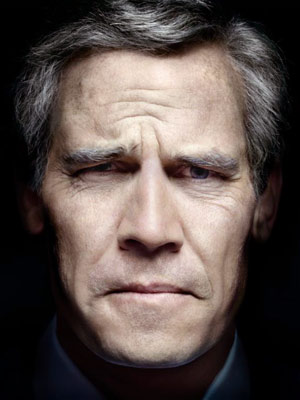
We are trying something new here at Pop Theology. I recently went to see W. with a few friends including Pop Theology contributor Richard Lindsay. We immediately thought that a conversation about the film might be a great way to approach it rather than just a simple review. As most everyone knows, Oliver Stone‘s W. focuses on George W. Bush’s rise to the White House and then the run-up to the invasion of Iraq. While there is much to talk about here in terms of brilliant filmmaking from Stone and acting from Josh Brolin, Richard and I wanted to talk about some of the religious, spiritual, and theological implications of the film. Richard: It was great to see W. with you last week. It sort of put an explanation point on this run-on sentence of an election season we have endured. Really, what will we do for entertainment when all the votes are cast and miscounted and it’s all over but the lawsuits? I am in awe of the cajones it took Oliver Stone to produce a biopic about a sitting president. He had to walk a fine line between farce and family drama, and seemed to do it well. I want as many negative histories of George W. Bush to come out right now as possible. Presidential legacies, even of blatant criminals like Nixon, tend to get burnished over time. The future must know how much this man is disliked, how the public perception is that he wrecked our country from stem to stern, foreign policy to economy, soup to nuts. He was the wrong man for the job at the worst possible time. So I’m glad a marginally insane leftist like Stone took the first shot.
What were your initial thoughts on the film?
Ryan: Same here, especially anticipating the end of this interminable election. I think you might agree that this film will have little if any impact on the election, as people who might vote for McCain in the upcoming election will most likely not go see this film, which is unfortunate, because I feel like Oliver Stone has given quite an even-handed account of Bush’s rise to the presidency. My initial thoughts were shock and awe (forgive me) at how much I actually enjoyed the film. I really felt like this was something with which both anti- and pro-Bush folk could connect. For the former, you get all the dramatization of this administration’s decision to invade Iraq and for the latter, you have something of a morality tale of a misguided man hearing and responding to a Divine calling. But along with that, I did feel frustrated when Stone would delve into and kind of hang around in the War Room with Rice, Rumsfeld, Chaney, Powell, Rove, et al. and veer away from the personal/family aspect of Bush’s rise to power. For me, this was the most compelling aspect of the film. A friend of mine who saw this said that it really is amazing how something as insular as a family squabble between a father and son has exploded into, really, a world crisis. You think Shakespeare could have written this any better? Personally, I blame Bud Selig.
Now, what I want to throw back to you, because I know you’re waiting on pins and needles for this one, is the religious/theological component to Bush’s story and the film. While it will be easy to jump on Bush and his supporters for their “theocratic” leanings, I wonder if we can’t broaden the implications here for such thinking. I felt like, in the film at least, Bush arrives at or hears this calling out of the blue, which, I am well aware, is where most folks hear God’s calling. It seemed, in the film, like W. was conflating his conflict with “Poppy” with his own spiritual struggle, or that it was a symptom of that struggle. Now to solve that by running for the leader of the free world, is quite problematic, to say the least. In the film, his minister also seemed to express a moment of reservation before being rail-roaded by W.’s confidence.

Richard: I like your point about the confusion between the spiritual and the family struggle. The most freighted statement Bush made about this was when he said he had consulted a “higher father” about Iraq, not the father who had actually already won a war against Saddam Hussein. I would suggest this confusion is pretty normal, as we tend to divinize our parents when we’re children, and part of the process of growing up as a person of faith is to separate them from God. The problem is when the unresolved issues of childhood go unexamined well into adulthood and get projected onto jobs and relationships. This president and the one before him had a maddening ability to drag the entire country through their personal psychodramas. (This is somehow fitting for our first two Boomer presidents.) I’m looking forward to having a president who has fought his personal demons before he gets into office, which I think we will get no matter who wins this election.
The scene after the church Bible study was the most moving of the film — the concrete block walls, the cheap stained glass, the Jesus prints on the wall — I’ve been to that church, and so have you. Where Oliver Stone gets it right is he takes Bush’s conversion seriously rather than treating it with the condescension of most secular commentators. Although I’ve never been an alcoholic womanizer, I could identify with where W. was in that scene — looking into the vast abyss of the universe and wondering if there was enough love there for someone like me.
Stone was just about to hit it out of the park when he had the minister character (played by Stacy Keach) make that comment about America being a nation of millions of born again Christians. No pastor worth his salt would make a political comment like that when someone was in the depths of personal despair. And, as you suggested, born again Christians, for all their talk of “taking back the nation” really believe themselves to be a part of a Kingdom not of this world.
Incidentally, did you even know that was Stacy Keach? He’s aging hard.
I wonder what you think about the idea that Bush felt “called” to the presidency. Does anyone get “called” to the presidency?
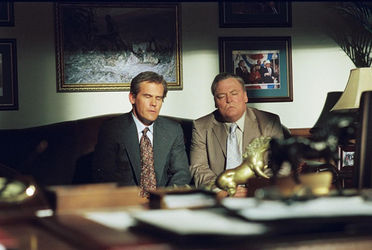
Ryan: Good call on Stacy Keach. I wonder how Stacy Keach as Luther would have interacted with Bush in that moment. I totally agree about the scene at the church and the sincerity with which Stone approached that moment in W.’s life. The minister’s statement about the nation of millions of born again Christians is fascinating in a way. You have evangelical Christians who want to take back a nation that theologically and spiritually is not their home. It’s almost like they want to take it back to trade up for the kingdom of God, a new world coming down from heaven to earth. At the same time, you have more liberal Christians who believe that the Kingdom of God will not come from the top down but from the bottom up and that a certain reclamation or re-creation through human action on behalf of God. It’s amazing how that one difference impacts evangelism, social justice, and politics.
Regarding W.’s assertion that God “called” him to the presidency is a difficult claim for me to buy into or critique. I imagine that, like me, you grew up in an environment where people talked like that and were confident that God had told them a variety of things. In college, I was surrounded by folks who swore that God held forth with them regarding their dating lives. While I believe in God’s continual work in this world and God’s on-going revelation through a variety of avenues, this idea of “God spoke to me” is the stuff of either a genuine person of faith or a lunatic. Perhaps the better question would be, how did W. respond to that calling? I would imagine if he had taken different turns in his presidency, we might be more accepting of his claim.
I really thought that the scenes of W. in the empty baseball park were quite telling as well. Whenever he faced a struggle or a conflict he would return to the baseball field in his mind as some sort of safe place. On top of this, the imaginary crowd’s reaction changes as his situation worsens. This, for me, might have been his true calling. So, again, I blame Bud Selig. Your thoughts?

Richard: The sad thing was I think he was happy as a baseball club owner. If only he had become commissioner. But then, considering his disdain for redistribution of wealth, I doubt we’d be any closer to a salary cap and league parity. Perhaps my beloved Reds will do better under an Obama administration.
Getting back to being called to be President, I don’t think it’s out of the question that God may have a preference as to who leads a country with massive wealth and ability to do harm or good. Looking back at the 1972 Nixon/McGovern election, I don’t think the country has ever had a starker choice between a decent, compassionate individual and a complete liar and crook. Politics aside, if you believe God prefers honesty over criminal duplicity, you have to think God wanted a different outcome. And the harm done to the nation by Nixon’s re-election would seem to confirm that.
What bothers me about Bush is that his election almost seemed too perfectly wrong. He was as unfit for the job as anyone we’ve ever had. He won because of a chain reaction of mistakes and coincidences unfathomable to the human mind. If Al Gore had won his home state, he would have been president. If you counted the “overvotes” from the infamous butterfly ballot of Palm Springs County, Gore would have had 5,000 extra votes. If 800 Nader voters had decided to cast their ballots for an actual winning candidate, it would have gone to Gore. On 9/11, Al Qaeda found the perfect dupe. Attacking an incurious, ill-informed President itching to prove his manhood after his father was criticized for not overthrowing Saddam, the terrorists succeeded in luring him into an apocalyptic battle on their terms. They knew they couldn’t destroy America on their own, but they knew with leadership that had the right combination of wounded pride and ignorant hubris, they could get America to dismantle itself. The last eight years have been like Providence in reverse.
Which leads me to wonder, have the last eight years still been Providential? Under the strict Calvinism that has been central to this country’s perception of itself, including the perception of the religious right, God is not a nice guy looking for the self-actualization of all people. There are elect and there are non-elect. There are people who act in favor of God’s righteousness and there are those who act in defiance of God, and are struck down to God’s greater glory. Under this view, it may be that God did choose George W. Bush, not because he was a great man, but because he was the perfect fool to humble an arrogant nation and bring about a re-ordering of the world. The religious right needs to wake up to its own theology. In biblical accounts, when a nation falls, as we have over the last eight years, it’s seen as a sign of God’s disfavor — and not because they didn’t ban gay marriage, but because they failed to listen to the cries of the widow, the orphan, and the poor.
I’ve mostly rejected this kind of theology in my own mind, but what can I say, Bush brings out the Jonathan Edwards in me.
Ryan: I like how you move from the political to the theological, but in a way that not many of us are accustomed to hearing. Well, maybe Jeremiah Wright brought out a little bit of that. Many American Christians are quick to claim some sort of divine favor, but are not willing to think about or live with the idea of divine disfavor. On the one hand, you have Christians (some) lining up behind Falwell et al when they claim Katrina is punishment for the gays. But let one minister criticize public policy and you have a nation-wide controversy on your hands.
We could go on and on about this film, but I think we both agree that, like most Oliver Stone films, it is thought provoking to a great degree. Unlike most Oliver Stone films, it certainly is much less heavy-handed in its approach to the subject matter.
Previous Post

October 28, 2008
Old Fashioned Television
Next Post
October 30, 2008 "Without Them, I'm Not Me..."
Browse Our Archives
Select a Category Classics DVD Film Music News Pop Culture Events Print Sports Television Uncategorized Video Games
Select a Month March 2017 February 2017 January 2017 December 2016 November 2016 October 2016 September 2016 August 2016 July 2016 June 2016 May 2016 April 2016 March 2016 February 2016 January 2016 December 2015 November 2015 October 2015 September 2015 August 2015 July 2015 June 2015 May 2015 April 2015 March 2015 February 2015 January 2015 December 2014 November 2014 October 2014 September 2014 August 2014 July 2014 June 2014 May 2014 April 2014 March 2014 February 2014 January 2014 December 2013 November 2013 October 2013 September 2013 August 2013 July 2013 June 2013 May 2013 April 2013 March 2013 February 2013 January 2013 December 2012 November 2012 October 2012 September 2012 August 2012 July 2012 June 2012 May 2012 April 2012 March 2012 February 2012 January 2012 December 2011 November 2011 October 2011 September 2011 August 2011 July 2011 June 2011 May 2011 April 2011 March 2011 February 2011 January 2011 December 2010 November 2010 October 2010 September 2010 August 2010 July 2010 June 2010 May 2010 April 2010 March 2010 February 2010 January 2010 December 2009 November 2009 October 2009 September 2009 August 2009 July 2009 June 2009 May 2009 April 2009 March 2009 February 2009 January 2009 December 2008 November 2008 October 2008 September 2008 August 2008 July 2008 June 2008 May 2008 April 2008 March 2008 February 2008 January 2008 December 2007 November 2007 October 2007 September 2007 August 2007 July 2007 June 2007 May 2007 April 2007 March 2007
Follow Us!
TAKE THE
Religious Wisdom Quiz
Who interpreted Peter's vision about clean and unclean animals?
Select your answer to see how you score.
Philip God Paul Barnabas
Related posts from Pop Theology


At SXSW2017: May It Last: A Portrait of...

At SXSW 2017: "Untold Tales of Armistead Maupin"
TRENDING AT PATHEOS Progressive Christian

Why Christians Have a Sacred Duty to Vote:...
The Bible offers strong support for the sacred duty to vote. Here...

What Being a Modern-Day Apostle Means to Me
In my last column, I discussed the ins and outs of modern-day...

Did Ancient China Once Worship the God of...
Across human history, a common thread weaves through the origins of the...

Love Your Neighbor – Including Earth-Kin: Lev. 19,...
God’s command to love your neighbor means acting in an ethical and...

Lead a Church Study of “Jesus and Lao...
Guest writer Jack Thomas (The Irreverent Reverend) reflects on leading his church...

Principles for Understanding the Apostolic Ministry Today
Whenever people discover that my formal ministry title is "apostle," as in...
view all Progressive Christian blogs
Ad-Free & Subscriber Log-In Subscription Support
- About Us
- 2026 Calendar
- Videos
- Podcasts
- Library of World Religions
- Faith In Media Tracker
- Advertise With Us
- Write for Us
- Privacy Policy
- Terms of Service
- Do Not Sell My Data
- Contact Us
- Radiant Digital
- Manage Newsletter Subscriptions
- Unsubscribe From Notifications
- Sitemap
Copyright 2008-2026, Patheos. All rights reserved.
Subscription Support Ad-Free & Subscriber Log-In
Follow Patheos