
BuddhistCatholicContemplativeEvangelicalGeneral ChristianHinduJewishLatter-day SaintMuslimNew VisionsProgressive Christian
Beliefs
- Buddhist
- Catholic
- Contemplative
- Evangelical
- General Christian
- Hindu
- Jewish
- Latter-day Saint
- More Voices
- Muslim
- New Visions
- Pagan
- Progressive Christian
Topics
- Religion News
- Food and Religion
- Sports and Religion
- Religious Art
- Religious Music and Entertainment
- Religious Events
- History and Religion
- Style and Religion
- Politics and Religion
- Women in Religion
- Recreation Outdoors and Religion
- Business Finance and Religion
- Careers Workplace and Religion
- Education and Religion
- Family Parenting and Religion
- Health Fitness and Religion
- Home and Religion
- Relationships and Religion
- Technology and Religion
- Travel and Religion
Columnists
- Buddhist Columnists
- Business Finance and Religion Columnists
- Careers Workplace and Religion Columnists
- Catholic Columnists
- Contemplative Columnists
- Education and Religion Columnists
- Evangelists Columnists
- Family Parenting and Religion Columnists
- General Christian Columnists
- Health Fitness and Religion Columnists
- Hindu Columnists
- History and Religion Columnists
- Home and Religion Columnists
- Jewish Columnists
- More Voices Columnists
- Latter Day Columnists
- Muslim Columnists
- New Visions Columnists
- Nonreligious Columnists
- Pagan Columnists
- Politics and Religion Columnists
- Progressive Columnists
- Recreation Outdoors and Religion Columnists
- Relationships and Religion Columnists
- Religion News Columnists
- Religious Art Columnists
- Religious Events Columnists
- Religious Music and Entertainment Columnists
- Sports and Religion Columnists
- Style and Religion Columnists
- Technology and Religion Columnists
- Travel and Religion Columnists
- Women in Religion Columnists
Resource Library
- 2026 Calendar
- Library of World Religions
- The 100 Most Holy Places on Earth
- Patheos Answers
- Podcasts
- Videos
- Faith Leaders Database
- Anglican Episcopalian
- Bahai
- Baptist
- Buddhism
- Christianity
- Confucianism
- Eastern Orthodoxy
- Hinduism
- Holiness and Pentecostal
- ISKCON
- Islam
- Judaism
- Lutheran
- Methodist
- The Church of Jesus Christ of Latter-day Saints
- New Age
- Paganism
- Presbytarian and Reformed
- Protestantism
- Religion Behind the Scenes
- Roman Catholic
- Scientology
- Shia Islam
- Sikhism
- Sufism
- Sunni Islam
- Taoism
- Zen
- See all religions
Research Tools
 Ad-Free & Subscriber Log-In Subscription Support
Ad-Free & Subscriber Log-In Subscription Support
Follow Patheos 

- Trending:
- Forgiveness
- |
- Marriage
- |
- Consciousness
- |
- Death Penalty
- |
- Election
- |
- Halloween
 Pop Theology
- Home
- Progressive Christian
- Religious Music & Entertainment
- A Sacred and Secular Negotiation
A Sacred and Secular Negotiation
Last updated on: October 22, 2008 at 10:27 am by J. Ryan Parker
A Sacred and Secular Negotiation 2008-10-22T10:27:42-07:00 J. Ryan Parker
Patheos Explore the world's faith through different perspectives on religion and spirituality! Patheos has the views of the prevalent religions and spiritualities of the world.
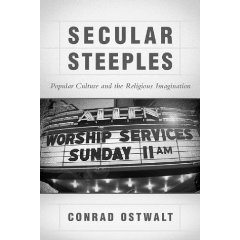
In the closing minutes of his new documentary, Religulous, Bill Maher transitions from an agnostic point of view to an atheistic one. He moves from saying, “I preach the gospel of I don’t know,” to saying, “For humanity to live, religion must die.” Such a transition signifies Maher’s narrow-minded view of religion and also his misguided understanding of secularization. Maher believes that the eradication of religion will help humanity flourish and put an end to many of the conflicts that divide us. This, one could argue, is one example of a type of secularization theory that has held sway in academic and religious thought. Thankfully, that idea, and its hold on our thinking, is losing its grip. Conrad Ostwalt’s book, Secular Steeples: Popular Culture and the Religious Imagination, represents a much-needed, fresh way of looking at the sacred, the secular, and the complex notion of secularization.
In his introduction to and throughout his book, Ostwalt debunks the notion of secularization as the death or disappearance of religion. A simple observation of contemporary American culture reveals a wealth of (non)institutional religious expression. However, as time has progressed, these institutions have lost the authority they once had over social, political, religious, and theological affairs during the Middle Ages, for example. Ostwalt claims that popular culture, for one, represents the greatest challenge to institutional religion’s control or power by offering its own set of values, morals, ethics, etc. Not surprisingly, popular culture speaks secularly and sacredly; the latter given traditional religion’s falling out of favor with much of the larger society, even religiously or spiritually minded people. Rather, Ostwalt sees secularization as a dance…a negotiation…between the sacred and the secular that takes place in both our communities of faith and popular culture. In Secular Steeples, Ostwalt examines three “locations” of this idea of secularization: place, text, and image. Put more specifically, he analyzes this understanding of secularization and its effect on sacred spaces, literature, and film.
In all of these instances, Ostwalt sees secularization as a two-way street. Popular culture is becoming more sacred and religious institutions (many of them) are becoming more secular. Indeed, Ostwalt argues that Christianity has been dealing with secularization since its inception. Today, the challenge of secularization for a religious organization is all about relevance. Much of this has to do with method which, in turn, affects the message. Ostwalt highlights what many faith communities face today: how do we present an ancient message to a postmodern audience, and, moreover, an audience that is increasingly inundated by popular culture and technology? As a friend of mine put it recently, “How are we a people of the Book, when books are going the way of Kindle?”
Just because religious institutions are losing their authority does not mean that people are losing their quest for or desire for the sacred. They then find it, in part, through various elements of popular culture: monuments, literature, films, music, etc. As people move away from more traditional religious expressions of the sacred, they begin to create and consume sacred forms of popular culture, or at least forms of which that express sacred themes. Themes once dealt with primarily by religion like redemption, death, the afterlife, or even the apocalypse are now recurrent themes in popular culture products.
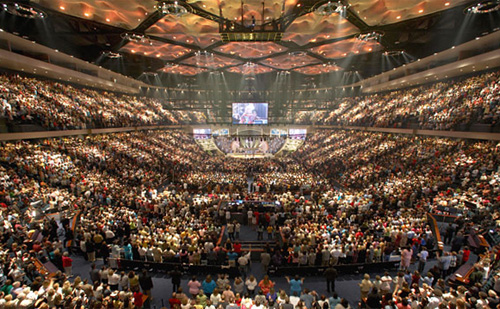 After his introduction, Ostwalt discusses the secularization of sacred space and the sacralization of secular space. For the former, he analyzes the megachurch movement in America and parts of Europe. For the latter, he explores Love Valley, North Carolina, an intentional utopian community. The megachurch movement represents the secularization of sacred space as churches become one-stop shopping for congregants and potential converts. These churches offer everything under one roof, shopping, worship, day care, entertainment, education, self-help groups, and the list goes on. In each of these programs, they must reckon with and either appropriate or reject elements of the secular. Ostwalt argues that the primary evidence of secularized sacred spaces in megachurches is worship. Big screen televisions, rock bands, drama, video clips all now contain the message that was once packaged in a sermon and a few hymns (with or without the organ). To think that this does not affect the message is terribly short sighted. As Ostwalt asks, “[…How] can a church maintain a prophetic role in society if its priority is to satisfy the client” (65).
 The sacralization of secular spaces, for Ostwalt, can most readily be seen in Love Valley, North Carolina, a utopian community founded by Andy Barker as a refuge from the wider (polluting?) culture. Barker founded Love Valley as a model after the main streets in so many Westerns or idyllic American films. No cars are allowed as horses are the only acceptable means of transportation in the town limits. Visitors are also allowed to carry handguns or rifles, all of which must be loaded. Thus, there is an element of danger even in this utopian setting. Ostwalt’s discussion of the sacralization of secular spaces might have benefited from a broader analysis and perhaps the inclusion of sports complexes and museums.
 Next, Ostwalt talks about the secularization of a sacred text, the Bible, and the sacralization of secular literature through the works of Clyde Edgerton, Randall Kenan, Amy Tan, and Lee Smith. Ostwalt claims that more “liberal” Biblical scholarship (historical or form criticisms, for example) and the conservative fundamental claim of Biblical inerrancy have rendered this sacred text secular. They both, in their own ways, de-mythologize and de-mystify scripture, replacing the quest for Truth (or truths) with the search for factual claims. Again, as traditional religious institutions and texts lose their authority, secular texts step in to “fill the void.” Writers like Tan and Edgerton engage traditional forms of religion (Southern evangelical Christianity or Buddhism, for example) and offer fresh representations or critiques of it. Focusing on three writers from the same region, the Southeast, Ostwalt reveals the sacred diversity of Edgerton, Smith, and Kenan’s work.
Finally, and perhaps most importantly, Ostwalt moves to a discussion of the image in a postmodern, secularized culture. Film, a truly postmodern creation, has spent its entire existence caught between this sacred and secular negotiation. To narrow this very broad history, Ostwalt looks at contemporary apocalyptic films by both religious and non-religious filmmakers to see the secularization of the sacred and the sacralization of the secular. His findings are fascinating.

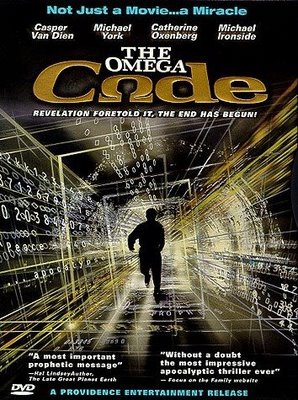
Religious apocalyptic films like Left Behind, The Omega Code, Meggido: The Omega Code II all reflect conservative, evangelical interpretations of the apocalypse that attempt to image the descriptions in Revelation. The antichrist, global unity, a final cosmic battle, the rapture, tribulation…they are all here in some form or another leading up to the final showdown between good and evil in which God prevails and ushers in a new world. The secularization of this sacred story takes place quite simply in the presentation and packaging of these films and the subtle changes that the filmmakers are forced to make in the process of making a film.
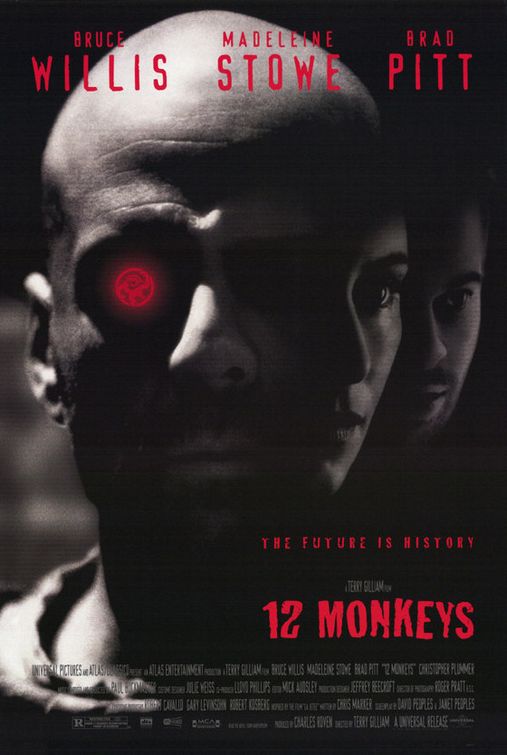
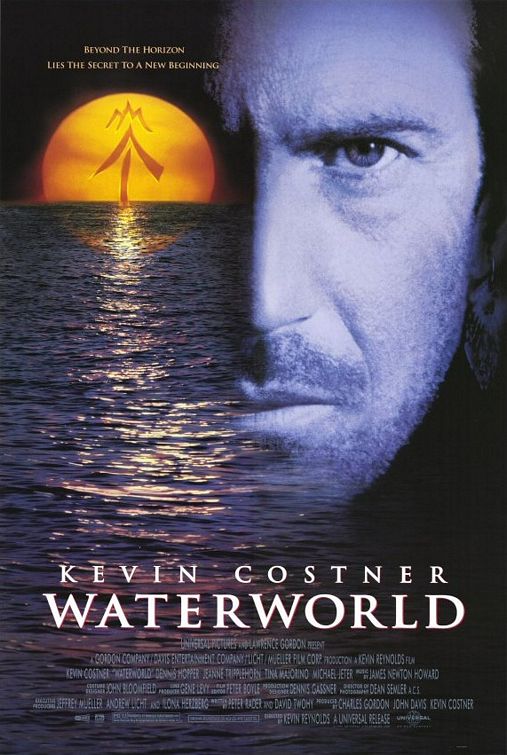
On the other hand, secular apocalyptic films use a sacred concept but tell a completely different story, and, as such, offer interesting critiques of one Christian view of the apocalypse. Films like Waterworld, 12 Monkeys, Armageddon, and Deep Impact present worlds in which God plays a smaller, if any, role in the apocalypse. In these worlds, humanity is responsible for the apocalypse be it through global warming or nuclear destruction. Occasionally alien invaders provide the apocalyptic impetus. Yet, unlike the sacred apocalyptic story, mankind is able to prevent or overcome the apocalypse through technology and socio-political unity, a sign of the antichrist in the Christian depiction.
Ostwalt’s book is a highly important and entertaining text for these highly antagonistic times. Ostwalt brilliantly reveals the truth of the interconnectedness of the sacred and the secular. While Ostwalt hammers home his secularization theory a bit repetitively, the repetition helps convey this reality and its prevalence in our contemporary culture.
Previous Post

October 14, 2008
Bad Movie Monday: The Happening
Next Post
October 23, 2008 A Country Gospel: Pop Theology Turns 200
Browse Our Archives
Select a Category Classics DVD Film Music News Pop Culture Events Print Sports Television Uncategorized Video Games
Select a Month March 2017 February 2017 January 2017 December 2016 November 2016 October 2016 September 2016 August 2016 July 2016 June 2016 May 2016 April 2016 March 2016 February 2016 January 2016 December 2015 November 2015 October 2015 September 2015 August 2015 July 2015 June 2015 May 2015 April 2015 March 2015 February 2015 January 2015 December 2014 November 2014 October 2014 September 2014 August 2014 July 2014 June 2014 May 2014 April 2014 March 2014 February 2014 January 2014 December 2013 November 2013 October 2013 September 2013 August 2013 July 2013 June 2013 May 2013 April 2013 March 2013 February 2013 January 2013 December 2012 November 2012 October 2012 September 2012 August 2012 July 2012 June 2012 May 2012 April 2012 March 2012 February 2012 January 2012 December 2011 November 2011 October 2011 September 2011 August 2011 July 2011 June 2011 May 2011 April 2011 March 2011 February 2011 January 2011 December 2010 November 2010 October 2010 September 2010 August 2010 July 2010 June 2010 May 2010 April 2010 March 2010 February 2010 January 2010 December 2009 November 2009 October 2009 September 2009 August 2009 July 2009 June 2009 May 2009 April 2009 March 2009 February 2009 January 2009 December 2008 November 2008 October 2008 September 2008 August 2008 July 2008 June 2008 May 2008 April 2008 March 2008 February 2008 January 2008 December 2007 November 2007 October 2007 September 2007 August 2007 July 2007 June 2007 May 2007 April 2007 March 2007
Follow Us!
TAKE THE
Religious Wisdom Quiz
I was only seven years old when I became king and reigned for forty years in Jerusalem. Who am I?
Select your answer to see how you score.
Joash (or Jehoash) Hezekiah Josiah Manasseh
Related posts from Pop Theology


#KillerSerials: An Interview with Kutter Callaway

Book Review: MUSLIMS AND THE MAKING OF AMERICA

TRENDING AT PATHEOS Progressive Christian

Why Christians Have a Sacred Duty to Vote:...
The Bible offers strong support for the sacred duty to vote. Here...

What Being a Modern-Day Apostle Means to Me
In my last column, I discussed the ins and outs of modern-day...

Did Ancient China Once Worship the God of...
Across human history, a common thread weaves through the origins of the...

Love Your Neighbor – Including Earth-Kin: Lev. 19,...
God’s command to love your neighbor means acting in an ethical and...

Lead a Church Study of “Jesus and Lao...
Guest writer Jack Thomas (The Irreverent Reverend) reflects on leading his church...

Principles for Understanding the Apostolic Ministry Today
Whenever people discover that my formal ministry title is "apostle," as in...
view all Progressive Christian blogs
Ad-Free & Subscriber Log-In Subscription Support
- About Us
- 2026 Calendar
- Videos
- Podcasts
- Library of World Religions
- Faith In Media Tracker
- Advertise With Us
- Write for Us
- Privacy Policy
- Terms of Service
- Do Not Sell My Data
- Contact Us
- Radiant Digital
- Manage Newsletter Subscriptions
- Unsubscribe From Notifications
- Sitemap
Copyright 2008-2026, Patheos. All rights reserved.
Subscription Support Ad-Free & Subscriber Log-In
Follow Patheos