
BuddhistCatholicContemplativeEvangelicalGeneral ChristianHinduJewishLatter-day SaintMuslimNew VisionsProgressive Christian
Beliefs
- Buddhist
- Catholic
- Contemplative
- Evangelical
- General Christian
- Hindu
- Jewish
- Latter-day Saint
- More Voices
- Muslim
- New Visions
- Pagan
- Progressive Christian
Topics
- Religion News
- Food and Religion
- Sports and Religion
- Religious Art
- Religious Music and Entertainment
- Religious Events
- History and Religion
- Style and Religion
- Politics and Religion
- Women in Religion
- Recreation Outdoors and Religion
- Business Finance and Religion
- Careers Workplace and Religion
- Education and Religion
- Family Parenting and Religion
- Health Fitness and Religion
- Home and Religion
- Relationships and Religion
- Technology and Religion
- Travel and Religion
Columnists
- Buddhist Columnists
- Business Finance and Religion Columnists
- Careers Workplace and Religion Columnists
- Catholic Columnists
- Contemplative Columnists
- Education and Religion Columnists
- Evangelists Columnists
- Family Parenting and Religion Columnists
- General Christian Columnists
- Health Fitness and Religion Columnists
- Hindu Columnists
- History and Religion Columnists
- Home and Religion Columnists
- Jewish Columnists
- More Voices Columnists
- Latter Day Columnists
- Muslim Columnists
- New Visions Columnists
- Nonreligious Columnists
- Pagan Columnists
- Politics and Religion Columnists
- Progressive Columnists
- Recreation Outdoors and Religion Columnists
- Relationships and Religion Columnists
- Religion News Columnists
- Religious Art Columnists
- Religious Events Columnists
- Religious Music and Entertainment Columnists
- Sports and Religion Columnists
- Style and Religion Columnists
- Technology and Religion Columnists
- Travel and Religion Columnists
- Women in Religion Columnists
Resource Library
- 2026 Calendar
- Library of World Religions
- The 100 Most Holy Places on Earth
- Patheos Answers
- Podcasts
- Videos
- Faith Leaders Database
- Anglican Episcopalian
- Bahai
- Baptist
- Buddhism
- Christianity
- Confucianism
- Eastern Orthodoxy
- Hinduism
- Holiness and Pentecostal
- ISKCON
- Islam
- Judaism
- Lutheran
- Methodist
- The Church of Jesus Christ of Latter-day Saints
- New Age
- Paganism
- Presbytarian and Reformed
- Protestantism
- Religion Behind the Scenes
- Roman Catholic
- Scientology
- Shia Islam
- Sikhism
- Sufism
- Sunni Islam
- Taoism
- Zen
- See all religions
Research Tools
 Ad-Free & Subscriber Log-In Subscription Support
Ad-Free & Subscriber Log-In Subscription Support
Follow Patheos 

- Trending:
- Forgiveness
- |
- Marriage
- |
- Consciousness
- |
- Death Penalty
- |
- Election
- |
- Halloween
 Pop Theology
- Home
- Progressive Christian
- Religious Music & Entertainment
- Do You Believe In…
Do You Believe In…
Last updated on: September 16, 2008 at 10:10 am by J. Ryan Parker
Do You Believe In… 2008-09-16T10:10:29-07:00 J. Ryan Parker
Patheos Explore the world's faith through different perspectives on religion and spirituality! Patheos has the views of the prevalent religions and spiritualities of the world.
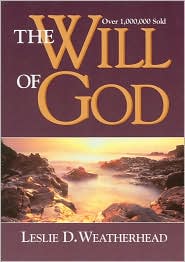
In college, I read a book that began to drastically change the way I thought about God and the ways in which God worked in the world. For a young person from a conservative Southern Baptist background, Leslie D. Weatherhead‘s The Will of God was a radical reading experience. Faced with theological inconsistencies during World War II, Weatherhead began re-thinking his concept of the will of God. His text, a series of sermons to victims of the war and their families, resonates decades later with anyone experiencing suffering or, perhaps, a series of debilitating doubts. I recently watched two films that reminded me of Weatherhead’s text. Both Saint Ralph (2004) and The Third Miracle (1999) deal, indirectly, with the will of God through their characters’ pursuit of miracles or interactions with the miraculous.
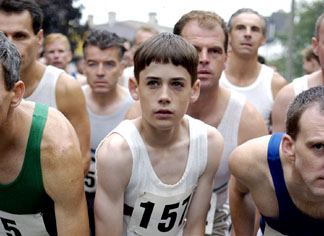 Directed by Michael McGowan, Saint Ralph tells the story of Ralph Walker (Adam Butcher), a Catholic teenager whose father died in World War II and whose mother is in the hospital, sick with cancer. A typical teenager, prone to the “sins of the flesh,” headmaster Father Fitzpatrick (Gordon Pinsent in another great performance) orders Ralph to join the cross country team to quell his sexual urges. Doctors told Ralph that it would take a miracle for his mother to recover. On the first day of cross country practice, Ralph’s coach, Father George Hibbert (Campbell Scott), mentions in passing that it would be a miracle if anyone from their team won the Boston Marathon. The dreamer that he is, Ralph puts two and two together and believes that if he trains for the marathon and wins that his mother will be healed. Thus begins a spiritual journey of sorts for several of the main characters. Ralph matures spiritually, physically, and emotionally; Father Hibbert re-discovers a long-lost passion; and Father Fitzpatrick embraces a suppressed aspect of his own spirituality.
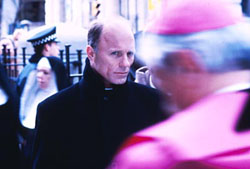 The Third Miracle, directed by Agnieszka Holland (who also directed three episodes of The Wire), follows Father Frank Shore (Ed Harris), a Catholic postulator who must verify or denounce reports of miracles in the process of canonization. We first meet Father Shore in the slums of Chicago and quickly learn that he has written a popular book on spirituality and has since taken something of a leave from the church. However, bound by vows of obedience, he must undertake the investigation of miraculous accounts of a blood-weeping statue and healings in the name of Helen O’Regan, a faithful layperson who operated an orphanage for children outside Chicago. Father Shore struggles through a personal dark night of the soul, wracked with doubts and uncertainties about miracles and, moreover, the existence of God. Unfortunately, he is not helped by his superiors, Bishop Cahill (Charles Haid) and Archbishop Werner (Armin Mueller-Stahl), who seem all too quick to dispel reports rather than embrace them. Father Shore perseveres and discovers secrets about Helen O’Regan’s life that have direct connections to the life of one of his superiors.
Both Saint Ralph and The Third Miracle are feel-good-movies, of a sort. Yet neither of them offer easy answers or nicely cleaned up endings. Moreover, their main characters, Ralph and Father Shore, are complex people of faith who struggle with that faith, especially in light of restrictive dogma. Ralph suffers from (stereo?)typical Catholic guilt over his adolescent doings while Father Shore faces a much more existential crisis, doubting the very existence of God. Drunk, he visits his friend and fellow priest, Father John Leone (Michael Rispoli), and in a fit of anger and despair cries, “I don’t want it to have all been for nothing! It better be goddamned true!” Both of these characters act out their crises quite powerfully: they cry, scream, curse, and get drunk. Yet they never lose hope.
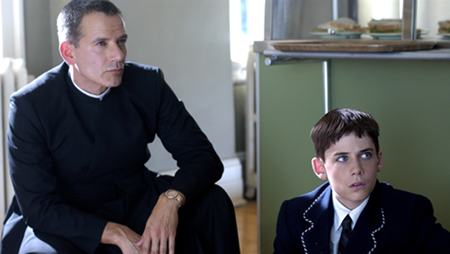 Both of these films offer up serious theological discussions regarding the will of God, miracles, and our relationship to the two. While the characters in Saint Ralph never claim that Ralph’s mom is sick because of the will of God or that her improvement would be the will of God, Ralph genuinely believes that he can participate in the miraculous…that God will heal her if he wins the marathon. While this, in a way, seems childish, on another level, it signifies the importance, perhaps even the necessity, of our participation in God’s work in the world. Yet Ralph does not win the Boston Marathon, coming in second by only the closest of margins. Three weeks later, his mother emerges from her coma. While this is an unexplainable event to the doctors, at least in the film, some viewers might attribute it to the work of God. Yet such a hypothesis also leads to a hypothetical question of its own: why do other cancer patients die or never emerge from their coma? What has God to do with them?
 This scenario finds a direct parallel in The Third Miracle. Before she moved to the United States, Helen O’Regan was a child in Nazi-occupied Slovakia. When allied forces bombed her town, she grabbed a statue of the Virgin Mary, ran to the city center, and prayed fervently for survival. The bombs that the planes dropped never struck the city…a miracle to be sure. As the film draws to a close, we learn that the doubtful, dismissive Archbishop Werner actually witnessed the event and claims that the bombs turned into a flock of pigeons. When he shares this with Father Shore, he becomes angry and cries, “A caprice of god. A capricious God. I would say it to his face if he were here. A wasted miracle to answer the prayers of gypsies while millions were dying!” Indeed, Archbishop Werner, a former German soldier, lost part of his left leg in the war. Where is the will of God in this when one city survives and countless others perish?
There are miracles in Saint Ralph and The Third Miracle, but the directors might have different ones in mind. People emerge from comas in both films, and in The Third Miracle, the lame walk and the injured are healed. Yet there are other “miracles” right there before our eyes. Maria Witkowski (Caterina Scorsone), the young girl healed by praying to Helen O’Regan (the event that started the whole affair), was badly abused as a child. She tells Father Shore, “Helen walked me home from school…she touched me.” These are not miraculous acts, but they certainly had a miraculous effect on Maria as a young child. Ralph’s maturation, Father Fitzpatrick’s recovery of faith, and Father Shore’s return to the ministry are certainly not as exotic as bombs turning into birds or a weeping statue. Therefore, we might look at these events less as miraculous works of God than miraculous journeys of faith for people who believe again not just in God or church dogma but in the power of community and each other.
Previous Post

September 15, 2008
New Leader...
Next Post
September 22, 2008 Tekkonkinkreet
Browse Our Archives
Select a Category Classics DVD Film Music News Pop Culture Events Print Sports Television Uncategorized Video Games
Select a Month March 2017 February 2017 January 2017 December 2016 November 2016 October 2016 September 2016 August 2016 July 2016 June 2016 May 2016 April 2016 March 2016 February 2016 January 2016 December 2015 November 2015 October 2015 September 2015 August 2015 July 2015 June 2015 May 2015 April 2015 March 2015 February 2015 January 2015 December 2014 November 2014 October 2014 September 2014 August 2014 July 2014 June 2014 May 2014 April 2014 March 2014 February 2014 January 2014 December 2013 November 2013 October 2013 September 2013 August 2013 July 2013 June 2013 May 2013 April 2013 March 2013 February 2013 January 2013 December 2012 November 2012 October 2012 September 2012 August 2012 July 2012 June 2012 May 2012 April 2012 March 2012 February 2012 January 2012 December 2011 November 2011 October 2011 September 2011 August 2011 July 2011 June 2011 May 2011 April 2011 March 2011 February 2011 January 2011 December 2010 November 2010 October 2010 September 2010 August 2010 July 2010 June 2010 May 2010 April 2010 March 2010 February 2010 January 2010 December 2009 November 2009 October 2009 September 2009 August 2009 July 2009 June 2009 May 2009 April 2009 March 2009 February 2009 January 2009 December 2008 November 2008 October 2008 September 2008 August 2008 July 2008 June 2008 May 2008 April 2008 March 2008 February 2008 January 2008 December 2007 November 2007 October 2007 September 2007 August 2007 July 2007 June 2007 May 2007 April 2007 March 2007
Follow Us!
TAKE THE
Religious Wisdom Quiz
What animal was most often sacrificed for a sin offering in the Old Testament?
Select your answer to see how you score.
A lamb A bull A goat A bird
Related posts from Pop Theology


At SXSW2017: May It Last: A Portrait of...

At SXSW 2017: "Untold Tales of Armistead Maupin"
TRENDING AT PATHEOS Progressive Christian

Why Christians Have a Sacred Duty to Vote:...
The Bible offers strong support for the sacred duty to vote. Here...

What Being a Modern-Day Apostle Means to Me
In my last column, I discussed the ins and outs of modern-day...

Did Ancient China Once Worship the God of...
Across human history, a common thread weaves through the origins of the...

Love Your Neighbor – Including Earth-Kin: Lev. 19,...
God’s command to love your neighbor means acting in an ethical and...

Lead a Church Study of “Jesus and Lao...
Guest writer Jack Thomas (The Irreverent Reverend) reflects on leading his church...

Principles for Understanding the Apostolic Ministry Today
Whenever people discover that my formal ministry title is "apostle," as in...
view all Progressive Christian blogs
Ad-Free & Subscriber Log-In Subscription Support
- About Us
- 2026 Calendar
- Videos
- Podcasts
- Library of World Religions
- Faith In Media Tracker
- Advertise With Us
- Write for Us
- Privacy Policy
- Terms of Service
- Do Not Sell My Data
- Contact Us
- Radiant Digital
- Manage Newsletter Subscriptions
- Unsubscribe From Notifications
- Sitemap
Copyright 2008-2026, Patheos. All rights reserved.
Subscription Support Ad-Free & Subscriber Log-In
Follow Patheos