
BuddhistCatholicContemplativeEvangelicalGeneral ChristianHinduJewishLatter-day SaintMuslimNew VisionsProgressive Christian
Beliefs
- Buddhist
- Catholic
- Contemplative
- Evangelical
- General Christian
- Hindu
- Jewish
- Latter-day Saint
- More Voices
- Muslim
- New Visions
- Pagan
- Progressive Christian
Topics
- Religion News
- Food and Religion
- Sports and Religion
- Religious Art
- Religious Music and Entertainment
- Religious Events
- History and Religion
- Style and Religion
- Politics and Religion
- Women in Religion
- Recreation Outdoors and Religion
- Business Finance and Religion
- Careers Workplace and Religion
- Education and Religion
- Family Parenting and Religion
- Health Fitness and Religion
- Home and Religion
- Relationships and Religion
- Technology and Religion
- Travel and Religion
Columnists
- Buddhist Columnists
- Business Finance and Religion Columnists
- Careers Workplace and Religion Columnists
- Catholic Columnists
- Contemplative Columnists
- Education and Religion Columnists
- Evangelists Columnists
- Family Parenting and Religion Columnists
- General Christian Columnists
- Health Fitness and Religion Columnists
- Hindu Columnists
- History and Religion Columnists
- Home and Religion Columnists
- Jewish Columnists
- More Voices Columnists
- Latter Day Columnists
- Muslim Columnists
- New Visions Columnists
- Nonreligious Columnists
- Pagan Columnists
- Politics and Religion Columnists
- Progressive Columnists
- Recreation Outdoors and Religion Columnists
- Relationships and Religion Columnists
- Religion News Columnists
- Religious Art Columnists
- Religious Events Columnists
- Religious Music and Entertainment Columnists
- Sports and Religion Columnists
- Style and Religion Columnists
- Technology and Religion Columnists
- Travel and Religion Columnists
- Women in Religion Columnists
Resource Library
- 2026 Calendar
- Library of World Religions
- The 100 Most Holy Places on Earth
- Patheos Answers
- Podcasts
- Videos
- Faith Leaders Database
- Anglican Episcopalian
- Bahai
- Baptist
- Buddhism
- Christianity
- Confucianism
- Eastern Orthodoxy
- Hinduism
- Holiness and Pentecostal
- ISKCON
- Islam
- Judaism
- Lutheran
- Methodist
- The Church of Jesus Christ of Latter-day Saints
- New Age
- Paganism
- Presbytarian and Reformed
- Protestantism
- Religion Behind the Scenes
- Roman Catholic
- Scientology
- Shia Islam
- Sikhism
- Sufism
- Sunni Islam
- Taoism
- Zen
- See all religions
Research Tools
 Ad-Free & Subscriber Log-In Subscription Support
Ad-Free & Subscriber Log-In Subscription Support
Follow Patheos 

- Trending:
- Forgiveness
- |
- Marriage
- |
- Consciousness
- |
- Death Penalty
- |
- Election
- |
- Halloween
 Pop Theology
- Home
- Progressive Christian
- Religious Music & Entertainment
- A Dose of Theology…
A Dose of Theology…
Last updated on: July 2, 2008 at 9:34 am by J. Ryan Parker
A Dose of Theology… 2008-07-02T09:34:36-07:00 J. Ryan Parker
Patheos Explore the world's faith through different perspectives on religion and spirituality! Patheos has the views of the prevalent religions and spiritualities of the world.
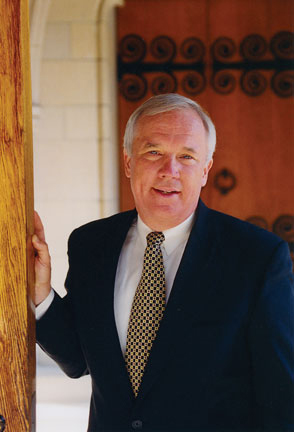
William H. Willimon’s newest book, Who Will Be Saved?, is an extended sermon in praise of the height, width, and depth of God’s love for the cosmos. As such, it is a staunch reaction to any concept of Christian salvation that would limit God’s loving reach for all by dictating “who’s in and who’s out.” As a recovering Southern Baptist accustomed to extended altar calls and evangelism training that stressed a personal relationship with Christ based on human faith, belief, or response, Willimon’s thoughts on Christian salvation, steeped ever so deeply in Scripture, are a joyous celebration of God’s work for us in the life, death, and resurrection of Jesus.
Throughout his book, Willimon tackles questions like “Who will be saved” or the hypothetical Evangelism Explosion question, “If you died today and Jesus asked why he should allow you into heaven, what would you say,” and explodes them for their misguided soteriology and anthropocentrism. Willimon consistently argues that “Who will be saved” is not nearly as interesting of a question as “Who saves?” By focusing on God, fully revealed in Jesus, implications of damnation or the unsaved begin to whither away.
There are three significant tensions throughout Willimon’s book: 1) the tension between God’s eternal “Yes” to us and the “necessity” of our responsive “yes” to God; 2) the tension between universal salvation and, well, non-universal salvation; and 3) the tension between different faiths and their various soteriological claims.
Throughout scripture, we read about a God that continually says “yes” to Israel and eventually opens up that “yes” to include the Gentiles (everyone else). This opening up is made particular and unique in the life, death, and resurrection of Jesus. In Jesus, God has reached out to us and said “yes” to all of us. In Jesus, God has made both a way to us and a way for us to God. God desires that we say yes to this way so that we may experience, ever more fully, salvation and that we may share it with others.
Willimon, like many other theologians and ministers who seek to swing wide the gates of heaven, is often accused of being a universalist. He rejects this label not because he believes some people will be eternally damned in hell, but claims that universal salvation doubly denies the free will of both God and humanity. On the other hand, arguing that God will or has to eternally punish “evil-doers” places limits on God as well. Therefore, like Barth, who he consistently references, Willimon conceives of hell as an “impossible possibility.” It is possible because one might continually reject God’s salvation. However, in the end, the “hound of heaven” (as C. S. Lewis puts it) will hopefully, eventually overtake him. Here, Willimon introduces a purgatory for Protestants…or at least the possibility of one. He questions whether we should look at hell, as traditionally conceived, as punitive or formative. What if the “fires of hell” are for refining rather than punishing and are not really fires at all but the recognition of how we have wronged God and one another throughout our lives.
Finally, and perhaps Willimon’s greatest challenge, at least for me, is his discussion of Christianity’s unique claim to salvation in Jesus Christ vis-à-vis other faiths or nonbelievers. In this section, Willimon strongly critiques modern religious pluralism, claiming that it is an invention of politicians and intellectuals to downplay religious (not just Christian) truth claims and, particularly, Christianity’s emphasis on the Kingdom of God. He rejects pluralistic metaphors that see people of different faiths climbing up different paths on the same mountain to ultimately reach the same destination (Marcus Borg). Willimon argues that for all he knows of Christianity and other faiths, we are climbing up completely different mountains. He asserts, for example, that Buddhists and Christians mean completely different things when speaking about salvation. To level the soteriological playing field, so to speak, is both unfaithful to Christianity and an insult to other faiths. In the end, Willimon claims, “The internal logic of Christian theology gives us our best hope for fruitful relationships with other faiths” (105).
Willimon’s latest book does a great service to Christians everywhere. It is deep and thoughtful without getting bogged down in academic, theological language. It is inspired by Scripture to the hilt. Willimon takes exclusivist proof texting and turns it on its head by taking conservatives’ favorite verses and reading one verse more to uncover “inclusive bombs” like Jesus’ saying, “I have other sheep that do not belong to this fold” (John 10:16). Frustratingly, I still find myself pushing against those old questions that just won’t die: but what about those sheep? Thankfully, Willimon’s thoughts are inspiring me to ask a much more important, and joyous, question: what does God desire?
Previous Post

July 1, 2008
They've Done It Again...
Next Post
July 3, 2008 The Afterlife and The Sopranos
Browse Our Archives
Select a Category Classics DVD Film Music News Pop Culture Events Print Sports Television Uncategorized Video Games
Select a Month March 2017 February 2017 January 2017 December 2016 November 2016 October 2016 September 2016 August 2016 July 2016 June 2016 May 2016 April 2016 March 2016 February 2016 January 2016 December 2015 November 2015 October 2015 September 2015 August 2015 July 2015 June 2015 May 2015 April 2015 March 2015 February 2015 January 2015 December 2014 November 2014 October 2014 September 2014 August 2014 July 2014 June 2014 May 2014 April 2014 March 2014 February 2014 January 2014 December 2013 November 2013 October 2013 September 2013 August 2013 July 2013 June 2013 May 2013 April 2013 March 2013 February 2013 January 2013 December 2012 November 2012 October 2012 September 2012 August 2012 July 2012 June 2012 May 2012 April 2012 March 2012 February 2012 January 2012 December 2011 November 2011 October 2011 September 2011 August 2011 July 2011 June 2011 May 2011 April 2011 March 2011 February 2011 January 2011 December 2010 November 2010 October 2010 September 2010 August 2010 July 2010 June 2010 May 2010 April 2010 March 2010 February 2010 January 2010 December 2009 November 2009 October 2009 September 2009 August 2009 July 2009 June 2009 May 2009 April 2009 March 2009 February 2009 January 2009 December 2008 November 2008 October 2008 September 2008 August 2008 July 2008 June 2008 May 2008 April 2008 March 2008 February 2008 January 2008 December 2007 November 2007 October 2007 September 2007 August 2007 July 2007 June 2007 May 2007 April 2007 March 2007
Follow Us!
TAKE THE
Religious Wisdom Quiz
Which king's name appears as an author in Proverbs, apart from Solomon?
Select your answer to see how you score.
Hezekiah Saul Lemuel David
Related posts from Pop Theology


#KillerSerials: An Interview with Kutter Callaway

Book Review: MUSLIMS AND THE MAKING OF AMERICA

TRENDING AT PATHEOS Progressive Christian

Why Christians Have a Sacred Duty to Vote:...
The Bible offers strong support for the sacred duty to vote. Here...

What Being a Modern-Day Apostle Means to Me
In my last column, I discussed the ins and outs of modern-day...

Did Ancient China Once Worship the God of...
Across human history, a common thread weaves through the origins of the...

Love Your Neighbor – Including Earth-Kin: Lev. 19,...
God’s command to love your neighbor means acting in an ethical and...

Lead a Church Study of “Jesus and Lao...
Guest writer Jack Thomas (The Irreverent Reverend) reflects on leading his church...

Principles for Understanding the Apostolic Ministry Today
Whenever people discover that my formal ministry title is "apostle," as in...
view all Progressive Christian blogs
Ad-Free & Subscriber Log-In Subscription Support
- About Us
- 2026 Calendar
- Videos
- Podcasts
- Library of World Religions
- Faith In Media Tracker
- Advertise With Us
- Write for Us
- Privacy Policy
- Terms of Service
- Do Not Sell My Data
- Contact Us
- Radiant Digital
- Manage Newsletter Subscriptions
- Unsubscribe From Notifications
- Sitemap
Copyright 2008-2026, Patheos. All rights reserved.
Subscription Support Ad-Free & Subscriber Log-In
Follow Patheos