
BuddhistCatholicContemplativeEvangelicalGeneral ChristianHinduJewishLatter-day SaintMuslimNew VisionsProgressive Christian
Beliefs
- Buddhist
- Catholic
- Contemplative
- Evangelical
- General Christian
- Hindu
- Jewish
- Latter-day Saint
- More Voices
- Muslim
- New Visions
- Pagan
- Progressive Christian
Topics
- Religion News
- Food and Religion
- Sports and Religion
- Religious Art
- Religious Music and Entertainment
- Religious Events
- History and Religion
- Style and Religion
- Politics and Religion
- Women in Religion
- Recreation Outdoors and Religion
- Business Finance and Religion
- Careers Workplace and Religion
- Education and Religion
- Family Parenting and Religion
- Health Fitness and Religion
- Home and Religion
- Relationships and Religion
- Technology and Religion
- Travel and Religion
Columnists
- Buddhist Columnists
- Business Finance and Religion Columnists
- Careers Workplace and Religion Columnists
- Catholic Columnists
- Contemplative Columnists
- Education and Religion Columnists
- Evangelists Columnists
- Family Parenting and Religion Columnists
- General Christian Columnists
- Health Fitness and Religion Columnists
- Hindu Columnists
- History and Religion Columnists
- Home and Religion Columnists
- Jewish Columnists
- More Voices Columnists
- Latter Day Columnists
- Muslim Columnists
- New Visions Columnists
- Nonreligious Columnists
- Pagan Columnists
- Politics and Religion Columnists
- Progressive Columnists
- Recreation Outdoors and Religion Columnists
- Relationships and Religion Columnists
- Religion News Columnists
- Religious Art Columnists
- Religious Events Columnists
- Religious Music and Entertainment Columnists
- Sports and Religion Columnists
- Style and Religion Columnists
- Technology and Religion Columnists
- Travel and Religion Columnists
- Women in Religion Columnists
Resource Library
- 2026 Calendar
- Library of World Religions
- The 100 Most Holy Places on Earth
- Patheos Answers
- Podcasts
- Videos
- Faith Leaders Database
- Anglican Episcopalian
- Bahai
- Baptist
- Buddhism
- Christianity
- Confucianism
- Eastern Orthodoxy
- Hinduism
- Holiness and Pentecostal
- ISKCON
- Islam
- Judaism
- Lutheran
- Methodist
- The Church of Jesus Christ of Latter-day Saints
- New Age
- Paganism
- Presbytarian and Reformed
- Protestantism
- Religion Behind the Scenes
- Roman Catholic
- Scientology
- Shia Islam
- Sikhism
- Sufism
- Sunni Islam
- Taoism
- Zen
- See all religions
Research Tools
 Ad-Free & Subscriber Log-In Subscription Support
Ad-Free & Subscriber Log-In Subscription Support
Follow Patheos 

- Trending:
- Forgiveness
- |
- Marriage
- |
- Consciousness
- |
- Death Penalty
- |
- Election
- |
- Halloween
 Pop Theology
- Home
- Progressive Christian
- Religious Music & Entertainment
- Film and Religion: A Review
Film and Religion: A Review
Last updated on: February 4, 2008 at 9:42 am by J. Ryan Parker
Film and Religion: A Review 2008-02-04T09:42:23-08:00 J. Ryan Parker
Patheos Explore the world's faith through different perspectives on religion and spirituality! Patheos has the views of the prevalent religions and spiritualities of the world.
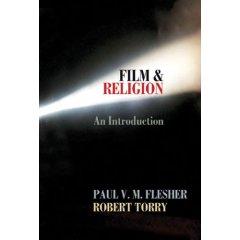 A new book has made an exciting contribution to the on-going study of the relationship between film and religion. Film and Religion: An Introduction by Paul V. M. Flesher and Robert Torry is an example of the kind of serious “religious critique” of films that must take precedence in this field if it is to thrive. Flesher and Torry are keenly aware of the socio-political influences on films and how the use of religion in film can be a way to respond to social crises of the day. Unlike many books on film and religion, this one includes discussions of films that treat Jewish, Islamic, and Buddhist inspired films as well.
In the introduction to their book, Flesher and Torry rightly assert, “Our approach examines the interaction between film and cultural issues and aims to explicate how films use religion in that interaction. This book does not use films to illustrate moral principles, religious ideals, or theological points. While some books take this approach, their neglect of films’ cultural context renders them inadequate for our purposes” (2). They frame their study by distinguishing between films that are overtly religious (The Ten Commandments) and films that are overtly secular but draw upon religious ideas or themes (The Matrix or The Natural). In both cases, they realize the necessity of going “outside the film into the social and political culture within which and for which a film was created” (xi). In doing so, they bring together three areas of knowledge in their engagement with these films: the films themselves, religious features in them, and the cultural concerns they address (xi).
Though they draw from these three areas in each chapter, some more strongly than others, they also take an additional approach when critiquing explicitly religious films, especially ones based on Christian scripture. For these films, Flesher and Torry resort to a cinematic form of targumic interpretation. This is a reference to ancient Jewish translations of the Hebrew Bible called targums that combined “exactingly accurate renderings of the Hebrew text into Aramaic with additional material” (12). Thus, they begin with the awareness of the differences between films and their scriptural predecessors and analyse the implications of these differences for a cultural reading of the film rather than simply ending with a realization that the films have somehow altered or added to the text.
After a general introduction to their study, Flesher and Torry divide their book into four sections. The first section looks at films from the 1950s and the ways in which they respond to two social crises, the atomic bomb and the Cold War. Science fiction films are especially adept at responding to fears of the atomic bomb while a film like The Ten Commandments responds to both issues.
The second section looks at four Jesus films from the 1960s and beyond. This is perhaps the strongest section of the book as it reveals the diversity of their research within one specific genre of film. Looking at the 1961 version of King of Kings as an atomic, Cold War response, they then move to an anti-establishment reading of Jesus Christ, Superstar, a “psychological” reading of The Last Temptation of Christ, and a truly troubling reading of The Passion of the Christ that argues that Jesus exhibits divinity by his request for and ability to endure unspeakable torture at the hands of the Romans (I say troubling because they are so right). Where this section starts off strong as a cultural analysis of these films, I fear they lose some steam as the move forward with their discussion of Last Temptation and Passion. If Nicholas Ray’s King of Kings is one response to the Cold War, to what cultural issue does Mel Gibson’s obsession with Jesus’ torture respond? What does it say about our religious audiences that they would flock to this limited, violent depiction of Jesus?
The third and most diverse section of the book analyzes how different genres of film make use of religion. Here they look at horror films, science fiction films, and what could be called “church” films, “films from different genres in which devout religious believers commit crimes and bring scandal upon themselves and their church” (4). Here, their critique of The Exorcist is extremely interesting as they “center on the religious and cultural implications of its use of sound and speech.” They continue, “These stress the clarity of the Word and all that term implies about truth and the necessity of a culture united against the threatening and disorganizing powers of noise, otherness, and falsehood. Despite the powerfully disquieting nature of its imagery […] The Exorcist is equally ocncerned with auditory effects that form a crucial aspect of its portrayal of the threatening and demonic” (178). To top it all off, their comparisons of films like The Apostle and Saved! are not only insightful studies of the bad behavior of some religious folk, but are occasionally humorous as well. In one of the numerous vignettes (a brief discussion of another film from the same genre) with which they conclude each chapter, Flesher and Torry write of Saved!, “The film suggests that the Christian community around the school deals with scandal by getting rid of it, but that this strategy fails because the pillars of the community are those who are most scandalous” (220). Pillars of faith indeed.
The final section moves away from a Christian emphasis and examines films that draw from Jewish, Islamic, and Buddhist sources. Like many Jewish films, the ones that Flesher and Torry analyze deal with assimilation and the effects of the Holocaust (The Chosen and The Quarrel). The Islamic films (Destiny and My Son the Fanatic) on which they focus examine the tension between faithful adherence to Islam versus Islamic fundamentalism. Films that draw from a Buddhist (Little Buddha and The Legend of Bagger Vance) perspective deal less with dogma and more with ways of seeing, and being, in the world.
Again, this is a welcome contribution to the field of film and religion in which so many books use films to teach moral lessons or authors jump at every chance to see a Jesus/Christ figure in a film. In their introduction to the book, Flesher and Torry claim, “We are interested in interpreting the film itself, not the details of how it was created” (5). While I understand their intentions here, I do disagree slightly. Some of the most telling, and interesting, information about a film and its responses to the socio-political climate in which it was created comes from the details of its creation from internal studio memos, interaction with the ratings board, and interviews with the cast and crew. Nevertheless, this is an entertaining read, a great introduction to how this study should be done while including in-depth analysis at the same time.
Previous Post

February 3, 2008
Super Sunday
Next Post
February 5, 2008 More Nominations...
Browse Our Archives
Select a Category Classics DVD Film Music News Pop Culture Events Print Sports Television Uncategorized Video Games
Select a Month March 2017 February 2017 January 2017 December 2016 November 2016 October 2016 September 2016 August 2016 July 2016 June 2016 May 2016 April 2016 March 2016 February 2016 January 2016 December 2015 November 2015 October 2015 September 2015 August 2015 July 2015 June 2015 May 2015 April 2015 March 2015 February 2015 January 2015 December 2014 November 2014 October 2014 September 2014 August 2014 July 2014 June 2014 May 2014 April 2014 March 2014 February 2014 January 2014 December 2013 November 2013 October 2013 September 2013 August 2013 July 2013 June 2013 May 2013 April 2013 March 2013 February 2013 January 2013 December 2012 November 2012 October 2012 September 2012 August 2012 July 2012 June 2012 May 2012 April 2012 March 2012 February 2012 January 2012 December 2011 November 2011 October 2011 September 2011 August 2011 July 2011 June 2011 May 2011 April 2011 March 2011 February 2011 January 2011 December 2010 November 2010 October 2010 September 2010 August 2010 July 2010 June 2010 May 2010 April 2010 March 2010 February 2010 January 2010 December 2009 November 2009 October 2009 September 2009 August 2009 July 2009 June 2009 May 2009 April 2009 March 2009 February 2009 January 2009 December 2008 November 2008 October 2008 September 2008 August 2008 July 2008 June 2008 May 2008 April 2008 March 2008 February 2008 January 2008 December 2007 November 2007 October 2007 September 2007 August 2007 July 2007 June 2007 May 2007 April 2007 March 2007
Follow Us!
TAKE THE
Religious Wisdom Quiz
Who prophesied the virgin birth?
Select your answer to see how you score.
Ezekiel Isaiah Jeremiah Daniel
Related posts from Pop Theology


#KillerSerials: An Interview with Kutter Callaway

Book Review: MUSLIMS AND THE MAKING OF AMERICA

TRENDING AT PATHEOS Progressive Christian

Why Christians Have a Sacred Duty to Vote:...
The Bible offers strong support for the sacred duty to vote. Here...

What Being a Modern-Day Apostle Means to Me
In my last column, I discussed the ins and outs of modern-day...

Did Ancient China Once Worship the God of...
Across human history, a common thread weaves through the origins of the...

Love Your Neighbor – Including Earth-Kin: Lev. 19,...
God’s command to love your neighbor means acting in an ethical and...

Lead a Church Study of “Jesus and Lao...
Guest writer Jack Thomas (The Irreverent Reverend) reflects on leading his church...

Principles for Understanding the Apostolic Ministry Today
Whenever people discover that my formal ministry title is "apostle," as in...
view all Progressive Christian blogs
Ad-Free & Subscriber Log-In Subscription Support
- About Us
- 2026 Calendar
- Videos
- Podcasts
- Library of World Religions
- Faith In Media Tracker
- Advertise With Us
- Write for Us
- Privacy Policy
- Terms of Service
- Do Not Sell My Data
- Contact Us
- Radiant Digital
- Manage Newsletter Subscriptions
- Unsubscribe From Notifications
- Sitemap
Copyright 2008-2026, Patheos. All rights reserved.
Subscription Support Ad-Free & Subscriber Log-In
Follow Patheos